Archive for the ‘Uncategorized’ Category
The Deep South
 Leave a comment
Hey y’all. I’m back in Iowa after a 10-day, five-state tour of the Deep South. Highlighting my travels were: three plates of fried green tomatoes, four college campuses, 18 of Savannah’s 21 historic squares, one civil rights gathering in Birmingham, pine forests in Alabama, the loveliest cemetery in the world, and bountiful spring color everywhere we went.
This trip was part of my 50-state alumni magazine project, tacked on to a magazine editors’ conference in Atlanta. So that’s where we started: Atlanta.
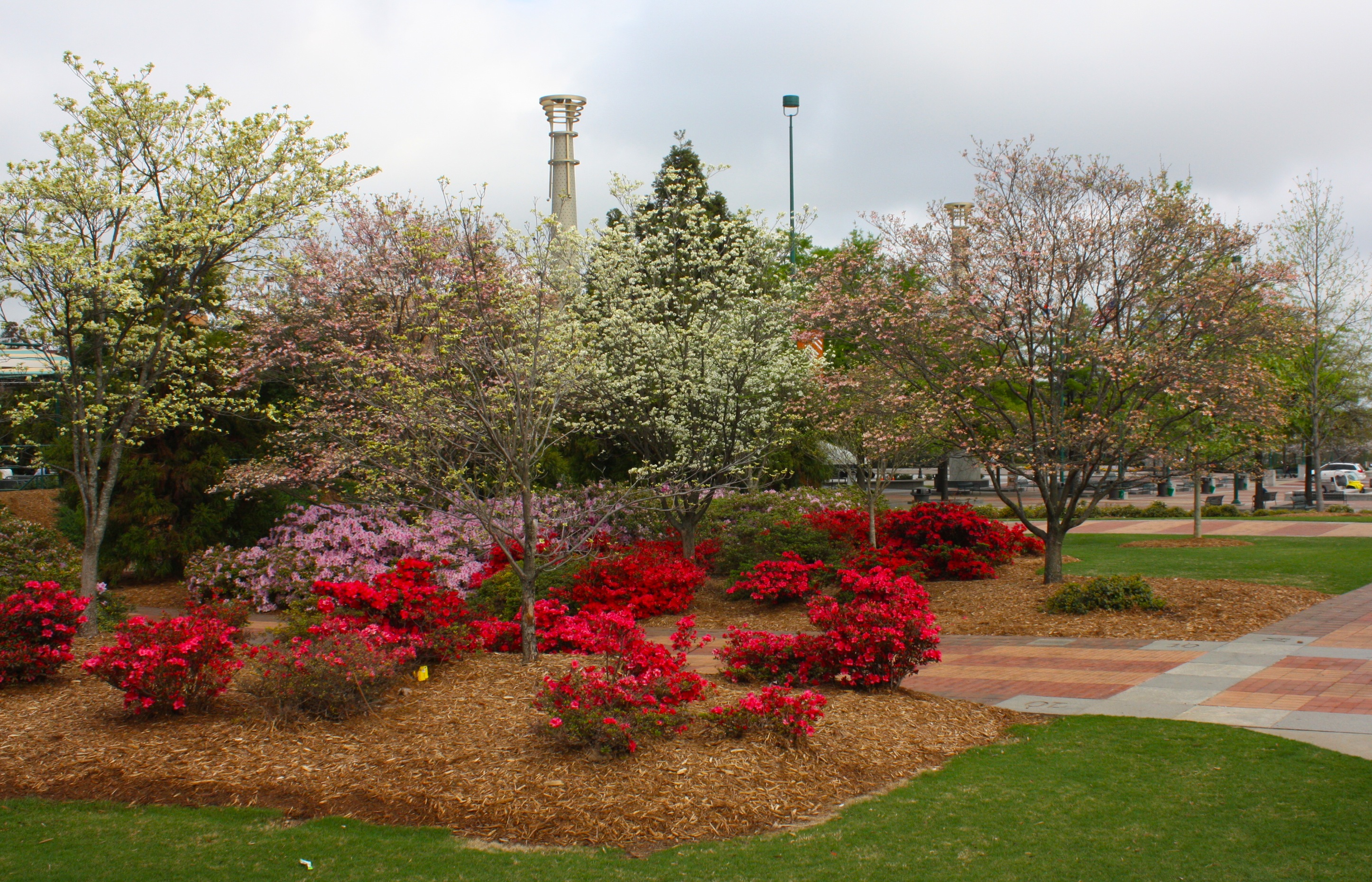
The capital of Georgia, Atlanta is home to 420,000 people – and a metropolitan area of more than 5.2 million inhabitants. Atlanta is not a particular Southern-feeling city. It’s sprawly and traffic-y. I stayed downtown in the Atlanta Sheraton, close enough to walk to some of Atlanta’s top attractions. I didn’t have much time to explore, but I did spend some time in Centennial Olympic Park, a 21-acre park built for the 1996 Olympic Games (above). Nearby are the Georgia Aquarium, World of Coca-Cola, and CNN. I visited the aquarium several years ago, and I think it is the best aquarium in the country.
I ate some very good food in Atlanta. Twice I went out with alumni who live in the area; they took me to excellent restaurants that I would have never discovered on my own (Spoon, a Thai restaurant; and Rathbun’s, serving modern American cuisine). I also went out with a group of editors to Pittypat’s Porch, a Southern dining experience for tourists just down the street from our hotel. There I ate the first of the aforementioned plates of fried green tomatoes. They were melt-in-your-mouth delicious, with just the right amount of spice.
The hands-down highlight in Atlanta was a meal at Pura Vida Tapas in the oh-so-wonderful-and-funky Virginia Highland area northeast of downtown. The last time I was in Atlanta I stayed at a small, independent hotel in this area and discovered Pura Vida on the first night. The food was divine. We ended up eating there three nights in a row. It’s there I discovered the truly well-made mojito. I also developed a bit of a crush on Raul, the bartender. Alas, I had to leave Atlanta after three nights.
While I simply could not pass up the opportunity to revisit Pura Vida (translation: “life is great”), I worried that it would have changed and that my memories of those three nights would be somehow tarnished. But I could not have been more wrong. The Cuban-inspired restaurant looked and felt exactly the same. I found my place at the bar just as before. Raul was gone, but a young bartender perfectly fit the role of Raul 2.0.
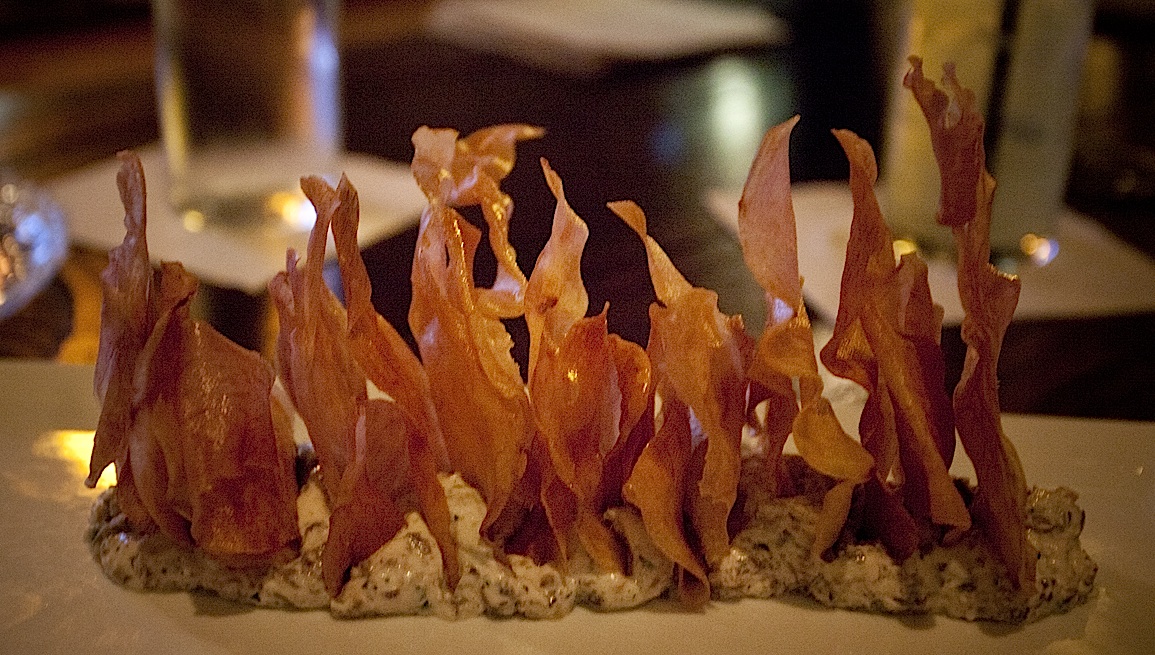
My dining companion, photographer Jim Heemstra, and I started with the malanga root chips with cremini mushroom dip and truffle oil (that’s Jim’s photo of the dish above). I don’t exactly know what malanga chips are, but I believe I ordered this dish all three nights on my previous visit. They were just as delicious and memorable this time around – presented beautifully lined up on a skinny white plate. We then ordered a tofu dish (and other mysterious but delicious ingredients) recommended by the bartender, a cheese plate, and some spiced almonds. Every bite sent me reeling. This is the best restaurant on the planet. Oh, and they still make a mean mojito.
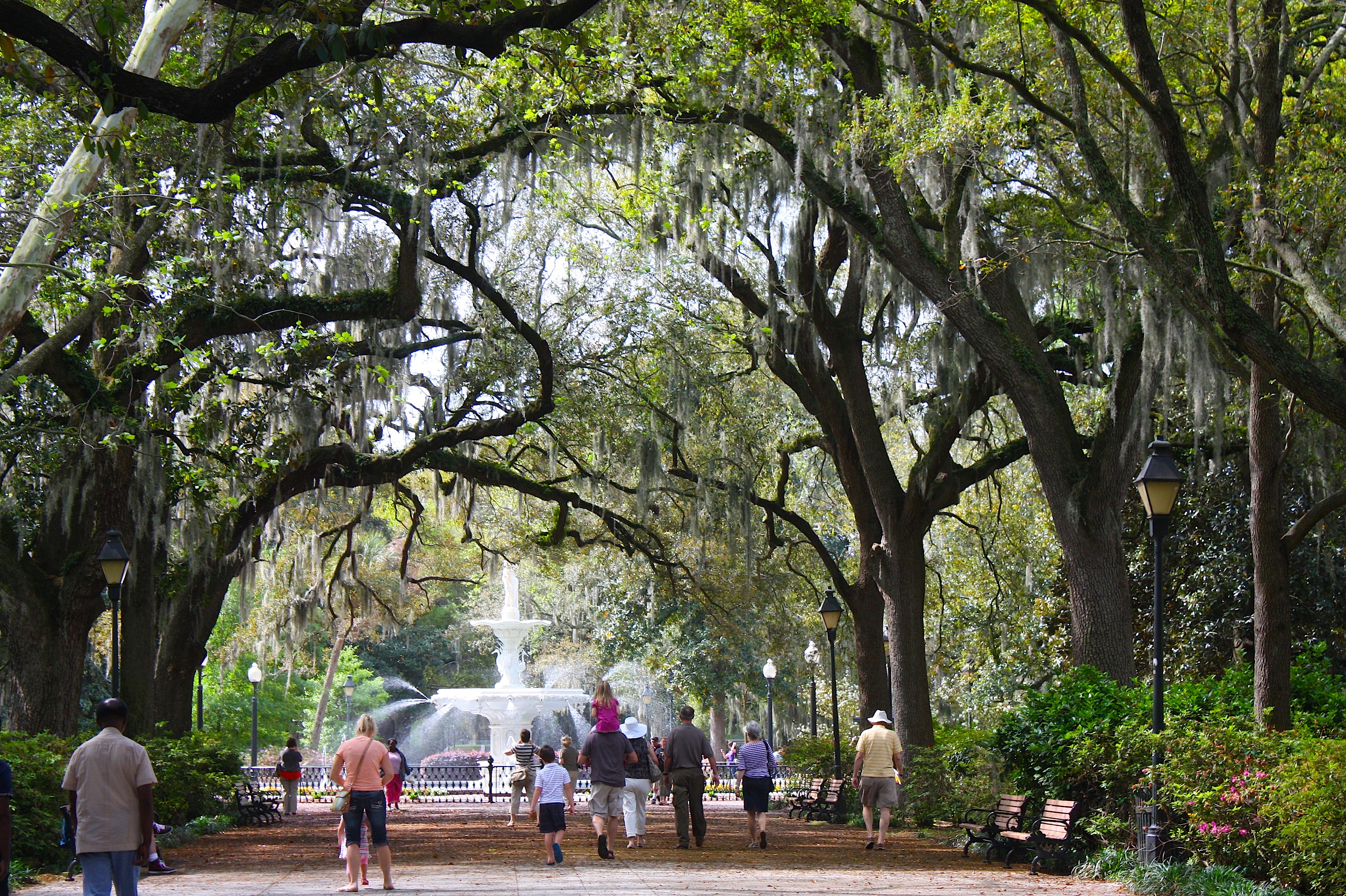
Leaving Atlanta, we headed to Savannah, Ga. This was a bit of a gift, really, as we had scheduled a photo and interview with an alumna at CNN who cancelled just before I left Ames. Savannah is one of my favorite cities, so it was a real treat to have a few hours there before we had to get back to work.
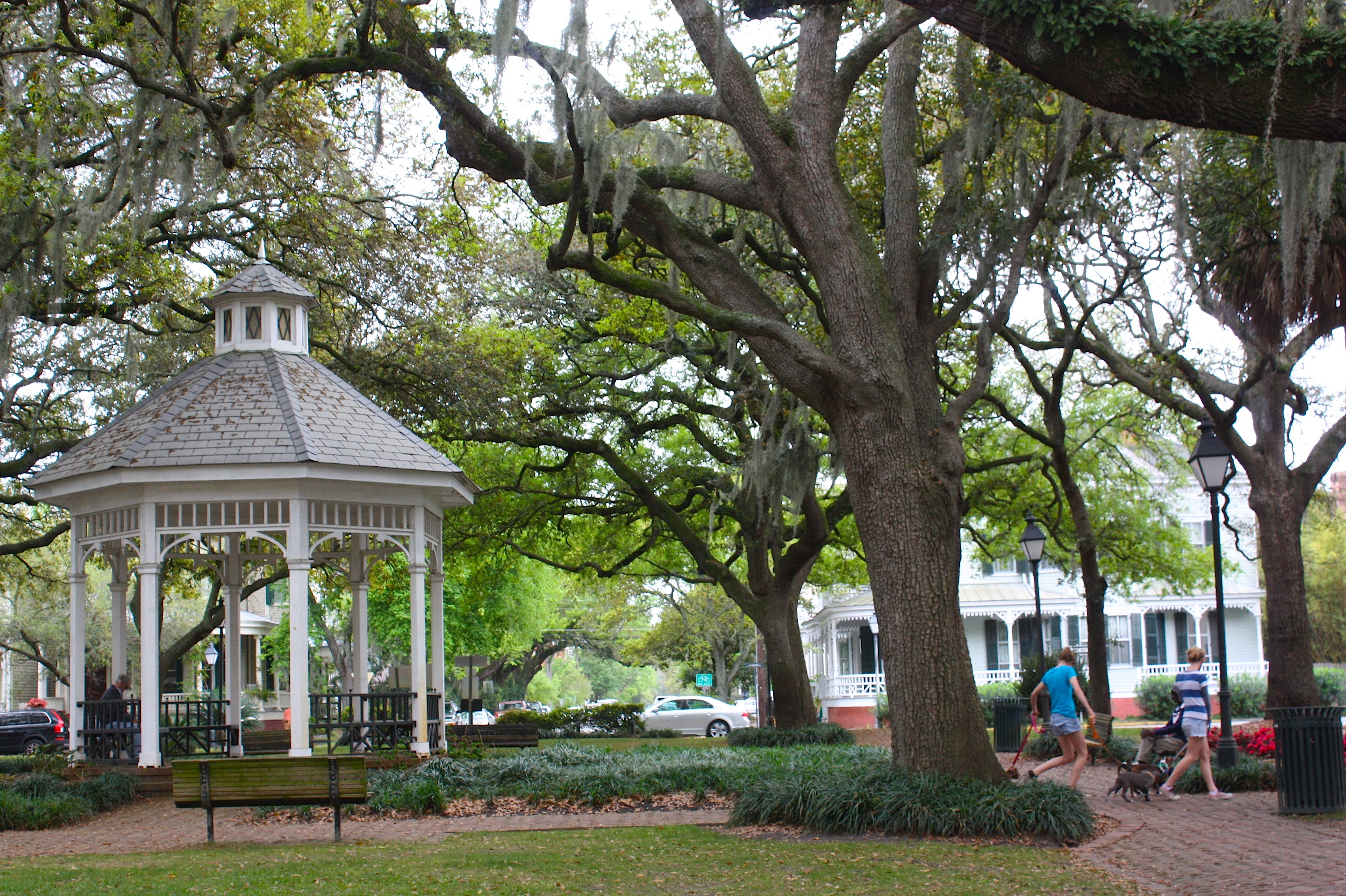
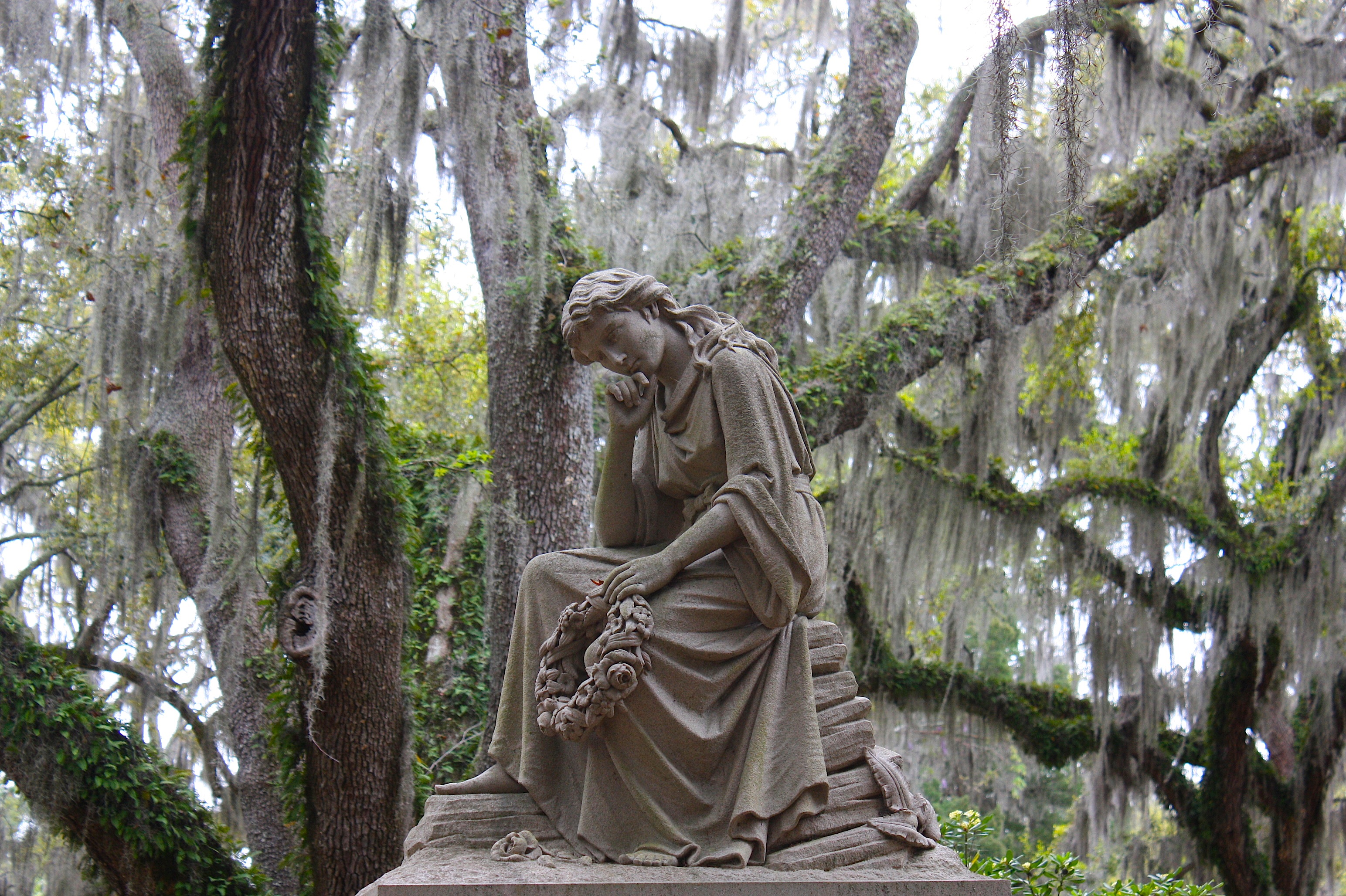
I had visited Savannah only once before, a few years ago with my family. Dave and I had walked to all 21 historic-district squares, each one a little oasis and each one a little bit different from the others. I wanted to do that again this time, but I didn’t know if we’d have time. It turns out that we made it to 18 squares plus Forsyth Park – Savannah’s first recreational park built in the 1840s. We also visited my other favorite spot in Savannah, the astonishingly lush and beautiful Bonaventure Cemetery (below). Between the squares and the cemetery, I enjoyed a full afternoon of live oaks and azaleas, extraordinary landscape design, historic statuary, fountains, and gazeboes. If I ever go back to Bonaventure in the spring, I will remember to bring mosquito repellant.
This trip featured, for no particular reason, quite a number of alumni associated with college campuses. We started with South Carolina State in Orangeburg. From there, we traveled to Auburn, Alabama. On the recommendation of the Auburn alumni magazine editor, we stayed at the Auburn University Hotel – really a lovely place. It’s across from the campus and just down the street from enough bars and restaurants to satisfy any traveler for a week or longer.
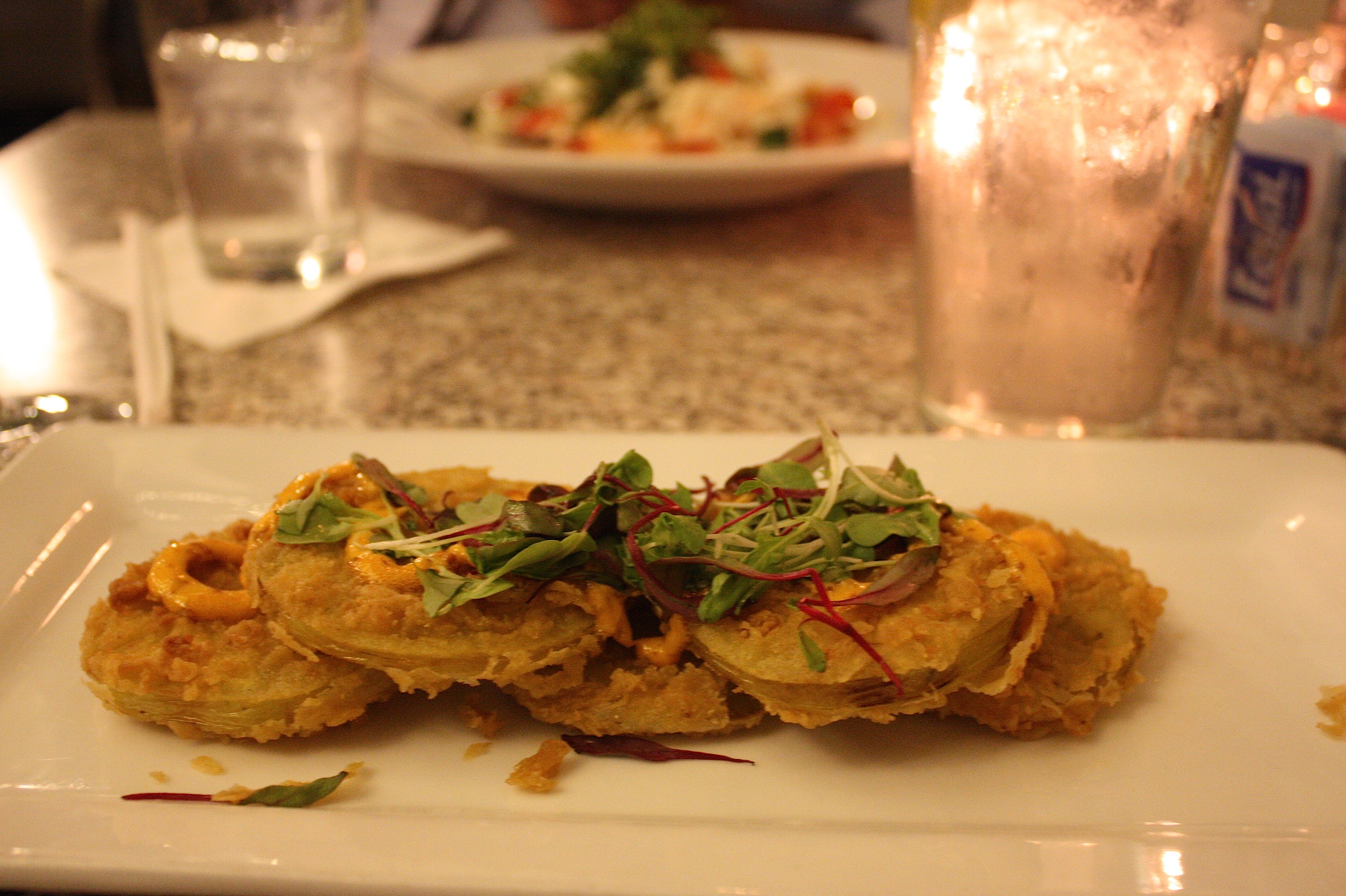 We stayed just two nights but enjoyed The Mellow Mushroom and Amsterdam Café (where I had my third plate of fried green tomatoes – pictured at left. I failed to mention plate No. 2, served in a Savannah brewpub, because they were virtually inedible.)

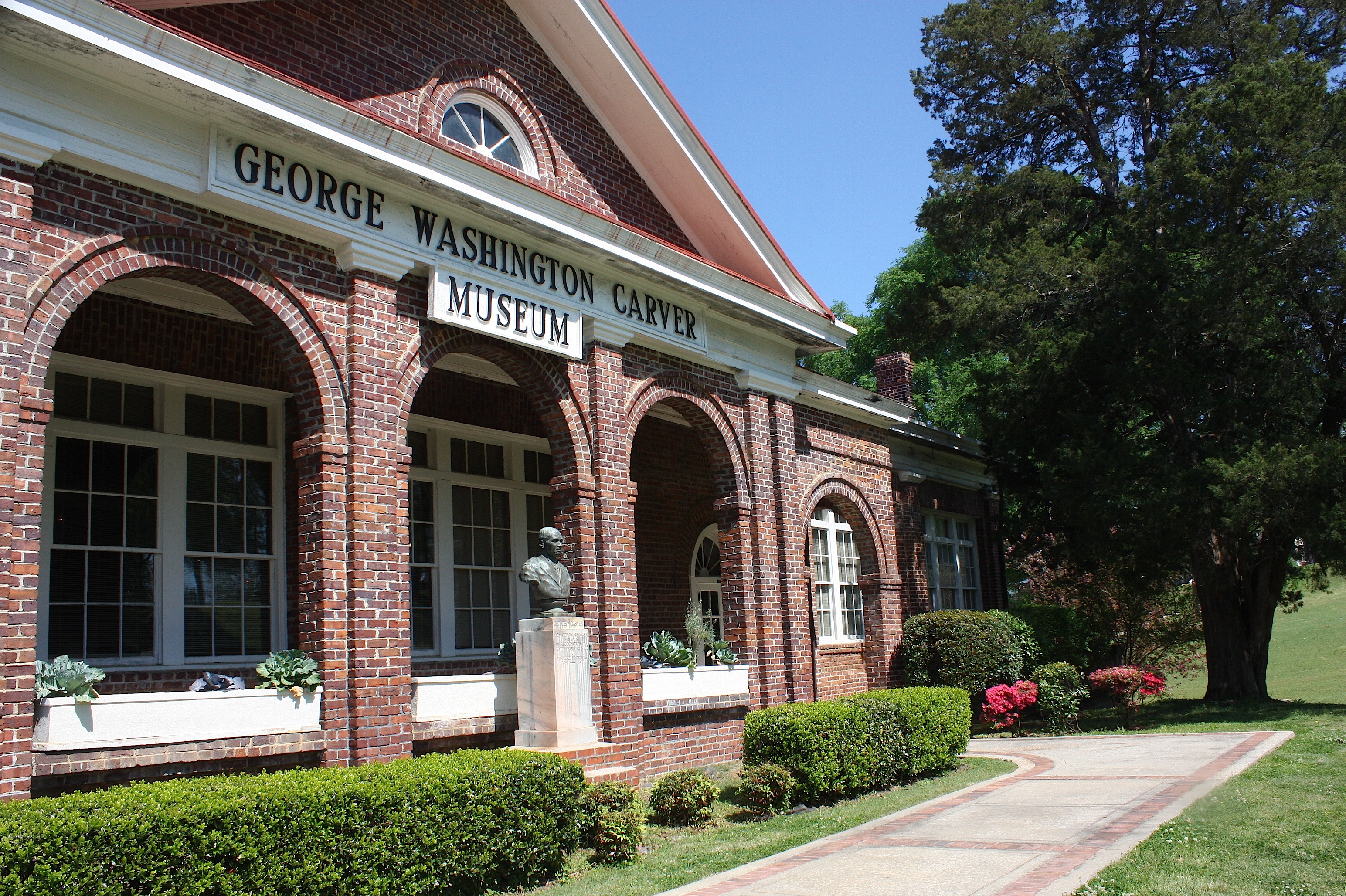
Besides the hotel and restaurants, highlights of our Auburn stay were a trip to a pine forest owned by an Iowa State alumnus (above) and a visit to Tuskegee University. Tuskegee is famous for its founder, Booker T. Washington, for the scientific discoveries of George Washington Carver (also an ISU alum), and for the Tuskegee Airmen. The entire campus of Tuskegee University was designated a national historic landmark in 1965. We stopped by the George Washington Carver Museum (below), and I had a great interview with an Iowa State Ph.D. graduate who is currently on the Tuskegee faculty.
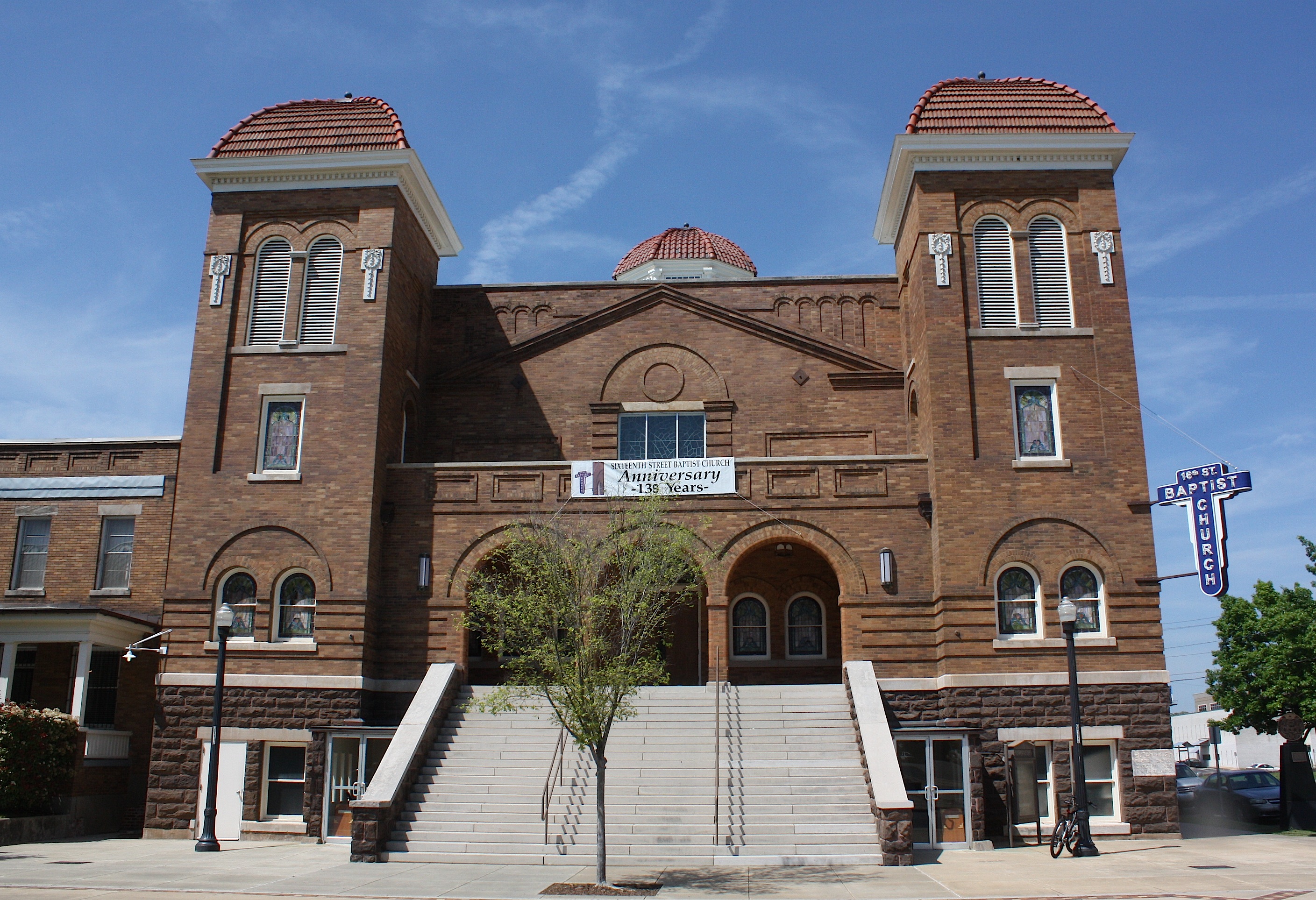
After leaving Auburn (sadly…I could have stayed much longer), we headed north to Birmingham. After our work there was finished, we visited the Birmingham Civil Rights Institute and surrounding district, which includes Kelly Ingram Park and Sixteenth Street Baptist Church (below), both significant sites in the civil rights movement. We arrived in the park just as a civil rights meeting was ending. The meeting featured Bishop Calvin Woods, president of the Birmingham Chapter of the Southern Christian Leadership Conference who actually worked with Dr. Martin Luther King, Jr. The museum itself puts into context the turbulent 1960s civil rights struggle by African Americans in the South through a short film, photos, a timeline, video clips, artwork, and more. It is a sobering experience.
I could have spent much more time in Birmingham. It’s a lively city with a vibrant arts community. But we had to keep moving, so off we went toward Oxford, Miss. En route we stopped at Elvis Presley’s birthplace just for grins and to get out of the damn car to stretch our legs.
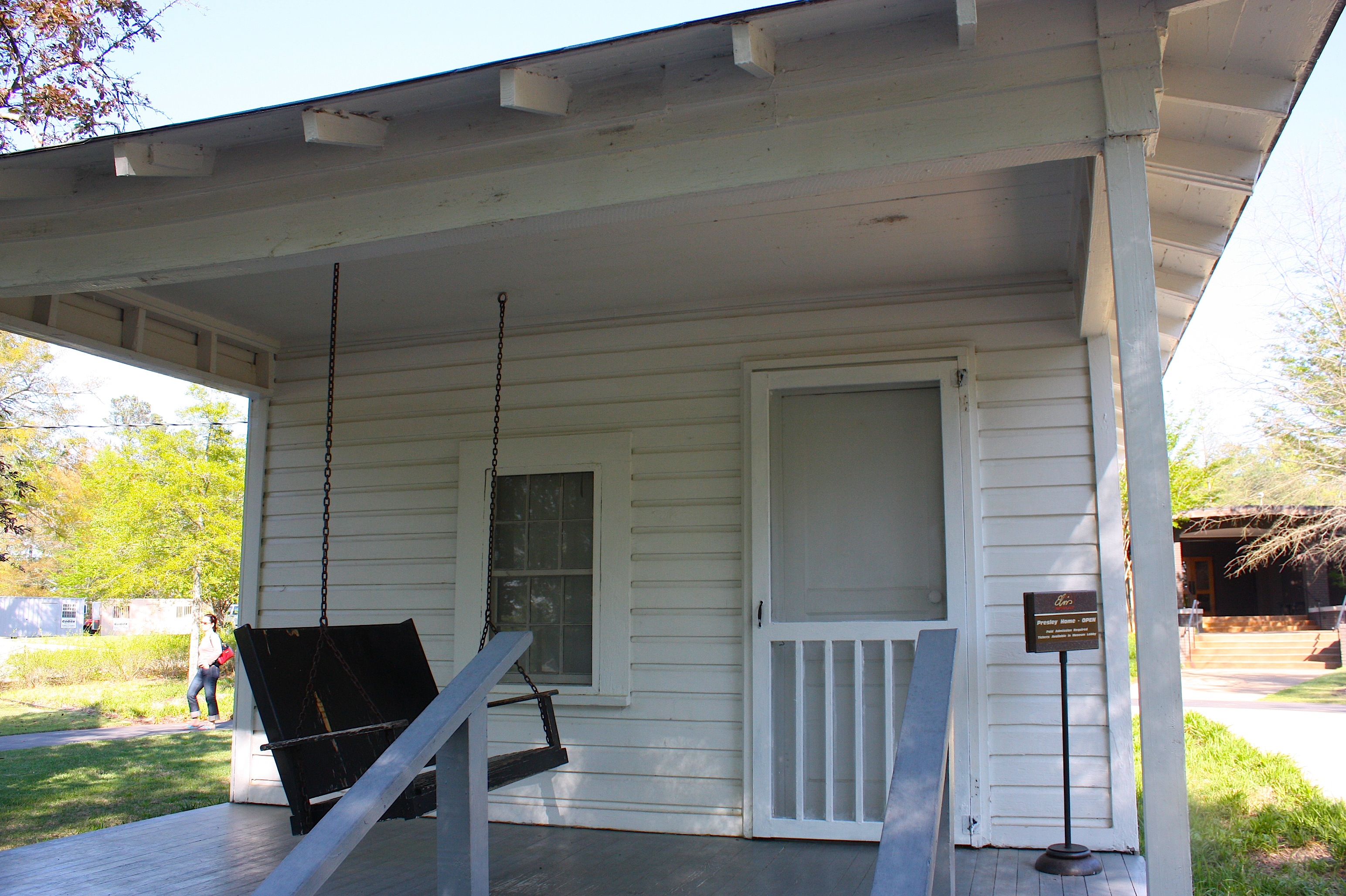 We didn’t pay the 12 bucks they wanted for an entrance fee (to what???) Basically all there is to the place is the tiny two-room home in which Elvis was born in 1935 and the church he attended as a boy (moved to the site). Yawn!
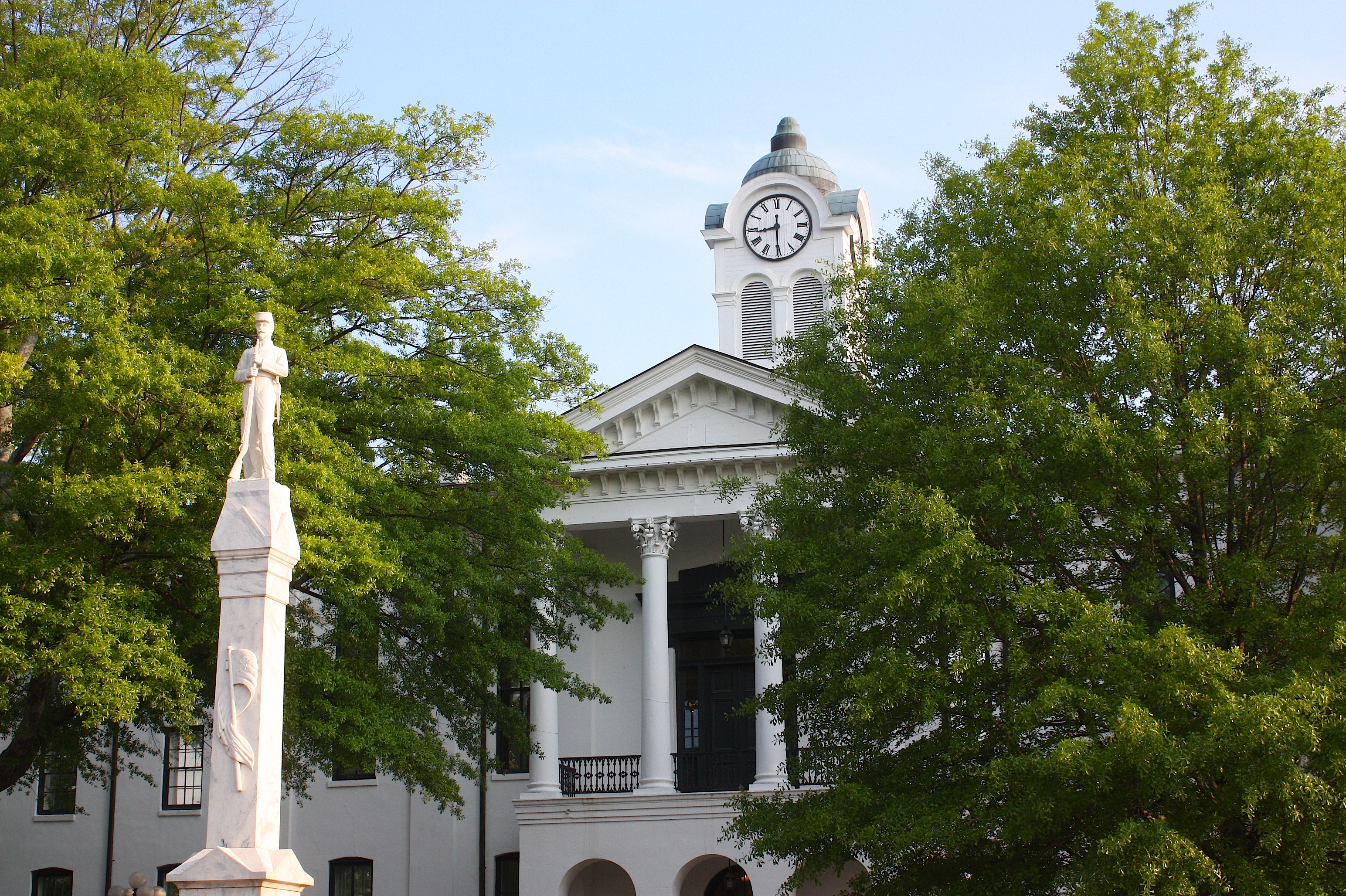
Oxford is a cool town and home to the University of Mississippi. The historic Oxford Square (below) had even more bars and restaurants than Auburn, plus a lot of (pricey) shops and THREE bookstores.
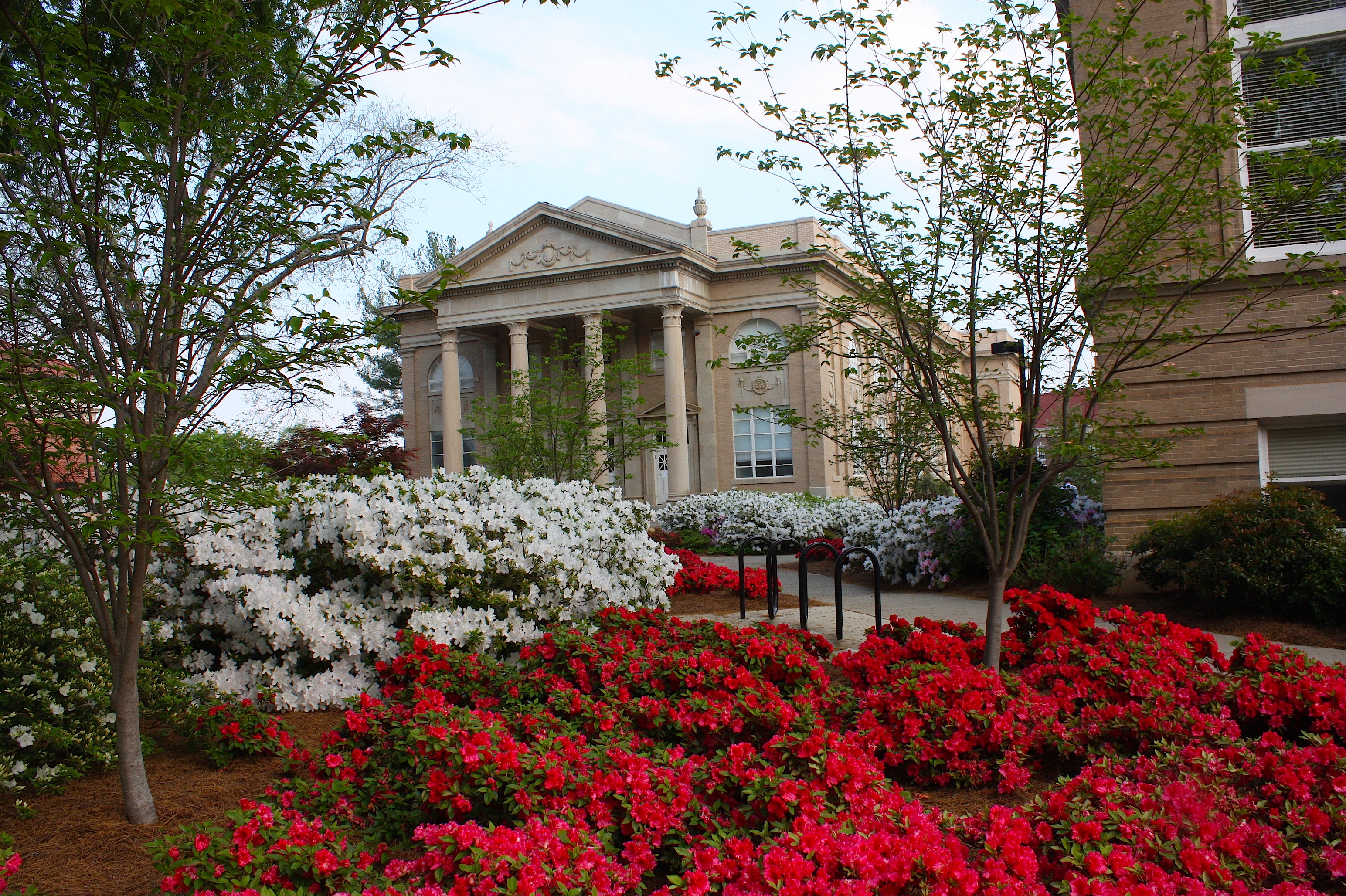
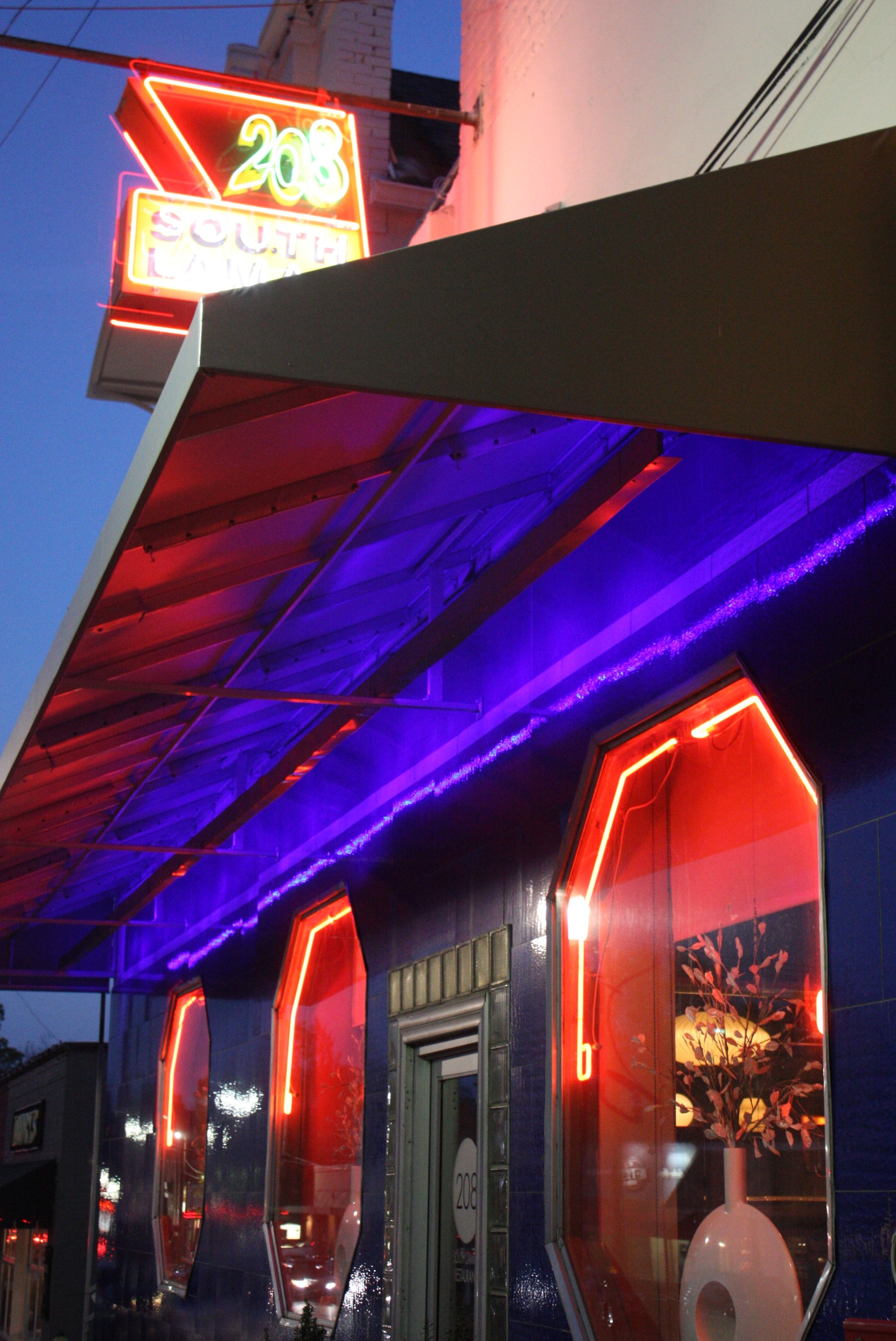 We ate at a restaurant called 208 South Lamar (left), which was nice but a little overpriced – and I think I was still hungry when I left. And I killed a bug crawling down the wall next to me, which always creeps me out at a restaurant. The next day, we walked the campus of Ole Miss (below). It’s just as pretty as you think it will be, with dogwood and azaleas blooming everywhere and lovely Southern architecture and landscaping. We went to lunch with our alumnus, who is on the faculty there, at a fun restaurant called City Grocery. I had a very good grilled vegetable sandwich so big that it made up for the smallish food served the previous night.
It was beginning to turn into the restaurant tour of the South. Between all the good food and all the sitting in the passenger seat, I think I may have put on a few pounds on this trip. After a great time in Oxford (if you don’t count the miserable night spent in the Comfort Inn, where we shared the motel with a very loud construction crew) we headed to Memphis, a quick hour-and-a-half drive north.
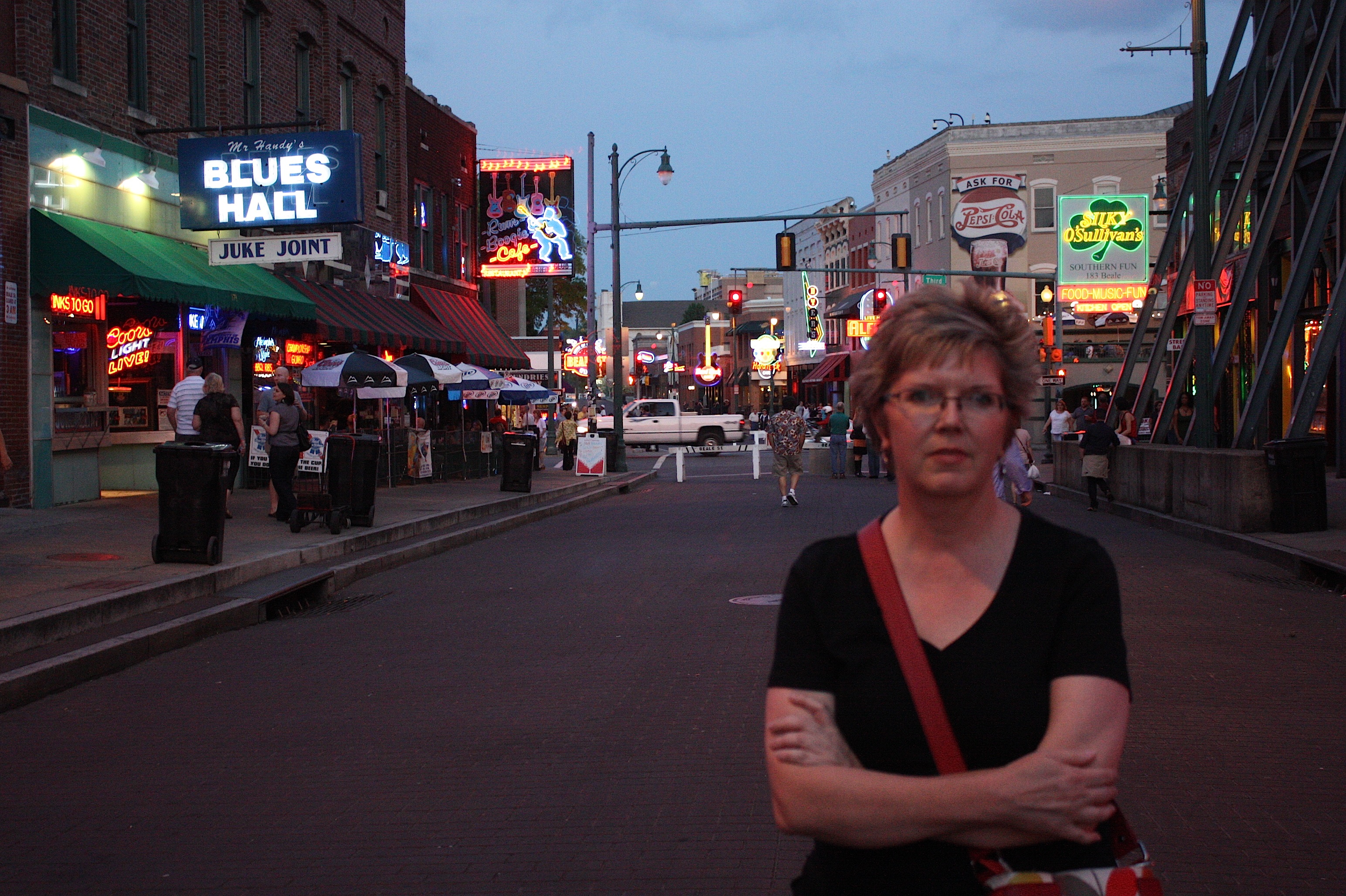
Memphis is an interesting city. The alumna we met with works in the criminal justice system, and she described Memphis in no uncertain terms as a high-crime city – with an active drug scene and a serious gang problem. We stayed near the river and not far from Beale Street, the Memphis equivalent of New Orleans’ Bourbon Street. Beale at night is a mix of tourists and locals, which has the potential to create a rather scary human stew. We didn’t stay long – just long enough to photograph her and fend off curious onlookers (and snap a picture of me, too, above). I will say one thing about Memphis: It has a really pretty Mississippi River Bridge.
We drove home the next morning. There’s nothing like a nice little 11-hour drive to cap off a tour of the South.
St. Patrick’s Day
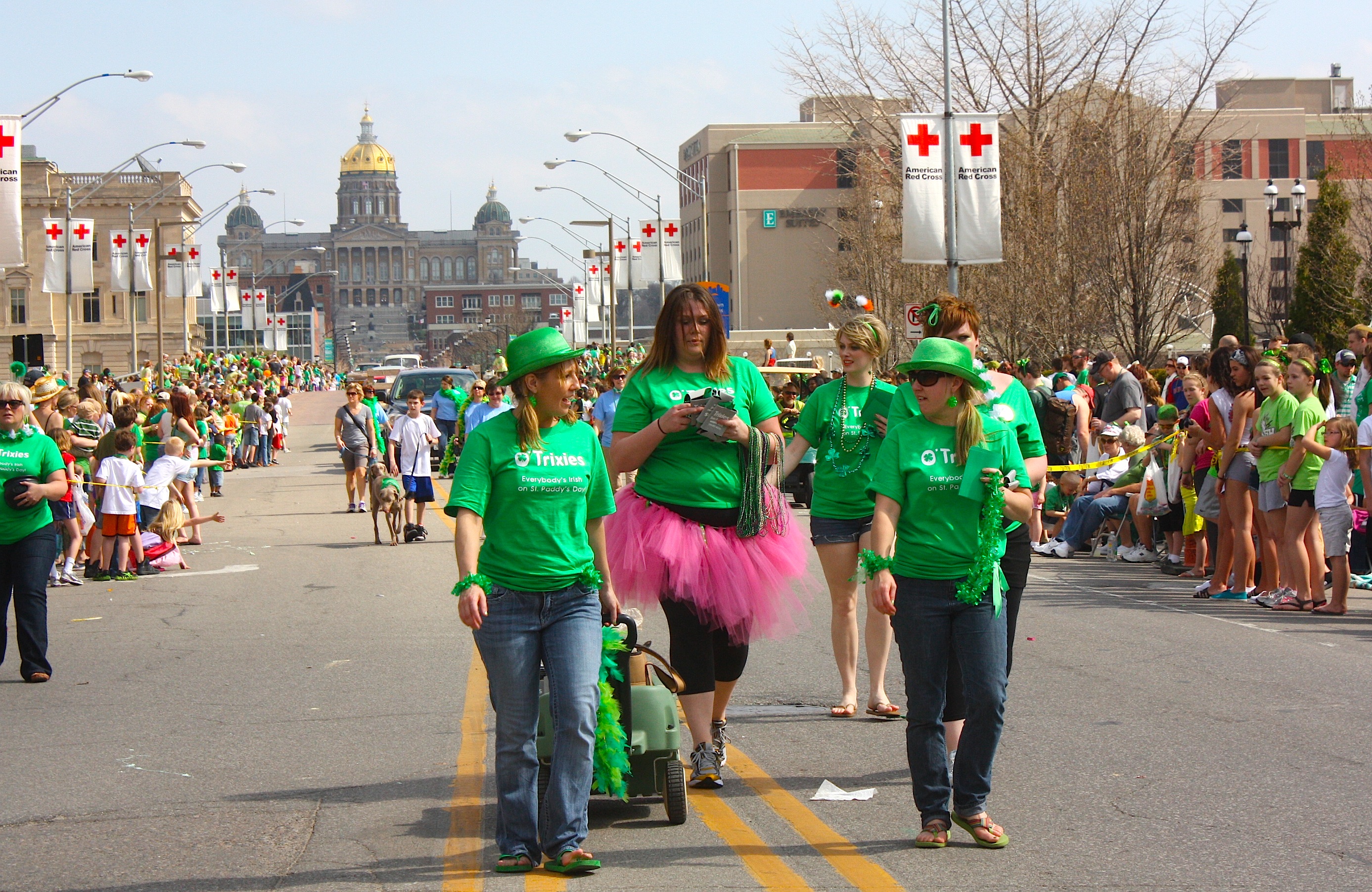
There were times this afternoon, standing on the route of the Des Moines St. Patrick’s Day Parade, that I thought for sure the crowd was more interesting than the parade itself.
 And, I asked myself, since when do so many people own a St. Patrick’s Day costume? It felt an awful lot like a green Halloween, what with the green hair, green and white boas, oversized sunglasses, green striped knee socks, tutus, giant green hats, beads, leis, and the inevitable “Kiss Me, I’m Irish” T-shirts. (I was amused by one shirt that said “Kiss Me Anyway.”)
The parade, sponsored by the Friendly Sons of St. Patrick, started at the state capitol, went over the Locust Street Bridge, and ended at the Marriott at 6th and Locust.
I guess I’m a parade snob. I’m rarely impressed by a local parade. I think the organizers use weak criteria for deciding who gets in — or maybe they have no criteria at all and anyone who signs up gets in. I will never understand the random vehicles that ride in these parades. In today’s parade, for example, there were limos and semis with no decoration nor tie to the holiday. There were LOTS of tricked-out party buses, some with little or no sharing o’ the green. And people just sort of walking along, looking less interesting than the crowd.
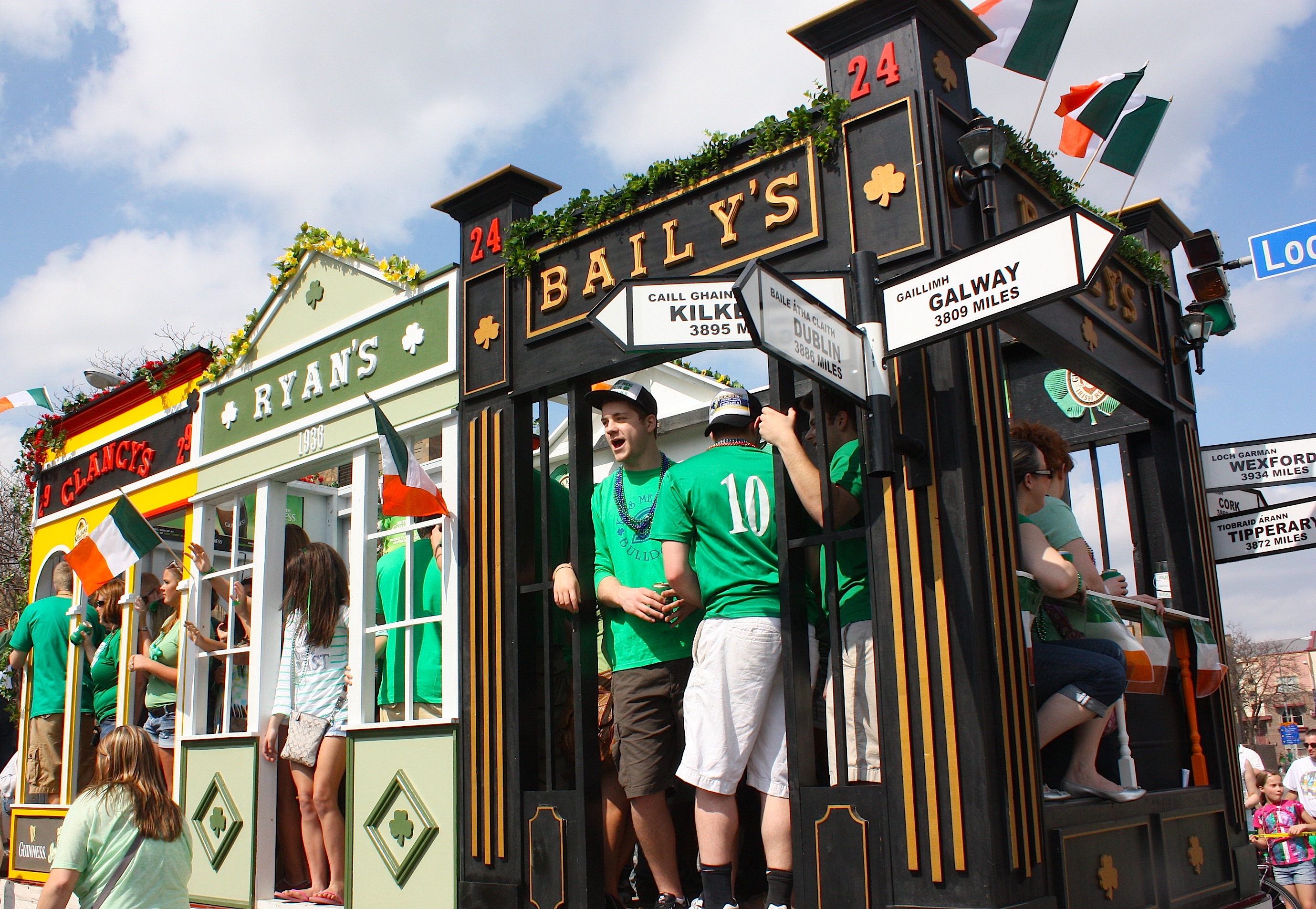
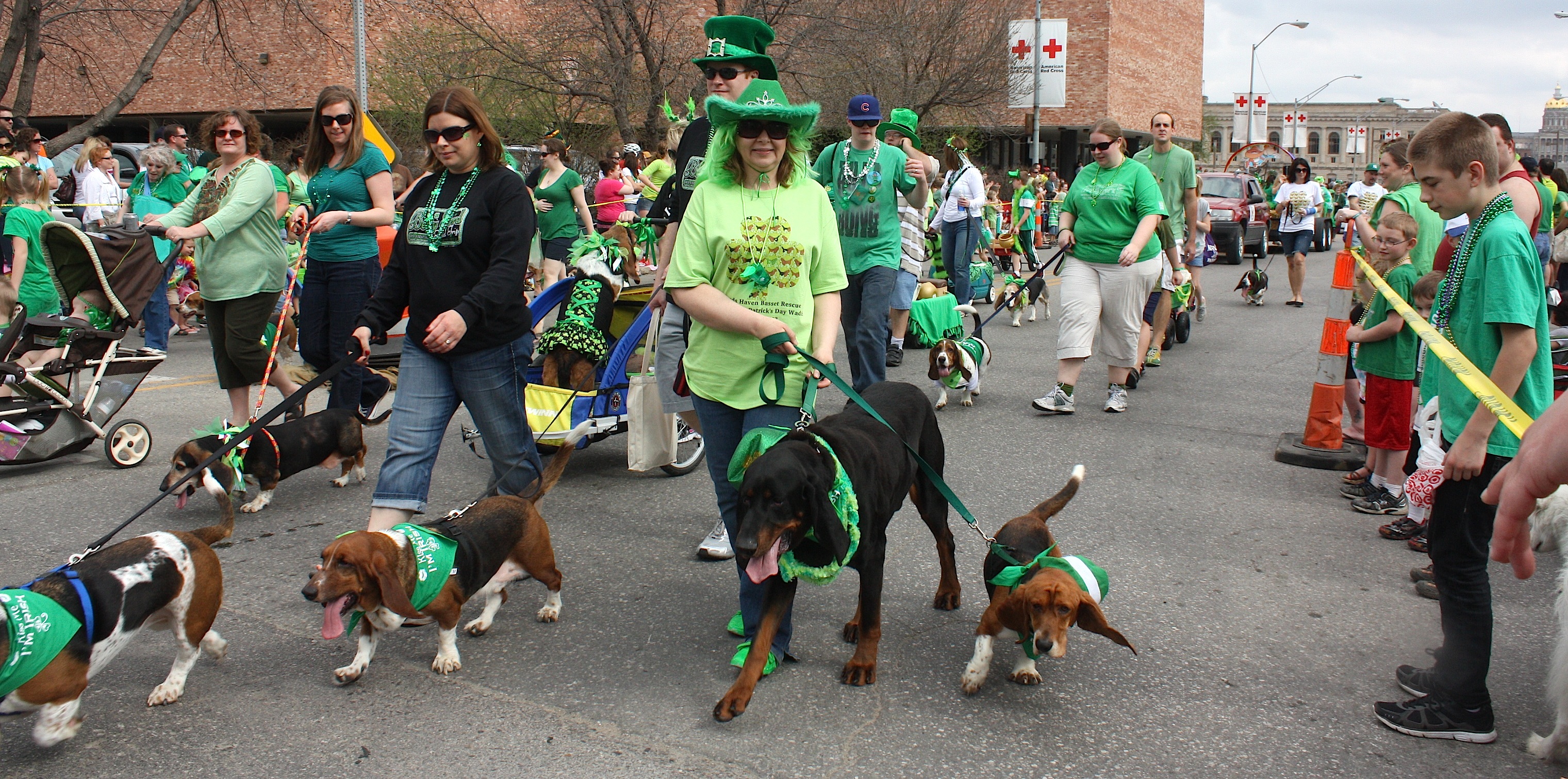
But there were some good entries, too. A fun entry by Hounds Haven Basset Rescue featured adorable, costumed basset hounds. One of the few true floats in the parade was a replica of three taverns in an Irish village — very cute. The men in kilts were fun — but aren’t kilts more of a Scottish thing? I enjoyed each attempt at Irish music and dance, even if it wasn’t all that great.
As usual, I got bored and left before the parade was finished.
The downtown Des Moines riverwalk
This week’s springlike weather was a perfect time to take an evening stroll. And where better to stroll than along the river in downtown Des Moines? Obviously it was not an original thought on my part, because lots of folks were doing it.
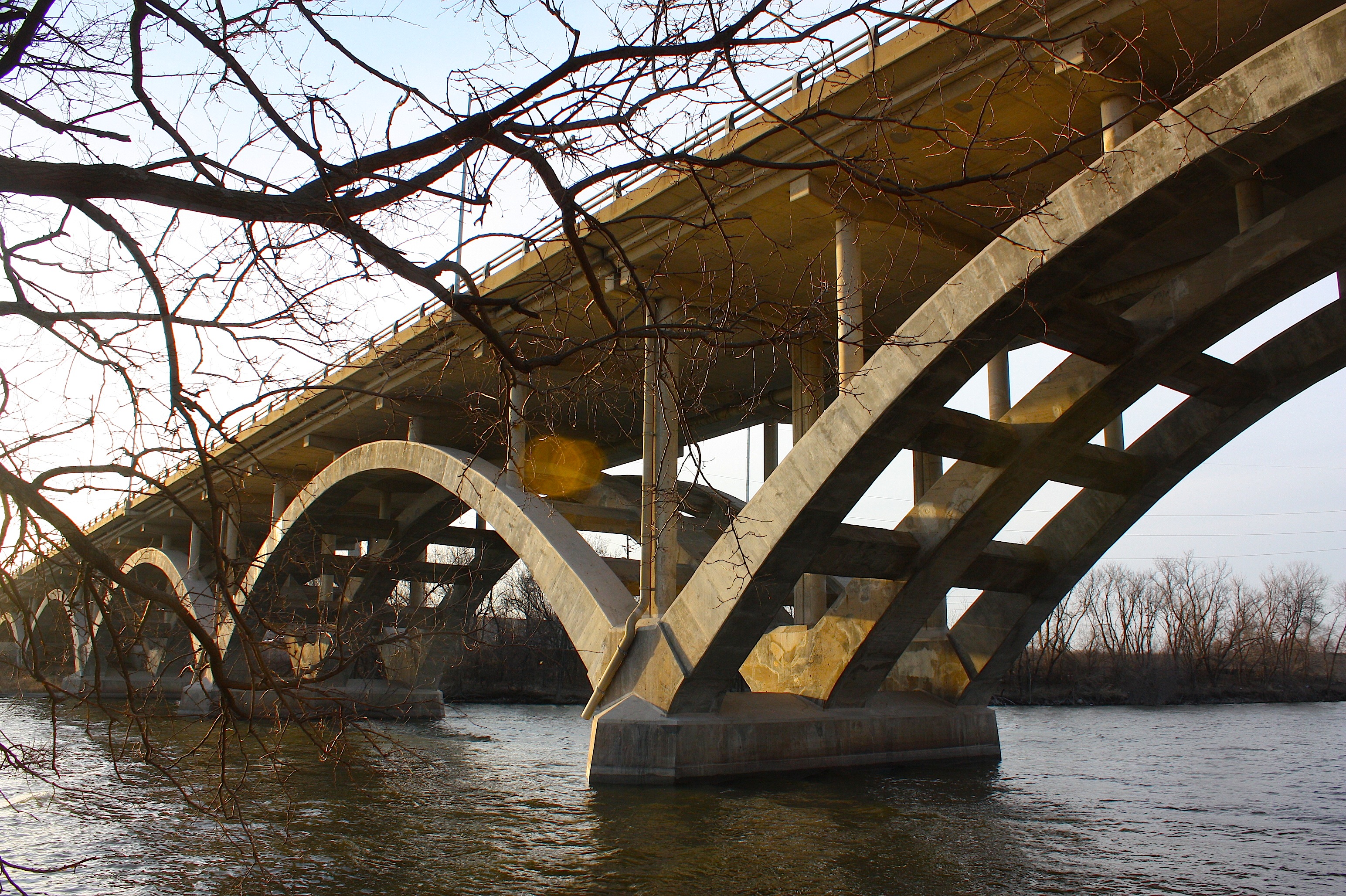
I started at the University Avenue Bridge, a concrete arched bridge built around 1920 that crosses the Des Moines River just north of the botanical center. This is one of the prettiest bridges in Des Moines, in my opinion. It reminds me of the bridges designed by Iowa State grad Conde McCullough — and it’s possible that he designed this one since he was working in Iowa about the time this bridge was built. He later grew to fame for his bridges along the Oregon coast.

The walkway near the Des Moines Botanical Center is pleasant, even without blooming trees and flowers. There are several benches positioned along the riverfront where you could sit and enjoy the view.

Next up, as you walk south along the east side of the river, you’ll encounter the John Deere Chinese Pavilion, a part of the Robert D. Ray Asian Gardens and Chinese Cultural Center of America. This center (according to its website) highlights the importance of diversity in the Des Moines community and acknowledges the significant contributions that Asian Americans have made to Iowa. The gardens also serve as lasting monuments honoring Gov. Ray’s visionary moral leadership and humanitarian outreach. The gardens were dedicated Aug 1, 2009.
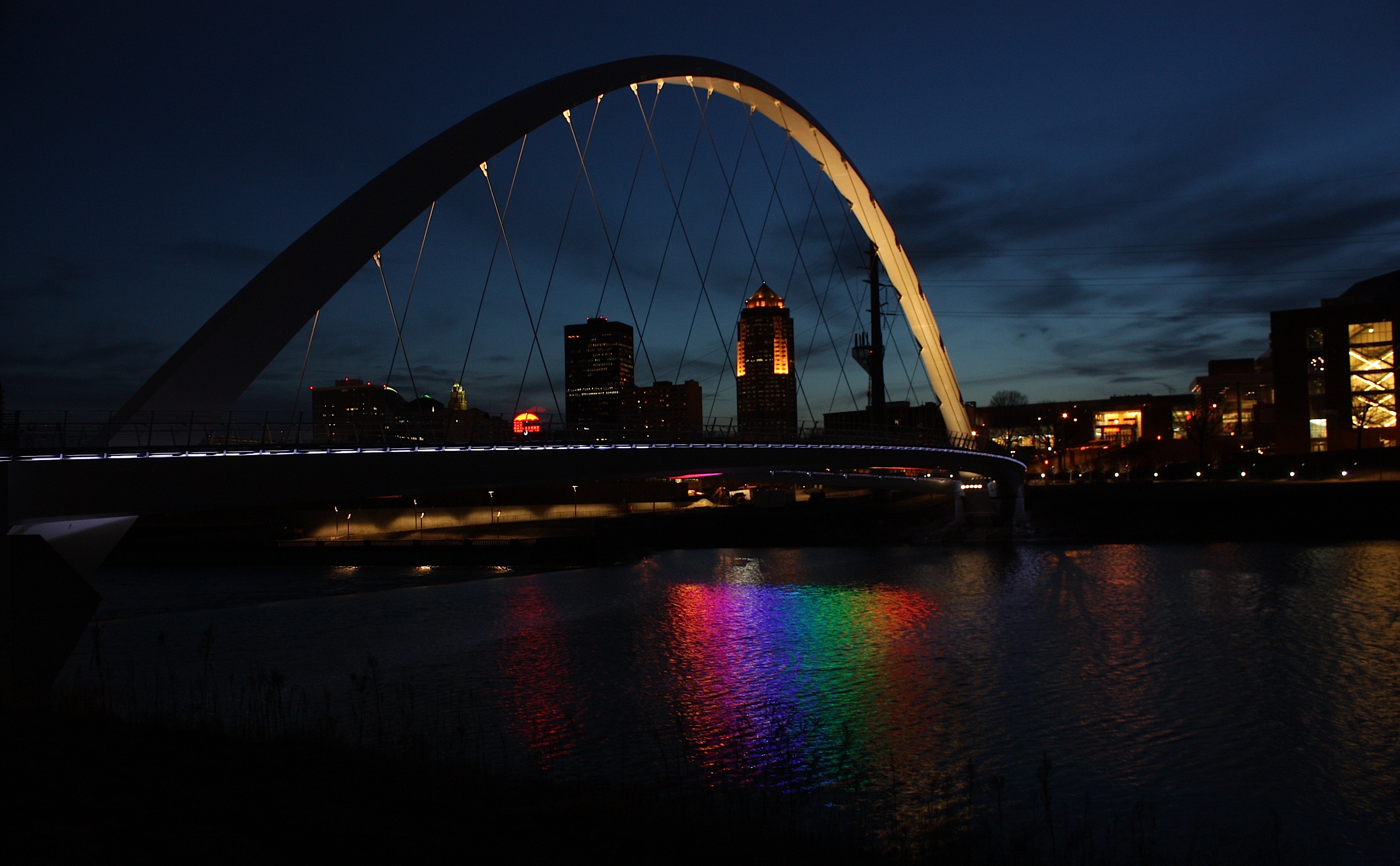
Just past the Asian garden is the Center Street Bridge, part of the Principal Riverwalk. The Riverwalk project began in 2004 and is still under construction. Sections that are completed include the very attractive Center Street Bridge, the Brenton Skating Plaza, Long Look Garden, Meredith Trail (which connects to Gray’s Lake) and more. Work continues on the Court Avenue Plaza and a multi-use trail.
The Center Street Bridge is pretty any time of the day, but at night it takes on a completely different look, with lights in the center that reflect onto the river in an ever-changing rainbow pattern. The bridge links the east and west sides of the city at the northern edge of The Principal Riverwalk loop. The bridge features two separate pathways — one for walkers/joggers and one for bicyclists.

A little further south, near the Embassy Suites hotel, the Simon Estes Amphitheater frames downtown and is the perfect place to watch the sun set. The amphitheater, named for opera performer Simon Estes, is the location for the popular Nitefall on the River concert series held each summer.

A few more blocks south is the Union Railroad Bridge. Once a carrier of train traffic, the Union Railroad Bridge has provided a pedestrian link over the Des Moines River since 2006. Painted its original color, “caboose red,” the bridge features cantilevers on each side, allowing pedestrians to stop and enjoy the view. The bridge is part of the Principal Riverwalk.

And, finally, a parting shot of the downtown skyline.
Des Moines Skywalks

I would never have considered making the Downtown Des Moines Skywalk system a destination or a topic for this blog if I hadn’t read David Elbert’s column in the Feb. 9 Des Moines Register. Titled “Makeover of D.M. skywalk glitters with images of city,” the story detailed a facelift that included new artwork and physical upgrades.
 I’m not sure how “upgraded” or beautified the skywalks are, but I had a hell of a lot of fun traversing the maze of walkways over streets, inside buildings, through parking garages, and over alleyways.
Here’s what the “See Des Moines” website says about the skywalks: “Connecting meeting facilities, shopping, restaurants, and entertainment, the extensive, 4-mile skywalk allows visitors to enjoy Downtown Des Moines all year long no matter what season it is.”
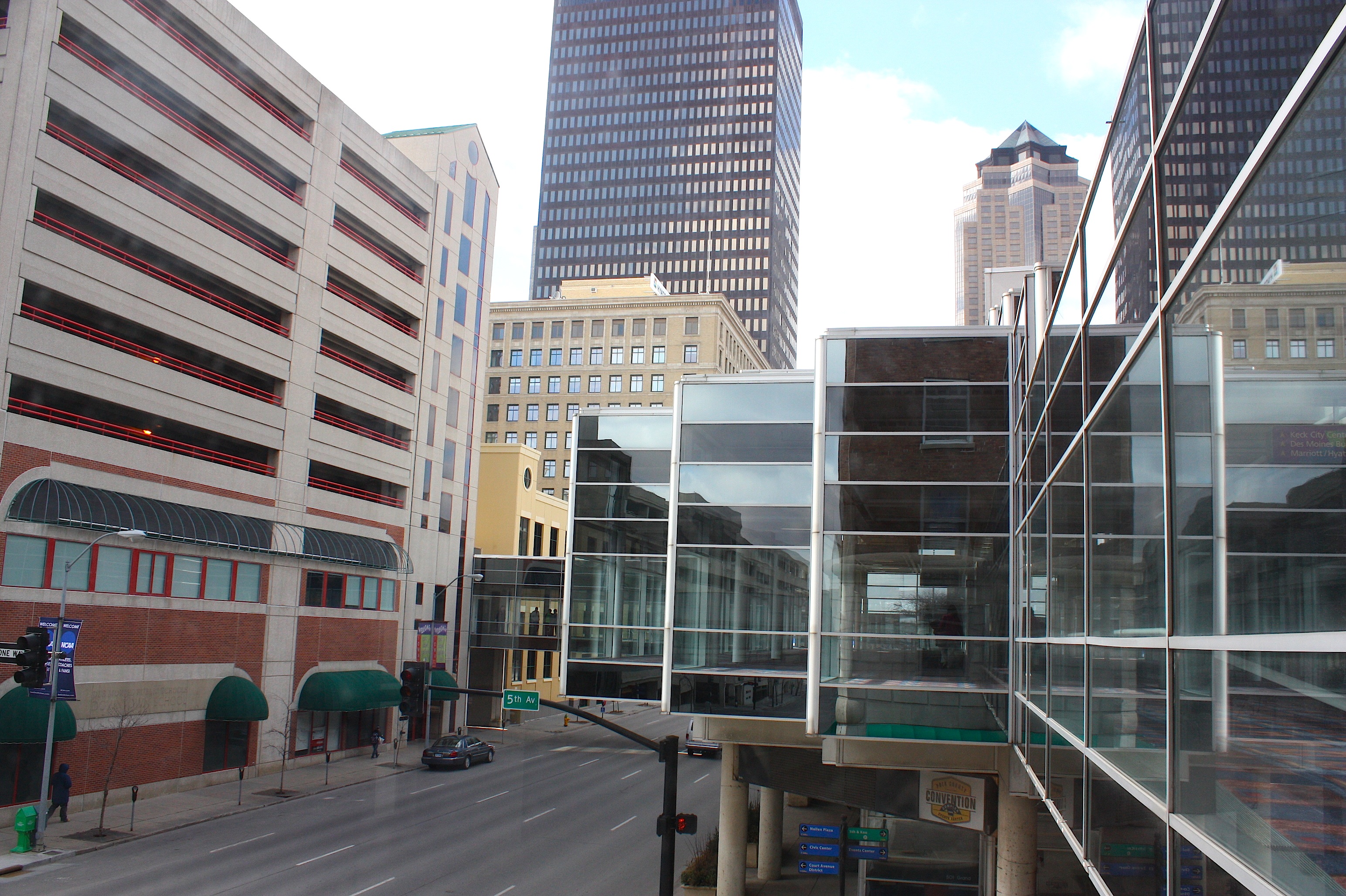 That’s a great point. Because once you get into the skywalk system, you don’t have to worry about the elements. It was cold yesterday when I took my walk (which was actually longer than 4 miles because I had to double back several times) and I didn’t even wear a coat. Some of the walkways are chilly and others are a little over-heated, but most are very comfortable.
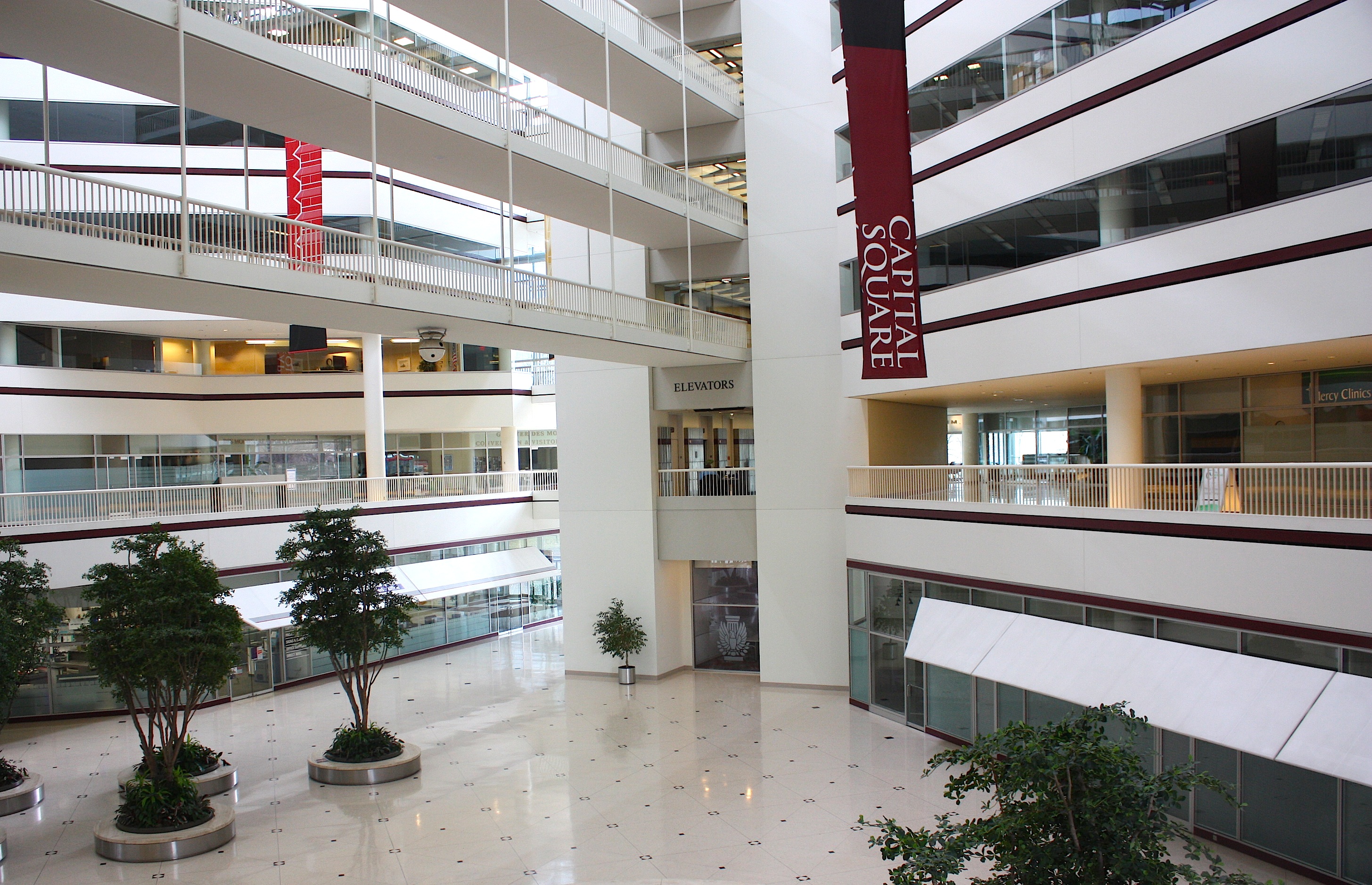 When I started my walk at about 10th and Locust, I fully expected to walk past hotels and parking garages, because that’s been my main connection with the skywalks in the past. You know: Park in the of the big downtown garages and walk to an event. Or walk from Court Avenue to the Civic Center. But I didn’t expect to walk through Capital Square (400 Locust) and through the Iowa Events Center (where a little girls’ dance competition was taking place inside Veterans Memorial Auditorium). I remembered walking through Kaleidoscope Mall at the Hub but it’s been years. This mall, like many of the businesses along the skywalk route, caters primarily to downtown workers and thus only open Monday through Friday during the day.
 My walk would have been completely different had I done it on a Tuesday at noon. I would have encountered business-suited workers rushing from meetings, talking madly on their cell phones. Instead, I encountered mostly families with young children, older adults on scooters, a few single walkers, and a couple of homeless guys. Through long portions of the skywalk system, I had the place to myself.
I walked past a number of restaurants (all closed), a barbershop, small retail stores, corporate banking headquarters with security guards, a former department store (Younkers), the Des Moines Register, and the Polk County Convention Complex.
 I was probably the most entertained by the Iowa Events Center area because several events were going on and thus the whole place was accessible. I hadn’t seen Vets since it was renovated (actually, I’m not sure I was ever in Vets before it was renovated, either). No matter. It’s a real showplace. The architecture is grand, the meeting spaces roomy, and the ballroom expansive. Besides the little girls strutting their stuff on the main level, the Variety telethon was starting upstairs. Inside Wells Fargo Arena, workers prepared for the girls’ state basketball tournament. And a group of teenagers (many of whom looked to be the aforementioned girls’ basketball players) was just going into the Iowa Hall of Pride (I have that attraction on my list for another blog, another day).
 So back to my source of inspiration: David Elbert’s column. In it, he said much of the facelift is “subtle” (windows washed, new carpet installed, lighting replaced, drooping ceiling tiles fixed). I can’t say I noticed any of that. The skywalk system morphs about every two blocks depending on what area you’re in. If you’re walking through Wells Fargo, you better believe the floors, ceilings, and walls are all gleaming architectural gems. If you’re walking through a parking garage, you’ll be lucky if there is carpet at all. More likely you’ll be walking on concrete or tile.
 Elbert also says there’s new artwork replacing aerial photos of gliders and hot air balloons that have been displayed for 20 years. In their place are 19 oversized photos of the city’s skyline and other icons along with artwork that celebrates downtown. If you go, don’t expect to see this all along the walkways; it’s confined to just one small section. It’s nice, but it was the artwork in Vets that really caught my eye (to be fair, Vets itself is not part of the skywalk system…you just sort of end up there if you keep walking).
Here’s a little skywalk history, again thanks to David Elbert and the Register:
- The first pedestrian bridge was across Fifth Ave. south of Walnut St. It was built in 1969. It connected the then-under-construction J.C. Penney building with the then-under-construction parking garage on the east side of Fifth St.
- Since 1982, nearly four miles of skywalks have been built downtown. The original backbone of the system was along Seventh St. through the Marriott Hotel and Younkers to Wells Fargo Bank.
- Today the system runs from Court Ave. to 801 Grand (a very hoity-toity section, if I recall) and from Wells Fargo Arena to the Nationwide Insurance campus (near where I parked).
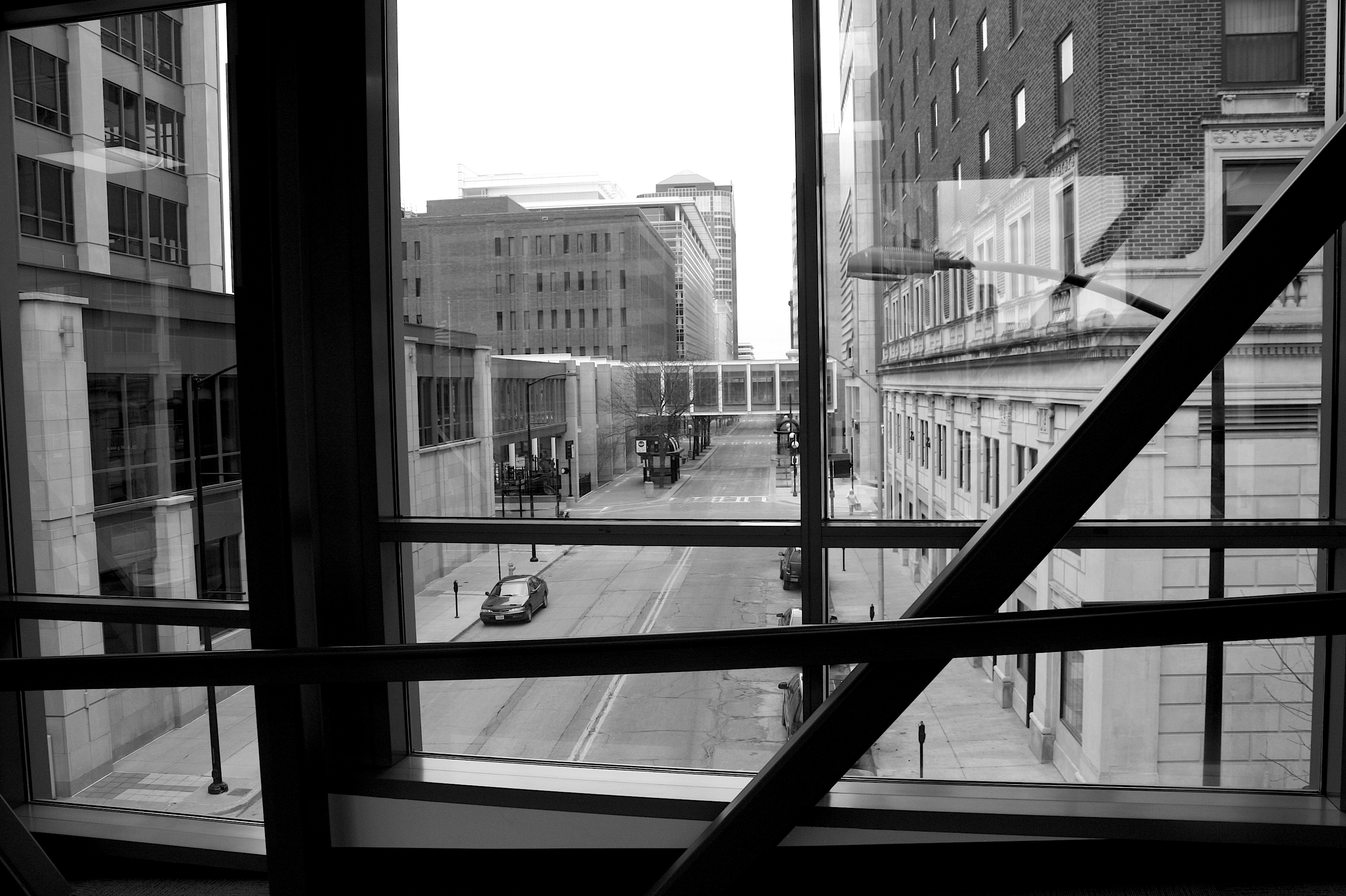
Elbert explains something I noticed: A lot of the buildings connected by the skywalks are vacant. Insurance companies Wellmark and Aviva left downtown in 2010 and as a result those spaces are vacant; the relocation of those workers has forced some retailers to close down as well. Elbert says the Keck Building is in foreclosure.
 One thing I’ve always noticed about the skywalks is that they’re not easy to get to from street level unless you know the system. I know you can access them on Court Ave. upstairs from Court Avenue Brewing Company, from the parking garages, and from the Marriott and other hotels. But I might have a hard time finding access elsewhere.
Part of the time I was in the skywalks I wasn’t sure exactly where I was, but it’s fun to pop out and see a street scene of, say, the State Capitol building, Java Joe’s, a river bridge, or a eclectic apartment building.
 If you decide that a walk through the Des Moines skywalks would be an interesting adventure on a cold or rainy day, you shouldn’t have any trouble finding your way through. Signage, though outdated in sections, is plentiful and maps are located throughout the system.
A blogging milestone
When I hit the “publish” button on my most recent blog, I was surprised to learn that it was my 100th blog post. So then I figured this was a good excuse to talk about some random stuff.
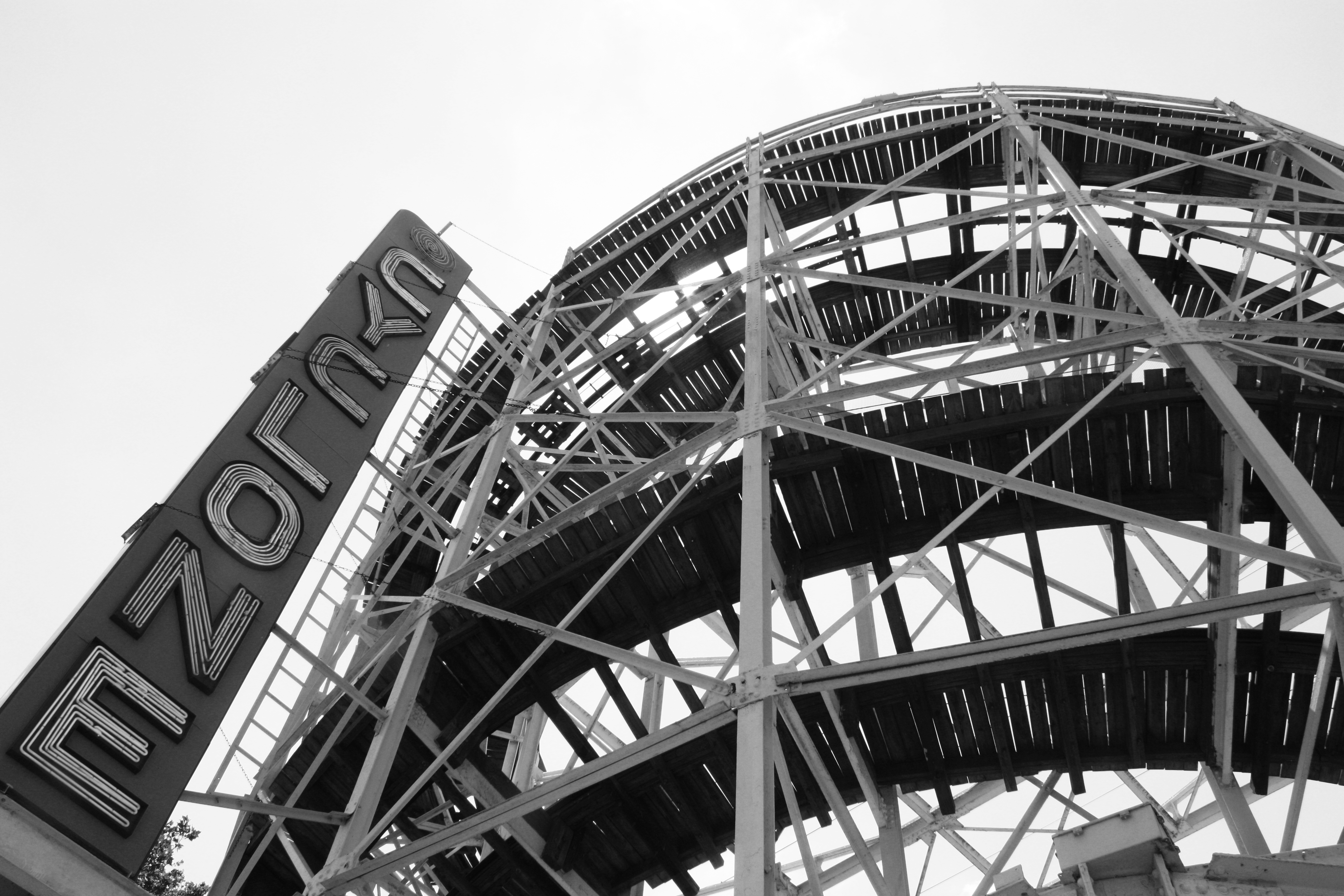
Random note No. 1: I’m shocked by the fact that three people have contacted me wanting to use photos from my blog. I am not a professional photographer, so I didn’t expect this. The first one was a request was from a young woman named Traci from New Orleans who wanted to give her fiancé a print of the Cyclone roller coaster at Coney Island for a wedding gift. She said, “I tracked you down from the information on your blog – the power of the Internet is amazing (and scary!), isn’t it. I have been searching and searching for a black and white photograph of the Cyclone Rollercoaster at Coney Island when I finally stumbled upon yours. It is by far the best I’ve found – and I’ve done a lot of looking!” Of course, I immediately sent her a high-res file so she could print it for her sweetie. That experience made me smile for a week!

The second person was the special sections editor from the Cedar Rapid Gazette wanting to use my photos from Kalona, Iowa. And the third request was just this week from a woman who works for the Department of Cultural Affairs wanting to use my photo of the High Trestle Trail bridge at sunset for the cover of one of their publications. Well, sure! I’m happy to oblige.

Random note No. 2: This one is called “why I’m such a slacker.” If you’re a regular reader, I hope you’ve noticed that I’ve become a very lazy Iowa Girl blogger. I’m attributing it to my extra workload at the office. I’m traveling to all 50 states to do stories on Iowa State alumni. While in a way that gives me lots of fun things to write about, it has also kept me from doing “regular” Iowa Girl stuff. Because when I’m not on the road, I’m catching up on work, writing stories and editing photos from the last trip, planning the next trip, etc. I knew when I started this project that I’d be working nights and weekends to keep my head above water – and that I also would not be able to trot around the state doing fun Iowa Girl stories. I mean, something’s gotta give. So bear with me.
The winter that wasn’t

I was hoping to pull out my snowshoes this weekend since we got some (very wet) snow on Friday. But I waited too late. With this afternoon’s high of 50 degrees, trails in central Iowa are muddy, not snow-covered.
Most winters, Iowans are talking about how cold and snowy and nasty it is. This winter, all we can talk about is how lucky we are not to have snow and cold.
I will admit that I don’t love driving on snow- and ice-covered roads, and I don’t enjoy extended bitter cold. But this winter, with no snow on the ground, the landscape is so bleak and brown and dull that I am just craving snow – lots of snow. Snow that won’t melt after one day.
I want to use my snowshoes at least once before spring. Is that too much to ask?
Hawaii
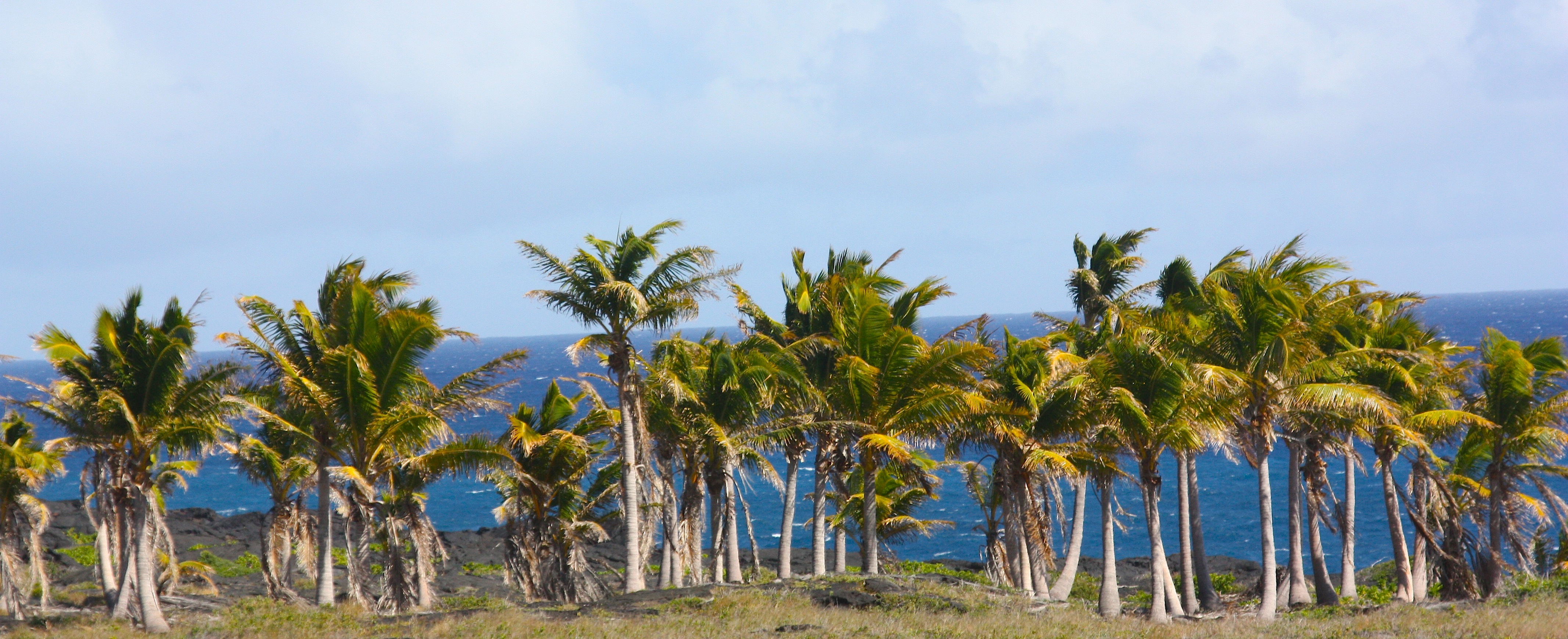
I had the good fortune to travel to Hawaii last week on business. (Yes, many people have reminded me lately that I have the best job in the world.) The trip was part of our alumni magazine’s 50-state project that began last fall and lasts two full years. Hawaii is just the fifth state on our list, so we have 45 more to go.
Hawaii is the only state I’ve never visited before. I had a goal a few years ago to visit all 50 states before I turned 50, but that deadline came and went. I had a hard time getting excited about traveling to a state that cost so much and took so long to reach.
Now that I’ve been to Hawaii, I’m happy to say I’ve crossed it off my list. It’s a beautiful place to visit, and the islands have seemingly unlimited geologic features and gorgeous weather. But, all things considered, it’s just another state. I think almost every state has its own set of unique charms.
We (my husband Dave, photographer Jim Heemstra, and his wife Sue) arrived in Honolulu late on the afternoon of Feb. 8 after getting up at 3 a.m. and traveling on three airplanes. We were pretty pooped and not in the mood for the traffic we encountered between the airport and our hotel in Waikiki. It took a good hour to get to the hotel. Once we checked in, we were ready for a beer and some food – and then sleep, since our internal clocks were reading midnight by that time.

Waikiki reminded me a lot of Los Angeles: touristy, beachy, expensive…with too much traffic. We spent three nights there and had a difficult time finding local food to eat, or even a restaurant that wasn’t part of a chain. The beaches were pretty, however, and we enjoyed watching the sunsets.
 Day 2 was a workday, but not until the afternoon. That morning, Dave and I took the bus (actually two buses) to Manoa Falls, about 45 minutes from our hotel. We were promised a .8-mile hike through a rain forest with a falls at the end. About halfway up, I regretted the decision to do a rain forest hike on a workday. I was sweating like crazy and had mud caked on my shoes and up my legs. This was a bad idea! The trail was slippery and uneven. I climbed at a snail’s pace. About two-thirds of the way up, I decided that at the pace I was going (and the potential for falling on my butt all the way back down the trail) I would never make it back in time for my interview. So I waited on a flat spot while Dave climbed the rest of the way up and back. We both made it back to the bottom without falling, but we were both very muddy.
 At the trail entrance was the Lyon Arboretum and Botanical Garden, which is a part of the University of Hawaii-Manoa. If I had it to do over again, I would have spent all of my time there, clean and dry.
We made it back to the hotel (on our two buses) in time for a quick lunch and for me to change out of my sweaty outfit. My sneakers are still muddy; I think I may just have to buy a new pair.
Jim and I spent the afternoon at the Battleship Missouri Memorial in Pearl Harbor being treated like royalty. An Iowa State alum was the director of the memorial for many years, and we had arranged to meet him on the ship for an interview and photo shoot. In order for tourists to reach the memorial, they normally have to board a shuttle at the visitor center. Bags are not allowed. So we made arrangements with the marketing department to allow us to drive onto the site.

A Navy public affairs officer escorted us across the bridge and we had complete access to the ship. I ordinarily don’t have much interest in military ships but this one was really impressive, and I enjoyed our visit. (Dave went the next day and visited each of the Pearl Harbor historic sites, which would have been way too much for me.)
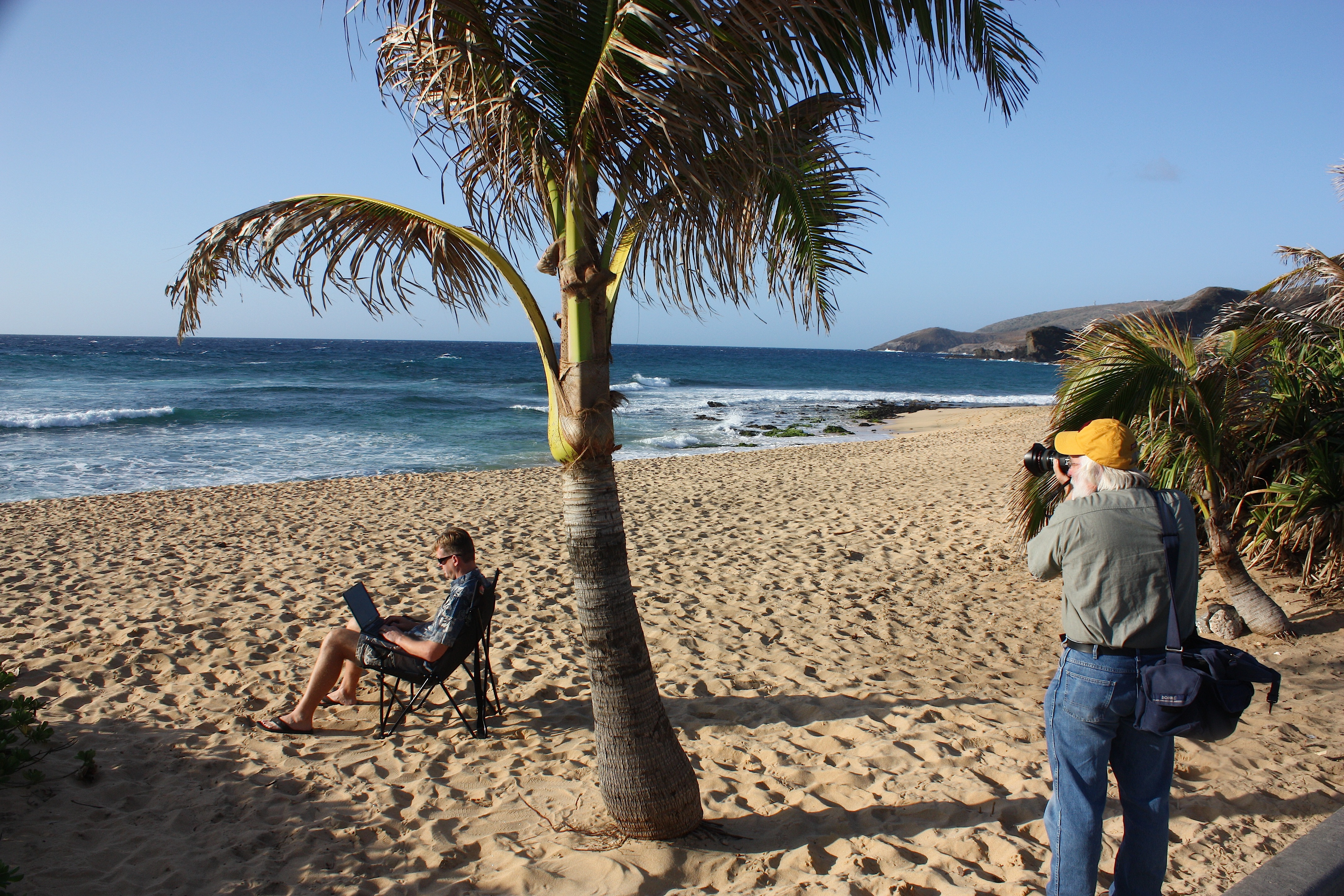 Day 3: Early the next morning we visited another Iowa State alum at his home in the Hawaii Kai area not far from Honolulu – but it seemed a world away. The homes in this area surround an ancient fishpond now formed into a tidy marina. For the photo shoot, we went to nearby Sandy Beach State Park, which seemed almost too good to be true. Only a few swimmers/surfers/sunbathers were in the area, so we mostly had the beach to ourselves. I think it was the first time I ever did a photo shoot in the sand. That’s Jim shooting Garret Pick on Sandy Beach, above.
Before the next interview, we had time to explore the town of Kailua in Windward Oahu, just 30 minutes along Route 61 across a mountain from Honolulu. It’s a small, funky town with more VW buses than I’d seen in a long time. We had lunch outside at a small market that served pastries, sandwiches made to order, soups, and deli salads. They also had a nice wine and beer selection – tempting, but we had to work. We drank cups of good Kona coffee instead.
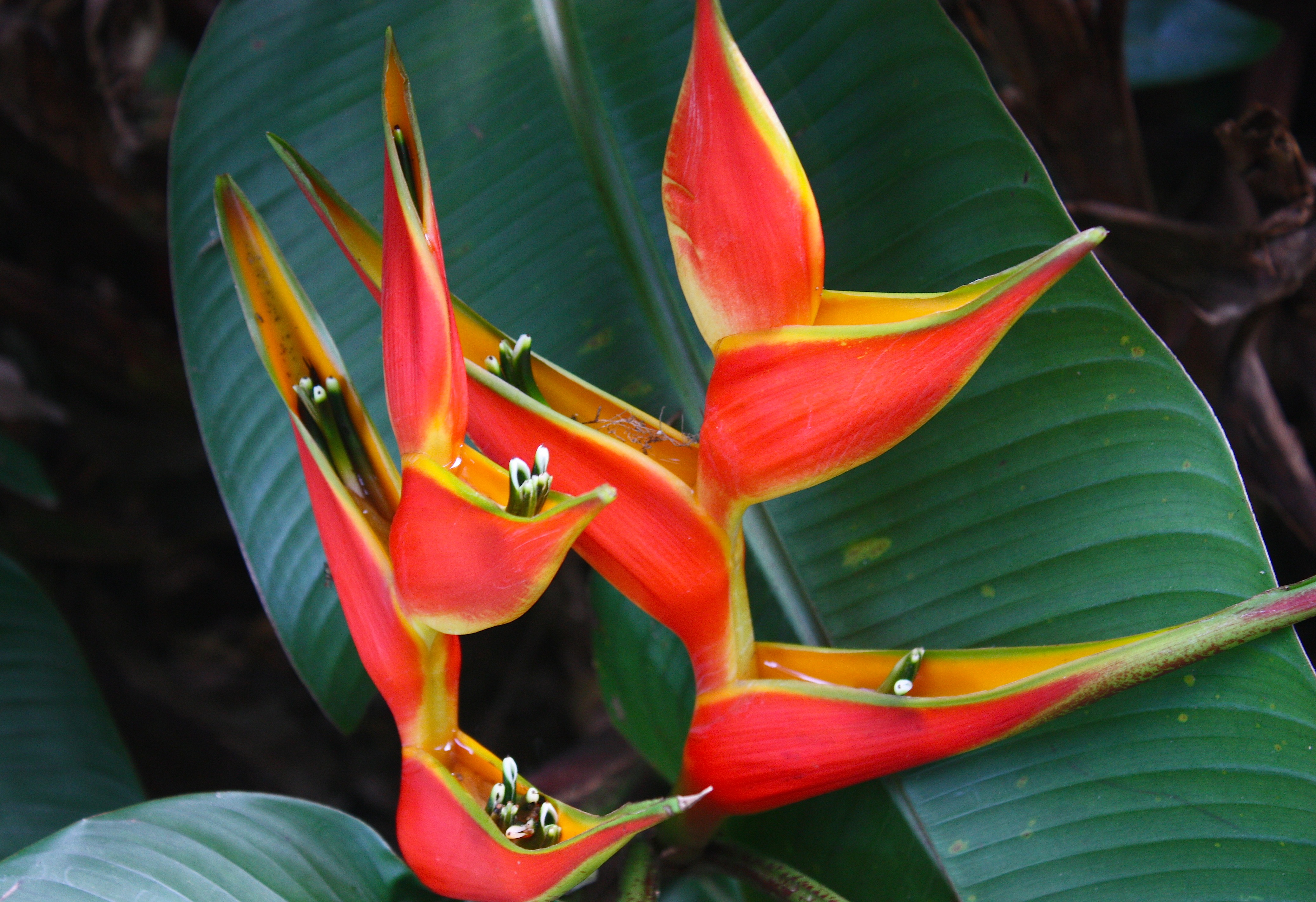
We quickly visited a beautiful botanical garden in the area, filled with plant species I’ve only seen inside domed botanical centers and zoos. We only had about half an hour to tour the grounds, but it was in such a lovely setting that I could have stayed there all day.

Tonight was our last night in Waikiki, and we savored the sunset.
Day 4: Early the next morning, we dropped off our rental car at the Honolulu Airport (goodbye, Honolulu traffic!) and flew to the Kona International Airport on the Big Island of Hawai’i. Initially, these next few days were to be vacation days, but we did have a little business to take care of first. Our alum from Kailua owns and manages macadamia orchards on the Hilo side of the Big Island, and the promise of a photo shoot in a macadamia orchard was too good to pass up. We drove the northern route across the island, stopping quickly for lunch in the town of Honoka’a. The climate and geography change is dramatic from the Kona side of the island (dry, arid) to the Hilo side (rain forest), and some of the views as we got closer to Hilo were breathtaking.
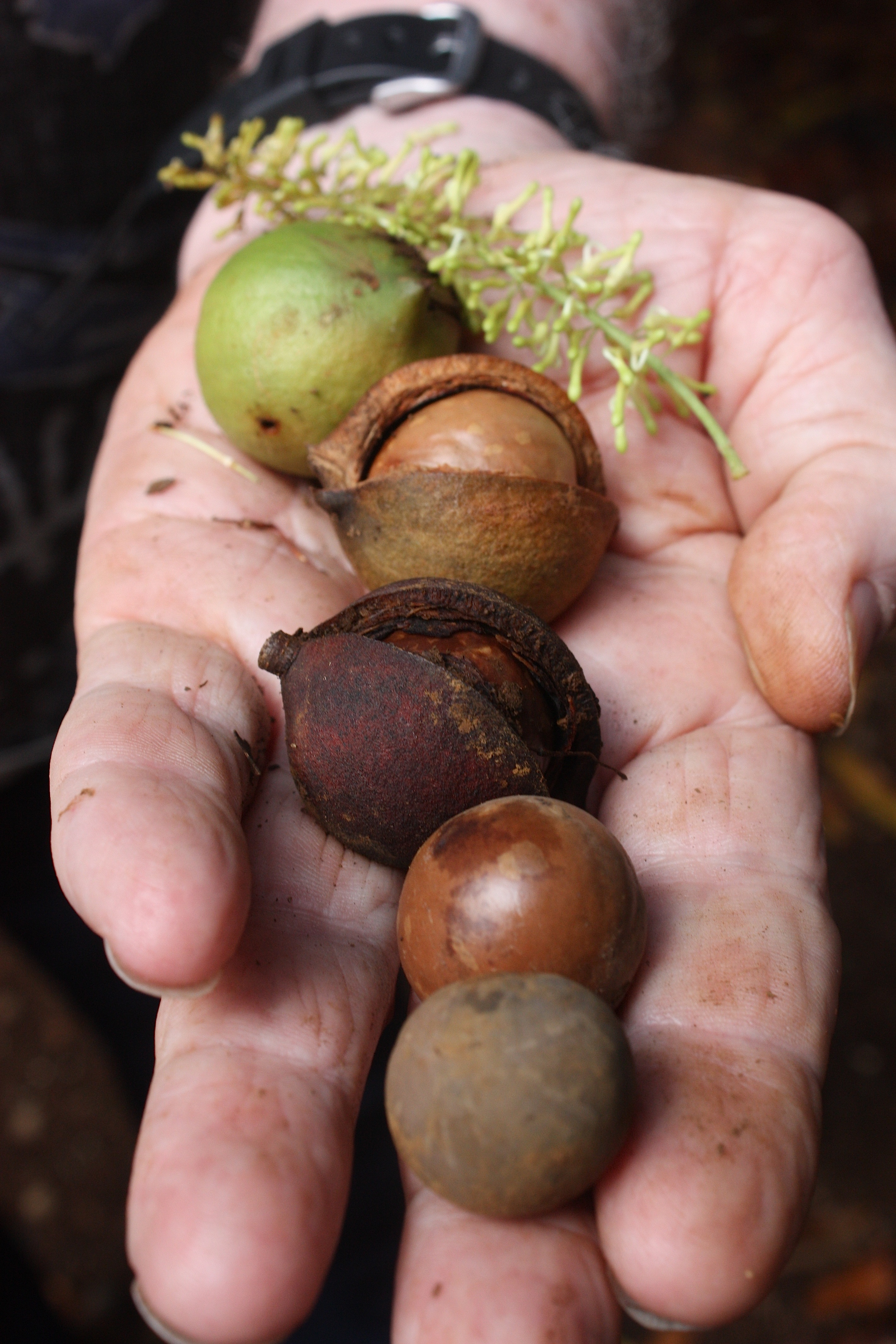 The macadamia orchard is near the town of Pepe’ekeo, and the area just steamed with humidity and green-ness. The macadamia trees are nearing the end of their growing season, but we were able to see nuts still on the trees and on the ground where they are harvested by hand.
Once we finished with the photo shoot, we went our separate ways. Jim and Sue had lodging reservations in Hilo; Dave and I headed back to Kailua-Kona (not to be confused with Kailua in Oahu. Not to be confused with the gazillion other town and street names in Hawaii that begin with the letter K.)
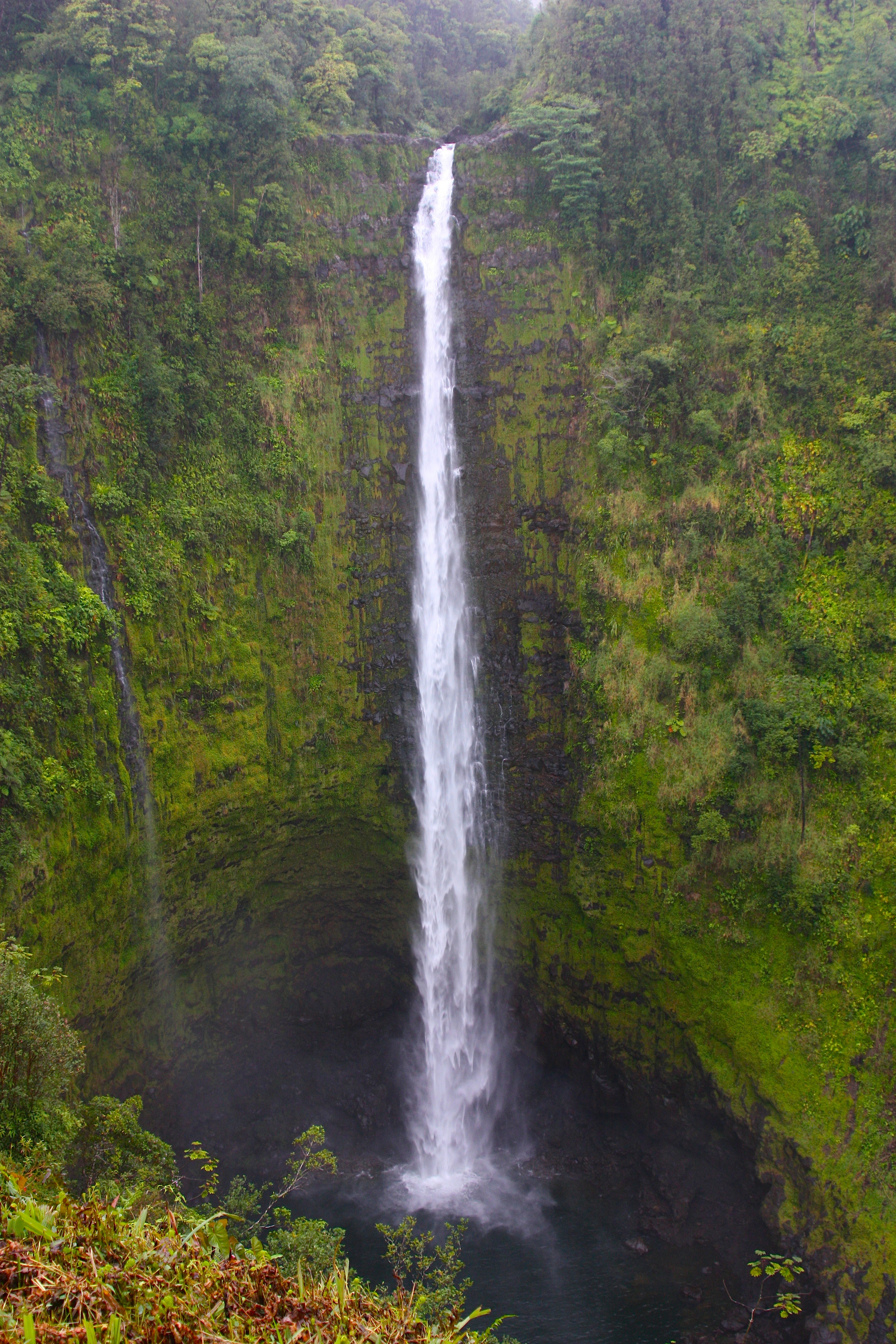 En route to our hotel, we stopped at Akaka Falls State Park. This was a very different falls experience from the Manoa Falls hike. For one thing the Akaka trail is completely paved, with steps and walkways to two falls. The rain forest is much more lush and more beautiful than Manoa Falls. And although I didn’t make it to the actual Manoa Falls, Dave assured me that Akaka Falls kicked butt in comparison.
On our drive back to Kona, we took the Kohala Coast highway but didn’t find it particularly beautiful. Kailua-Kona itself is a resort town, so that means lots of tourist bars with expensive drinks and very little “authentic” cuisine. We didn’t spend too much time in town. But our lodging, the Wyndham Kona Hawaiian Resort, couldn’t have been better. So much space! We had our own patio with a dining table and lounge chairs, a huge living room, kitchen with bar seating, two bedrooms, two full baths with showers, and a claw-footed bathtub with jet sprays. Heaven!
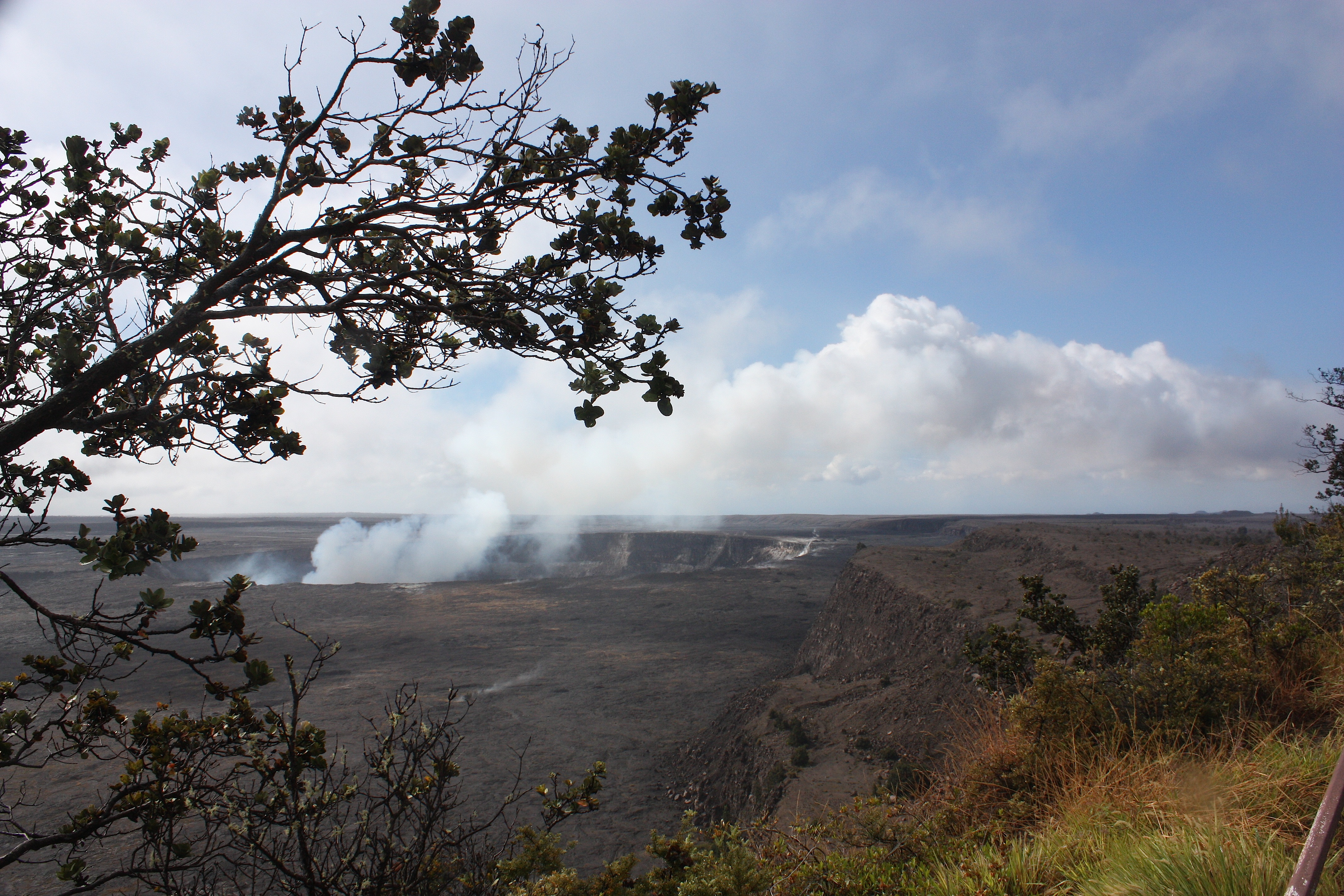
Day 5: We spent a full day in Hawai’i Volcanoes National Park. This is a place I’ve wanted to visit for years. I haven’t been to every national park (not by a long shot), but I imagine this one is unique unto itself. The park’s environments include alpine, rain forest, desert, active volcanoes, craters, and rugged coastline.

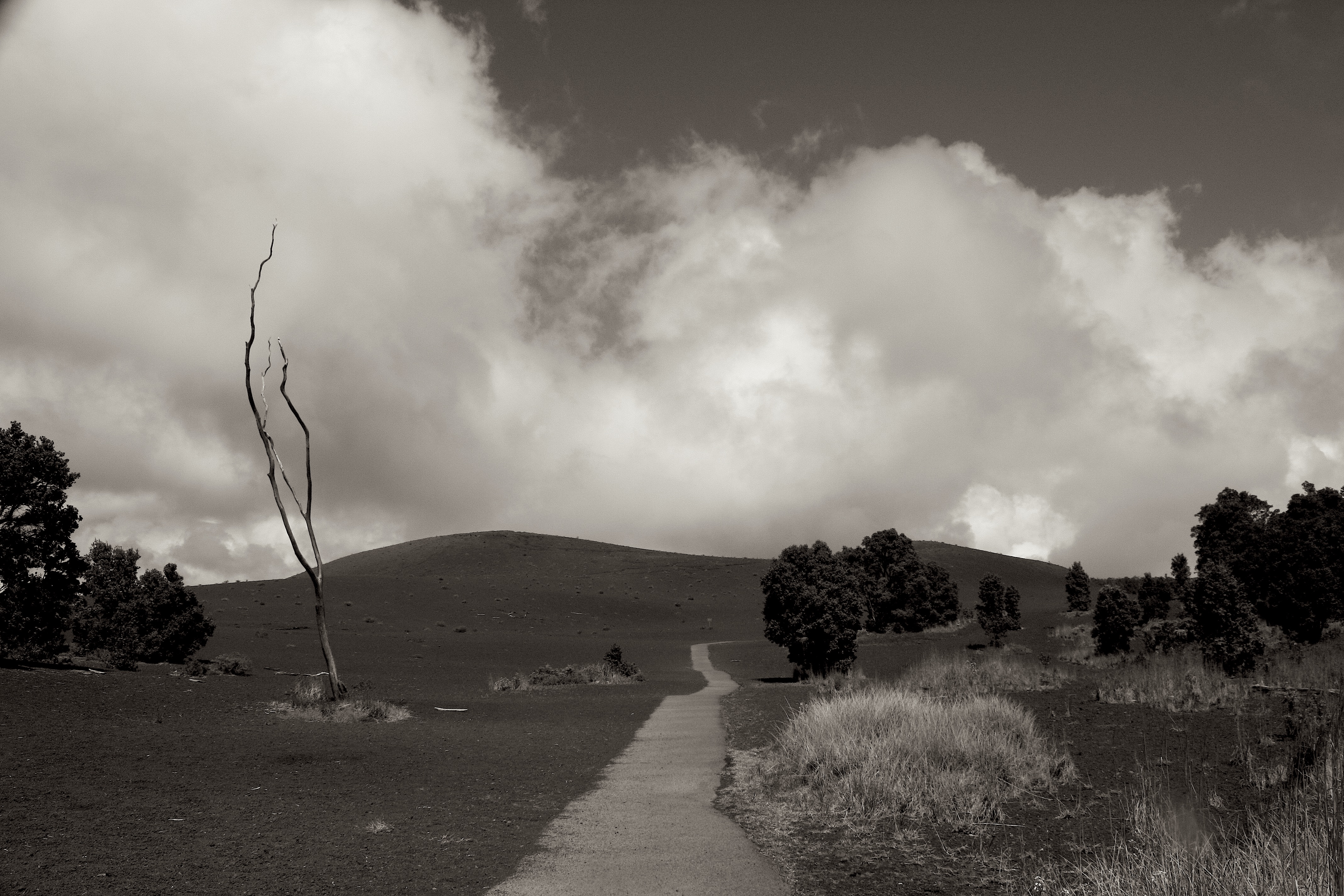
We began our tour by taking the Crater Rim Drive – at least as much of it as we could. About half of the road was closed off due to high amounts of dangerous sulfur dioxide gas. We stopped at overlooks, viewing the Kilauea Caldera from many different angles. We hiked part of the Kiluaea Iki Crater trail, viewed steam vents (above), walked through a 500-year-old lava tube and its surrounding rain forest (stunning!), and hiked the Devastation Trail, a landscape buried by cinders from a 1959 lava fountain eruption (below).

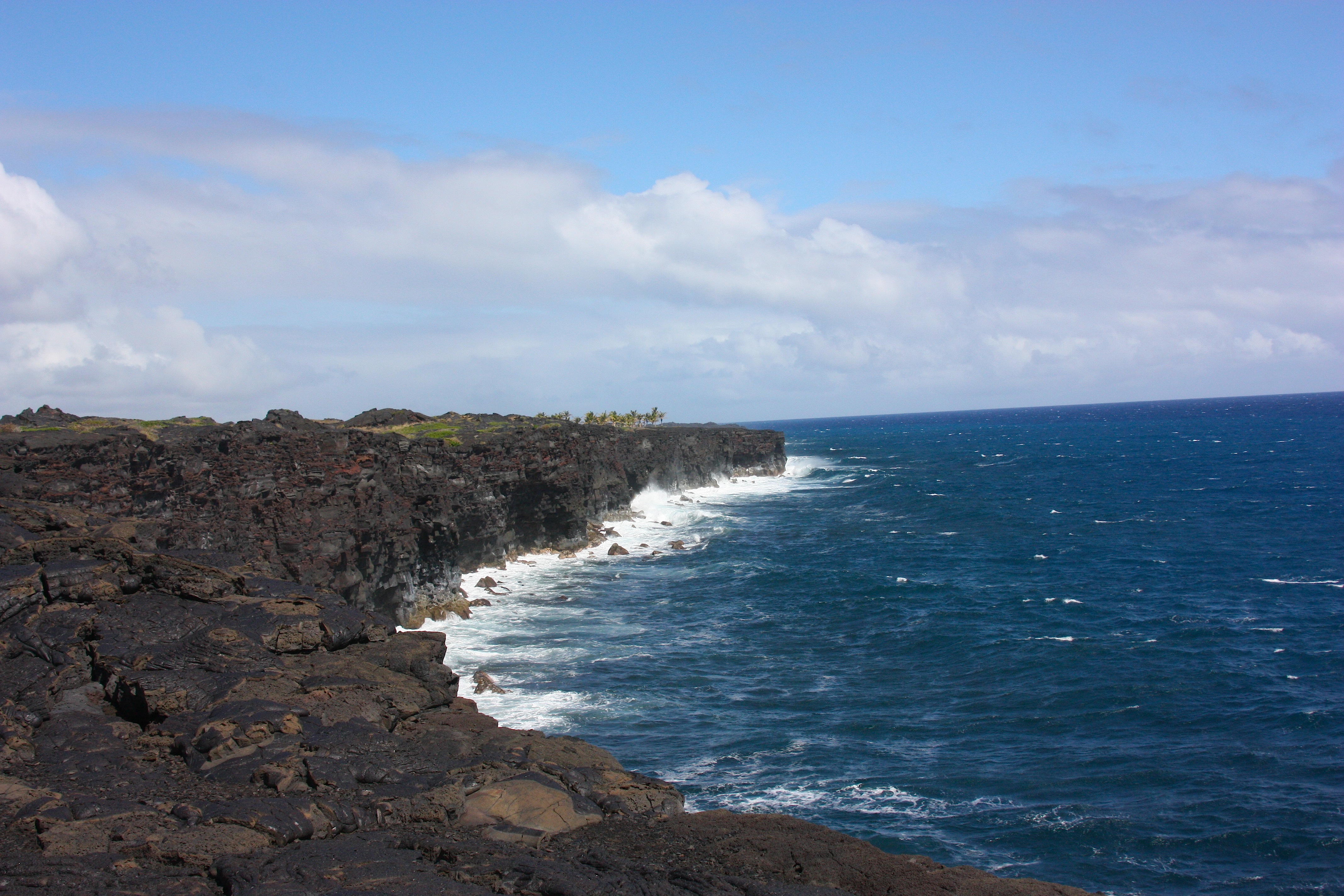
Next we took the Chain of Craters Road that leads to the sea. That’s the big payoff – the Holei Sea Arch and recent (2003) lava flows that cover the end of the road – but along the way we stopped to view a number of unique environments created by volcano activity. Much of the ground looks like the top of a pan of brownies – the cakey kind that crack on top.
The drive to the national park is 2-plus hours from the Kona coast, along the south side of the island. The road is narrow and curvy, and we didn’t want to risk driving back after dark, so we headed back. (Advice: If you want to spend multiple days at the park, or at least one long day, stay in Hilo – only about 30 miles – or the small town of Volcano Village located right outside the park.)
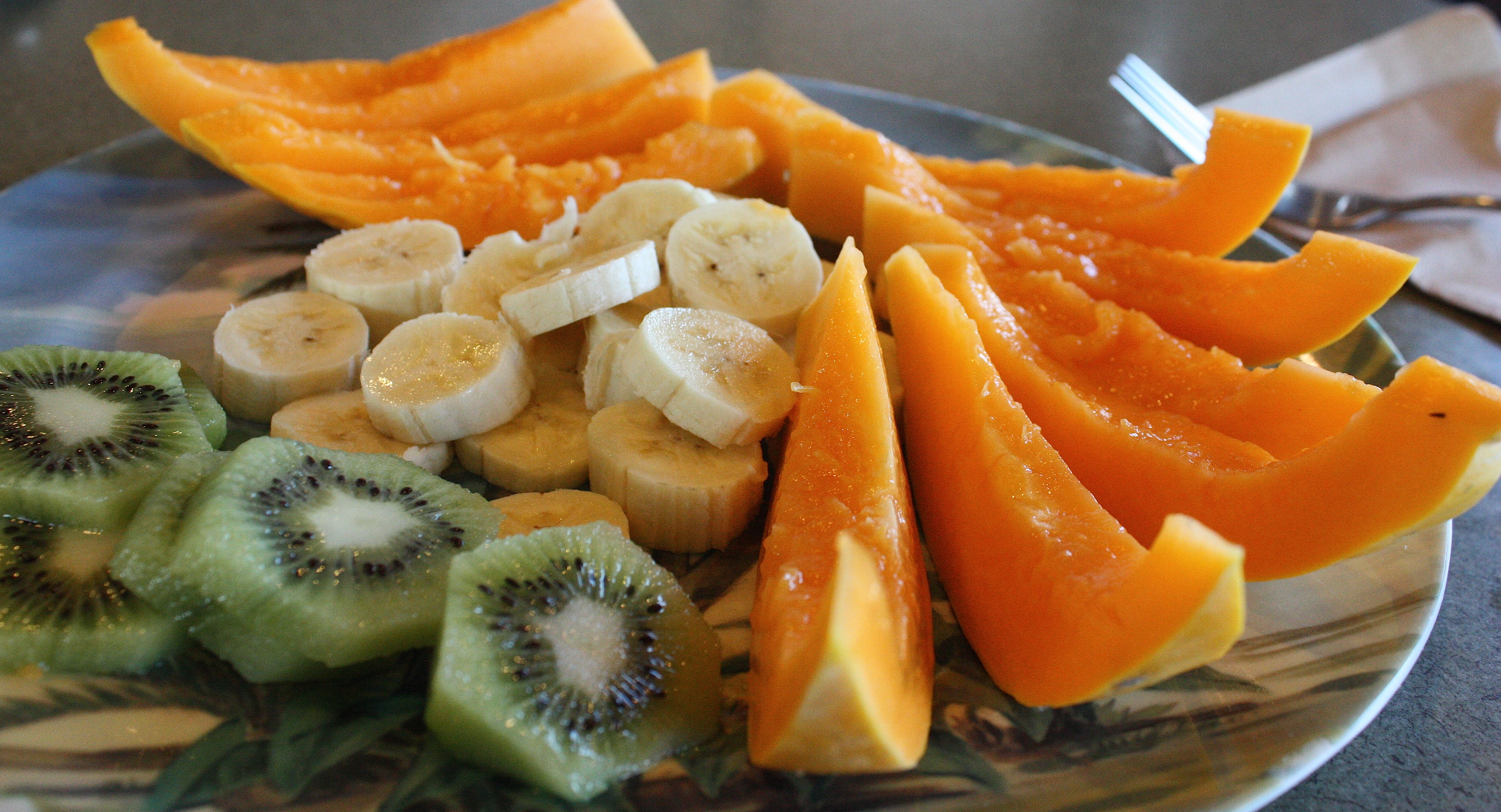
Small towns dot the highway, and we stopped both on the way (for breakfast — see my plate of fruit above — and later for the day’s provisions) and on the return drive (for ice cream and iced coffee). We passed by several stands selling local fruits and vegetables. We stopped by one not far from Kailua-Kona and bought some apple bananas, star fruit, and a gigantic avocado for breakfast the next day.

That night, after watching the sunset, we ate and drank at a Mexican restaurant near the beach. After a long day in the park, it was a relaxing evening.
Day 6: Today we considered taking the northern route back to the Hilo side of the island (to see another waterfall and a botanical garden), but after being in the car for so many hours the two previous days we decided to stay on the Kona coast. We slept late and ate fruit on the patio, then went to the Pu’ukohola Heiau historic site run by the National Park Service. It was about 30 miles up the coast, and I can’t recommend visiting it.

Next we went straight up a mountain outside Kailua-Kona to the Mountain Thunder organic coffee plantation – at 3,200 feet. It was cool and rain-foresty up there, and we took a fun tour of the coffee plant. Bought a very expensive bag of coffee, too. I guess you could say that was my souvenir from the Big Island.

The rest of the day was leisurely: eating a late lunch, sitting by the pool at our resort (above). We dressed up for dinner that night, the first time I’d changed clothes for dinner since we arrived. It was kind of nice – although dress is so casual everywhere you go on the islands that you certainly don’t need to dress for dinner.
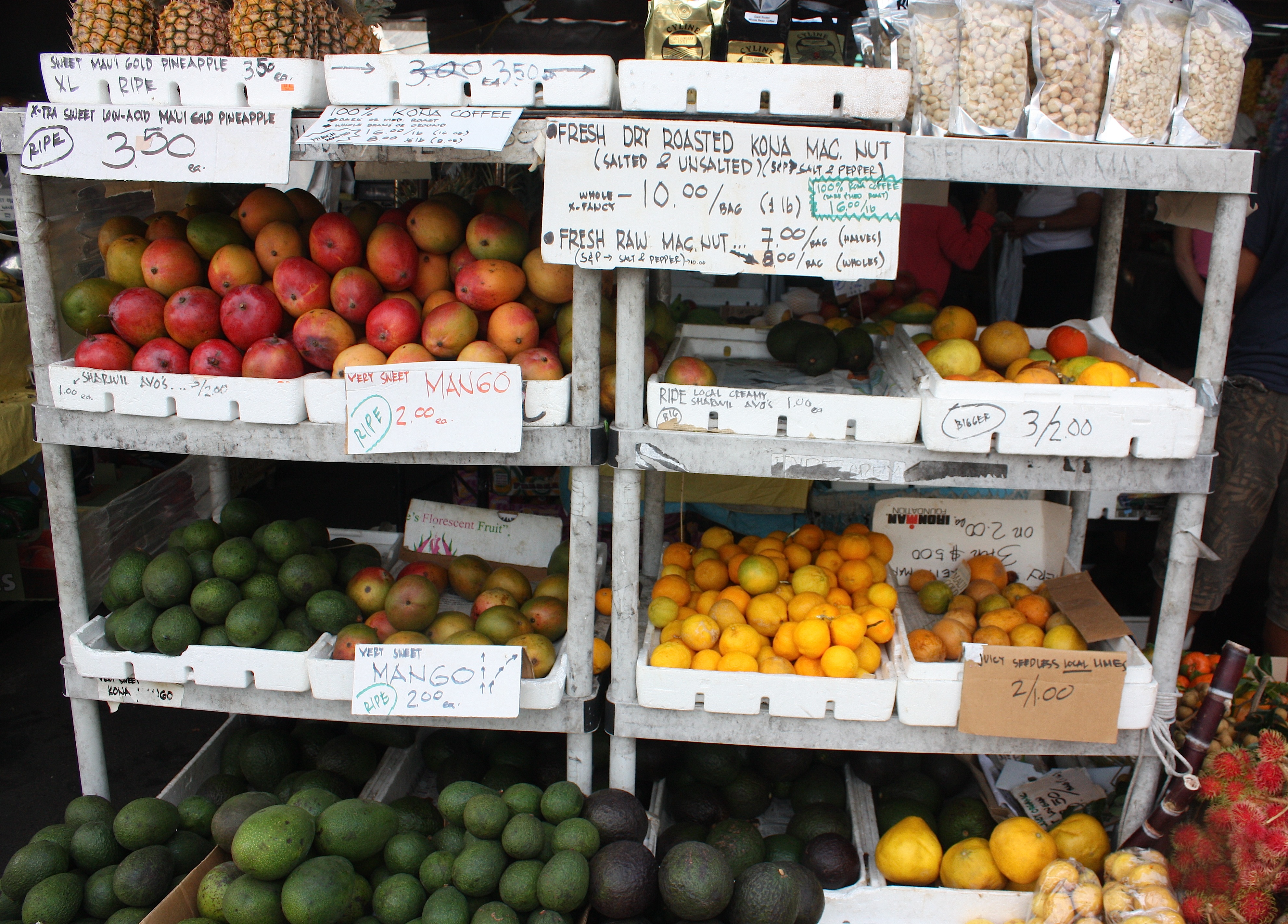
Day 7/8: We started our last day on the Big Island at the Kona farmers’ market. I had been itching to see a real Hawaiian farmers’ market since we arrived. They are everywhere! But not at the times and places where we happened to be. I was happy to get to this market but disappointed in the amount of local food vs. the number of Hawaiian shirts and tacky trinkets for sale. I bought a pineapple, a papaya, and a mango and took it all back to the resort to eat. I am a new fan of papaya – it’s incredibly good when it’s fresh. The mango was OK, but not great. The pineapple was wonderful.

We needed to be out of the hotel by 10 a.m., so we packed the car and checked out. Our plan was to go to the Kaloko-Honokohua national historic park just south of the Kona International Airport. It turns out that this is a great place, and I wish we had visited it the previous day because (like the Manoa Falls hike) I got very sweaty and sticky and smelly – not a good way to start a full day/night of air travel. Nevertheless, this was a fun place to walk. We saw a sea turtle and beautiful shoreline and crashing waves. It would have been a perfect place to spend a day walking in the sand, reading a book, and catching some rays.

Our last meal on the Big Island was at a Thai restaurant that (gasp!) actually had a vegan section on its menu. Wow! After that highlight, the rest of the day/night/next day was completely downhill, with four flights, a long layover in the Honolulu airport, and utter jetlag by the time we arrived the next afternoon in Des Moines. It’s hard to believe you can travel that far and still be in the United States!
Moscow Festival Ballet

I caught the performance of the Moscow Festival Ballet’s “The Sleeping Beauty” in Ames during the company’s tour last week. I will say right up front that I am no ballet expert, but I’m pretty sure this was one world-class performance. From the costumes to the set design to the principal dancers, this ballet was sheer perfection.
It helped that the storyline was familiar. The ballet tells the tale of Aurora, the infant princess condemned by an evil fairy to prick her finger and die on her 16th birthday, and of the good fairies’ spellbreaker that allows Aurora to only fall into a deep sleep — to be awakened by love’s true kiss.

The music by Tchaikovsky is also very famous, of course. My only slight source of disappointment is that the ballet company did not travel with a full symphony orchestra — that would have been impressive but, I’m sure, cost-prohibitive. The prerecorded music was excellent and, from where I sat, hard to distinguish from the real thing.
The full-length ballet consisted of a prologue (introducing Aurora as an infant, the evil curse, and the good fairies) and three acts: “The Spell,” “The Vision” / “The Awakening,” and “The Wedding.” Plenty of familiar characters appeared, and the audience, which included a large number of young children, was obviously delighted.
Principal dancer of the Bolshoi Ballet Sergei Radchenko founded the Moscow Festival Ballet in 1989. The performance in Ames was part of the Stephens Auditorium 2011-2012 Performing Arts Series.
Winter Blues Fest
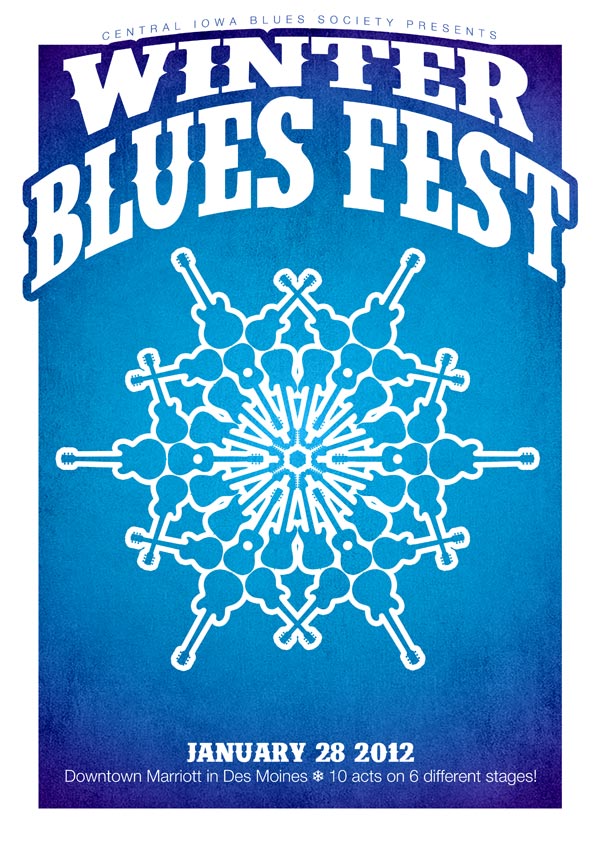 The Central Iowa Blues Society 2012 Winter Blues Fest was held last night in the downtown Des Moines Marriott with 10 bands and individuals performing on six stages.
It was quite the deal — very different from other blues festivals I’ve attended in Des Moines. Those were held in the Court Avenue district, with bands performing either in an outdoor venue (the summer version) or in various bars throughout the area (winter version).
For a winter venue, the Marriott worked great. You can park your car anywhere downtown and access the hotel through the skywalk system, thus staying warm the entire way. The CIBS did a good job of scheduling the acts so you would watch one set, then when the band took a break you could go to another room and another group would be in full swing. Of the four bands I watched, each was unique in its blues style and performance, from soulful to hard rocking to sleek and stylized to full-on boogie.
We started with the Lil’ Slim Blues Band, the 2011 Blues Society of Omaha blues challenge winner. The lead singer had a great voice and was an amazing lead guitarist. Of the four, this band was probably the truest “blues” band and definitely my favorite.
Moving on, we went to the Dubuque Room to see Eddie Turner and the Trouble Twins, an unlikely name for a band made up of three of the most different-looking guys you could imagine. Perhaps the name was supposed to be ironic. The lead singer, Eddie Turner, had the most unusual hair style I believe I’ve ever seen. It reminded me of one of those dogs at the American Kennel Club dog show that looks more like a sheep than a dog. He was sporting lots of bling-y jewelry and a deep voice. When he was on lead vocals, the band was more rock than blues. But switch over to the drummer on lead and you got a completely different, much more bluesy sound. The drummer, wearing vintage sunglasses and a beret, looked more like a poet or an English prof but, man, he could wail on the harmonica (while still banging on the drums).
The third band, Connie Hawkins and the BluesWreckers, was a finalist in the 2011 Kansas City Blues Society Challenge. A six-piece band, Connie shared lead vocals with her husband. My favorite performer in this upbeat group was probably the keyboardist, an older guy with a hat and a very happy attitude.
The blues played late into the night, but I only managed to see one more band before allowing the ringing in my ears to send me home at 10:15. The last band, The Candymakers, was made up of considerably younger musicians and provided the slickest-looking (i.e., black suits, red shirts, and black ties) performance of the evening. More jazzy than bluesy at times, the Candymakers (winners of the 2011 Iowa Blues Societies Blues Challenge) featured a saxophone player and a mean lead guitarist.
The Candymakers gave me a little hope that this musical style might live to see the next generation. All other indicators pointed to the opposite, however. Most of the other musicians I saw were middle-aged or older (some much older), and the majority of the audience was 40 and over. I’d like to think that blues transcends all age groups.
I should mention the other six bands that performed last night (and probably into this morning while I was soundly sleeping): Rob Lumbard, Bryce Janey, Lil’ Ed and the Blues Imperials, Bob Dorr and the Blue Band, Javier and the Innocent Sons, and the Bob Pace Band.
Let’s go to the movies
Winter is a perfect time to go to the movies. It’s a warm, indoor activity available pretty much anywhere you live. And many of the Oscar-worthy films are released late in the year, often on the coasts, and meander their way to the Midwest and other small markets as January progresses.
I’ve been on a real movie jag the past few weeks. I had in mind a few weeks ago to try to see three movies in one day at the Fleur in Des Moines. I had all the times planned out, and it would have worked, too. But instead we got a late start and went to just two films — which turned out to be plenty. They were “Young Adult” starring Charlize Theron and “The Descendants” starring George Clooney. Both films were really well done but both depressing in a lot of ways. I was sort of glad we didn’t see my third choice — “Melancholia” — which is about the end of the world. Talk about depressing!
 I liked Young Adult very much, mainly for the performances of Theron as Mavis Gary, an author of young adult fiction who lives in the Twin Cities, and Patton Oswalt, her former high school classmate who still lives in her hometown. Mavis is a high school “mean girl” who has never really grown up. She returns to her hometown to go after an old boyfriend because she’s learned he and his wife have just had a baby. Mavis’s delusions make her only somewhat sympathetic — mostly you can’t believe what a horrible person she is. Oswalt’s character provides a balance of humanity. The screenplay is by Juno’s Diablo Cody.
 The Descendants is set in Hawaii and features fine acting and a script with just the right amount of twists and turns to keep you interested but never jettisons off into a land of unbelievability. It’s simultaneously sad and funny, depressing and uplifting. The Hawaiian setting makes an interesting backdrop and plays an important role in the film’s storyline.
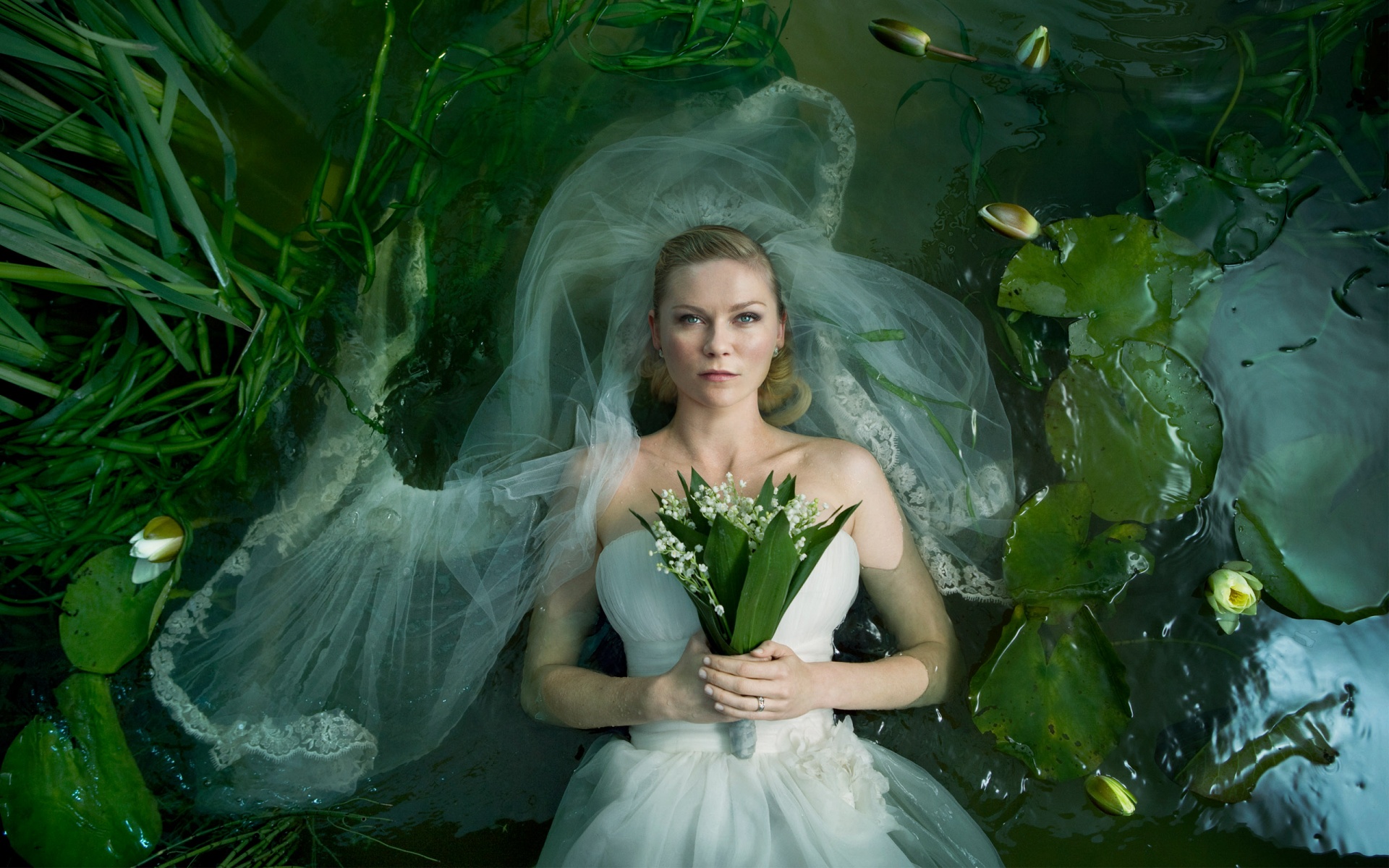 Melancholia stars Kirsten Dunst as a beautiful young woman suffering from depression. While others are in a panic at the impending collision of the earth by another planet, she embraces the fact. The movie is beautifully filmed, with a stunning score featuring music by Richard Wagner. Images of the film stay with you for a long time, and it’s difficult to look up at the sky in the same way again.
 The next film I really wanted to see was “My Week with Marilyn” starring Michelle Williams as Marilyn Monroe. The film is based on the tense interaction between Sir Laurence Olivier and Monroe on the set of The Prince and the Showgirl. Monroe’s vulnerability and the disparity between her true self and her Marilyn Monroe persona is fascinating to watch. A young “third assistant director,” Colin Clark, befriends Miss Monroe and helps her through the difficult film. Of course, he falls in love with her. She’s Marilyn Monroe — how could you not fall in love with her? I loved Michelle Williams as Marilyn and Eddie Redmayne as Colin and really just loved the movie from beginning to end.
 I missed “Moneyball” when it was a first-run film but caught it at the dollar show last week. I am not a sports fan but this is not, strictly speaking, a baseball movie. There’s plenty of baseball in it, but it’s much more similar to “The Social Network,” say, than it is to “Bull Durham” or “The Natural.” That should come as no surprise since Aaron Sorkin wrote the screenplay for both Moneyball and The Social Network. The excellent cast is anchored by Brad Pitt as Billy Beane, the general manager of the Oakland A’s baseball franchise, and Jonah Hill as a geeky economics graduate who turns the game upside down. I didn’t expect to like this film as much as I did. It’s intelligent and thought-provoking, and — I’ll be honest — Brad Pitt is really nice to watch.
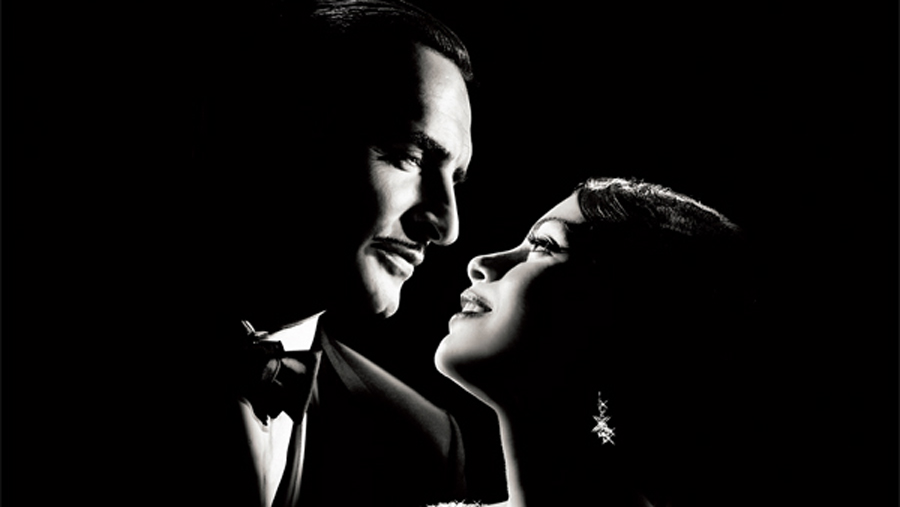 That brings us to the last film: “The Artist.” This film was not on my radar screen until last weekend when I watched the Golden Globe awards on television. It was raking in the nominations and seemed to have a very positive buzz in the audience. It opened in Des Moines on Friday, so we went to see it last night. It’s really an amazing film, like nothing I’ve ever seen before. I have to wonder how it ever got made — a black and white silent film in 2011? I would have loved to have been in the meeting where the film’s creator pitched that idea to the producers. But I’m so glad it worked out, because the story of silent movie star George Valentin and his long, slow descent into despair after the advent of talking pictures is an absolute joy to behold. It’s sweet and sad and funny and totally lovely from beginning to end. Don’t wait for this one to come out on DVD — it won’t be the same.


 Iowa Girl on the Go