Archive for the ‘Uncategorized’ Category
A late summer day at Reiman Gardens
 Leave a comment
Today was another splendid summer day — a perfect day to enjoy a visit to Reiman Gardens in Ames.
The main reason I went was to see the quilt show, but I ended up much less interested in the indoor quilt display than in the outdoor displays. It was just a really nice day to be outside.

Special this summer at Reiman is the “Nature Connects” display – sculptures built with Legos. The exhibit continues through Oct. 28, so you have plenty of time to see it. The exhibit features 14 individual displays with a total of 27 sculptures: a butterfly, lily pads and frog (below), dragonfly, bison, goldfinches at a bird feeder, a fox stalking a rabbit, hummingbird and flower (above), and several more. The sculptures, ranging from 530 Lego pieces to 45,000 pieces each, were created by Sean Kenney, a New York artist.
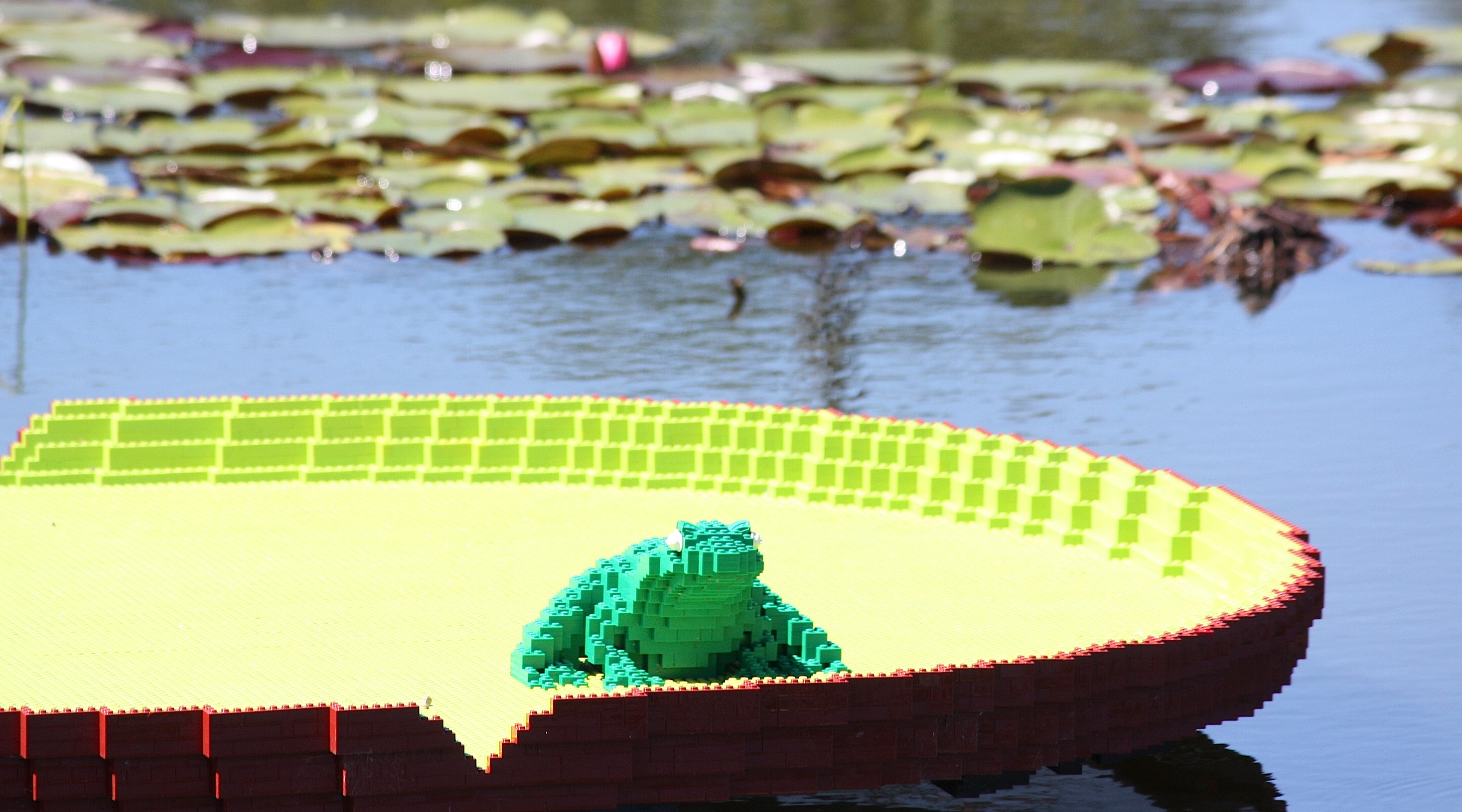
The Lego objects are whimsical and placed in the garden in appropriate places. They’re also fun to find. It’s almost like a scavenger hunt. There’s a brochure available at the front desk with the displays marked on a map if you want to cheat.
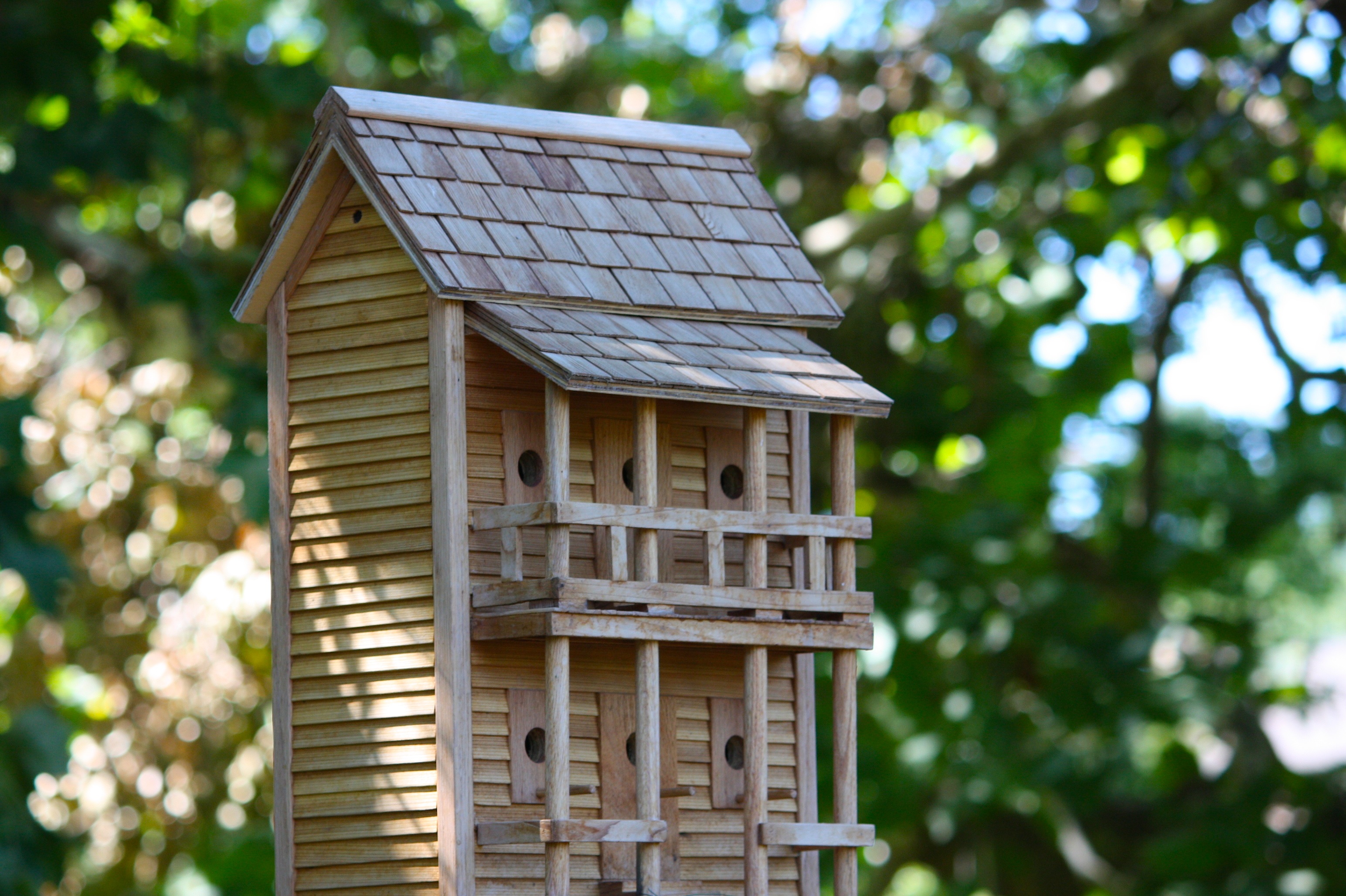
Besides the Lego exhibit, there are a number of other garden displays, such as “Animal Homes” in the Children’s Garden and “Building a Healthy You” in the Home Production Garden. The one I enjoyed most was “Bird Houses” in the Stafford Garden. Some of these are really well-designed and well-made. They reminded me a little bit of doll houses. Most of these special displays run through Oct. 14.
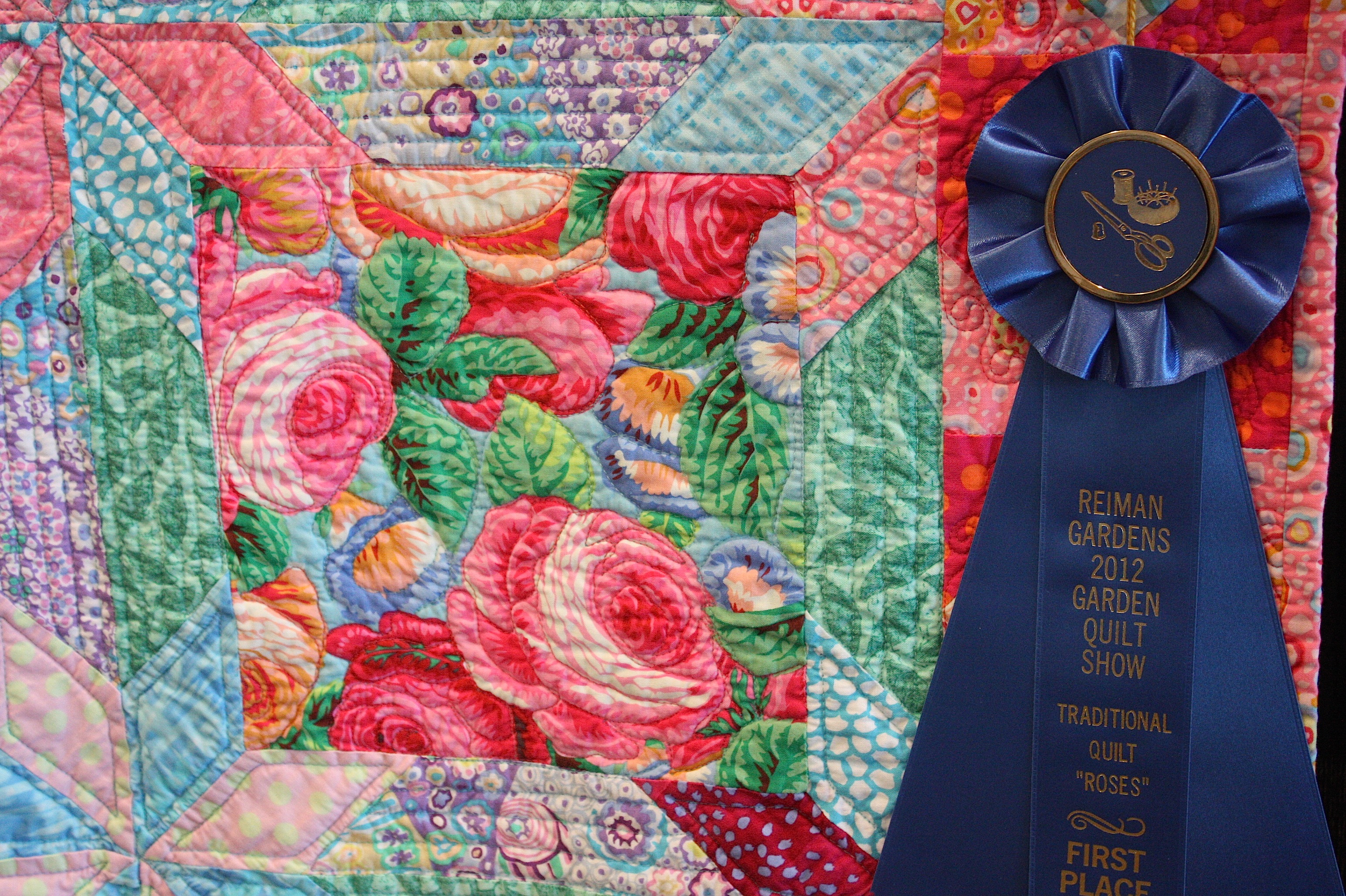 The quilt show was OK. My take on it was if you’re a quilter you’d like the show. Besides quilts on display there were tables filled with quilting products, fabric, tools, and whatnot. I breezed by pretty quick.
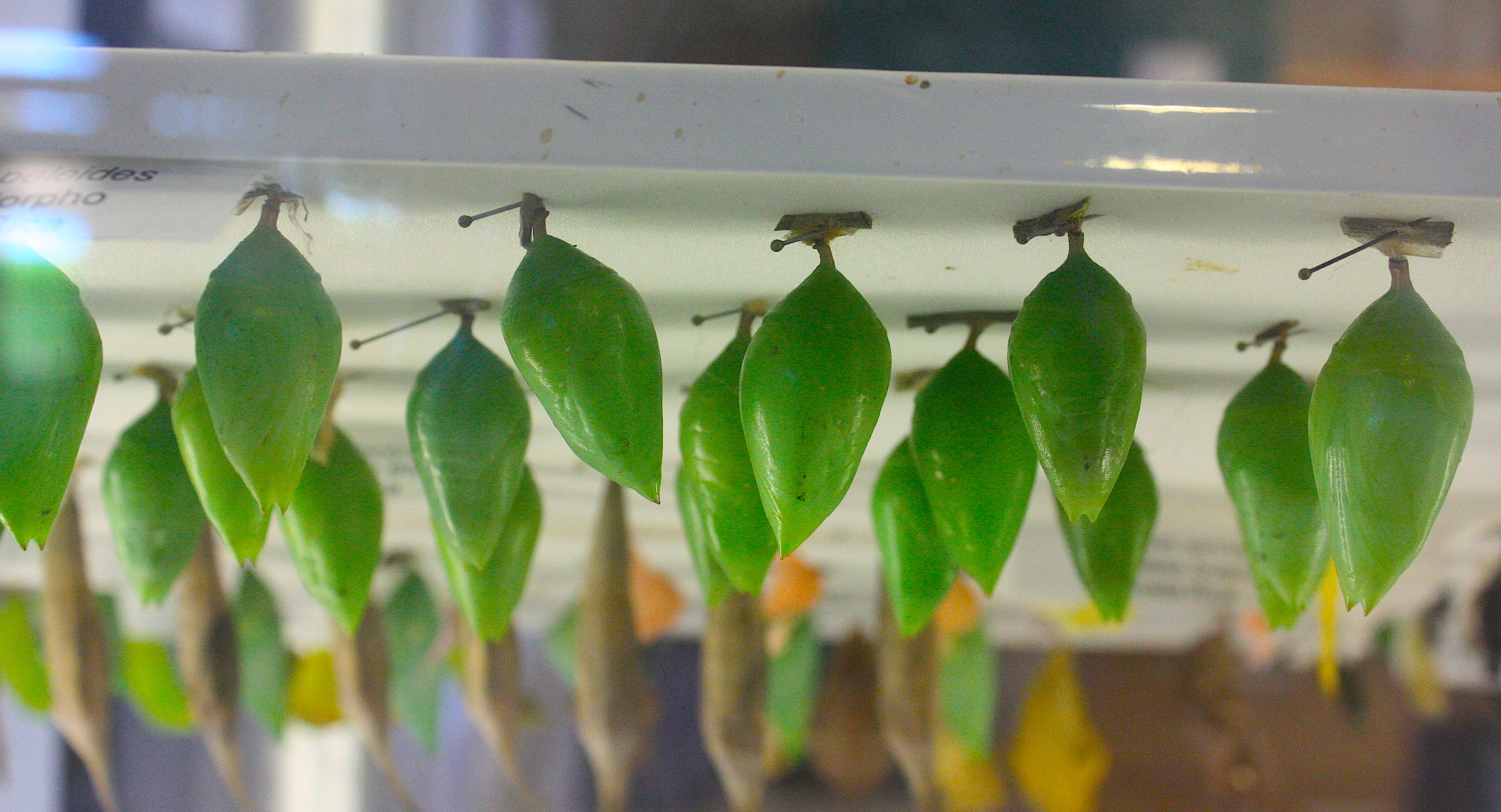
Last thing I did before leaving the Gardens was to peek into the window where the butterflies emerge from their chrysalides. Always fascinating! There were giant moths…but I really just love these dainty little green guys.
Santa Maria Winery

The heat finally took a break this week, and I celebrated by eating dinner on the Italian-inspired patio at the Santa Maria Winery and Restaurant in Carroll, Iowa.
Carroll is at least an hour away from Ames (straight west on Hwy. 30), but Santa Maria is truly a destination. What makes it stand out from other Iowa wineries is that it not only has large event spaces and a tasting room, but also a full-service restaurant open 11 a.m.-9 p.m. Mondays through Thursdays and until 10 p.m. on Fridays and Saturdays.
The menu includes sandwiches, wraps, wood-fired pizza, soups, salads, and (after 5 p.m.) a nice selection of pasta, steaks, and chops. You can also opt for one of the yummy-sounding appetizers, like Tuscan bruschetta, toasted reuben wedges, and mozzarella fresca kabobs.

A bistro in the spacious tasting room is open year-round. Friday night I opted to dine al fresco on the patio, but only after tasting some of the winery’s 25 varietals at the tasting-room bar. (Four 1-ounce tastings cost $3.50; for $2 more, you can keep one of the glasses.) The list includes red and white dry, semi-dry, and sweet wines plus a variety of fruit wines made from bing cherries, blackberries, plums, strawberry-rhubarb, and peach. I can’t vouch for the sweeter wines, nor the fruit wines, because they are not to my taste, but the dry wines were very good.
I started with two whites: a pinot grigio and the Riesling Reserve. Both were fine, although I enjoyed the riesling a bit more. But the reds were outstanding: Red Twilight and Barbera. I had tasted the Barbera before and I remember it being a really excellent wine, certainly on par with a good California red. I wish I could review the rest of the wine list for you, but four 1-ounce tastes plus a full glass of Barbera was plenty for me for one night.

Following the tasting (in a really wonderful space; the winery is located in the historic Wittrock car dealership building, and the restoration is amazing) we went out to the very pleasant patio for our dinner. We could not have picked a nicer evening: The weather was spectacular, and the crowd was just the right size. My husband ordered the sirloin steak dinner, which came with vegetables, a baked potato, a chunk of baguette, and a choice of soup or salad — a bargain at $14.99. He opted for a draft beer. I chose the pasta marinara with baguette and a very nice salad with poppyseed dressing and homemade croutons for $9.99. And, of course, a glass of wine. I also bought a bottle of Barbera to take home ($12.99).
Santa Maria Winery is owned by John and Rose Guinan. It’s definitely worth a drive for a tasting with friends or a getaway dinner.
A love letter to Whole Foods Market
Dear Whole Foods Market,
 I can’t believe you’ve finally come to Iowa.
I’ve loved you since I first walked through your doors in California in 1999. I loved your fresh flowers, your salad bar, your little individual to-go servings of crème brulee.
I’ve tracked you down from coast to coast: Texas, New York, Illinois, Ohio, Alabama, Colorado, Louisiana, Massachusetts, Virginia. I’ve shopped in your St. Paul, Minn., store so many times I feel like a regular.
Your Whole Foods Market Cookbook contains some of my favorite and most-prepared recipes. Your salad bar, deli, bakery, cheese counter, and bulk food section have gotten me through countless road trips and hiking adventures. Your produce section is consistently photo-worthy.
I once walked to one of your Chicago stores while I was in town for an editors’ conference. During the lunch break, other editors stayed within a block or two of the hotel for lunch. I put on my walking shoes and walked nearly a mile to your store on West Huron. It was worth it. Your salad bar, deli, and bakery greeted me with fresh, flavorful, healthy foods. I sat in the dining area near the window and watched the people walk by. I felt like a local.
I’ve likewise walked ridiculous distances to locate your stores in New Orleans and Boston. But it was all part of the adventure. Some would say I’m obsessed with you. A stalker. A groupie. A fanatic. I just say I’m an admirer.
You seem to understand that I’m a vegetarian (and sometimes vegan). You label all of your prepared foods so I know what’s in them. You even mark your deli items with “vegetarian” and “vegan” symbols.
You have great coffee. When you’re in a state that allows it, you always have a lovely selection of beer and wine. You have that “365” label that I can count on for a lower-priced item without sacrificing quality. You have those veggie chips that look like packing peanuts but taste so wonderful on a long car ride. You do the best pico de gallo.

I visited your new West Des Moines store yesterday. It was strange. I’ve always had to come to you, and now you’ve come to me. I hardly knew how to act. You’re in Iowa. I’ll be able to run to you for a quick kale salad or loaf of cranberry-walnut bread in less than an hour.
Welcome, welcome, welcome.
Alaska in July
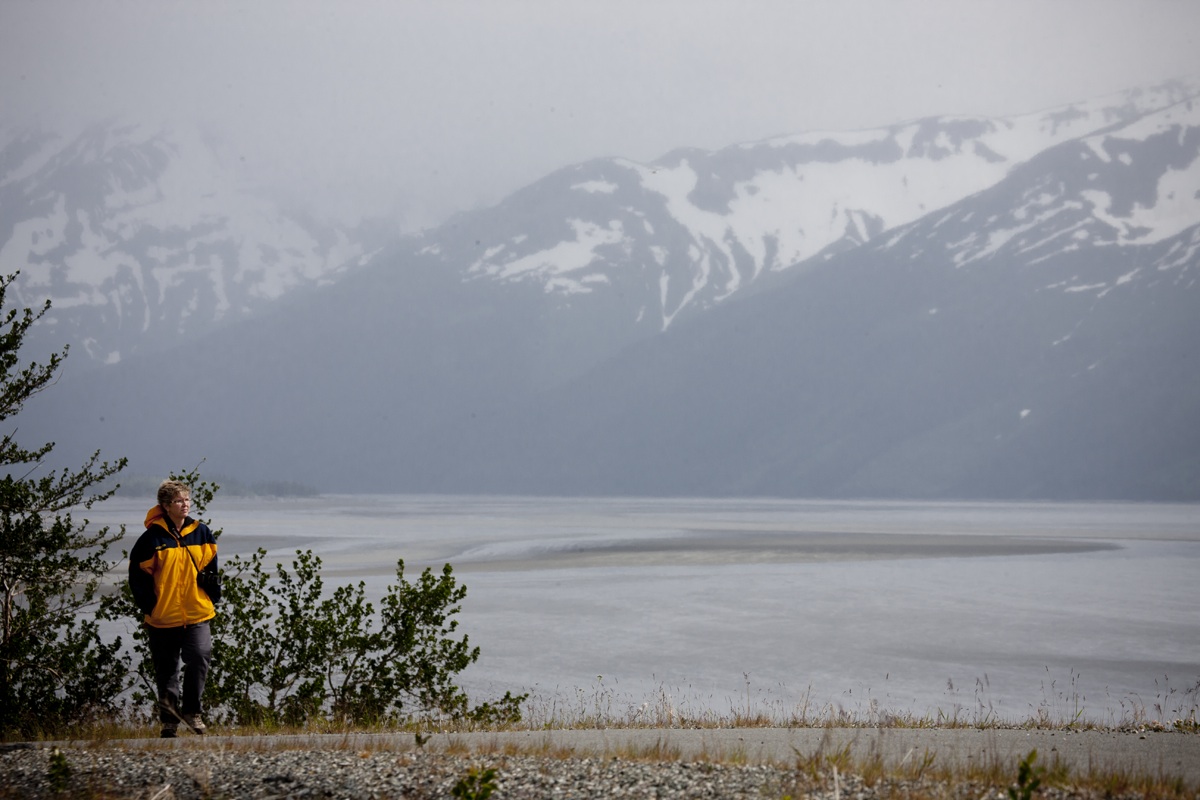
There’s something really magical about Alaska. Maybe it’s that you can go from 105 degrees in Iowa and in half a day be climbing a mountain pass in 45-degree weather. Or maybe it’s that everything is so damn BIG in Alaska. Or maybe it’s just the fact that no matter how many times you visit the state, you still feel like you’ve only seen like one-millionth of it.
Whatever the reason, I love love love Alaska. I spent six days there recently (if you count the travel days), and it was fabulous. Except for the pit toilets, which were not fabulous.
I traveled with my friend and magazine photographer Jim Heemstra to cover Iowa State alumni for our 50-states magazine project. But, as always, we crammed as much adventure into our travels as we possibly could between work assignments. And even the work assignments in Alaska became part of the adventure.
We arrived in Alaska on the Fourth of July. We had taken a relatively short 5 1/2-hour non-stop flight from Minneapolis and arrived in Anchorage before 11 a.m. That was great, because it gave us the better part of the day to explore. The first thing we had to do after we got our rental car (well, rental Jeep) was to find some food. I had done some research online before we left, and one place I thought sounded good was the Yak & Yeti Himalayan restaurant. I mean, how can you resist a place with a name like that? Amazingly, we found it without our GPS (which did not recognize Alaska as a state so was no good to us the entire time) and enjoyed bowls of rice with lentils and chickpeas.
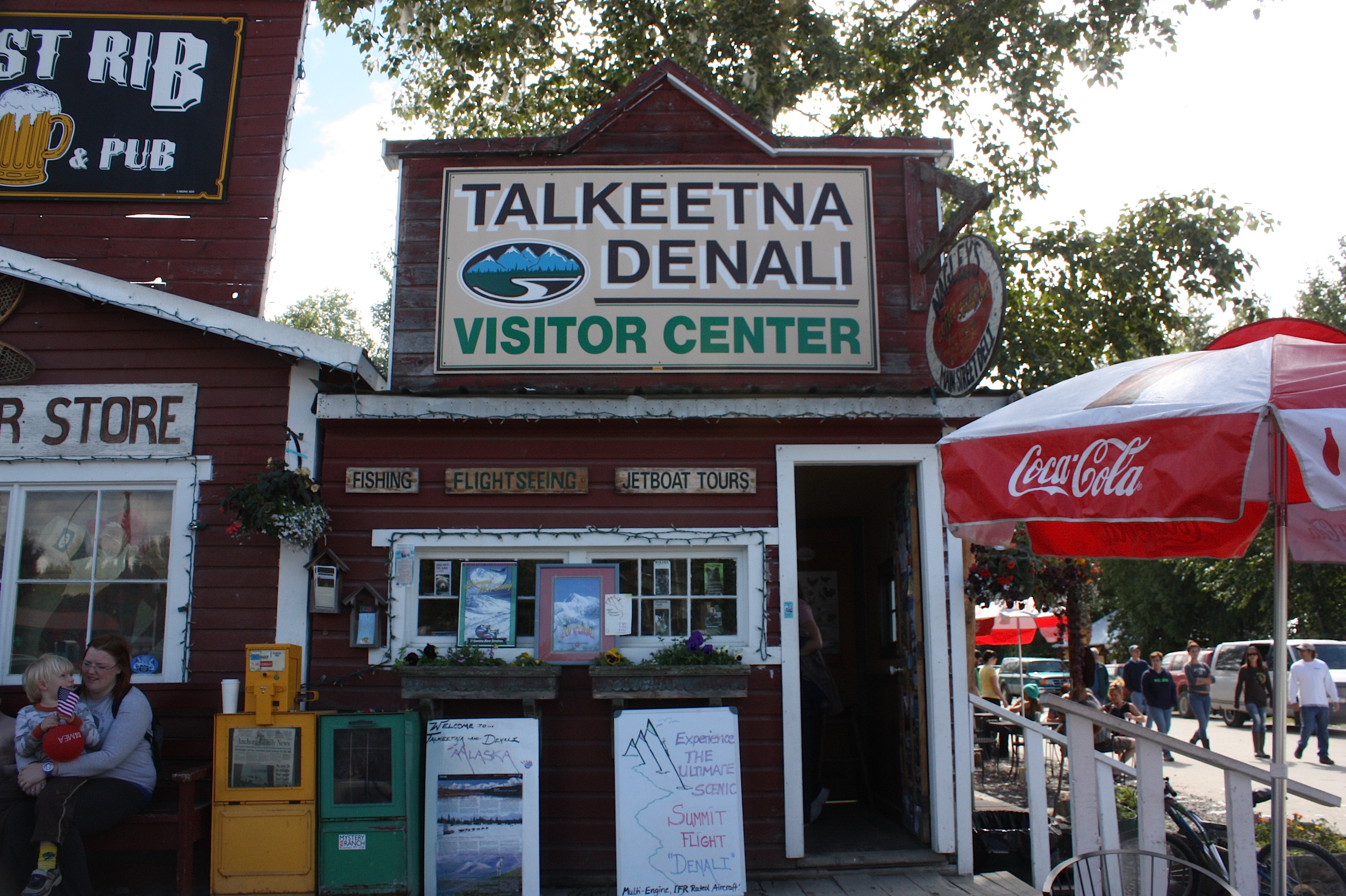
We had originally planned to use our arrival day to scout locations for a later photo shoot, but unfortunately one of our alumni had cancelled on us right before we left Minneapolis. So we had an extra day. We decided to drive up to Talkeetna, a historic Alaskan village that is the jumping-off place for Mt. McKinley/Denali adventures. On the Fourth of July it was crazy with tourists and not the funky frontier town I expected it to be. We took pictures of the chaos and then settled on bar stools for beer and an hour-long chat with a local artist who was fed up with the tourists and ready to relocate to the Big Island of Hawaii. I bought a hiking stick from a crazy man.
Talkeetna didn’t hold our interest for very long, so we headed on to bigger things. Much bigger, as it turned out.
Jim had done some research and thought it would be fun and scenic to drive Hatcher Pass Road, a 49-mile drive (about an hour north of Anchorage), about 13 miles of which is paved. The pictures looked pretty. So off we went, ignoring signs that warned us that the road had just opened for the season on July 1 and suggested it might still be impassable and more signs that implored us to tell someone where we were going before we started this apparently death-defying drive.
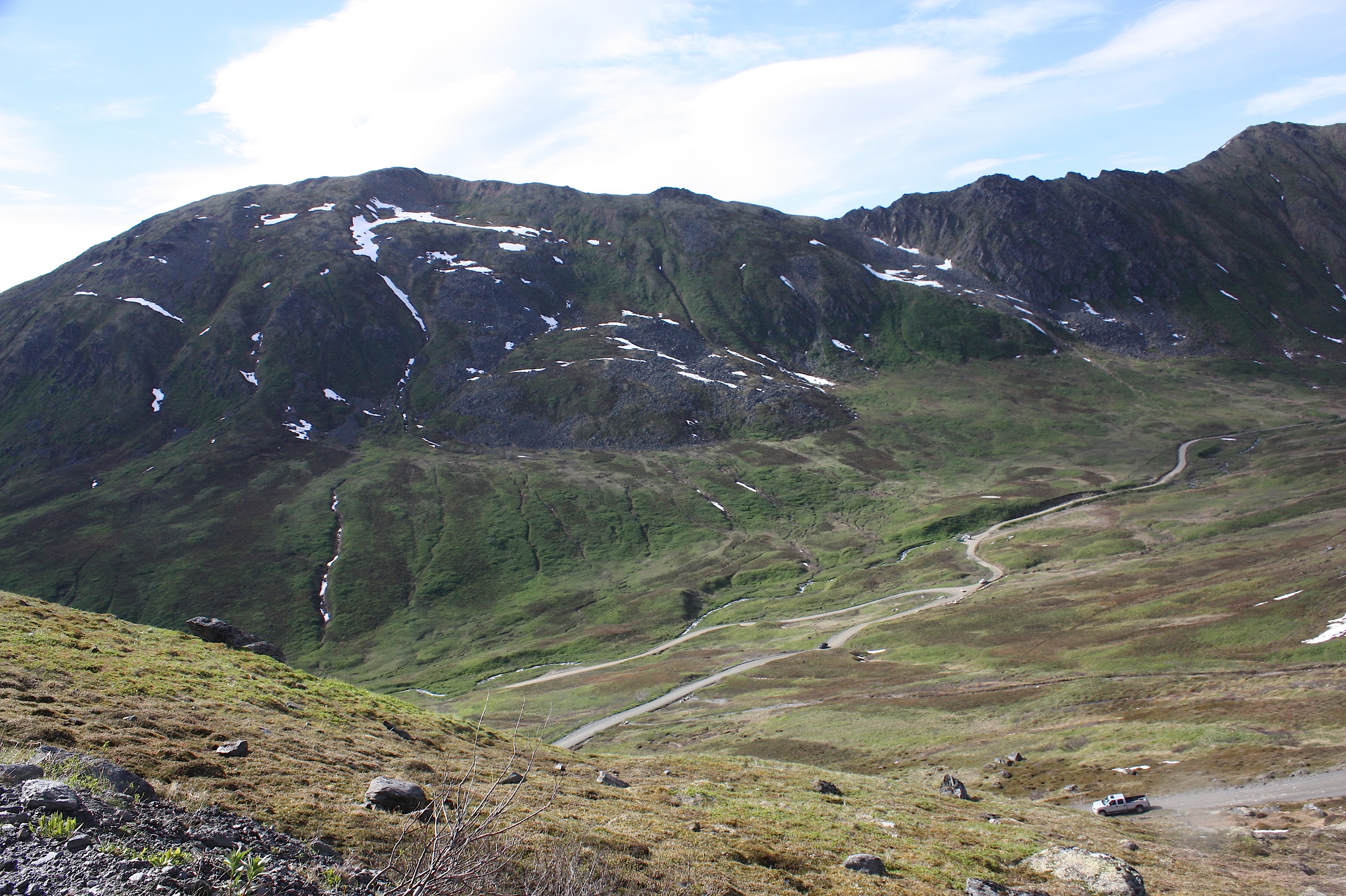
It started out innocently enough. And then the pavement turned to gravel and then turned to dirt and the nice edges went away, leaving a narrow path of a road with no shoulders and sheer drop-offs. And did I mention the hairpin turns? It was terrifying. I clenched my jaw so hard that my face hurt. But we (along with many other foolish tourists) made it across the pass without hurtling down the mountain to our deaths. We were very glad to see paved roads in Palmer on the other side.
DAY 2
We started the day, like every day in Anchorage, by walking across the street from our hotel (the Inlet Tower Hotel & Suites at 12th and L) to the New Sagaya City Market, where we ate coffee and breakfast pastries and bought picnic supplies for later in the day.
Our plan for today was to scout photo locations for Saturday. We figured it would take a couple of hours. But it ended up taking all day.

We had been given some suggestions by our Anchorage alum about good views in town. We started on the Tony Knowles Coastal Trail, an 11-mile bike trail that follows the Anchorage Coastline from downtown to Kincaid Park. The first place we stopped was rather unattractive and smelled funny. Then we went to Earthquake Park and Point Woronzof and were treated to excellent views of the Cook Inlet, Knik Arm, the Anchorage skyline, and low-flying jets coming from Anchorage International. But no great places to photograph our alum.
Next we went to Kincaid Park, where last time we visited Alaska we got to witness moose, um, mating. This time, we had no more than started our walk when we were approached by a local cyclist who stopped to tell us there was a huge bull moose up ahead on the left and a smaller male moose on the right of the trail. Yay, moose! What Midwesterner doesn’t crave the sight of wildlife that’s not deer, rabbit, or squirrel?
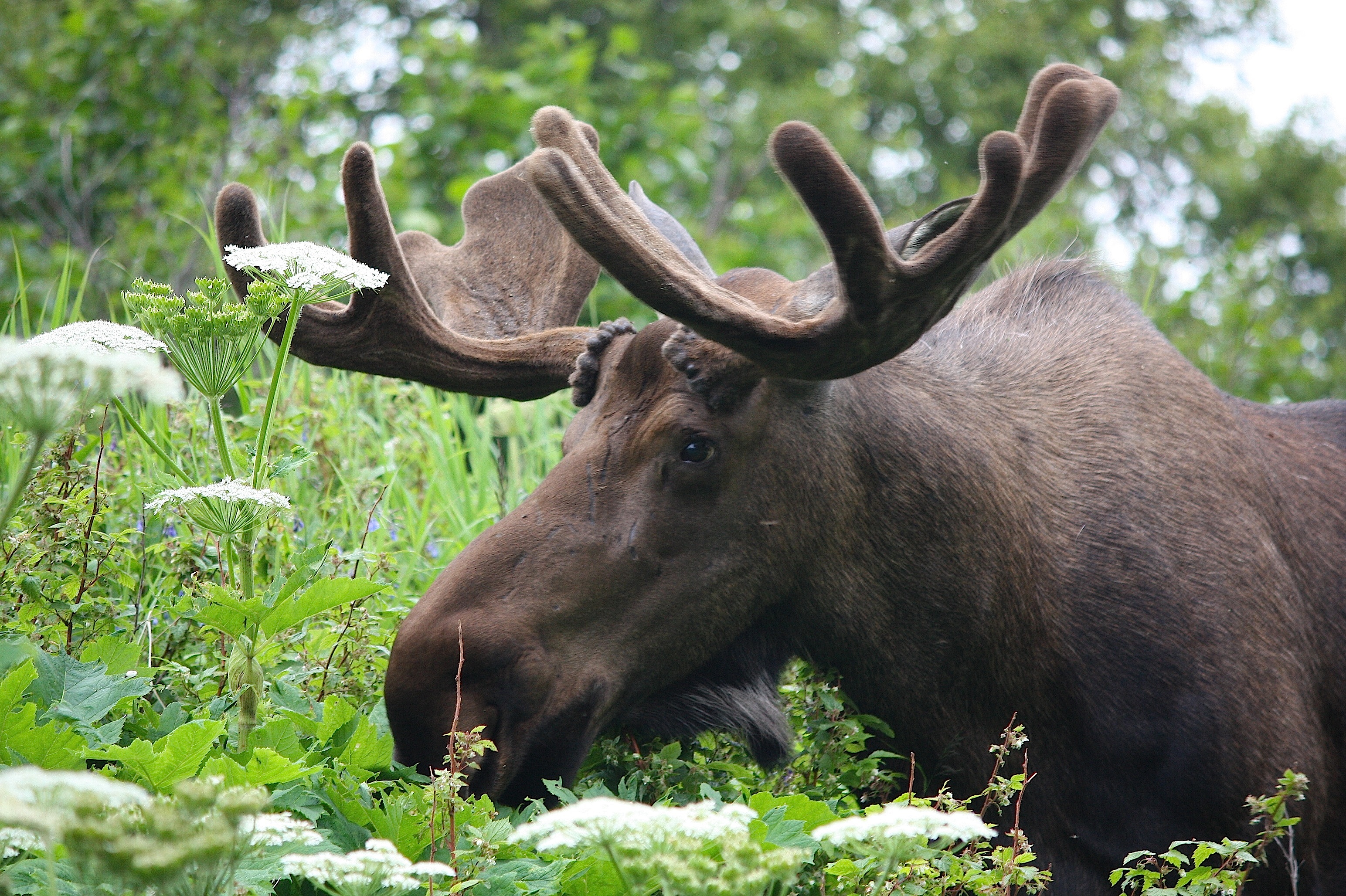
These moose did not disappoint. We had full access to the largest moose I’ve ever seen, munching away on vegetation right next to the bike path. And, as promised, a smaller guy was on the other side, trying to eat a tree. We took pictures of the big bull until we decided we might be pressing our luck being so close to him with clicking cameras, what with the death-by-moose warnings lurking in our heads. The smaller one seemed friendly, and we watched him walk unhurriedly across the path.

That encounter was sort of the highlight of the day. We did a few high-fives and continued our walk but eventually determined that this, too, was not the best spot for the photo shoot.

So we headed down the Turnagain Arm, which is about as spectacular a drive as there is anywhere in the United States. If you do it without stopping to take pictures (which is impossible) it takes about 45 minutes to drive the Seward Highway from Anchorage to Girdwood. Driving down this ever-curving road, you have the 3,000-foot mountains of Chugach State Park jutting straight up on your left and spectacular views of the fjord-like Turnagain Arm of Cook Inlet and more distant, snow-covered mountains on your right.
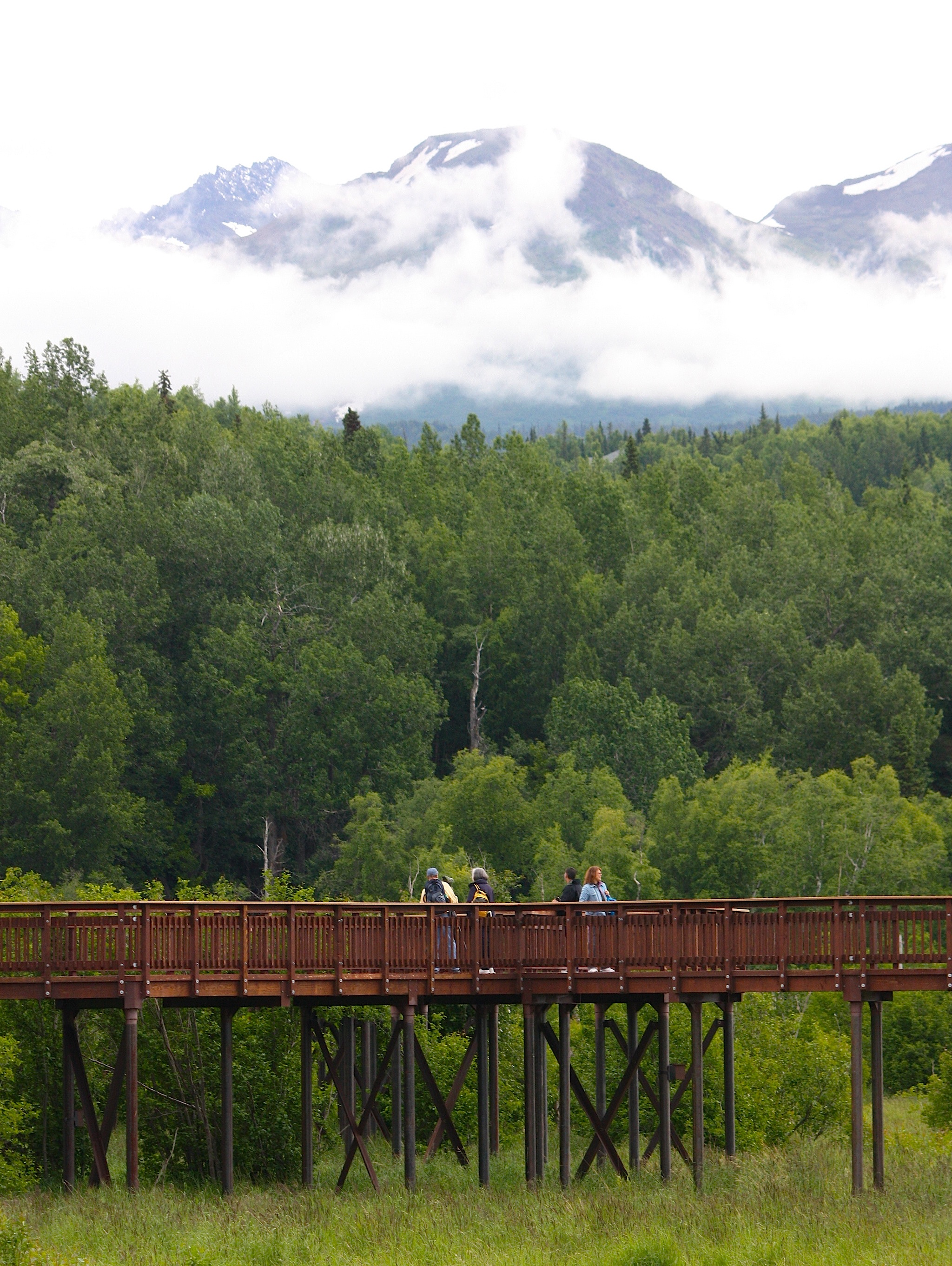 The first stop has to be Potter Marsh, where boardwalks allow you to walk through the marshy area to spot migrating birds and waterfowl, including eagles. We also got to see a great view of the mountains reflecting in the ponds. At that point, it was a pretty day.
We stopped a dozen times to take pictures along the highway, and the weather kept getting worse. By the time we had our eureka moment around the Bird Creek area (when we finally found our perfect photo shoot location), it was full-on raining. And cold. And windy.
We stopped at Bird Point because we were starving and could no longer wait for sunshine and a dry picnic table to enjoy the picnic lunch we’d packed so many hours earlier. So we sat in the back of the Jeep and ate bread with cheese and avocadoes. A van-load of German tourists took pictures of us.
The rest of the afternoon was spent finding alternative photo shoot locations (in case our top choice was too windy), taking pictures in the rain, stopping at Girdwood for coffee, and driving all the way to Portage Glacier only to view the glacier momentarily from the car window because the weather was so horrible.
By the time we got back to Anchorage, it was warmer, less windy, and practically sunny. Hmmm…maybe it’s a Turnagain Arm thing?
Tonight we went out to dinner at Sacks restaurant with Lisa Olson, a friend of mine who lives in Anchorage, and her husband Jerry.
DAY 3
Finally, a real working day.
We met ISU alumnus and Fed Ex pilot Darrell Holmstrom in Eagle River. After a few pleasantries, he took us for a floatplane ride to his cabin, located sort of north and west of Anchorage (I honestly was never sure exactly where we were). The flight was awesome, once I managed to get myself into the plane (I required a push from behind) and get all hooked up in the back seat with my seat belt and headset.
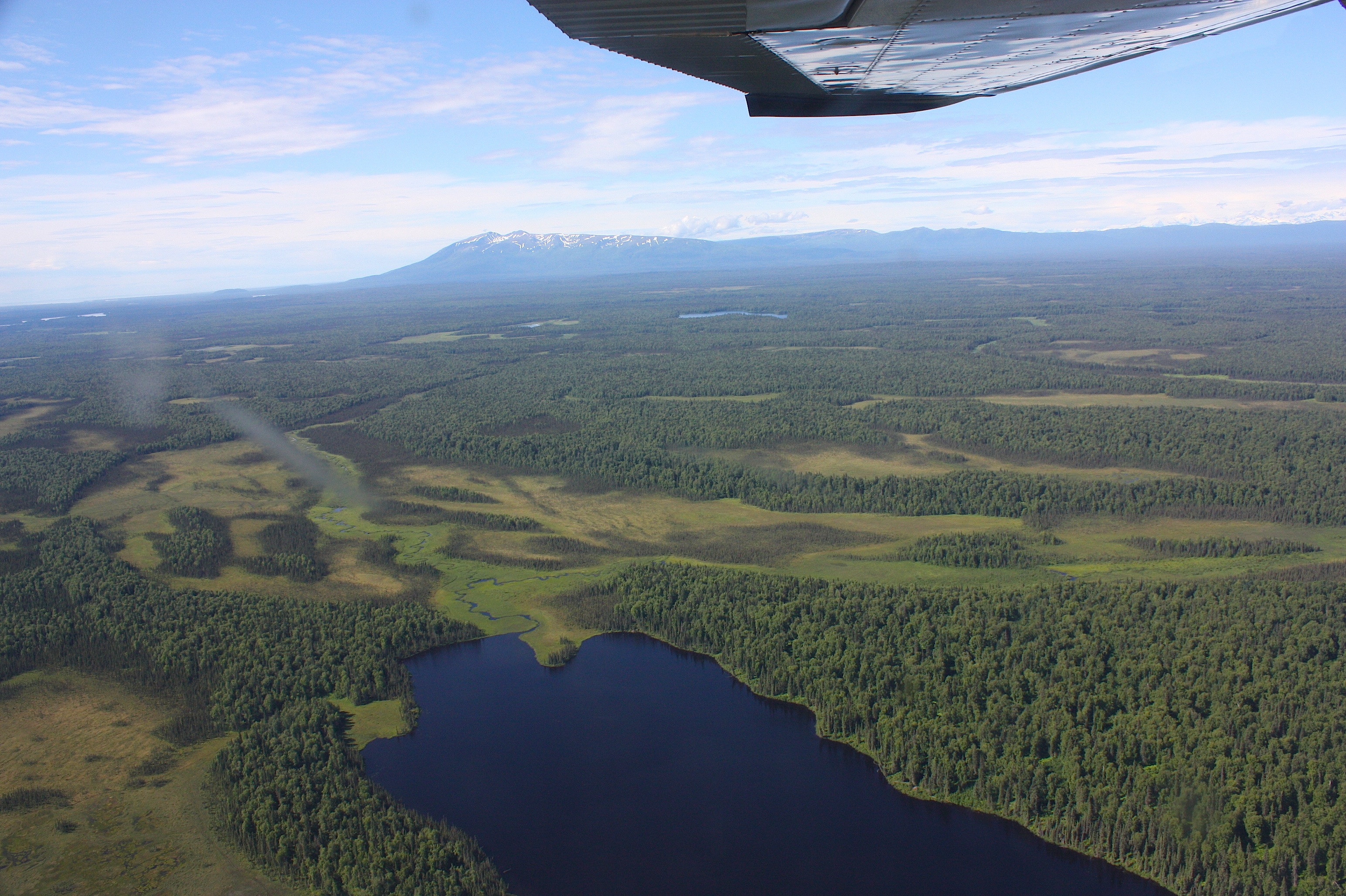
Our first view was of Knik Arm at high tide, with the towns of Palmer and Wasilla off to the right. We could see the town of Willow, the starting point for the Iditarod Trail Dog Sled Race, and the Iditarod Trail itself, which in summer is a twisty river. (In winter, Alaskans apparently use the frozen river like a highway to travel by snowmobile.)
We had a good view of Mt. McKinley/Denali, even though the top was obscured by clouds. We saw fishing lodges, lakes, a glacier, Mt. Susitna (“The Sleeping Lady”), and rivers made from glacial silt. But no roads. I realized then that you don’t know what Alaska really looks like until you fly over it.
I was happy that I remembered to take Dramamine and wear my motion-sickness bracelet.
We landed on Darrell’s lake and went to his cabin, a beautiful thing with running water and flush toilets. We sat on his sunny porch, swatting mosquitoes. I could live like this.

The floatplane ride did not frighten me, but a quick boat ride across the lake to visit one of Darrell’s neighbors did alarm me a bit, given that the boat didn’t really have sides and I don’t have any swimming skills (nor was I wearing a lifejacket). But it turned out OK, and the day was just breathtaking: sunny and warm.
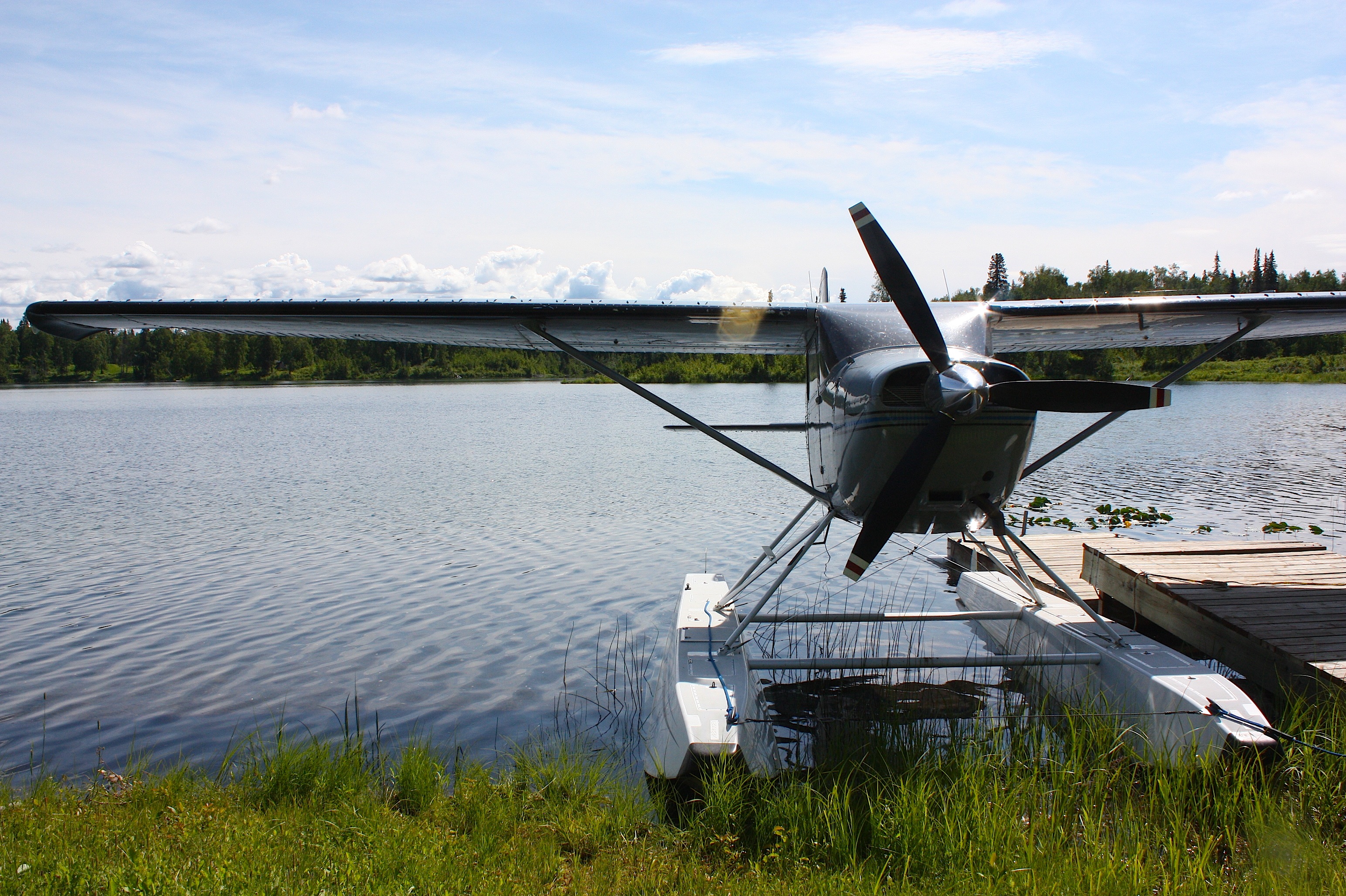
The flight back to Eagle River was uneventful. I was in the front seat on the way back and I liked talking to Darrell and having him point things out as we flew. It was awfully nice of him to give us this treat: a view of Alaska that we certainly wouldn’t have seen otherwise.
By the time we got back, it was something like 3 o’clock in the afternoon and we were once again starving. We found an Asian fusion restaurant in Eagle River that was open at that odd hour and shared veggie fried rice and tofu curry dishes.

After that we were ready for a hike. We headed for the Eagle River Nature Center, just a few miles from town. Saw more moose on the way. The center is located within Chugach State Park and is the jumping-off point for a number of trails. We took the easiest one, and it turned out to be just the right length and level of difficulty. The trail featured really spectacular views of the Chugach Mountains framed by wildflowers, a beaver-viewing deck at which we saw only ducks, and a salmon-viewing deck at which we saw no salmon. It was lots of fun.
Apparently the Crow Pass Trail is a really good hike (25 miles) all the way to Girdwood. There’s no way I could have done that, even if we would have had the time, and besides, the trail is closed due to a brown bear feeding on a moose kill right on the trail. Yikes!
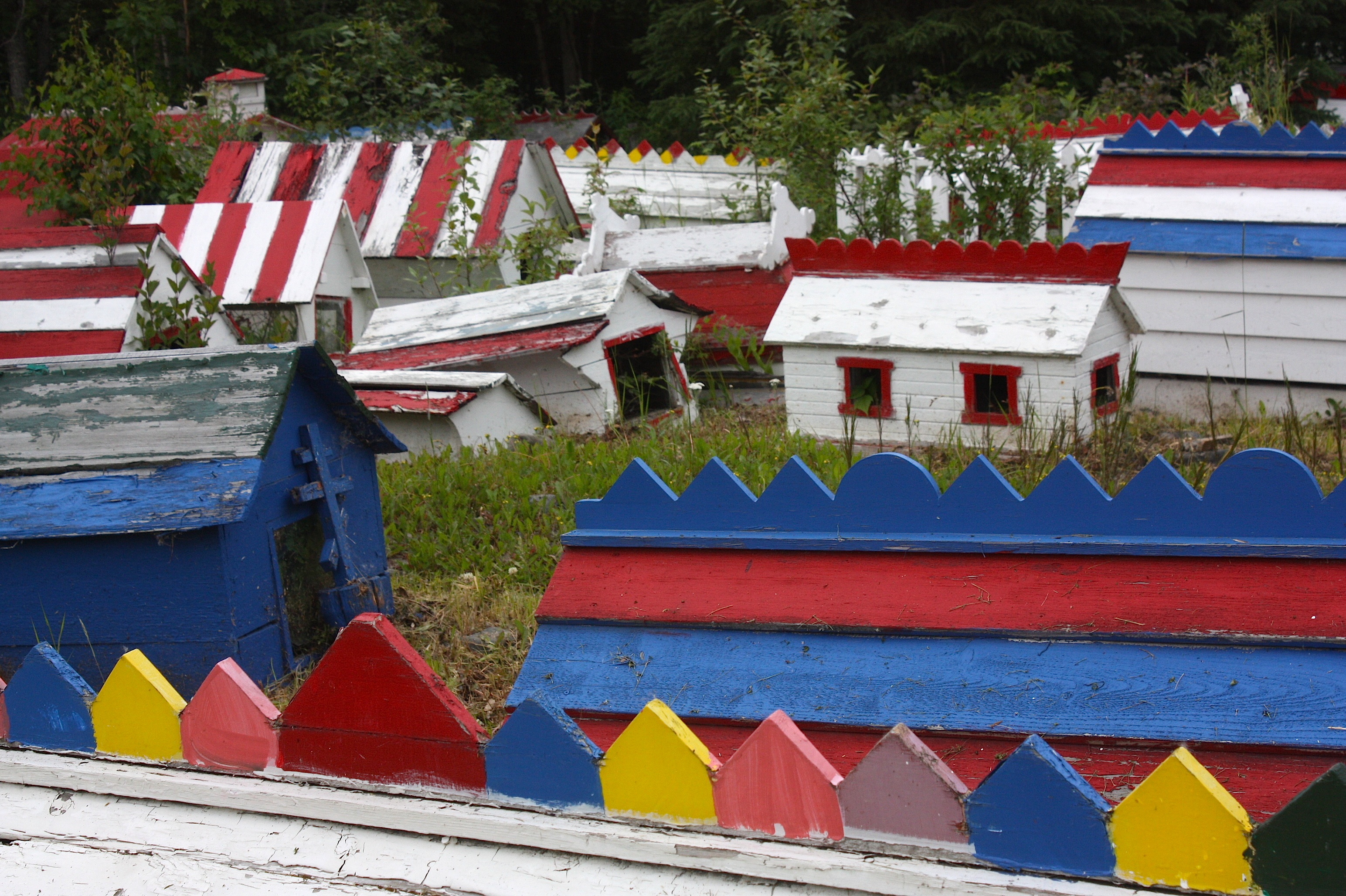
Afterward, we drove to the tiny town of Eklutna to see an old Russian cemetery.
Since we ate such a late lunch, we opted to drink beer and eat fries for dinner at a downtown Anchorage Irish pub.
DAY 4
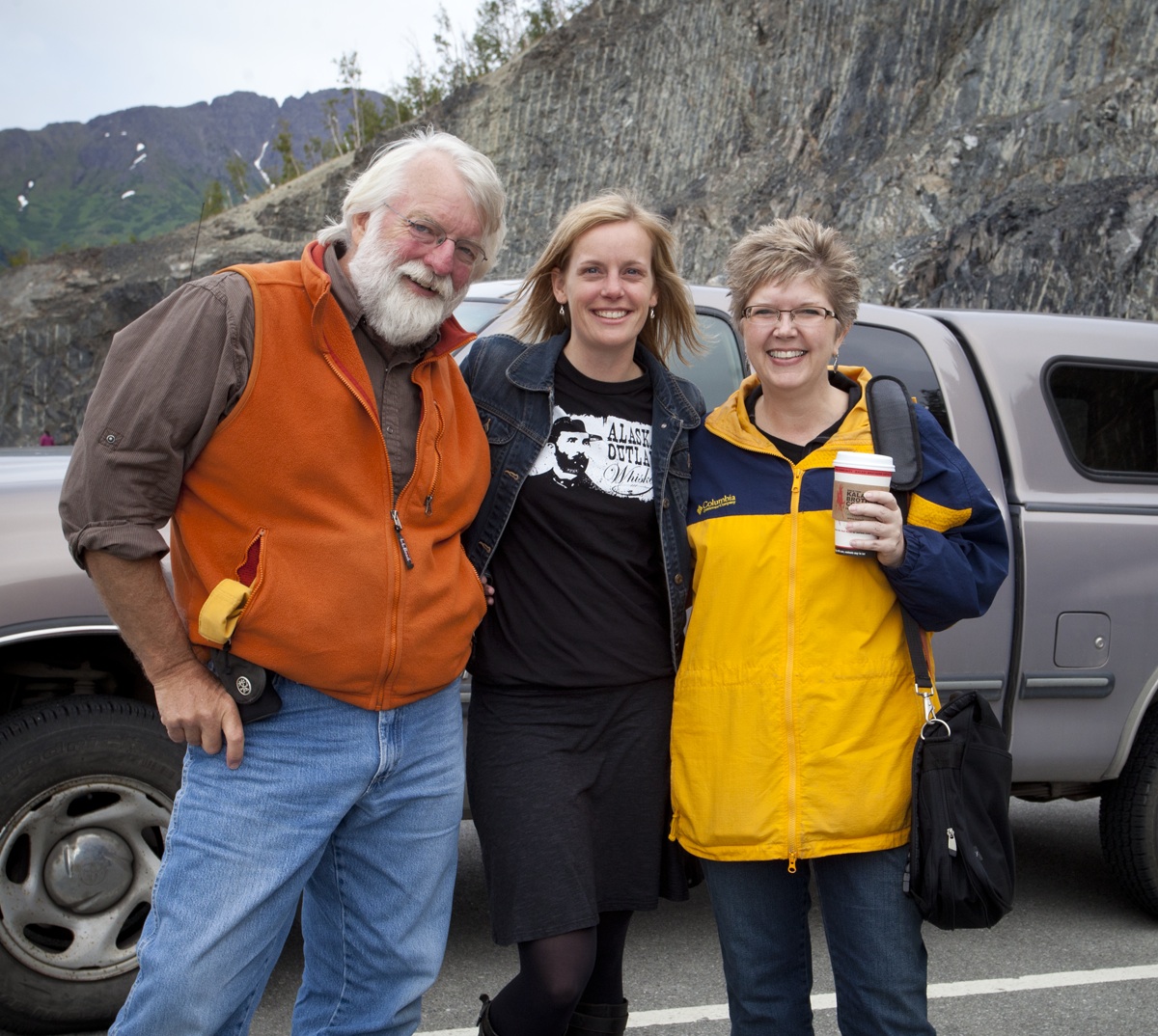
Early morning meeting with Laura Tauke, our alum for whom we’d been scouting locations. We met her at New Sagaya for coffee and then took off in both vehicles (me with Laura in her “Alaskafied” pickup, Jim in the Jeep) down Turnagain Arm. Thankfully, the weather held and we were able to photograph Laura at Bird Creek with blue skies and no wind. (When it comes to photo shoots, I am the weather fairy.) That’s Jim, Laura, and me above.
After the photo shoot and an interview conducted mostly in the truck, Jim and I were finished with our work. We headed north for the Glenn Highway.
We almost immediately left behind the sunny skies, and our drive along the Glenn and eventually the Richardson highways en route to the port city of Valdez was in the rain, with low-hanging, heavy clouds obscuring most of our views.

That didn’t make it any less cool for me. I always love rainy days, and after the heat we’d been having in Iowa, the 40s and 50s felt wonderful. We stopped a gazillion times to take pictures of glaciers and streams and overlooks. Stopped in Glenallen for gas and a quick bite of food out of the back of the Jeep.
The drive to Valdez from Anchorage is said to take 6-7 hours, or all day if you stop and hike and gawk at the scenery a lot. We knew we’d be coming back on the same road the next day, so we tried to make good time. Our only lengthy stop was at the Worthington Glacier (in the rain). We wanted to explore Valdez tonight.
We arrived at our lodge on Robe Lake just north of Valdez at about 6:30 p.m. and got checked in. Then we drove the six miles into town.

Valdez is a fishing port located on Prince William Sound and surrounded by the Chugach National Forest. I get the feeling that most people in Valdez are working – either in the fishing or tourist industry – or they’re tourists there for a sightseeing excursion. You can book tours for fishing, wildlife viewing, glacier hiking, and lots of other outdoor recreation. We didn’t have time for any of that. What we did have time for was taking thousands of pictures of the most picturesque fishing port imaginable and then following the advice of a local diner and going to the fish hatchery area where there were more boats, plus eagles, sea lions, sea otters, and (theoretically) bears.

We spent hours hanging around the inlet, watching the birds and the fishermen and just being basically awestruck at the beauty of the place. We went there on the first night and then three times the next day. But now I’m getting ahead of myself.
DAY 5
So last night we met this local guy at The Fat Mermaid, where we were drinking beer and eating pizza. He knew we were tourists and wanted to know if we had seen any bears. We had not. So he told us to go to the fish hatchery at high tide the next morning. (High tide would occur at 4:52 a.m.) The high tide brings in the salmon, he explained, and then as the tide went out, some of the salmon would be left behind and out would come bears to eat it.

This sounded like a great idea. So we took a look at the place the night before and planned to be back this morning at 5:30 a.m. His advice was not exactly correct. For one thing, it takes HOURS for the tide to go back out. And we never did see any bears, even though we went to the spot three times (at 5:30, after running back to the lodge and checking out, and then again after eating breakfast in town). But we were so pleased that he had told us about this place, because it was so spectacular, bears or no bears.

We watched eagles and seagulls feed on the fish, watched the sea lions play, and got to witness Day 1 of pink salmon fishing season, for which 240 fishermen had secured permits. At 6 a.m., they all put down their nets at exactly the same time and commenced fishing. The permits gave them 14 hours to harvest as many pink salmon as they could. A guy we met on there said the fishermen could make up to $25,000 in one day. It was quite a sight.
We could have stayed all day in Valdez, but we had a long drive ahead of us. Fortunately, the weather today was the total opposite of yesterday, with blue skies, sunshine, and high, fluffy clouds.

We started north along the Richardson Highway, stopping dozens of times to photograph the vistas, especially the ones along Thompson Pass. It was truly amazing that this was the same pass we’d crossed the day before in the low, view-obscuring clouds. My friends Lisa and Jerry described this section of the drive as “otherworldly” and it was indeed that, both in clouds and in sunshine.
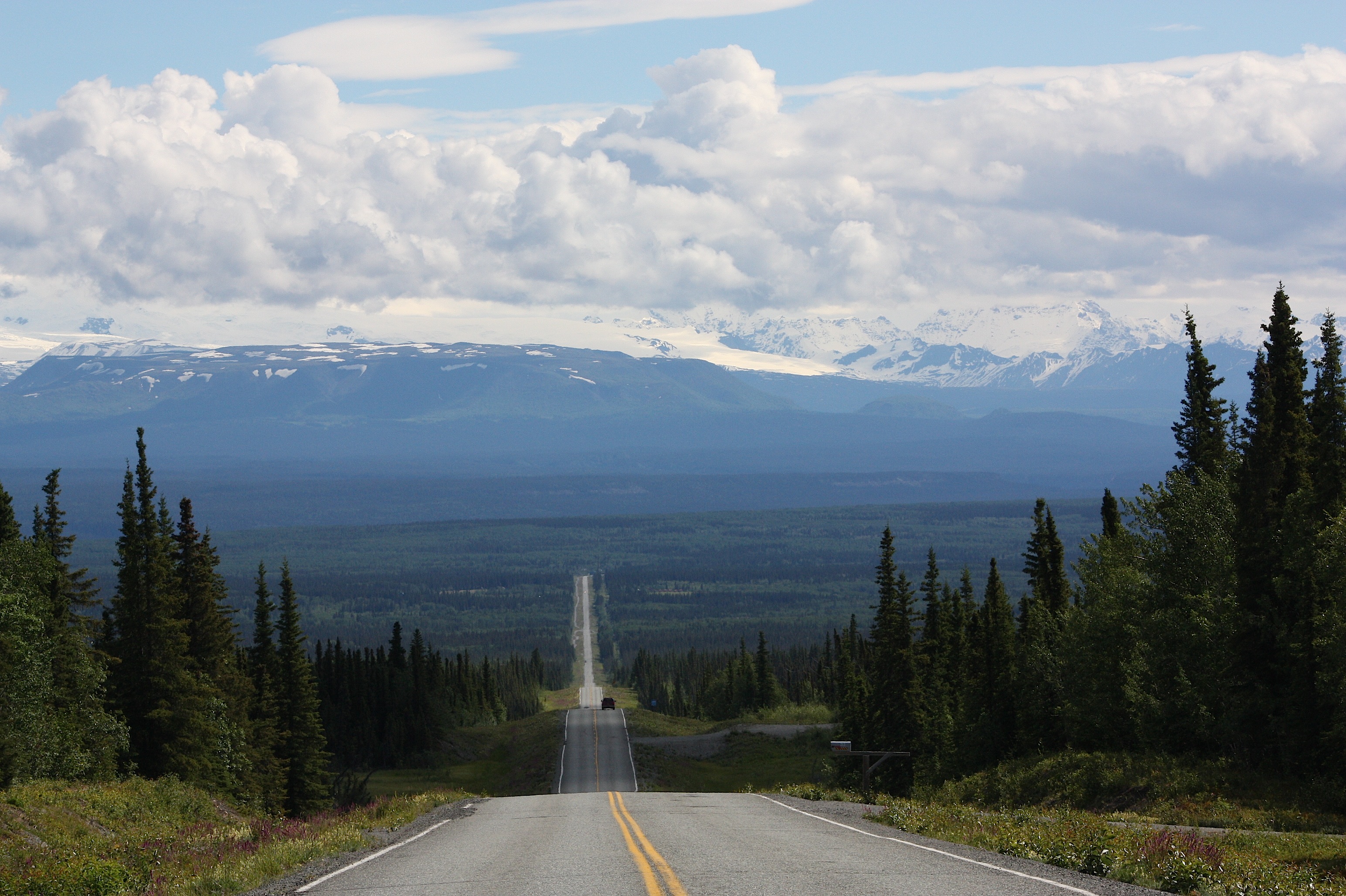
Midway down the Richardson Highway, we turned right on the Edgerton Highway and drove toward the town of Chitina, with views of the Wrangell Mountains and the Wrangell-St. Elias National Park and Preserve. This is somewhere I’ve wanted to visit for awhile now, and, like the rest of Alaska, now I’ve seen just a tiny piece of it and want to see more.
At 13 million acres, Wrangell-St. Elias is America’s largest national park. It’s larger than the entire country of Switzerland. It’s about the size of Nova Scotia. It’s six times the size of Yellowstone. Nine of the 16 highest peaks in the U.S. are in the park. The Wrangell-St. Elias Wilderness is the largest designated wilderness in the United States.
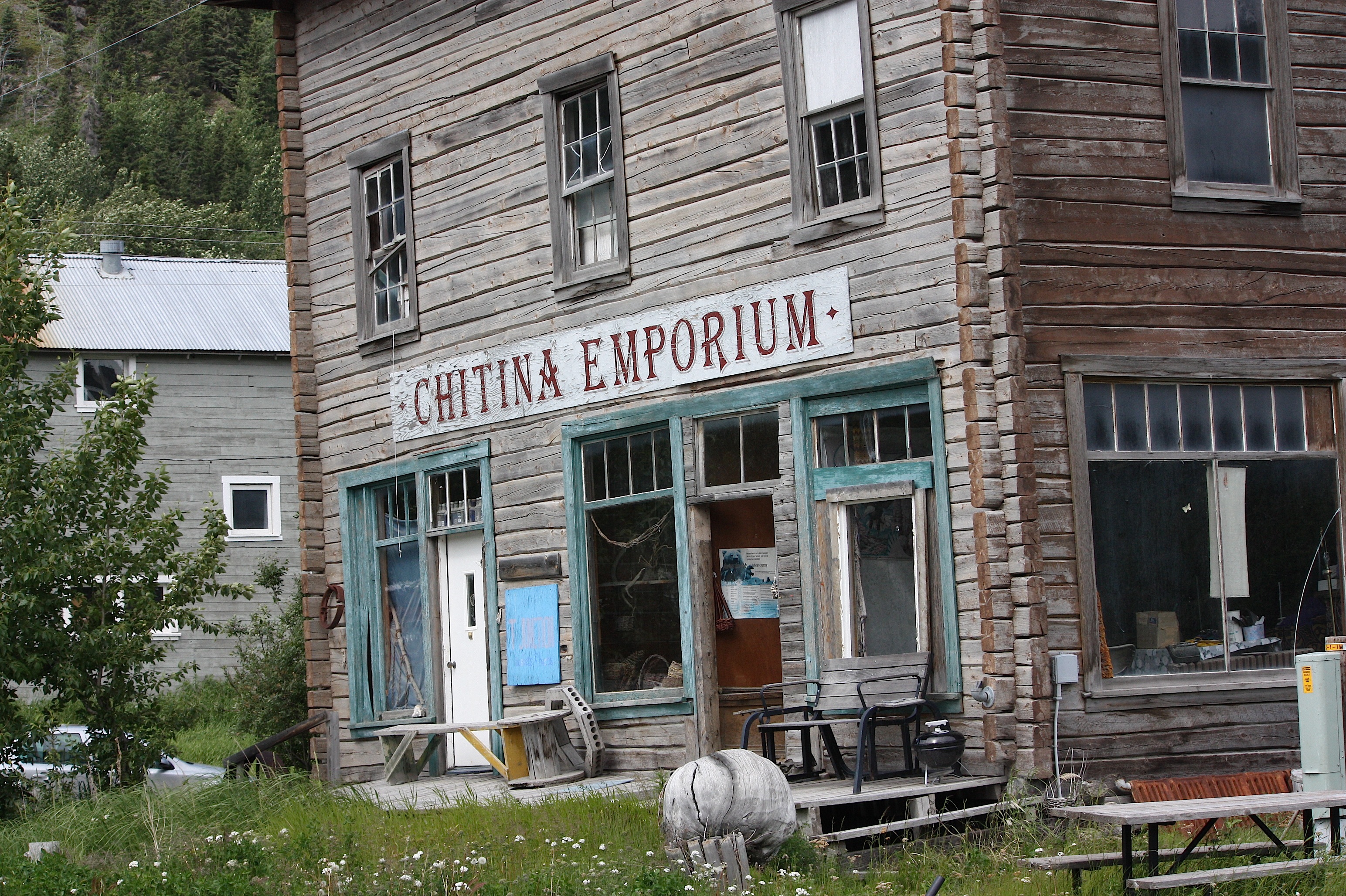
So, needless to say, we didn’t see much of it. But what we saw was spectacular. We drove as far as the town of Chitina, crossed the bridge, and then turned back. The road continues to Kennicott (an old mining town) and McCarthy, but we were told it’s a very difficult road. The park can also be accessed from the Nabesna Road to the north. Most of the park is not accessible by car. There are a number of landing strips for small aircraft.
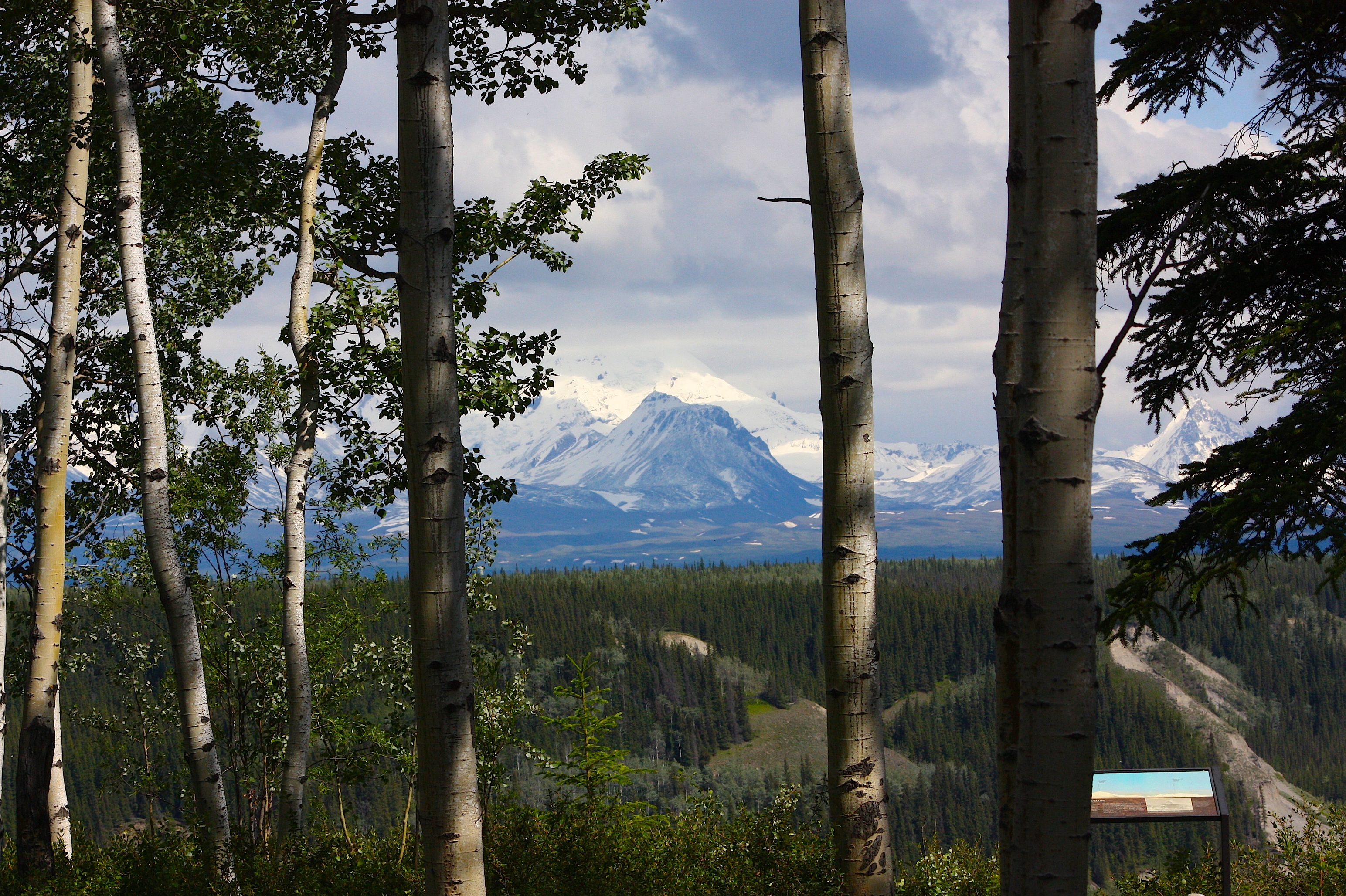
We visited a small National Park outpost in Chitina and a very nice, new visitor center near Copper Center (on the Richardson Highway). The visitor center has all the usual things, plus a theater, an exhibition building, and a nature trail that would have been lovely if it were not for the 50 million aggressive mosquitoes that call the area home.

I didn’t expect the rest of our drive back to Anchorage on the Glenn Highway to be very interesting, but since we’d missed all the views the day before in the rain, I was pleasantly surprised. We were astounded at the views and stopped again and again to take pictures. We were able to see the Matanuska Glacier in much different light than the day before. We saw a wolf and one last moose.
We checked back in to the Inlet Hotel in Anchorage, sort of sad that our big driving adventure was over. We ate dinner that night at a very good restaurant called Orso.
DAY 6
The flight home was uneventful. In fact, the whole day would have been uneventful if the brakes wouldn’t have gone out on Jim’s van. Well, maybe “out” is too strong of a word. We still had brakes, but there was something wrong with them, causing the left rear wheel to heat up. At any rate, about 10:30 p.m. we determined that we would have to stay the night in Albert Lea, Minn. Our fun was over. We arrived back in Iowa the following day.
Des Moines Metro Opera

I did something on Friday night that I haven’t done in many years: I went to the opera.
Although I am a huge follower of musical theatre, I’ve never considered myself an opera fan. It’s one of those things that you probably just love or you don’t. But I appreciate the art form, and I would like to become more knowledgeable about it. And here in central Iowa, we have access to nationally recognized talent during the Des Moines Metro Opera’s summer season.
The Des Moines Metro Opera has been in existence for 40 years, making it the sixth oldest U.S. professional opera company. Does this surprise you? It surprises me. The company is not a touring company, nor is it made up of local talent. Its home is the Simpson College campus in Indianola, just south of Des Moines.
We attended the performance of Mozart’s Don Giovanni on Friday night. The opera is one of three performed in repertory this summer; the other two are La Rondine by Puccini and Eugene Onegin by Tchaikovsky. Principal artists in Don Giovanni came from as far away as San Juan, Puerto Rico; Lindenhurst, N.Y.; and Portsmouth, Va. Each of the three operas performed this summer has its own stage director, orchestra conductor, and cast.
An opera in two acts, Don Giovanni was first performed in 1787 by the Prague Italian Opera. The Italian libretto was written by Lorenzo da Ponte, and it was billed as a drama giocoso, meaning a mix of dramatic and comic action.
In a nutshell, the plot involves Don Giovanni, a villainous character who rapes women and kills anyone who stands in his way. (In the setting of this 1700s opera, his is a comic character. Today, we’d call him a sexual predator. We might even do a “Law and Order: SVU” episode about him. And it wouldn’t be fun.) In the opening of the first act, a shirtless Don Giovanni has just had his way with an unwilling woman and is being pursued by her father, whom Giovanni kills. The rest of the opera centers around more of Giovanni’s bad behavior — we meet a number of his former, current, and potential conquests – and the push by several characters urging him to reform and repent. In the end, it’s a tale of morality. But not without mistaken identities, heaving bosoms, and lots and lots of singing in Italian.
 That’s one problem with opera: the language barrier. Most famous operas are not written in English. Some companies translate the operas into English, but that sort of ruins it, right? Des Moines Metro Opera performs its operas in the native language (in this case, Italian) as they were meant to be sung, and it offers supertitles above the stage so the English-speaking audience is not completely in the dark. I have a love-hate relationship with supertitles; they do obviously let you understand what the characters are saying (and even thinking) but it’s hard to watch the action on the stage and read the supertitles at the same time. Add to that the responsibility of watching to make sure the actors don’t fall into the orchestra pit (located smack dab in the center of the stage) and you have an exhausting job as an opera-goer.
Nonetheless, Des Moines Metro Opera is a cool deal and we should be proud to support it. Next time I go, I will probably take advantage of the pre-opera dining (the brunch prior to matinee performances sounds especially delightful) and have a glass of wine.
I-Cubs game
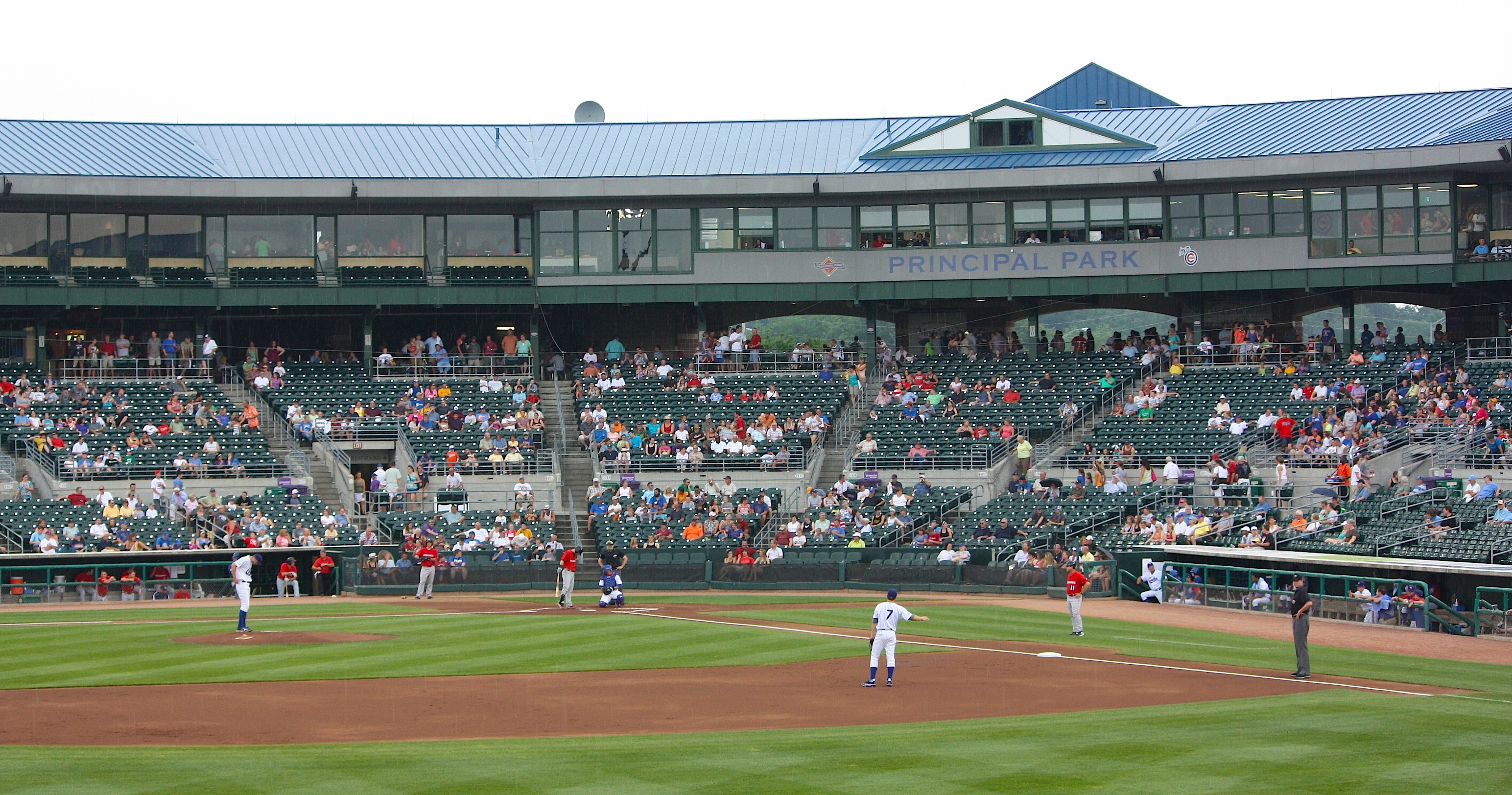
I picked last Thursday, one of the hottest nights of the summer (so far), to attend an Iowa Cubs game that I didn’t really care about.
But it turned out to be fun. I have fond memories of attending Royals baseball games in Kansas City where I grew up. (Back then they were a good team.) In those days, I knew who all the players were. Baseball is one sport that doesn’t annoy me if my husband is watching it on television or listening to it on the radio. It’s a summer sound.
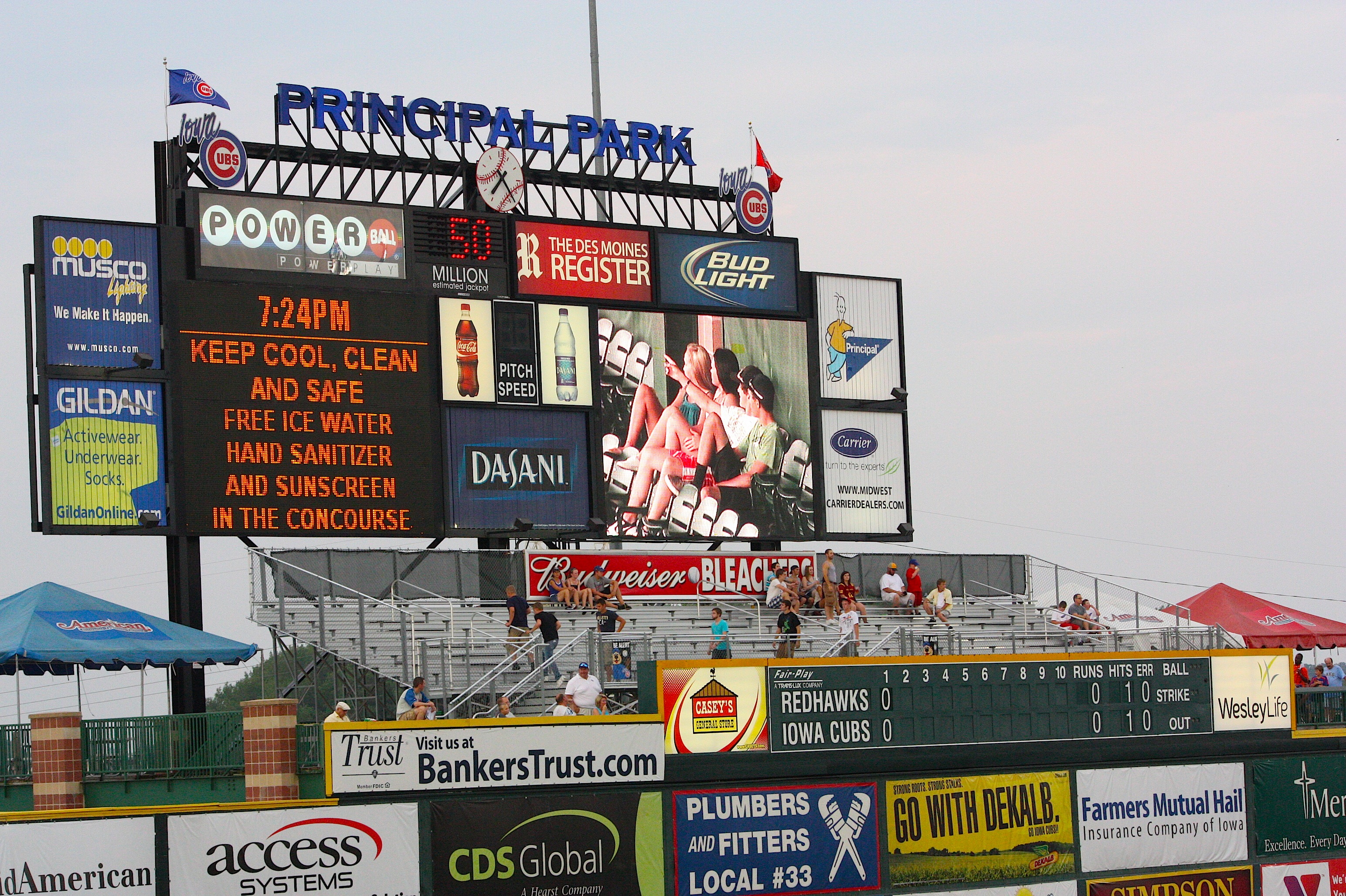 I’ve gone to two or three I-Cubs games before, usually with a group. This time it was a group of my husband’s co-workers, and we had access to a suite. That was especially nice since it was about 95 degrees outside with high humidity and no discernible breeze. At times, the inside action (air conditioning, food, new friends) was more fun than the outside action (minor league baseball game with lame between-inning entertainment).
Principal Park is definitely NOT Royals Stadium (that’s what they called Kauffman Stadium back in the day). But it’s easy to get to, easy to park near, easy to find your way around in, and super clean. I also like the proximity to downtown. If your seat is on the first-base side (look at me using baseball terminology!) you have a great view of the state capital among other buildings. The sunsets can be stunning.
Thursday night, not so much. I was on the third-base side so I mostly saw the backsides of the players in the outfield and had no view, unless you count being able to see the tippy-top of Mullets bar as a view. And there wasn’t so much a sunset as the haze just got darker.
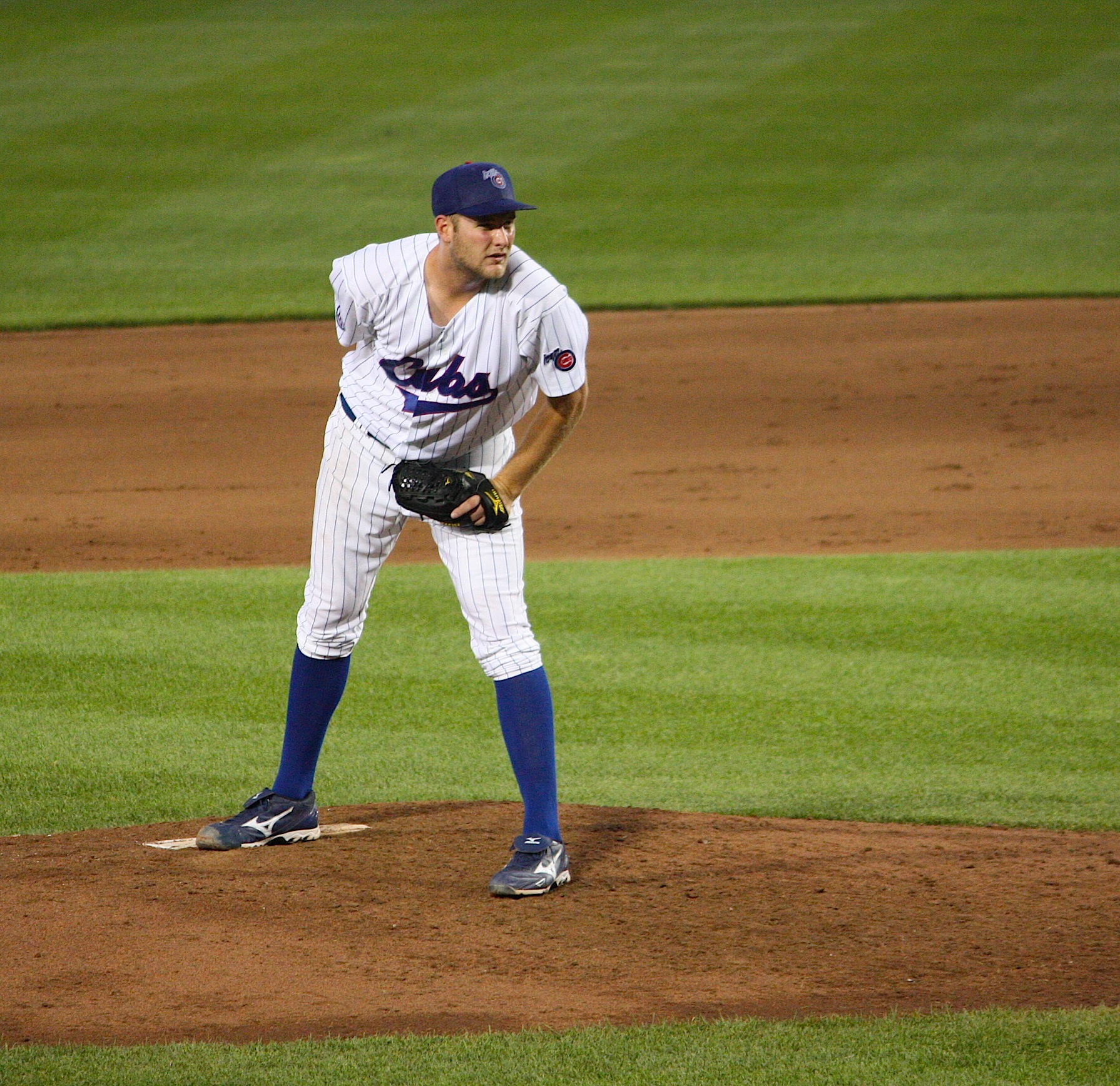 Anyway, the game was sort of uneventful, as most baseball games are. We had one ball smack into the wall right below where we were sitting, so that was kind of exciting. We left right after the seventh-inning stretch so we didn’t see the end of the game. According to the newspaper the next day the I-Cubs lost to the Oklahoma City Redhawks 3 to 1, although as my husband pointed out, Iowa had more hits. Little good that did them.
I’d like to go back when the weather is nicer and the crowd is larger because I think it would be a more exciting atmosphere. The official attendance Thursday night was 6,407 but there’s no way that many people were really in the stadium. I’m guessing a lot of people had tickets to the game, took one look at the temperature, and stayed home.
Historic Lincoln Highway Bridge
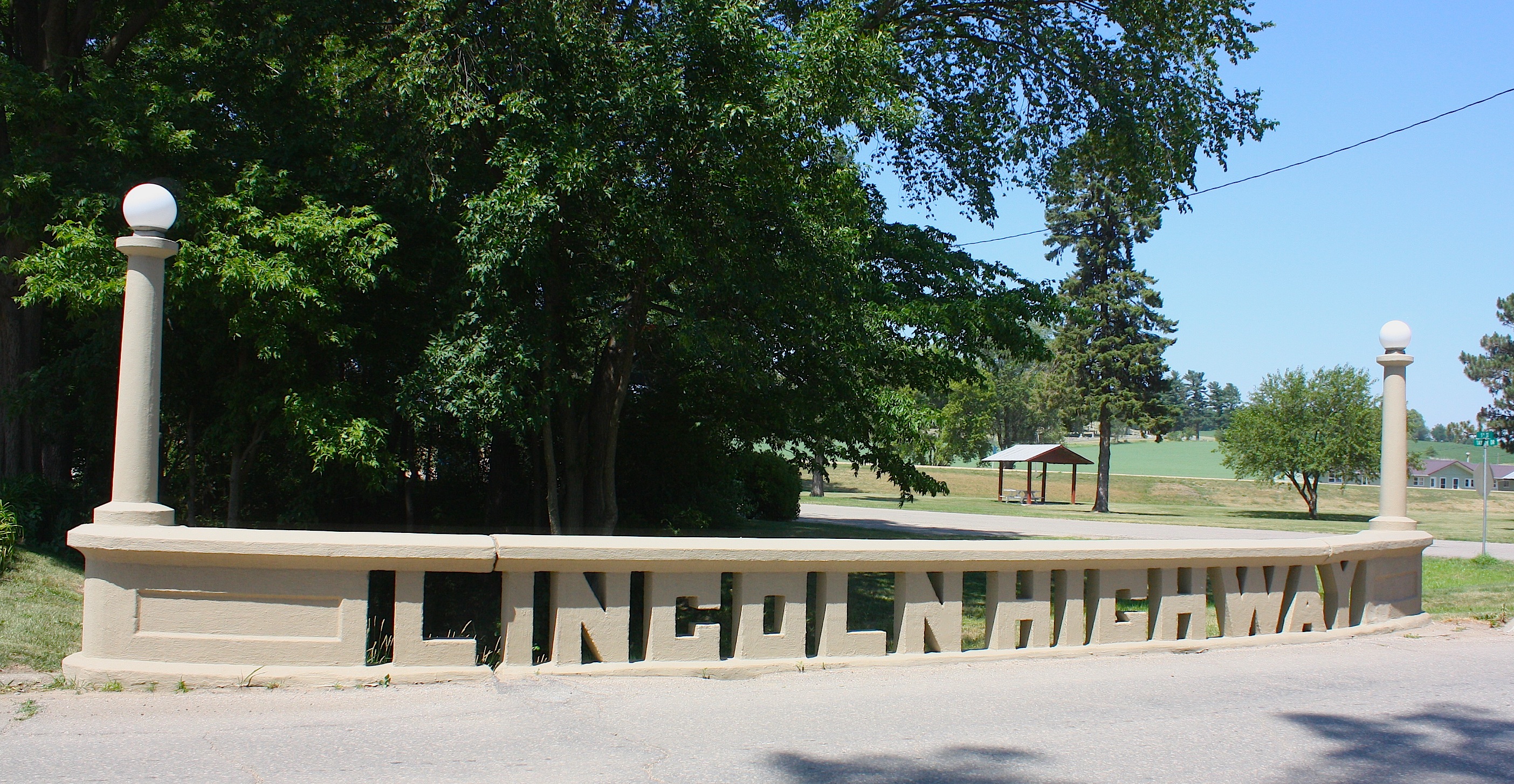
The Lincoln Highway Bridge, located in Tama, was constructed in 1915 as an early advertisement for the Lincoln Highway. The highway was the first successful effort to mark, promote, and build an automobile highway spanning the width of the United States. Initiated in 1913 as a memorial to former President Abraham Lincoln, the Lincoln Highway linked Iowa to both coasts.
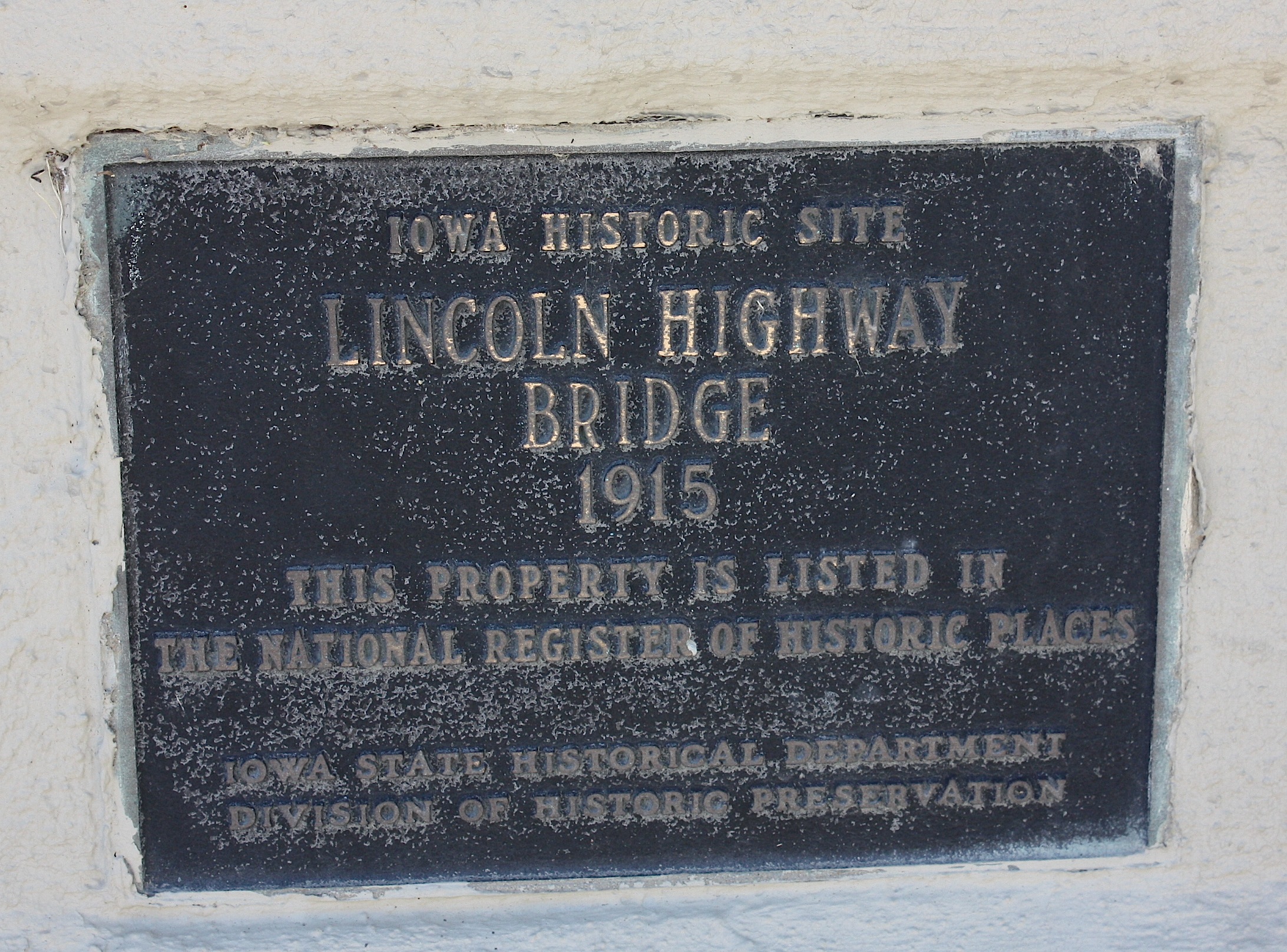 Today you can travel the original route through Tama by following signs that begin at the bridge and continue west on 5th Street. Guardrails spelling the name on both sides make this a unique bridge on the Lincoln Highway. In 1978 the bridge was officially listed on the National Register of Historic Places. It underwent restoration in 1987. According to a sign that marks the significance of the bridge, “it stands as a dramatic reminder of a time when few roads were paved and the campaign to ‘get out of the mud’ had just begun.”
 I happened upon the Lincoln Highway Bridge the other day when I was coming back from Cedar Rapids. Tama is about the halfway point back to Ames, so I stopped there for a break. I had read about the bridge in my trusty Iowa travel guide, but I admit that I had forgotten about it. So it was a nice surprise.
I stopped and took some pictures of the bridge — said to be the only Lincoln Highway bridge still in existence — and its accompanying signage, and I also took advantage of the small park just north of the bridge. It was a nice spot to sit and eat my picnic lunch.
Grant Wood Tour of Iowa: Part III
I started my Grant Wood Tour of Iowa almost a year ago, and the funny thing is, the more I do, the more I learn there is still to do to really follow in this Iowa artist’s footsteps and learn about his work.
To recap the tour so far: I started in August 2011 with visits to the Dubuque Museum of Art, the Grant Wood Art Gallery in Anamosa, Stone City, and the Cedar Rapids Museum of Art. Two weeks ago I visited the American Gothic House in Eldon.
So finally last weekend I visited the Grant Wood Studio at 5 Turner Alley in Cedar Rapids, and this week I went to the Tipton Public Library. Why Tipton? I’ll explain later.
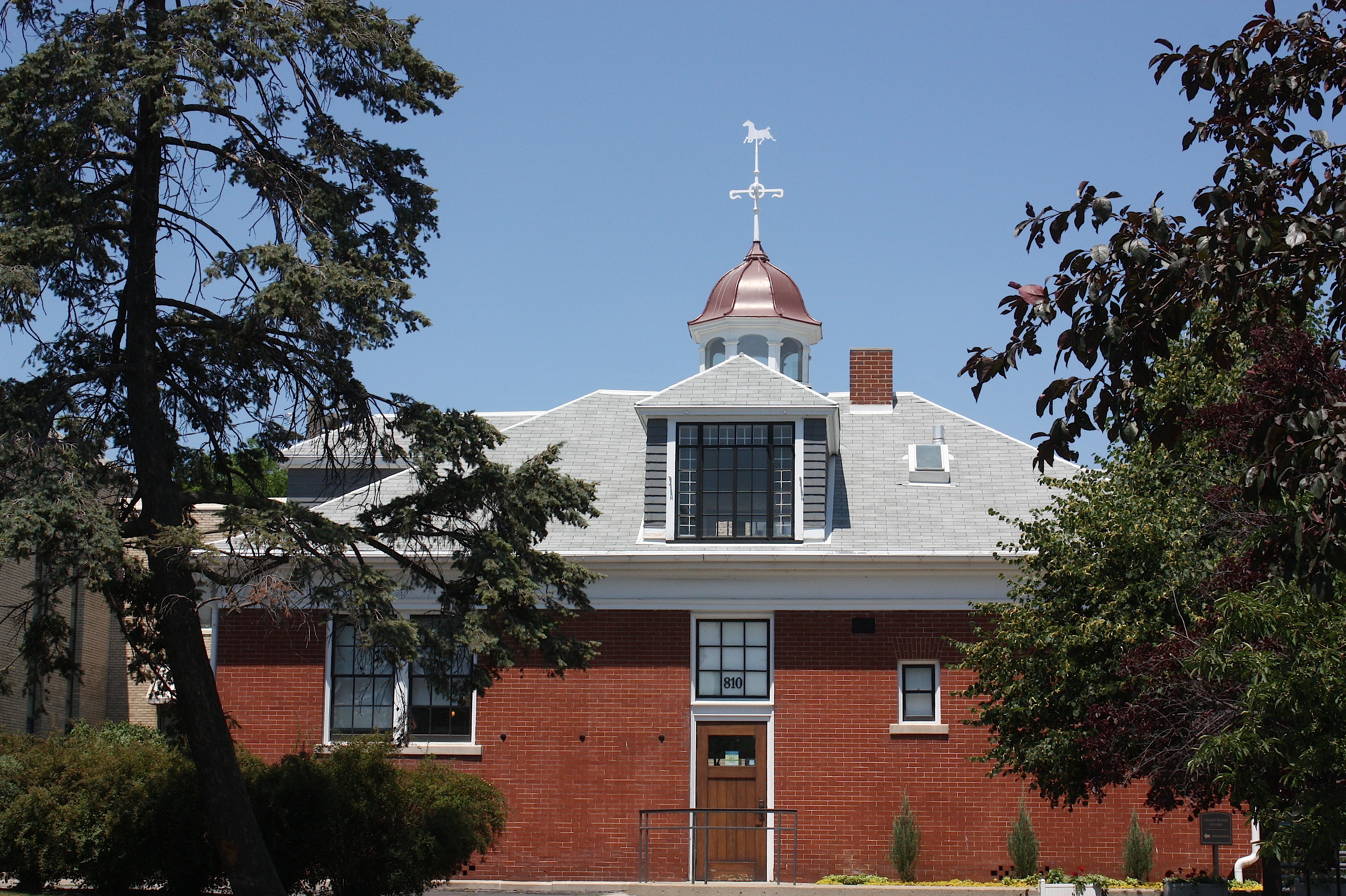
I’ve been wanting to go to the Grant Wood Studio and its accompanying Armstrong Visitor Center for a year now. It’s tough to find time to get there since it’s only open part of the year and only from noon to 4 p.m. on Saturdays and Sundays. If you go this summer, be forewarned that there is road construction in the area and you may have to detour a bit, but the studio is definitely open for visitors.
When I entered the visitor center it was suggested that I join a group that was already watching a 22-minute film about the work of Grant Wood and his lifelong connection to Iowa. After viewing the film, the docents, Bill and Karen Schlue, took us on a tour of the studio.

Grant Wood lived and worked in this studio from 1924 through 1935. The building, originally a carriage house next to the Douglas family mansion, was built in the 1890s. In 1924, David Turner was planning to convert the mansion into a funeral home, and he offered Wood free rent in the hayloft of the carriage house if he’d help with the work.
At first, Wood used the loft only as a studio, but he soon converted it into a full-time residence for himself and his mother (and sometimes his sister, Nan). The space is certainly small for that many people plus art supplies, but Wood was a master at finding a place for things in every nook and cranny, as you can still see in the studio’s built-in storage.
 The Schlues spoke about Wood’s life and work during the days he lived in the studio, illustrating their talk with a handful of old photographs that showed the work space as it was in the 1920s and even some images of Wood posing with his art in the space. During the time he lived there, Wood created many of his most famous paintings, including Woman with Plants, Daughters of the American Revolution, Young Corn, and American Gothic.
The studio and visitor center are located at 810 Second Avenue SE, Cedar Rapids. Admission is free, thanks to benefactors Esther and Robert Armstrong Charitable Trust.
Next on my list was the Tipton Public Library. I honestly can’t even remember how I learned about the Grant Wood art collection at this library; I think it was through somebody I encountered during last August’s tour. At any rate, I made a note and did some research, and indeed, this small library houses a collection of 21 Grant Wood lithographs and two oil paintings.

Apparently Chicago attorney Roger R. Leech was an avid collector of Grant Wood art. When he died in 1976, he left his estate to his sister, who then died the next year. Upon her death, the major portion of the estate went to the Tipton Public Library, including the art collection.

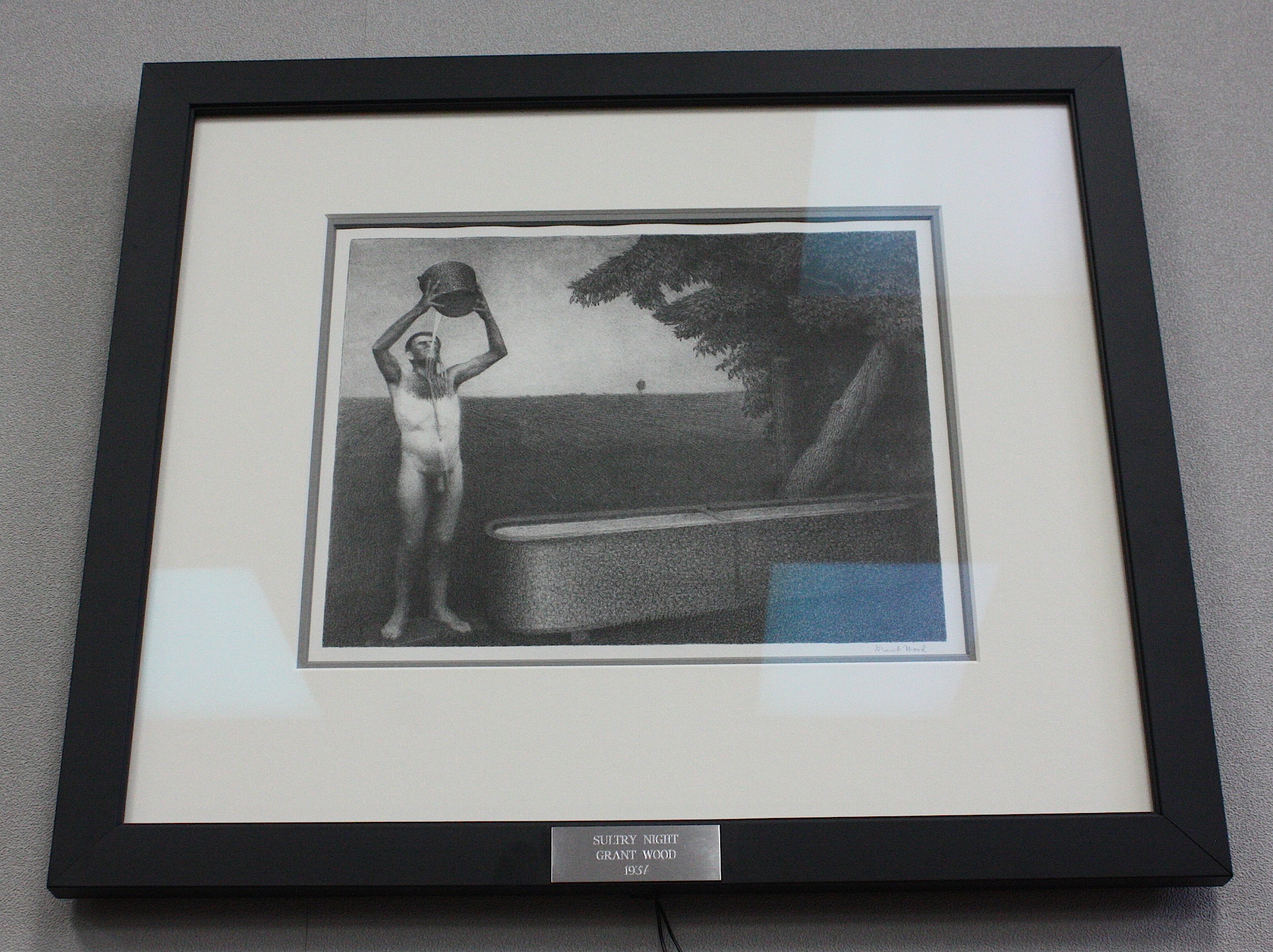 The collection features many famous lithographs, including Approaching Storm (left), Tree Planting Group, Fertility, and Honorary Degree among many others. One lithograph, Sultry Night (right), features a farmer who is bathing nude after a long day in the field. It’s Wood’s only “regionalist nude,” and only 100 were made due to the controversial content. (You may click on these images to see them enlarged if you’d like.)

 Other unique works include a set of hand-colored lithographs, Vegetables and Tame Flowers (left). Even more unique are oil paintings titled Statue of Musette (right) and The Crucifix. I can’t find out much about these two pieces, but I can only assume they were created during Wood’s early-1920s foray into Impressionism when he studied in Europe.
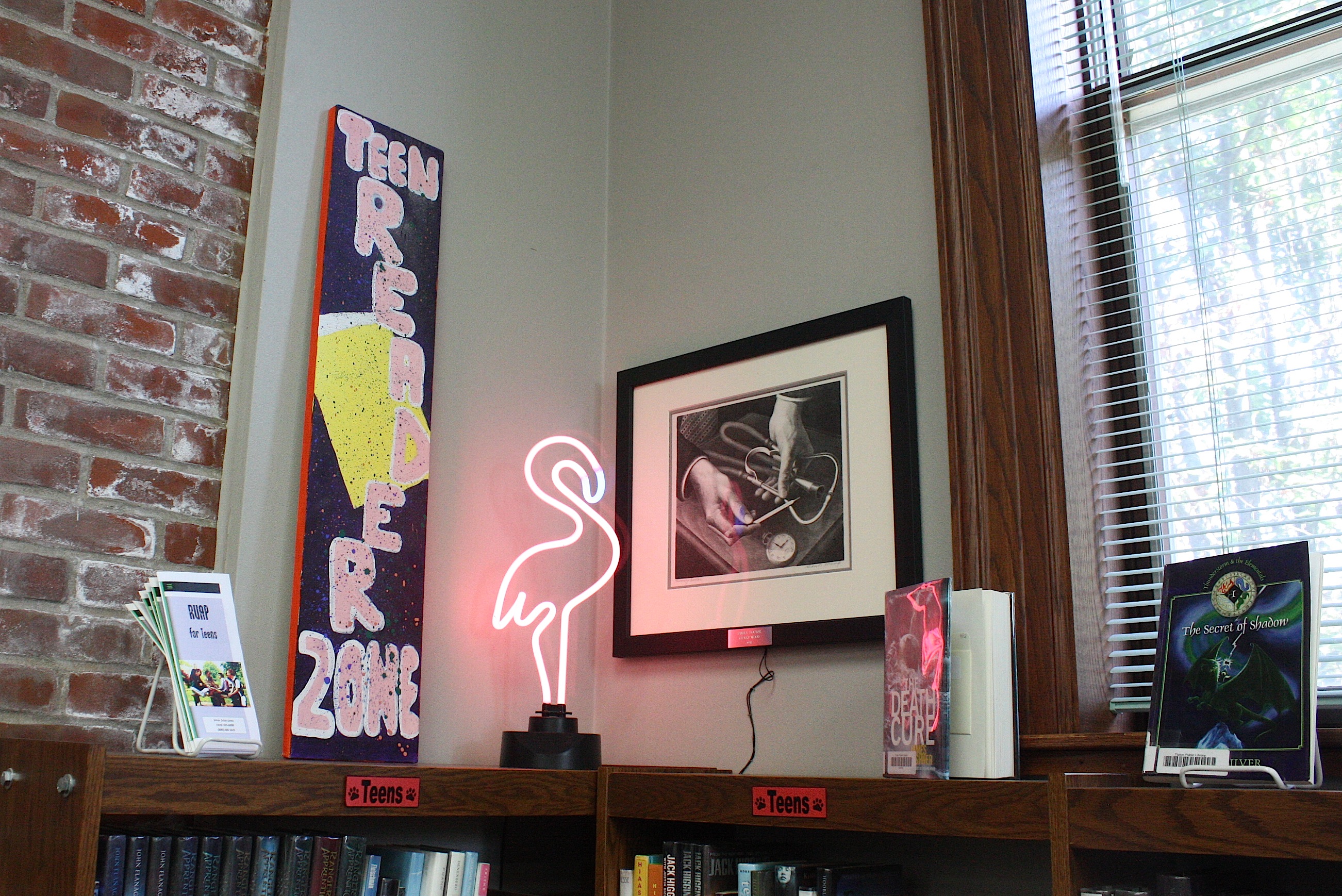
 This being a library and not an art gallery, the artwork is not exhibited on, shall we say, a grand scale. For one thing, the light’s not great. There is one wall with six agricultural lithographs displayed nicely (if not exactly spaced evenly), but most of the others are a bit haphazard. For example, December Afternoon is displayed within just inches of a tacky sign promoting e-books for kids. But the worst offender is the display of a lithograph titled Family Doctor, which was commissioned by Abbott Laboratories of Chicago as gifts for physicians and considered to be Wood’s last artistic work. It’s wedged in the corner, adjacent to a neon flamingo. Ahem.
The Tipton Public Library is open 10 a.m. to 8 p.m. Monday through Thursday, 10 a.m. to 5 p.m. on Fridays, and 10 a.m. to 1 p.m. on Saturdays. If you ask nicely, a photocopied guide of the Grant Wood collection is available at the circulation desk.

And finally: An Iowa tour of Grant Wood artwork cannot be complete without a visit to Iowa State University’s own Parks Library. There you will find magnificent murals designed by Wood and executed under the federal program providing work for unemployed artists in the 1930s, known as the Public Works of Art Project.
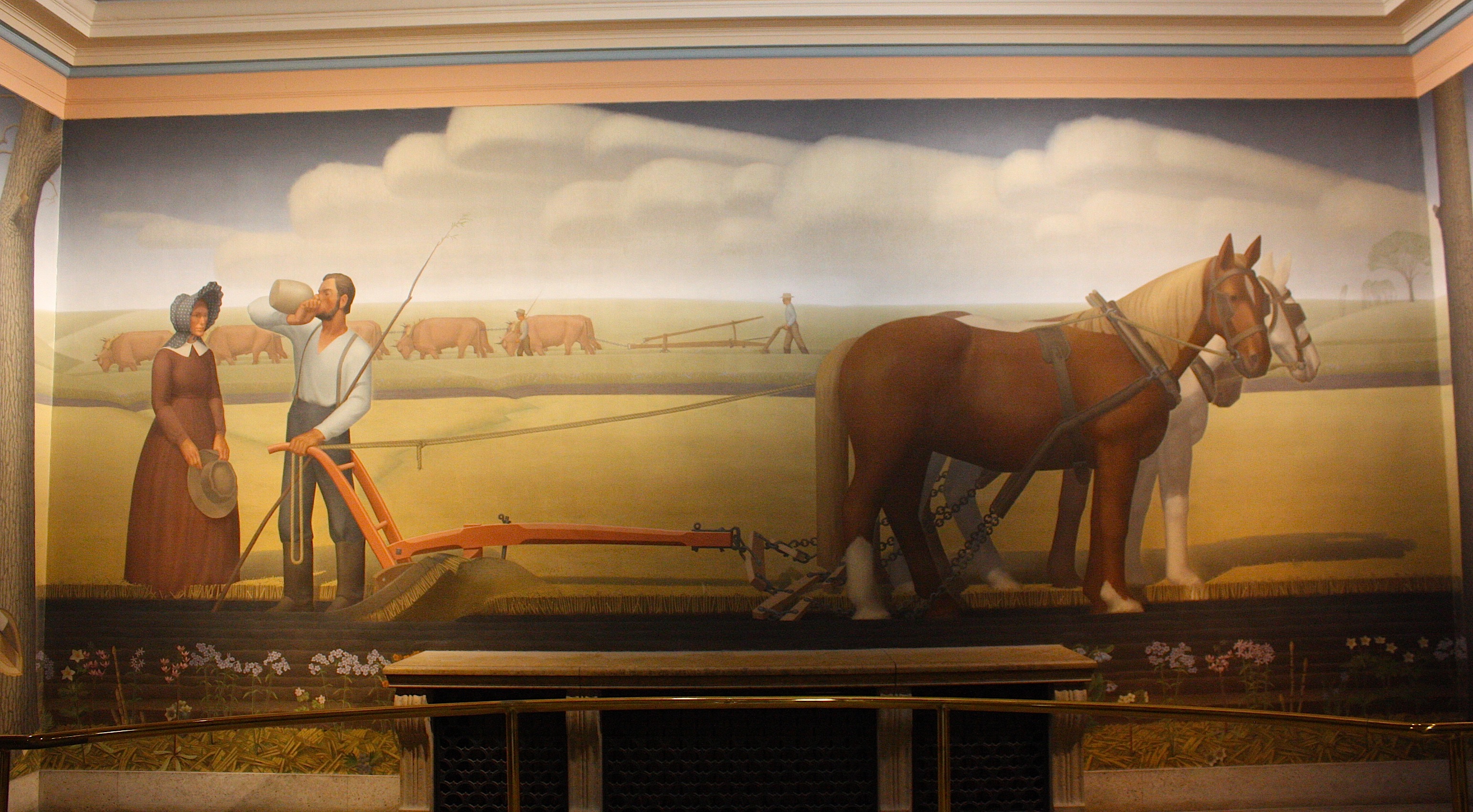
The murals – When Tillage Begins, Other Arts Follow and Breaking the Prairie Sod – are located around the staircases near the library’s original entrance. Tillage consists of nine mural panels, each covering 17 x 6 feet. The lovely Prairie Sod consists of a 23×11-foot center panel, plus two 11×9-foot side panels. You can view these spectacular murals any time the library is open (go to http://www.lib.iastate.edu/libhours-todayall/6175 for up-to-date information).
I promise this will be my last Grant Wood post for awhile.
Zoo Brew

What a great concept: The zoo…open only to adults…in the relatively cooler summer evening hours…with adult beverages. It’s a stroke of genius!
The Blank Park Zoo has, for the past several years, opened its doors to an adults-only crowd every Wednesday night during the months of June, July, and August in a event called Zoo Brew. Each Wednesday event features a different opportunity to sample wines and beers and listen to live music. And, of course, walk through the zoo without having to deal with sticky, screaming children.

I attended “Uncorked,” the first Zoo Brew of the summer on June 6 with my daughter, Katie. (Technically speaking, she’s a grownup.) Wines from Covered Bridges Winery, John Ernest Vineyard & Winery, Madison County Winery, Prairie Moon Vineyard & Winery, and Tabor Home Winery were available for our tasting pleasure. I’ve tried to love Iowa wines over the years but often find them fairly off-putting. Samplings from this group were so-so; one tasted exactly like grape juice, another had to be spat out. Surprisingly, the best was a crisp chardonnay from Prairie Moon. I also liked a white wine from Covered Bridges. None of the reds were worth drinking.
Unimpressive full-size drinks can be purchased at stands around the zoo. I didn’t see any food for sale, and that’s a drawback to this event. It starts at 5:30 p.m., so a few food vendors would make this a one-stop evening event. As it was, we didn’t stay long because we were hungry and eager to find something to eat. Next time, maybe we should back a picnic like the old days, with juice boxes and goldfish crackers?
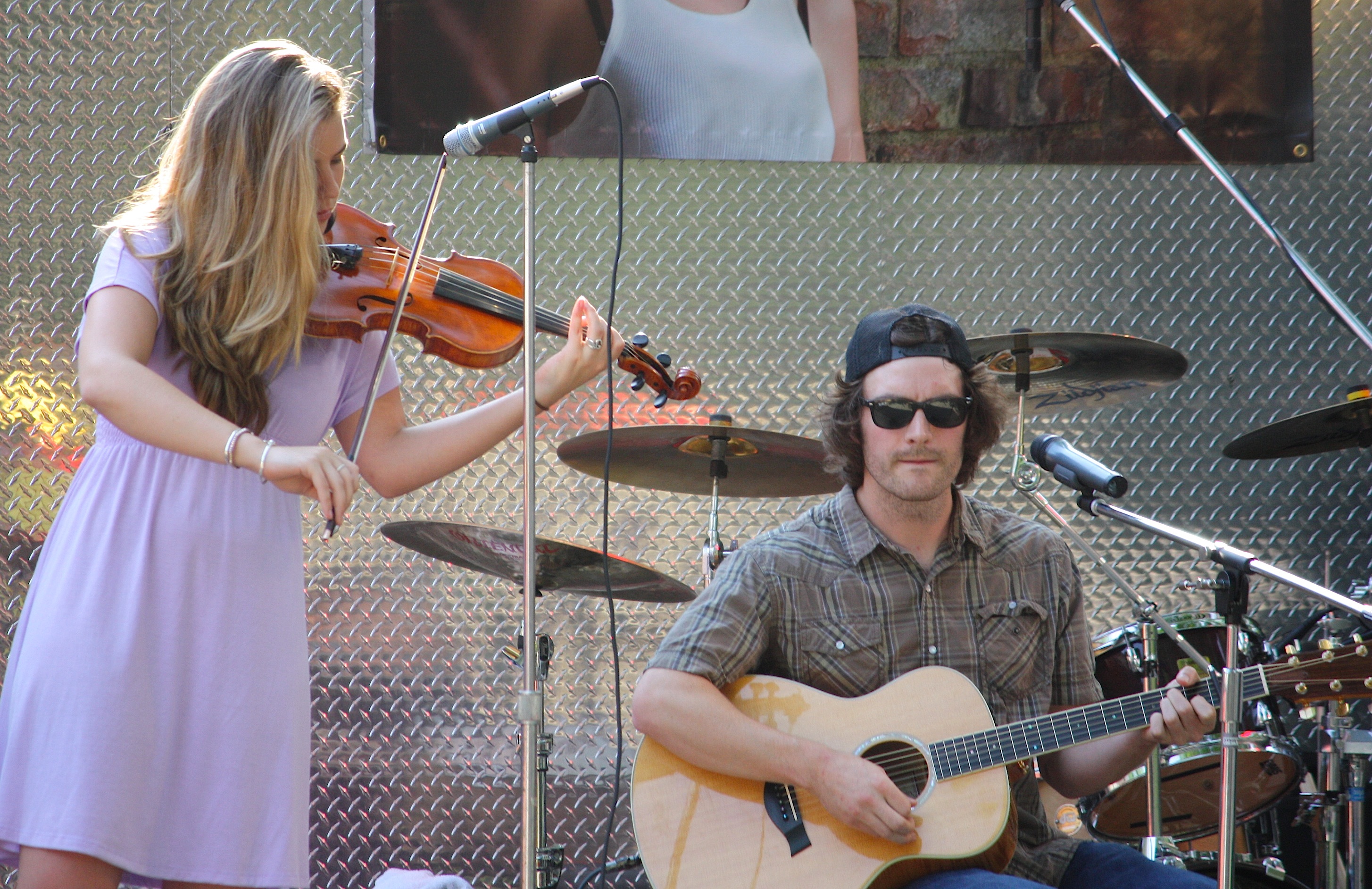
Lack of food aside, this is a great event for young professionals and others in the Des Moines area. It’s definitely a mix-and-mingle event, and the zoo vibe is very pleasant. The night we were there, very good musical entertainment was provided by Bonne Finken with Ryne Doughty.
Here are the upcoming themes, featured drinks, and musical entertainment for the rest of the summer:
- June 13: “Around the World,” featuring Loose Neutral and samples of international beers
- June 20: “Iowa Brew Night,” featuring Throwing Toast and Iowa microbrews
- June 27: “Ladies’ Brew,” featuring Damon Dotson with Rudy York and samples of flavored beers
- July 4: “Red, White & Brew,” featuring Decoy with Brian Congdon and summer beers
- July 11: “Uncorked Encore,” featuring Abby Normal and Iowa wines
- July 18: “Iowa Brew Night” featuring Standing Hampton and Iowa breweries
- July 25: “Country Night” featuring Beau Nystrom Band with Time Well Wasted and a variety of beers
- Aug. 1: “Zoolympics” featuring Cold Filtered and English beers
- Aug. 8: “Summer Luau” featuring Monkey, Monkey, Monkey and light, summer beers
- Aug. 15: “Fan’s Choice” featuring The Wilder Side Band’s Live Karaoke Band and samples chosen by fans on Facebook
- Aug. 22: “Ladies Brew Take Two” featuring Hollywood Burnout with Josh & Josie and more fruit-flavored beers
- Aug. 29: “Zoo Brew Finale” featuring Pianopalooza with Josh and Will and a variety of local beers and wines
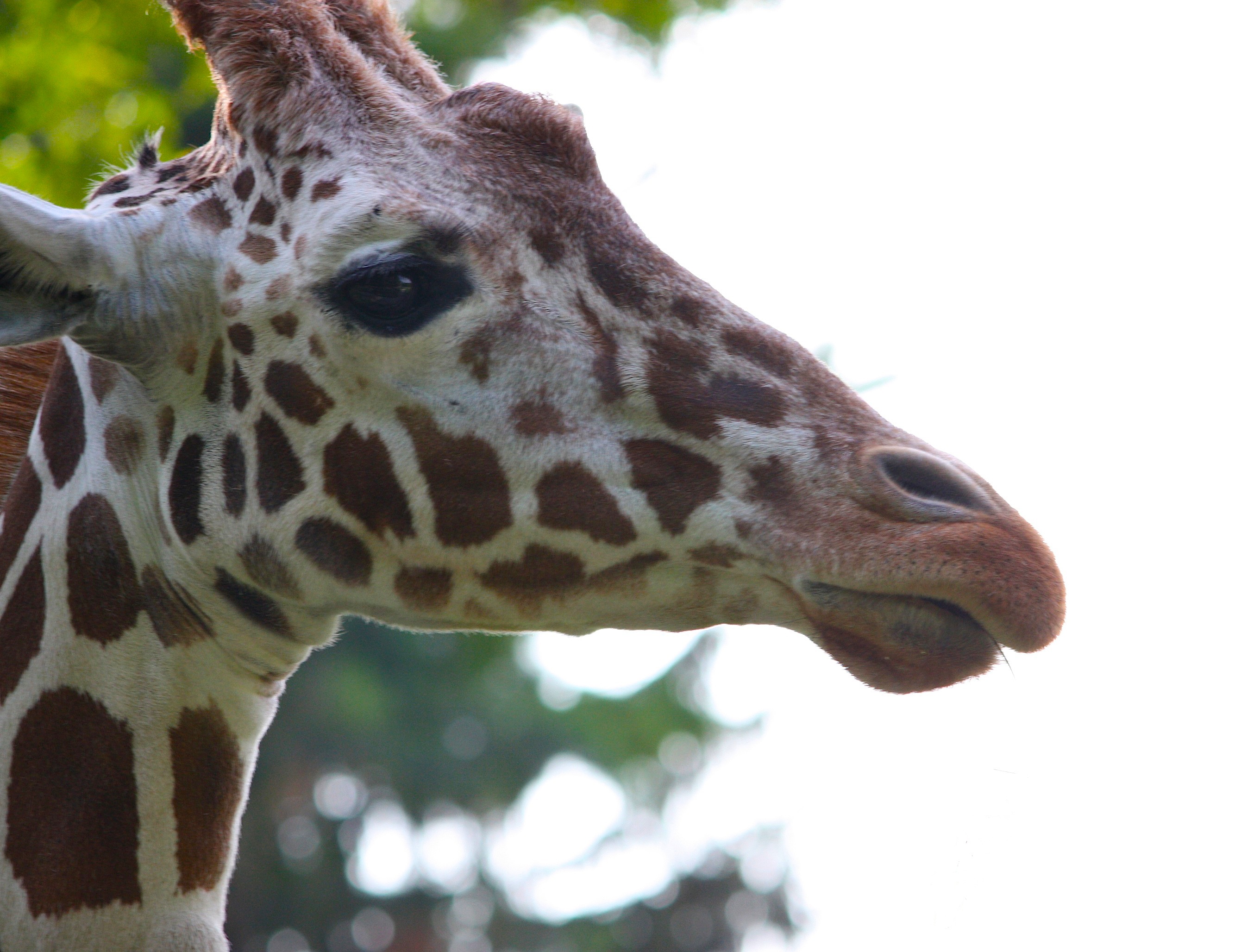
With all the attention being paid to the beverages and music, it’s easy to overlook the real stars of the zoo: the animals. Blank Park is a small but extremely nice zoo, and there are dozens of exhibits to enjoy including a new sea lion exhibit, giraffes, lions, tigers, monkeys, otters, prairie dogs, and flamingoes. There’s also a petting zoo that’s as much fun for adults as it is for kids — as witnessed at the recent Zoo Brew.
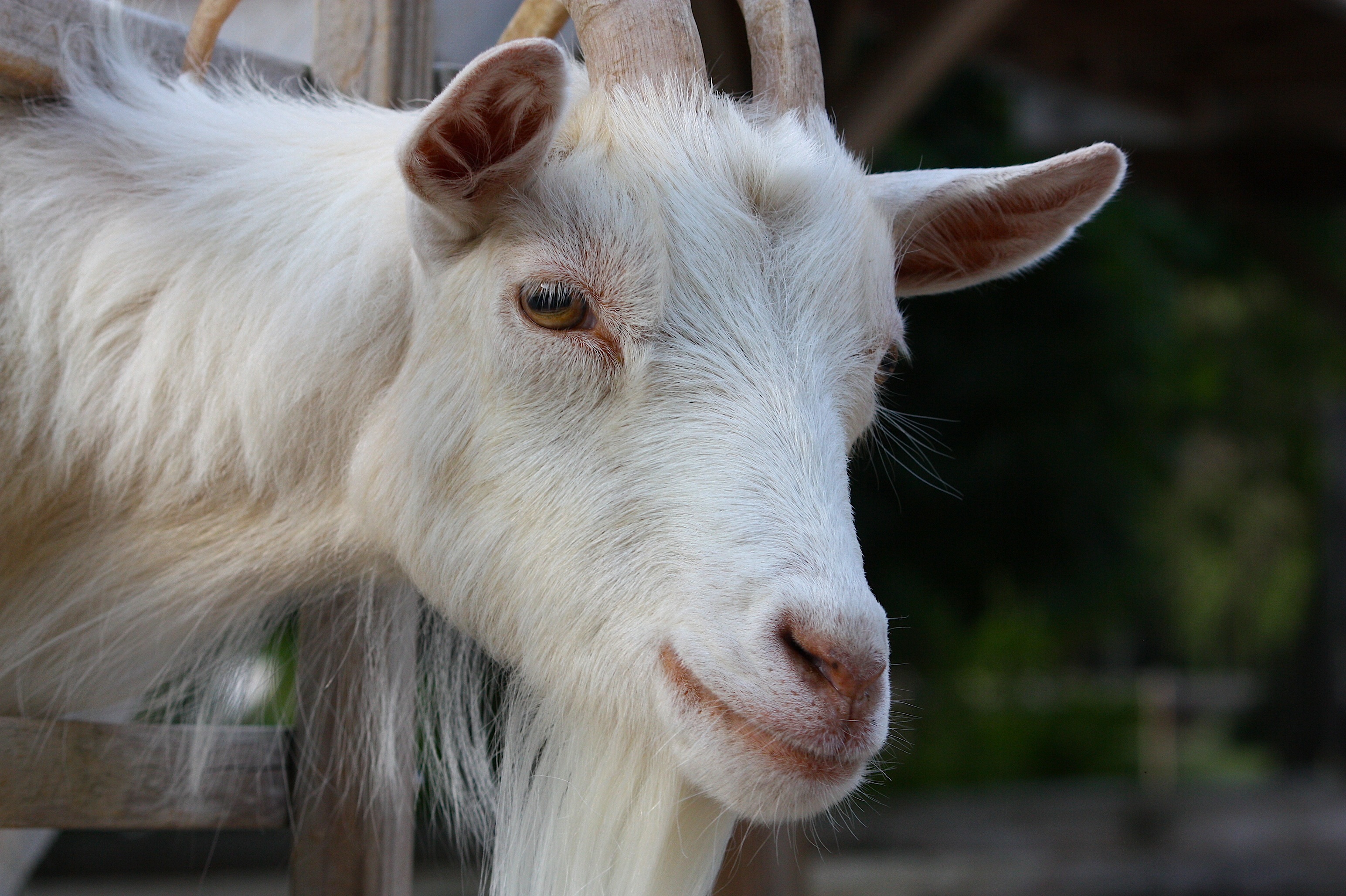

Zoo Brew is held every Wednesday through the end of August from 5:30 to 9 p.m. (entry doors close at 8 p.m.) Cost for Zoo Brew is the same as regular zoo admission: $11. Katie and I were lucky to have snagged a Groupon that got both of us in for just $10 — such a bargain! And I was happy to have an opportunity to try out my new telephoto lens on some feathered, furry, and floppy subjects.


Historic Albia, Iowa
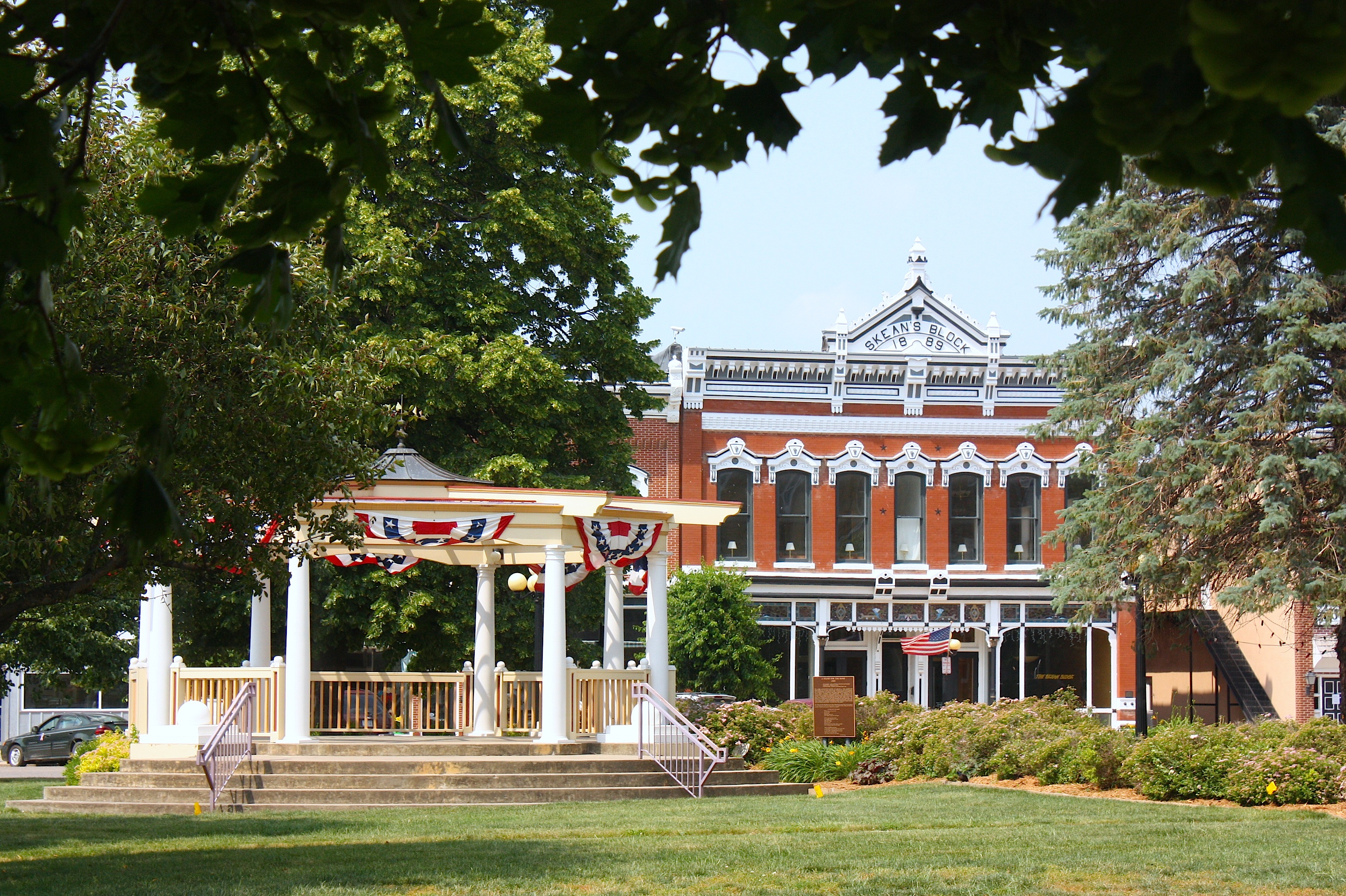
With 92 buildings on the National Historic Register, Albia, Iowa, is a town preserved in time.
Albia is the county seat of Monroe County in south-central Iowa, with a population of 3,706 as of the 2000 census. The town’s historic square features buildings fitted with plaques giving specific details for each piece of architecture: when the buildings were built, what the buildings have been used for, who purchased the buildings.
 For example, the E.M. Noble Block plaque states: “This building is one of the best examples of the commercial Queen Anne style from the early 1900s. The polygonal roofed oriels are the outstanding feature, but the corbeled cornice and round arched brick pediment with cast concrete panels are also noteworthy…. This double-front building has held a number of different businesses over the years, including the D&W Tea Company, which specialized in selling tea and Queensware (pottery), a specialty business that could not exist today given the population of the community.” There’s lots of good information like this on each sign.
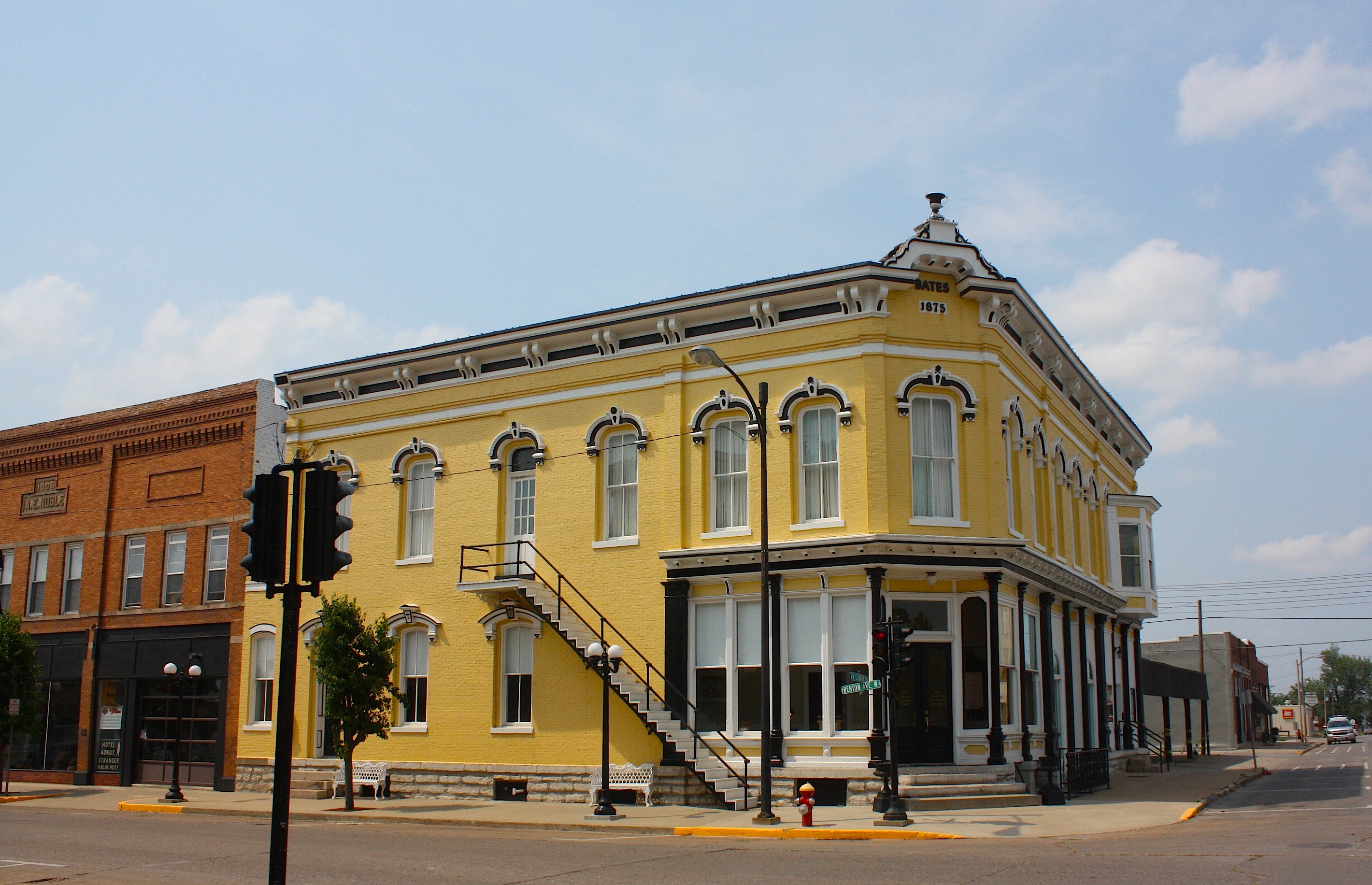
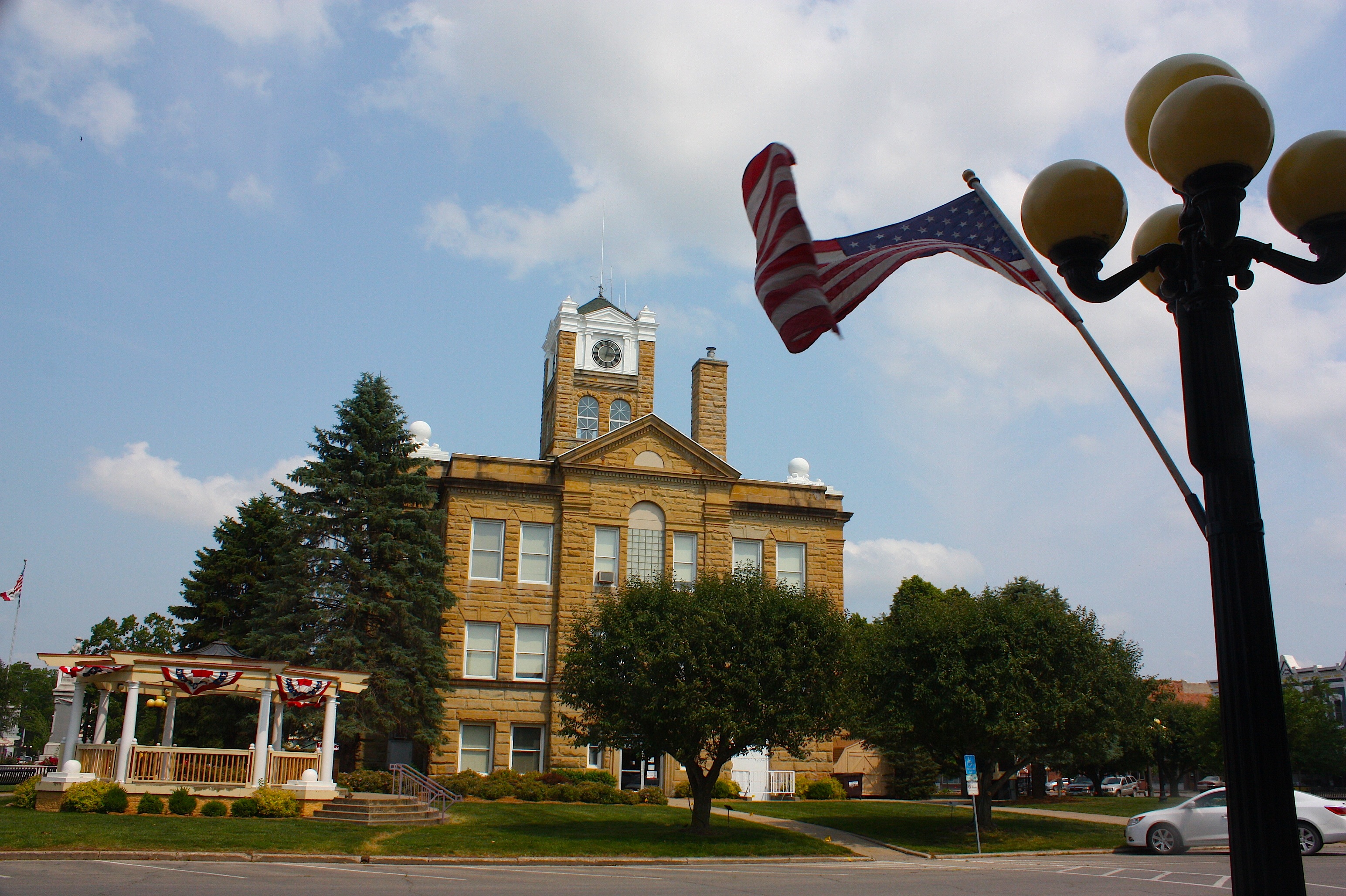 The centerpiece of the downtown square is the Monroe County courthouse; a gazebo shares the spacious lawn. Buildings surrounding the square are mostly made of brick, some with painted accent colors. Some are completely painted – for example, the R.O Cramer building, built in 1890, is blue, white, and yellow; the Bates building, built in 1875, is yellow with black and white accents. Unlike many small-town Iowa squares, these buildings are not in need of repair, paint, or new windows. Most have their names and years painted at the top; most appear to be occupied.
One building, the First Iowa State Bank, is decorated in Victorian antiques. Many homes in Albia were also built in the Victorian era. Tours are given at the Walker House, located at 106 2nd Ave. West.
The Albia Restoration Days festival is held the fourth Saturday of each August. And a Victorian Stroll is held each December.


 Iowa Girl on the Go