Archive for the ‘Uncategorized’ Category
Door County top five
 Comments (3)
Door County, in northeast Wisconsin, is eight hours from central Iowa. The county is on a peninsula that juts out into the water, with Green Bay on the west side and Lake Michigan on the east.
It’s one of the Midwest’s top visitor destinations, but for some reason I’d never been there before. I think I had the idea that it was overly touristy. People go for different reasons, I suppose: to camp, shop, tour the wineries, fish, kayak, browse art galleries, or maybe just relax. I visited “The Door” last week with my husband, Dave, and I was surprised by all the things I really liked about it. Here are my top five:
LIGHTHOUSES
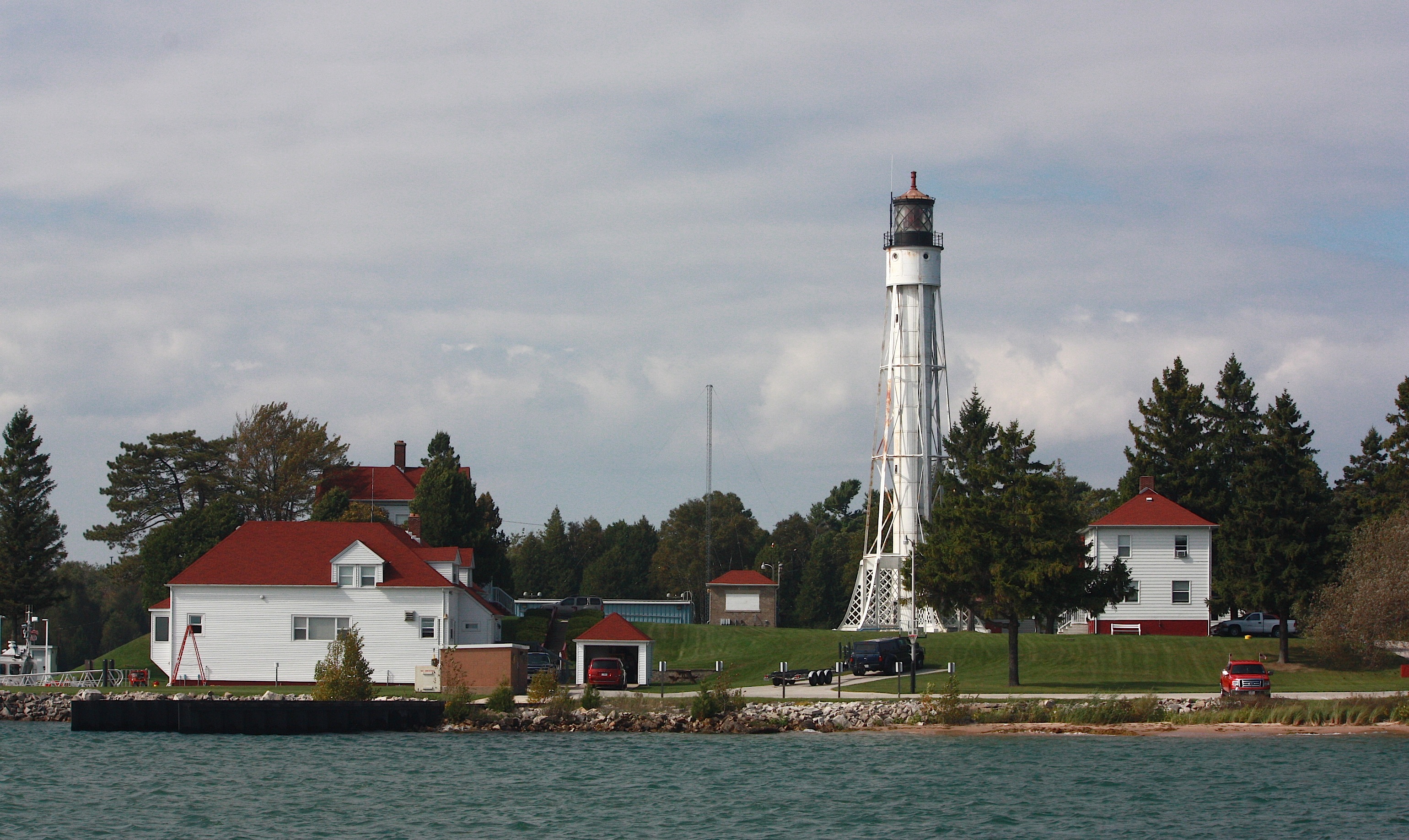
How many lighthouses can one person photograph? All of them – that would be my answer. But, sadly, not all lighthouses are accessible by car and/or on foot. Many of them are located out on an island somewhere, or they’re on private property, or they’re just out of bounds for some reason.
So my realistic goal was just to see and photograph as many as possible. Of the 11 lighthouses on the peninsula and its islands, I found five, and half the fun was just getting to them:
- Baileys Harbor Range Light
- Canal Station Lighthouse (above)
- Canal Station Pier-head Lighthouse
- Cana Island Lighthouse
- Eagle Bluff Lighthouse
My favorite by far was the Canal Station Pier-head Lighthouse. It’s bright red, and it sits on a tiny, rocky island just off the coast of the U.S. Coast Guard station near Sturgeon Bay. This lighthouse is the featured photograph on the cover on the 2015-2016 “Key to the Door” vacation guide. It’s a beautiful thing.

But we almost didn’t get to see it. We had a terrible time finding the Coast Guard station, and even when we did, there was a big warning sign, with a stop sign and orange barricades in the road. Plus, I still wasn’t sure where the Pier-head Lighthouse was even located; we could easily see the less unique Canal Station Lighthouse (built in 1899) from the car, but not the red one that I so desperately wanted to see.

But then I carefully read the whole “warning” sign and found a loophole: There’s about a four-foot walkway that’s public, surrounded by private land on either side. As long as you walk straight down that ribbon of asphalt, it is apparently OK and not considered trespassing. At the end of the road is the pier that juts out into Lake Michigan, with the tiny, rocky island at the end.
It was windy as we made our way down the ever-narrowing pier. I began to hold on to the steel beams with both hands. But, oh my, it was worth it. Just take a look at this beauty, built in 1882:


This was probably my favorite experience on the Door County peninsula. But the other lighthouses were fun, too.

Eagle Bluff (above), built in 1868, is located on a steep bluff in Peninsula State Park and is easily accessible by car. So easy, it almost seemed like cheating, and there were a lot of people there.

The Cana Island Lighthouse (above) is a bit trickier to get to, but it’s well worth it. You have to pay $7 per person to walk across the causeway to the island and tour the lighthouse, built in 1869. To climb into the light tower, it’s an extra five bucks. This is a great lighthouse, and the grounds are nice, too.


The Baileys Harbor Range Light (above) has a unique story: Between 1869 and 1969 the range lights were used by navigators to safely enter Baileys Harbor on the Lake Michigan side of the peninsula. When the upper and lower lights were lined up, the sailor knew he was in safe water. The lighthouse is not open to the public, but you can walk around the exterior.
STATE AND COUNTY PARKS
Door County has five state parks and 19 county parks, and the ones we visited were all fantastic. We were hoping for some good hiking and great scenery, and we were not disappointed. Be aware that you need a park pass to visit the state parks ($10 per day or $35 per year for out-of-state cars).
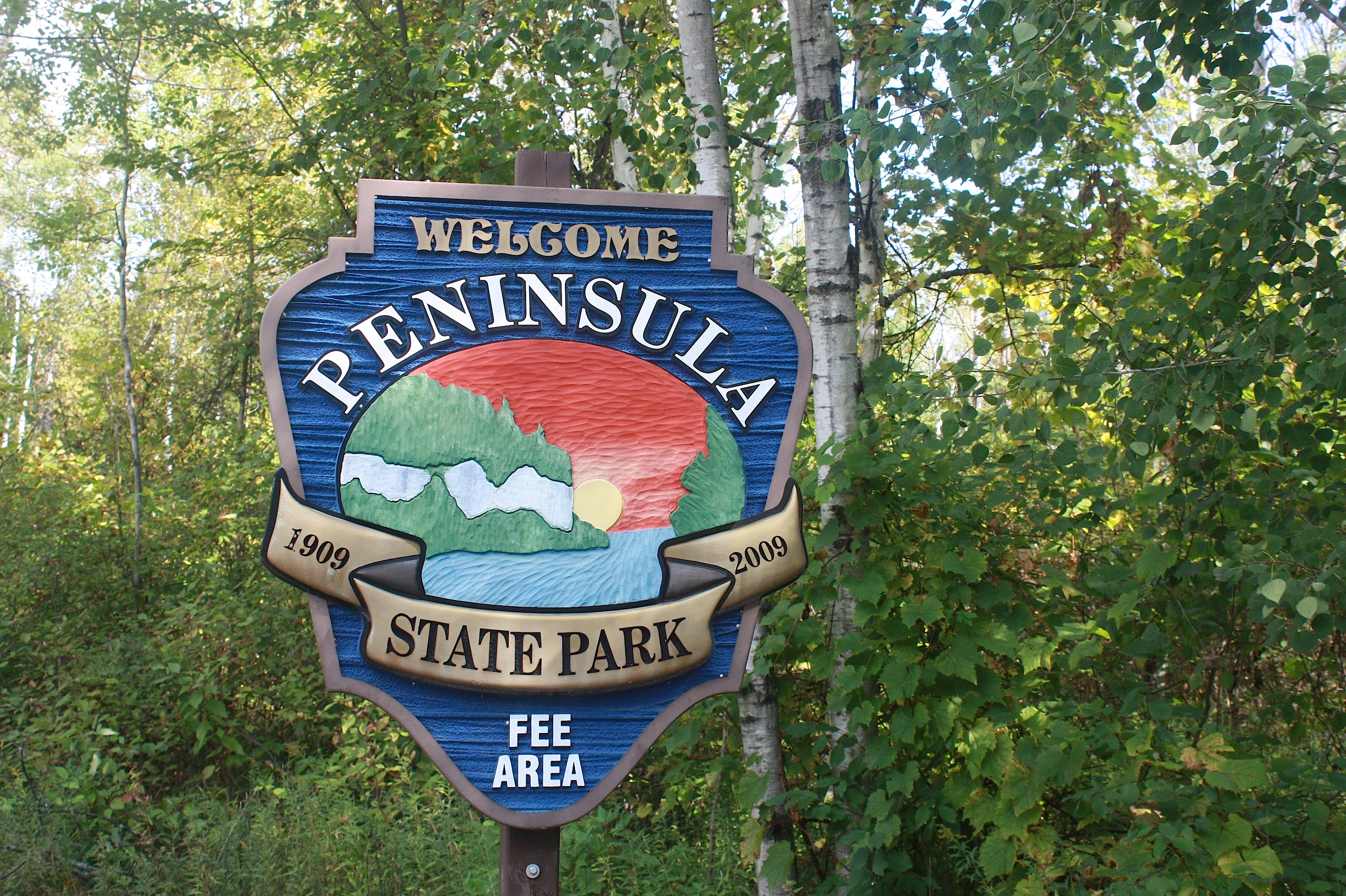
We visited one state park on the western shore of the peninsula: the 3,776-acre Peninsula State Park. This may be the premier state park in the system; it has a huge golf course, the aforementioned lighthouse, bike trails, camping, swimming beaches, a theater, a nature center, and 20 miles of hiking trails.
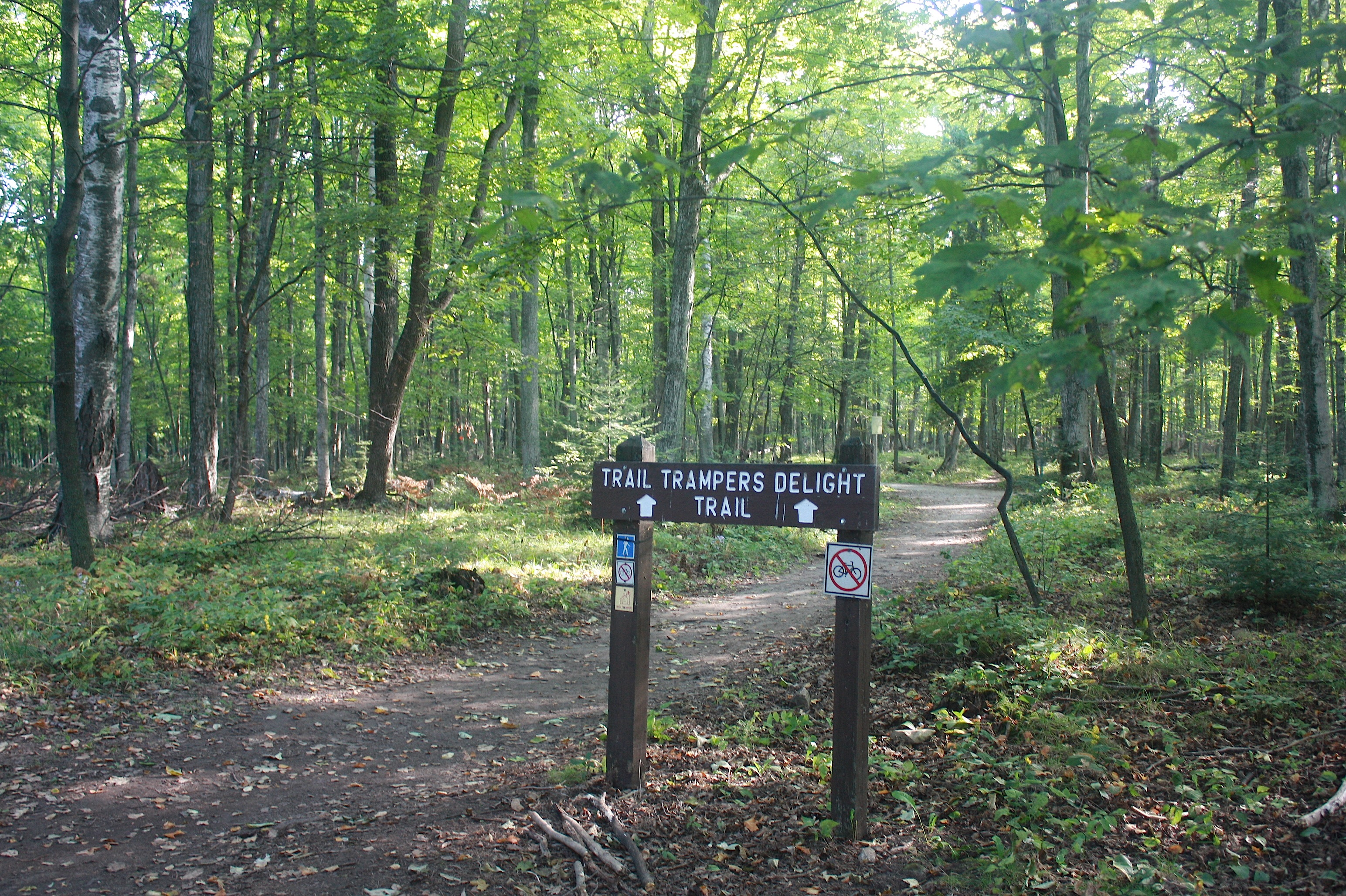


We took two well-marked hikes: the Trail Tramper’s Delight and the Sentinel Trail, both quite nice, with gentle terrain. Other trails offer more of a challenge, with steep, rocky descents and access to remote areas.
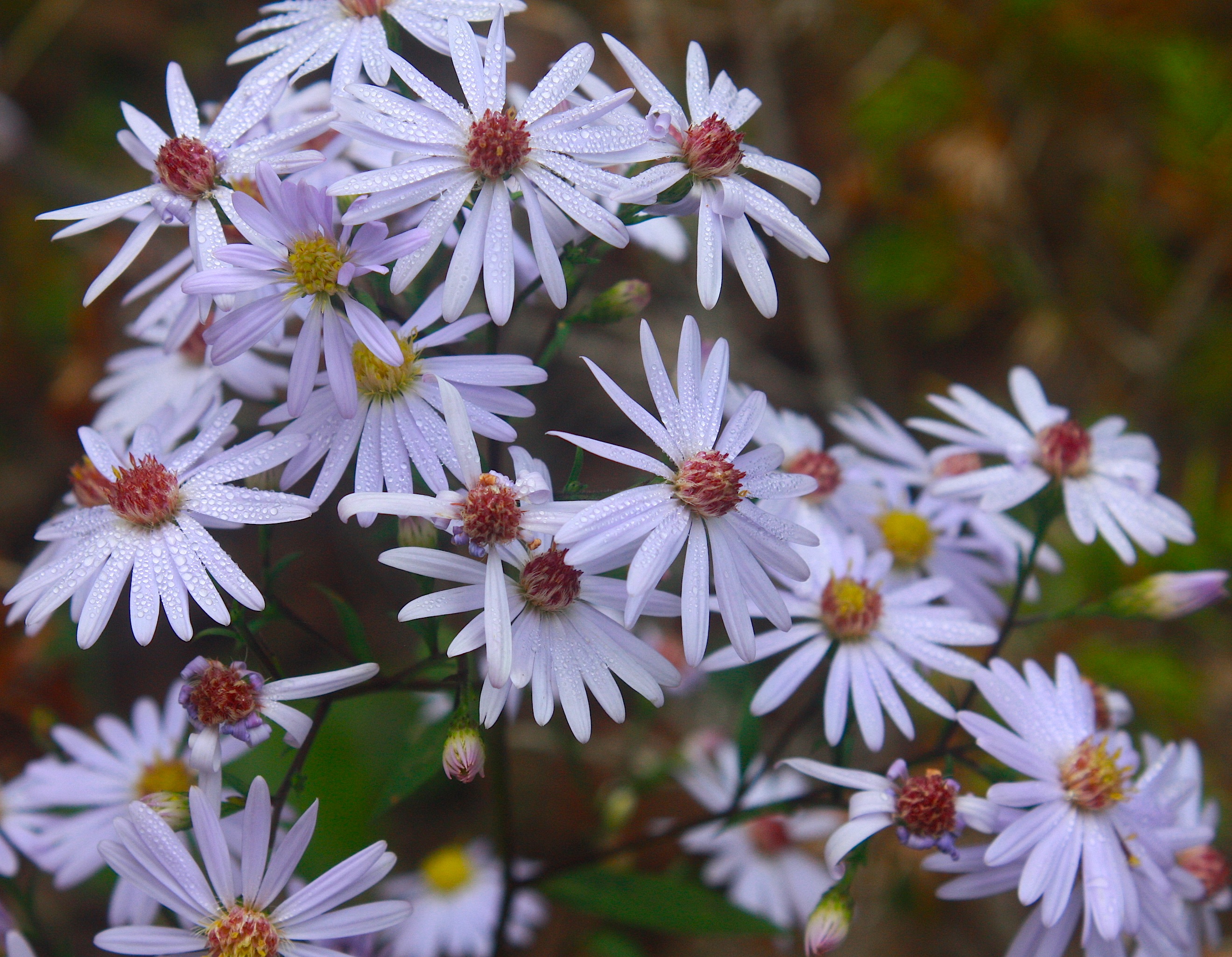
On the Lake Michigan side, we visited Newport State Park, Wisconsin’s only formally designated wilderness park. With 2,373 acres of forest, wetlands, and upland meadows and only one mile of road, you could spend days here hiking the 30 miles of trails and camping in 16 remote campsites. We hiked the Upland loop, a narrow, 2-mile trail with plenty of rocks and tree roots to keep things challenging but very little up/down climbing, so it was relatively easy and probably the prettiest hike we took in Door County. Much of Newport State Park is edged by Lake Michigan, with coves and bays all along the way.

The last state park we visited was Whitefish Dunes. There we followed the “red trail” to “Old Baldy,” the tallest sand dune in the park. I found the hike to be tedious, with too many steps to climb with too little payoff. But the beach just a few yards from the parking lot was very pleasant (above).
Other state parks include Potawatomi, located south of Sturgeon Bay, and Rock Island, which is on the north side of Washington Island (a ferry ride from the peninsula) and can only be accessed by boat or yet another ferry.
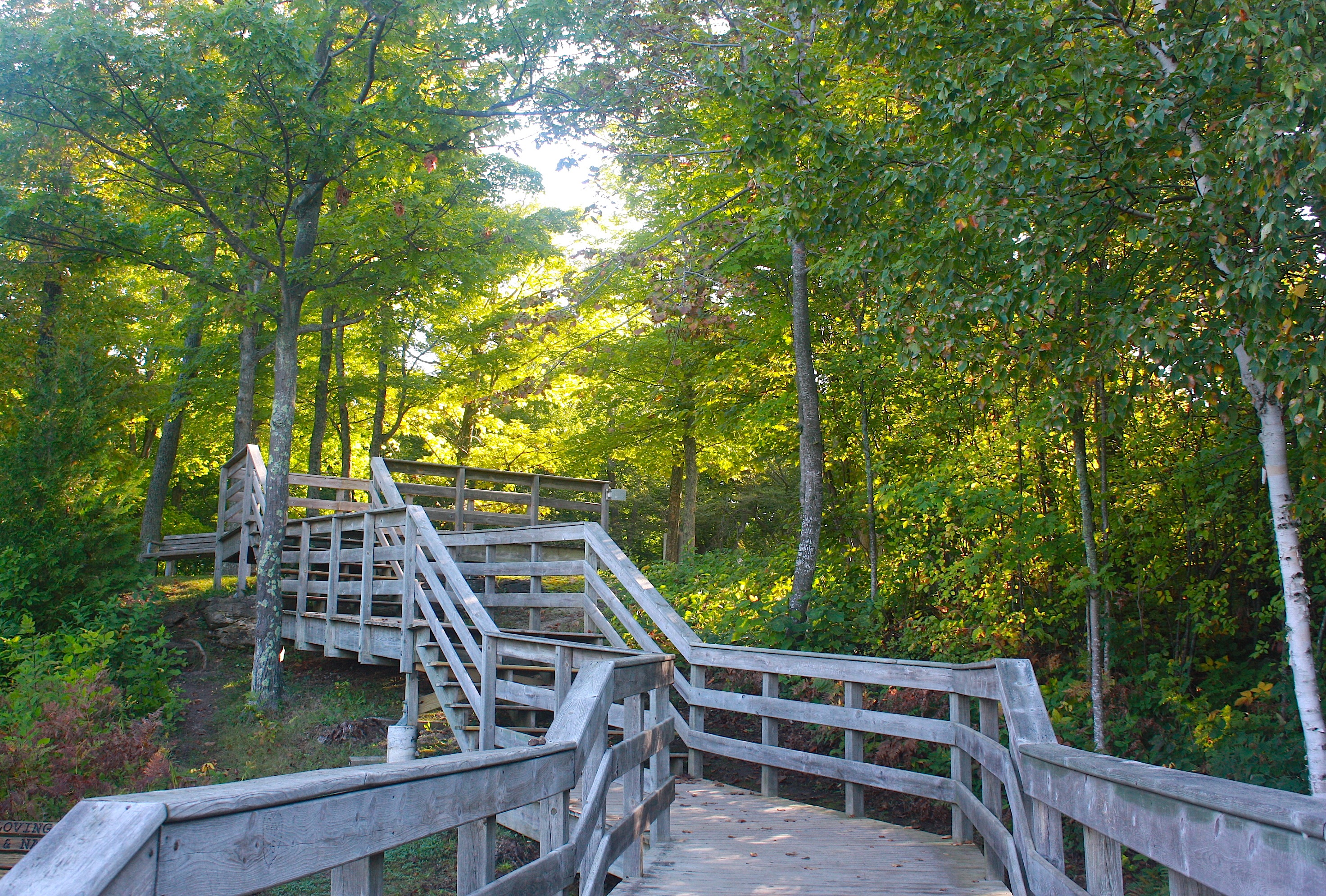
Of the nearly two dozen county parks, we visited Ellison Bluff near Ellison Bay (above) for its beautiful views and a very nice, easy hike, and Cave Point near Jacksonport (below) for the crashing Lake Michigan waves against the limestone cliffs.


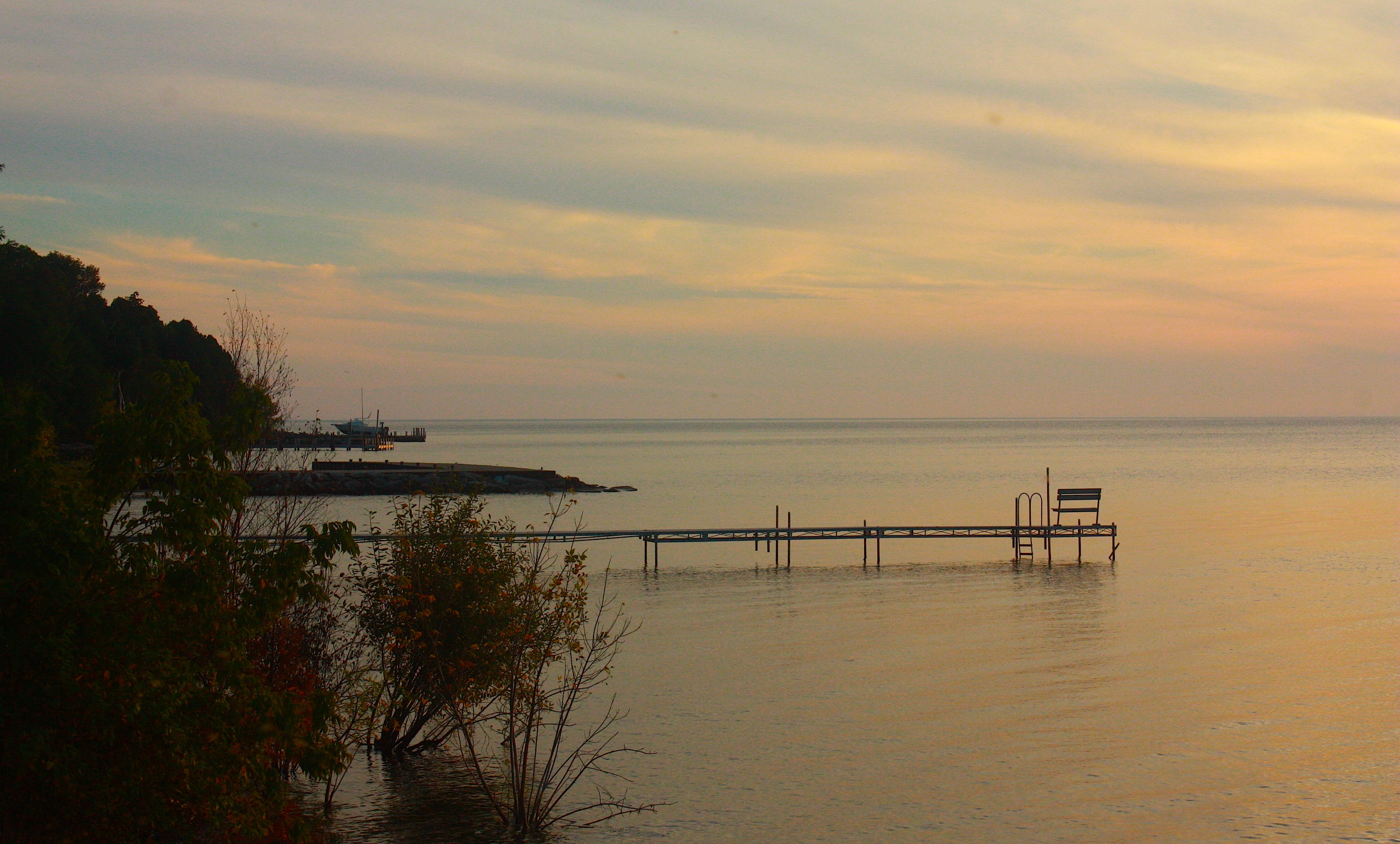
We also watched a gorgeous sunset at Sunset Beach Park in Fish Creek on our first night there.


WINERIES AND FARM STANDS
Door County’s wine trail includes more than half a dozen unique wineries and vineyards – and that doesn’t include the distillery, cider house, and brewery. So you could easily spend an entire day driving from tasting room to tasting room, if that’s your thing.
I am more inclined to choose just one and enjoy it fully. We chose Simon Creek Vineyard & Winery, which is located pleasantly off the main highways near Jacksonport. There we found free tastings of Simon’s red, white, rose, cherry, and dessert wines (the region is famous for its cherry wine, which sounds terrible, but tastes pretty good, although I doubt I could drink a whole glass), plus, of course, wine for purchase.


We chose a bottle of cabernet and sat in Adirondack chairs out on the lawn, listening to a singer and guitarist and very much enjoying the view.

Also fun – especially in the fall – are the many farm stands, orchards, and markets. We hit as many as we could. Most of them are on the main highways (State Hwys. 42 and 57 span the peninsula). We saw apples, gobs of cherry products (unfortunately, fresh cherry season is in July), local wines, gourds, and a gazillion pumpkins. (I bought a huge one for just $4.50.) One place even had a petting zoo.
CHARMING SMALL TOWNS AND FARMLAND
Small villages dot the shoreline of Door County. With enchanting names like Egg Harbor and Fish Creek, it’s fun just to walk through these towns, peek into store windows, and stop for a beer or cup of coffee.

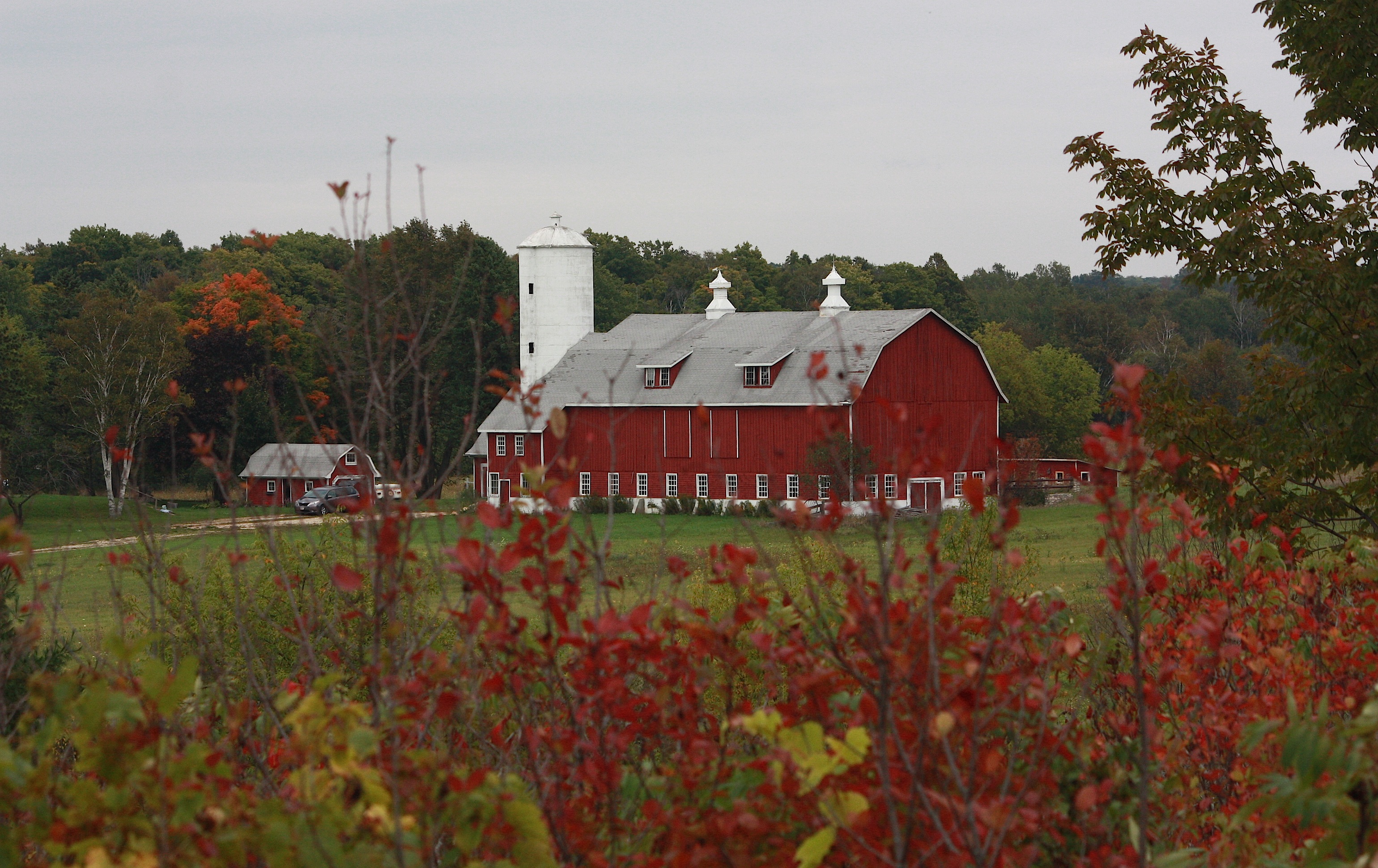
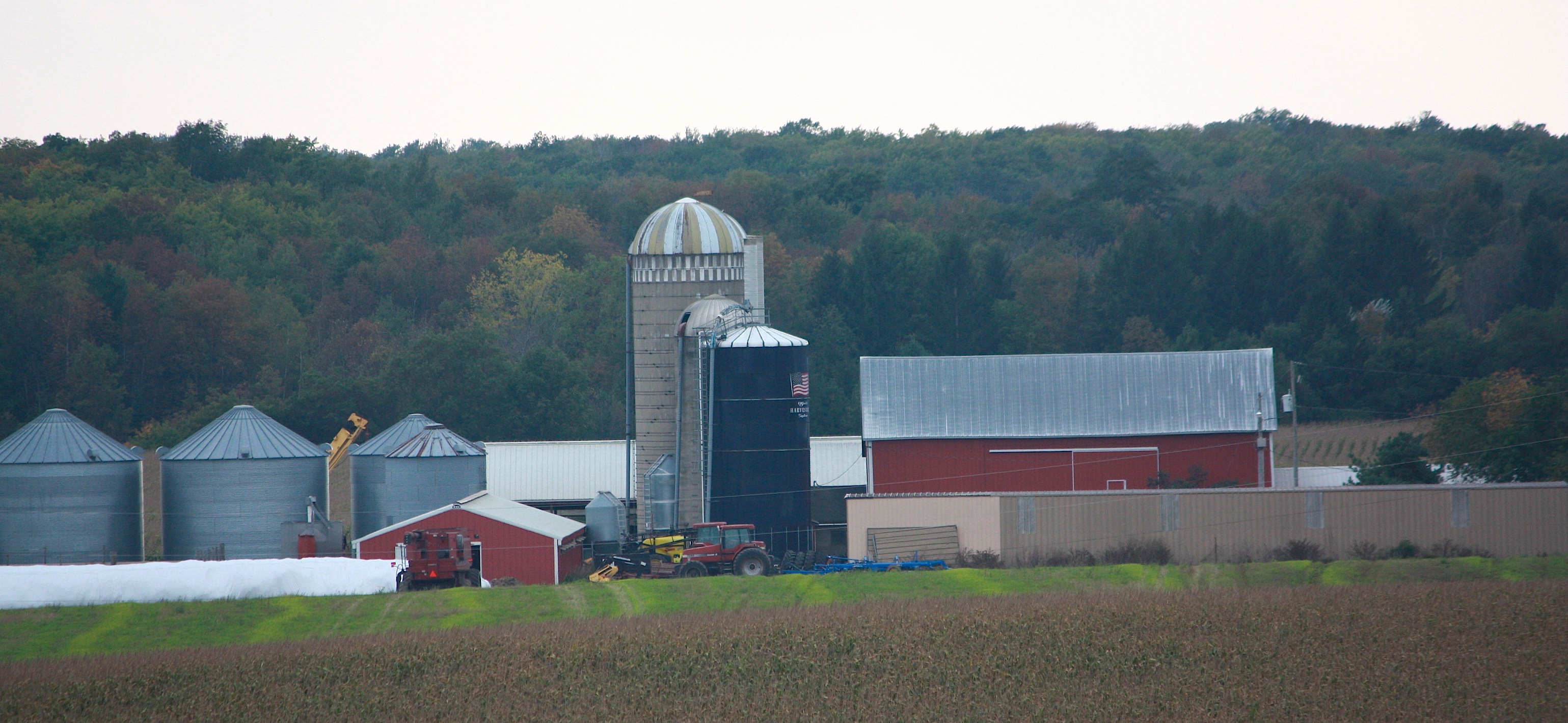
Equally engaging are the farms you’ll find off the beaten path, along roadways with names like Plum Bottom, Sunny Slope, and Maple Tree Road. I liked the barns, the orchards, the vineyards, and the cows. If you go, be sure to drive the side roads, because they’re delightful.


FOOD
I’m a vegetarian, and to raise the level of difficulty of finding a restaurant, I’m trying to eat healthier. So, no more French fries, no more mac & cheese, no more grilled cheese sandwiches. No more pie a la mode for lunch. But I had absolutely no problem finding good, healthy, veggie-friendly food in Door County, and Dave, a dedicated carnivore, was happy, too.
I had two meals at The Cookery in Fish Creek: grilled veggie kabobs and vegetarian fettuccine. I ate a wonderful spinach salad with goat cheese, toasted hazelnuts, and blackberries at Bier Zot Beer Café, a charming “European gastropub” in Sister Bay. I fell in love with the wood-fired pizza at the Wild Tomato in Fish Creek. And I even found a pretty decent walnut burger (weird, I know) at The Bistro in Egg Harbor. We were lucky that the weather was so nice; we ate many of our meals al fresco. Good breakfast also abounds in Door County, and many restaurants serve breakfast all day long. We avoided the top tourist meal: the fish boil.

AND THE REST
I think there are about two million places to stay in Door County: charming inns, resorts, B&Bs, condos, cottages, lodges, and yacht clubs. I found the choice overwhelming a few months back when I started looking for a place for two people to stay for four consecutive nights in September. Many of these places were already booked for the dates that worked best for us. Of the ones that were still available, some of them were really, really pricey. Dave managed to find a place, the Settlement Courtyard Inn, located just outside Fish Creek. Our room had a kitchenette, gas fireplace, and tons of space, so we were pleased with our choice. The Egg Harbor/Fish Creek/Ephraim/Sister Bay section of the peninsula has the most to offer in terms of lodging, food, and drink. If you want something more remote, consider Baileys Harbor or Jacksonport on the Lake Michigan side.
One other thing I’ll mention that I really liked about Door County was the almost total lack of any national chains. With the exception of a few in Sturgeon Bay, the largest town on the peninsula, you won’t find a Super 8, McDonald’s, Wal-Mart, or Olive Garden anywhere. There’s no Marriott, and nary a Subway. Talk about relaxing!
Here are some parting shots:

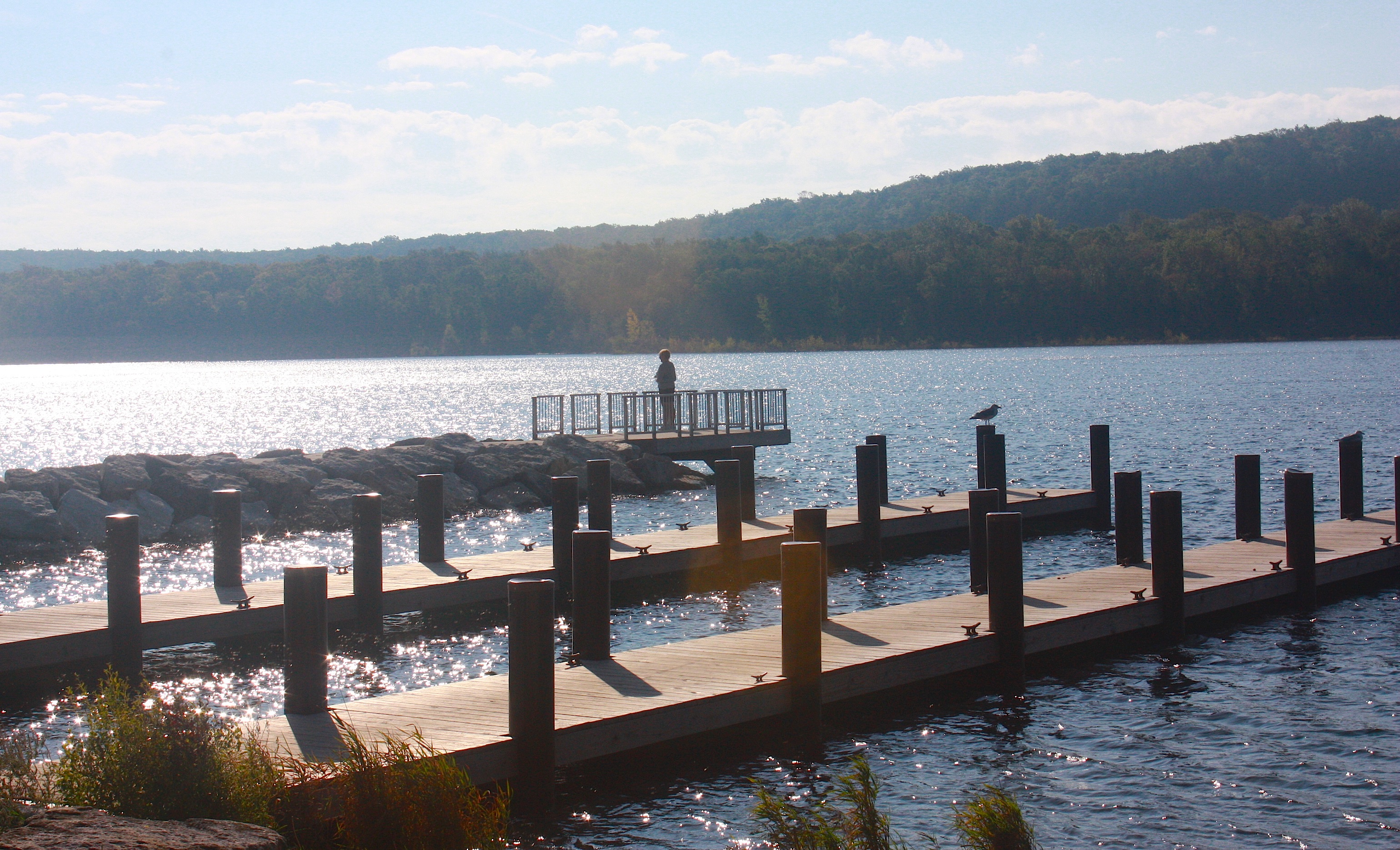


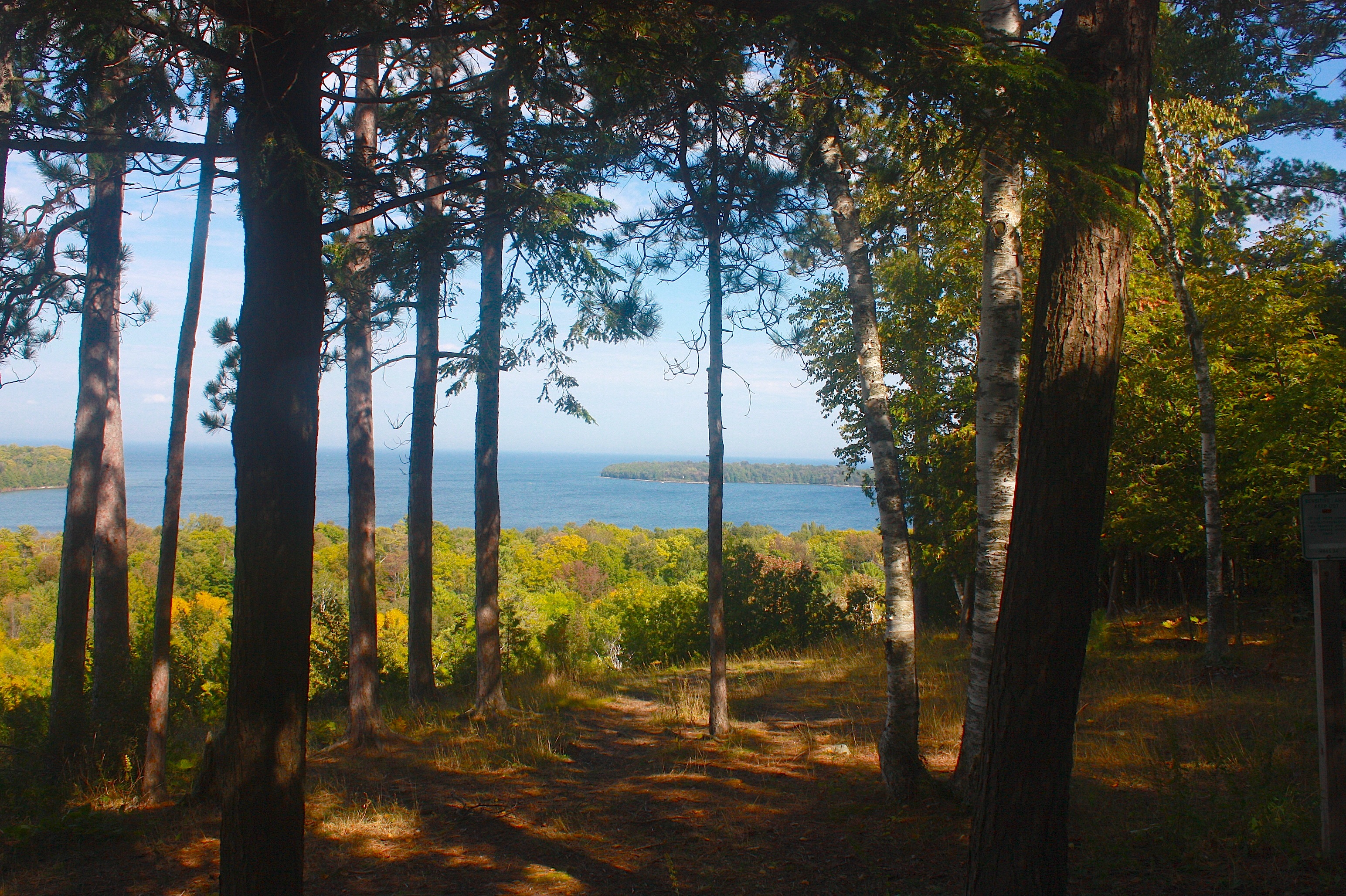
Fairfield First Friday Art Walk
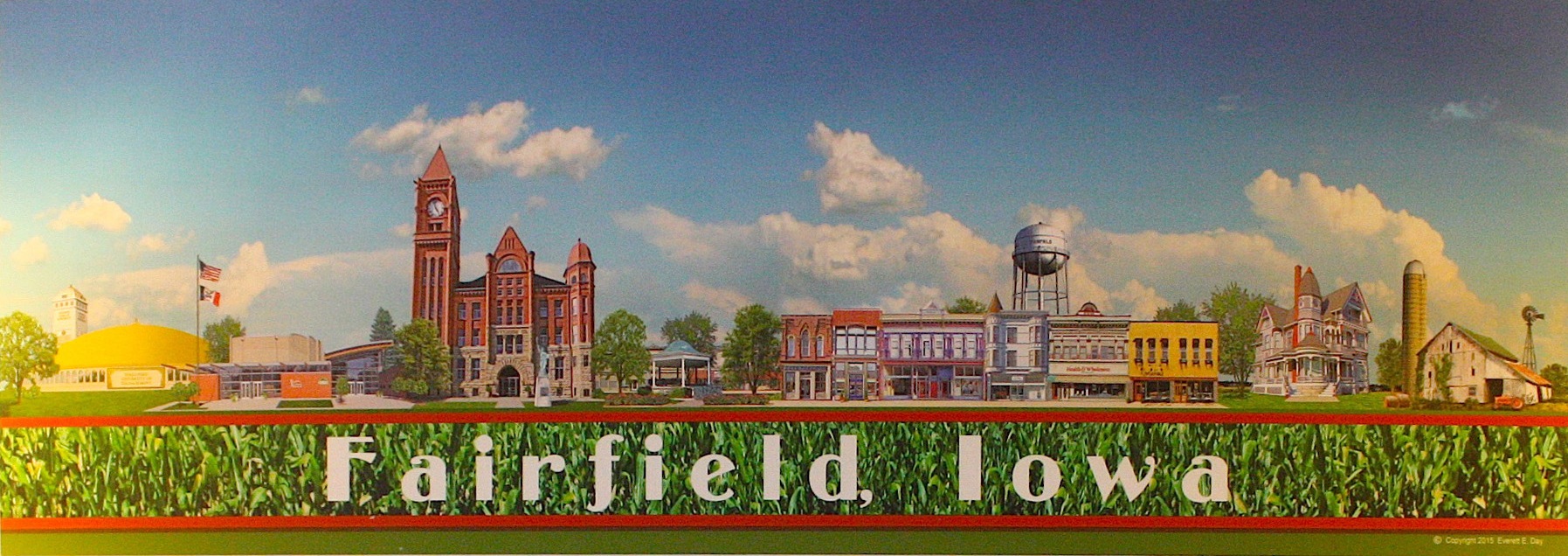
Fairfield is one of the most unique small towns in Iowa. With Maharishi University of Management and Maharishi Vedic City nearby, the vibe in Fairfield is a cultural smorgasbord.
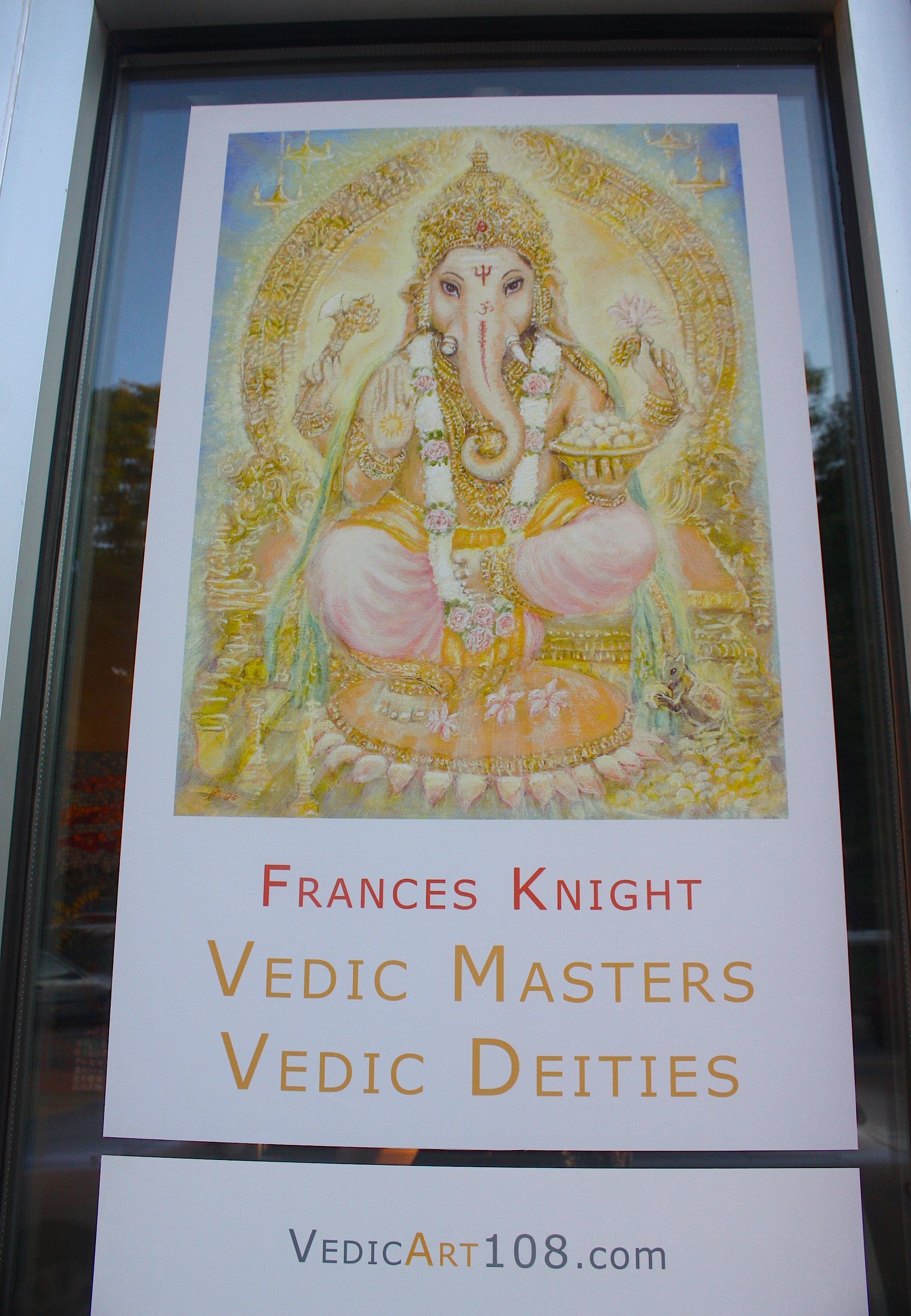 The Maharishi University, which embraces Transcendental Meditation and follows the teachings of Maharishi Mahesh Yogi, provides students with organic vegetarian meals from produce grown at the university’s local organic farm. It’s a unique, consciousness-based education with a couple of dozen available majors.
Nearby, Maharishi Vedic City was incorporated in 2001 as a model of ideal city life. The architecture in this town of 259 is designed according to Maharishi Sthapatya Veda design to promote health, happiness, and good fortune. There are schools, organic farms, and health care. The town’s motto is “Creating a national center for perfect health and world peace.”
The whole town is only about one square mile, and it’s located about four miles north of Fairfield.
This has nothing to do with my visit to Fairfield last week for one of its First Fridays Art Walk, except that it helps to explain why Fairfield, a town of 9,464 residents and the county seat for Jefferson County in southeast Iowa, is so unusual.
Fairfield has always seemed attractive to me because of its food choices. I can’t imagine finding a vegetarian Indian restaurant, an Ethopian restaurant, and a Turkish restaurant in any other town of this size in Iowa. And that’s not to mention Thai, Mexican, Italian, and Caribbean restaurants, plus three organic eateries, a crepe restaurant, coffee houses, and funky cafes. Fairfield’s tourism website boasts that the city has more restaurants per capita than San Francisco.
The town is also known for its “Fairfest,” “Live on the Square” and other festivals, including the First Fridays Art Walk. The art walk has been named an Iowa Tourism Event of the Year, and it’s held on the first Friday evening of each month regardless of season or weather. Each month features a different theme. September’s theme was “Harvestfest: Celebrating the bounty of the season.”

When Dave and I arrived in downtown Fairfield last Friday night around 6:30, the band East of Omaha was rocking the gazebo. A few booths were set up, selling food and handcrafts, and people were beginning to mill around the area. We sat on a park bench and listened to music for a little while, then decided to go find the art galleries.

There are nearly a dozen galleries in Fairfield, mostly around the town square. We visited the Americus Gallery (above), featuring the work of artist Jim Weidle, among others.

We also went into the ICON Gallery (above), which had an installation called “Bill’s Soup, Part 1” – an eclectic mix of work from the Fairfield art community. We tried to go into ArtFiftyTwo – a gallery across the street from the Jefferson County courthouse (below) – but it was closed.
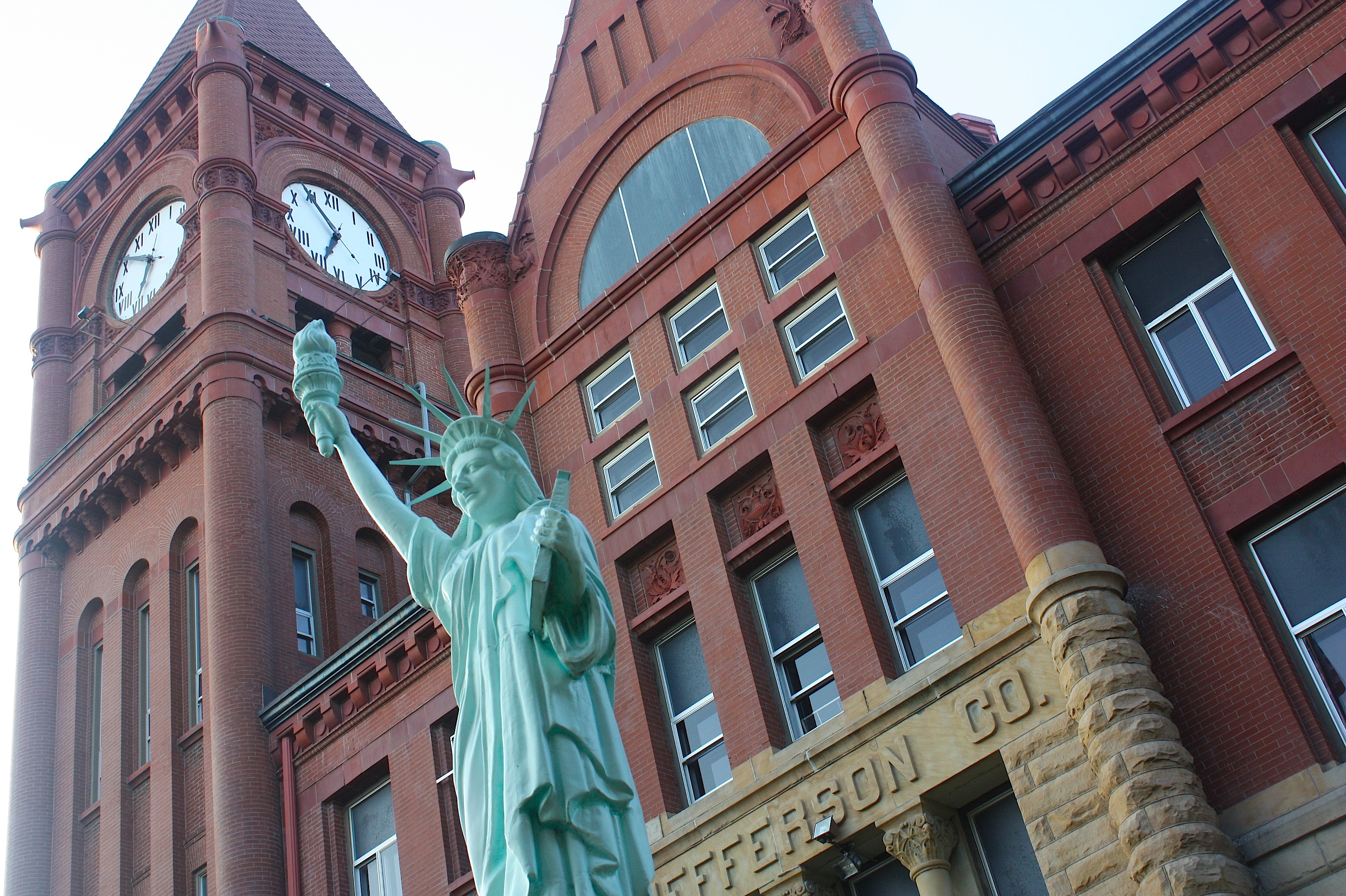
I didn’t really care, because by this point I was really hungry, and I could smell food coming from every direction. We walked by two restaurants in very close proximity: Ila’s and Revelations. Both menus looked delicious. We landed at Revelations Café, which is also a bookstore, as it turns out.
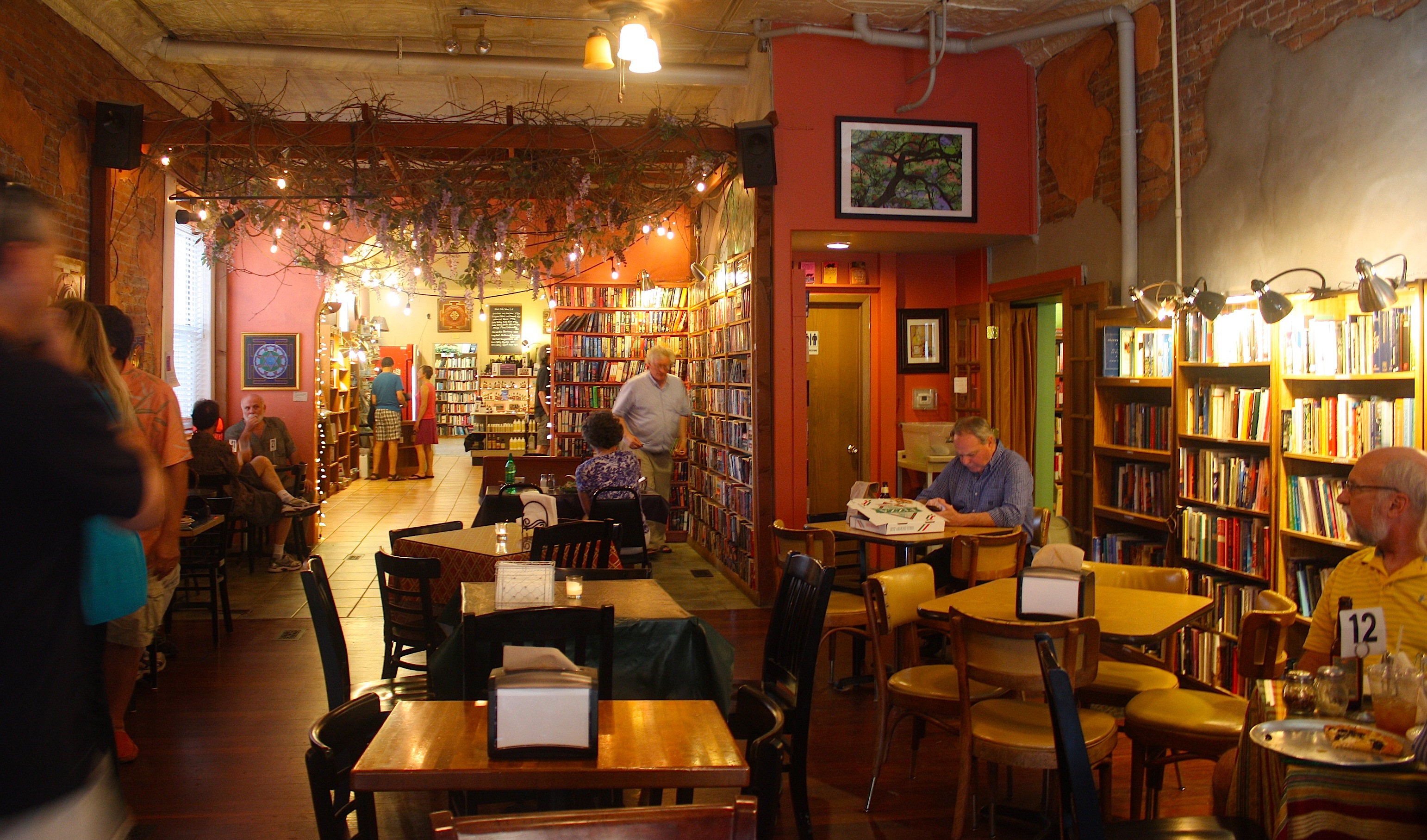

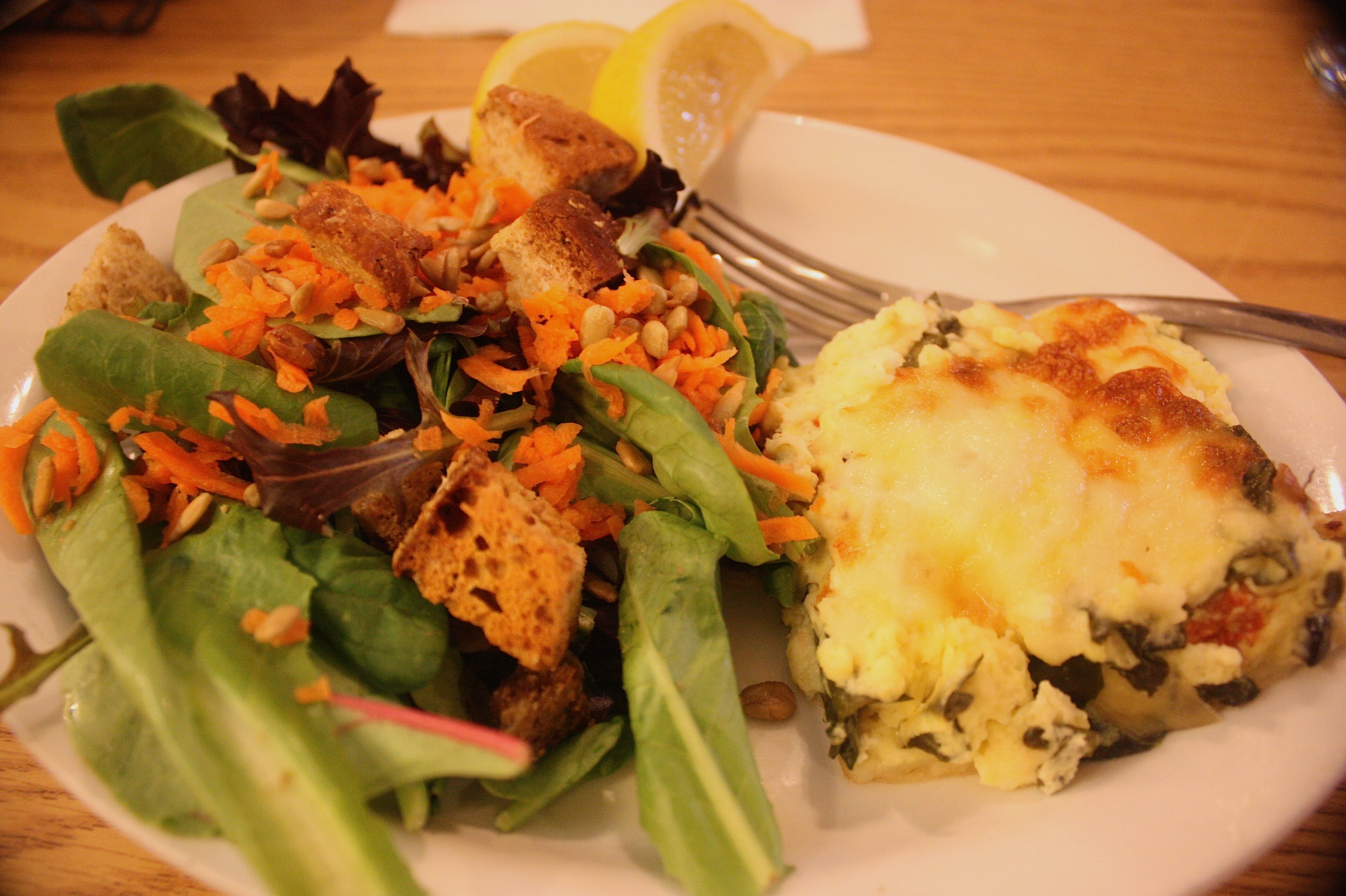
This is a fun and funky place to eat. You put in your order at the counter at the back of the store. The menu offered wood-fired pizzas, salads, sandwiches, and other yummy-sounding dishes. I ended up ordering the quiche of the day (Greek) with a side salad, and it was a delicious and healthy choice. Both Ila’s and Revelations are known for their use of locally produced foods.
And there was a bonus: Cedar Valley Winery of Batavia, Iowa, was on hand with samples. I tasted the Chambourcin, a dry, medium-bodied red, and it was tasty enough that I ordered a whole glass. I was told that all the grapes used in producing the Cedar Valley wines are grown locally.
After our meal, we went back outside and walked around the square. I poked around in a couple of shops: The At Home Store for kitchen goods and textiles and the Health and Wholeness store for good-smelling soaps and other stuff. There are funky clothing stores and a variety of other unique shops that would make for a fun excursion with my daughters or sisters. (Dave is not much of a shopper.)

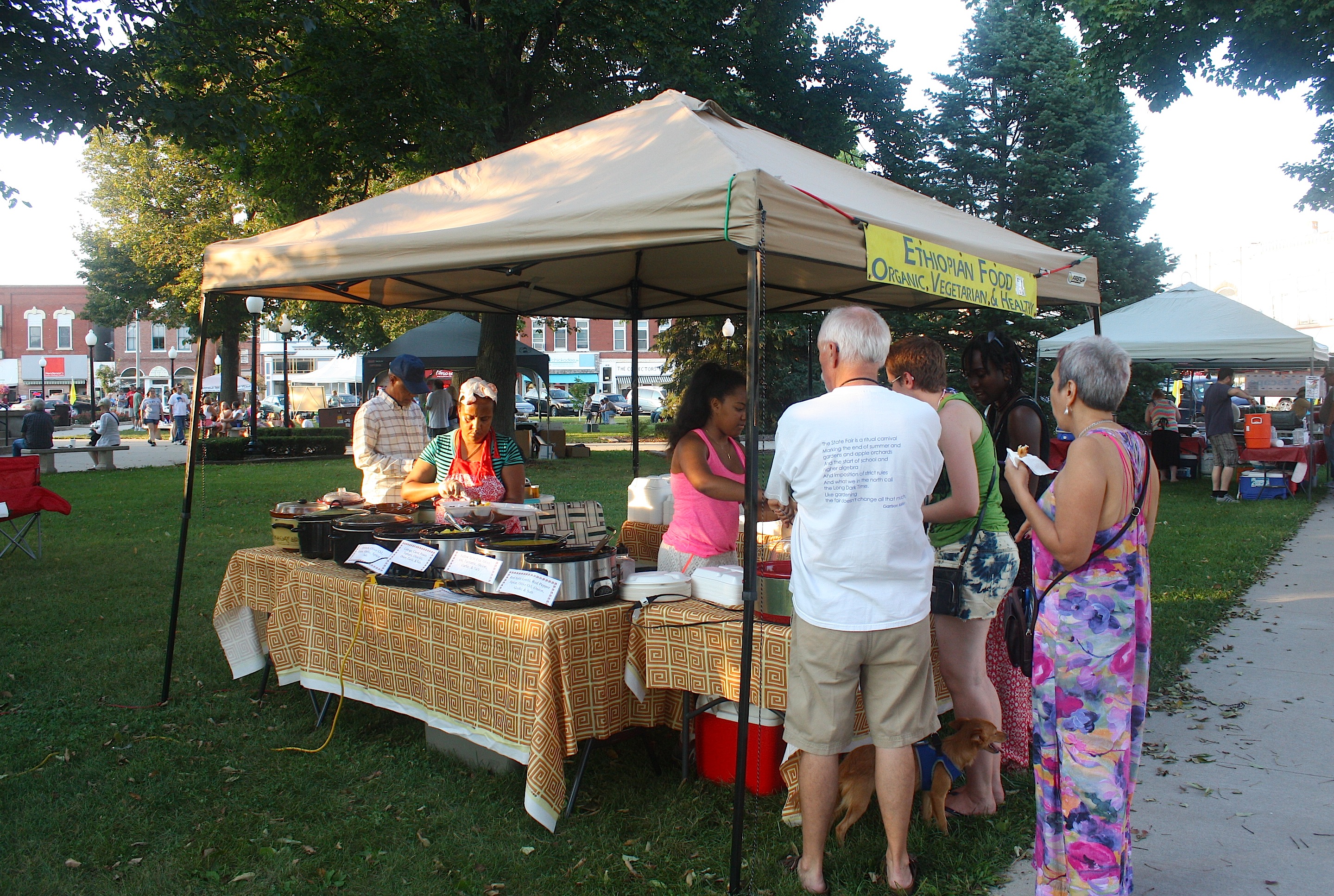
By now, more vendors were set up in the square: A face-painting booth, a wood-fired pizza stand, a Southeast Iowa Food Hub booth, a crepe stand, and Ethiopian food vendor, and more. I didn’t really get the Harvestfest connection, however. We only found one produce stand, but it was a good one – I bought a big bag of yellow heirloom tomatoes.

The next First Fridays Art Walk is Oct. 2. The theme is Oktoberfest: A celebration of German Culture and Community.
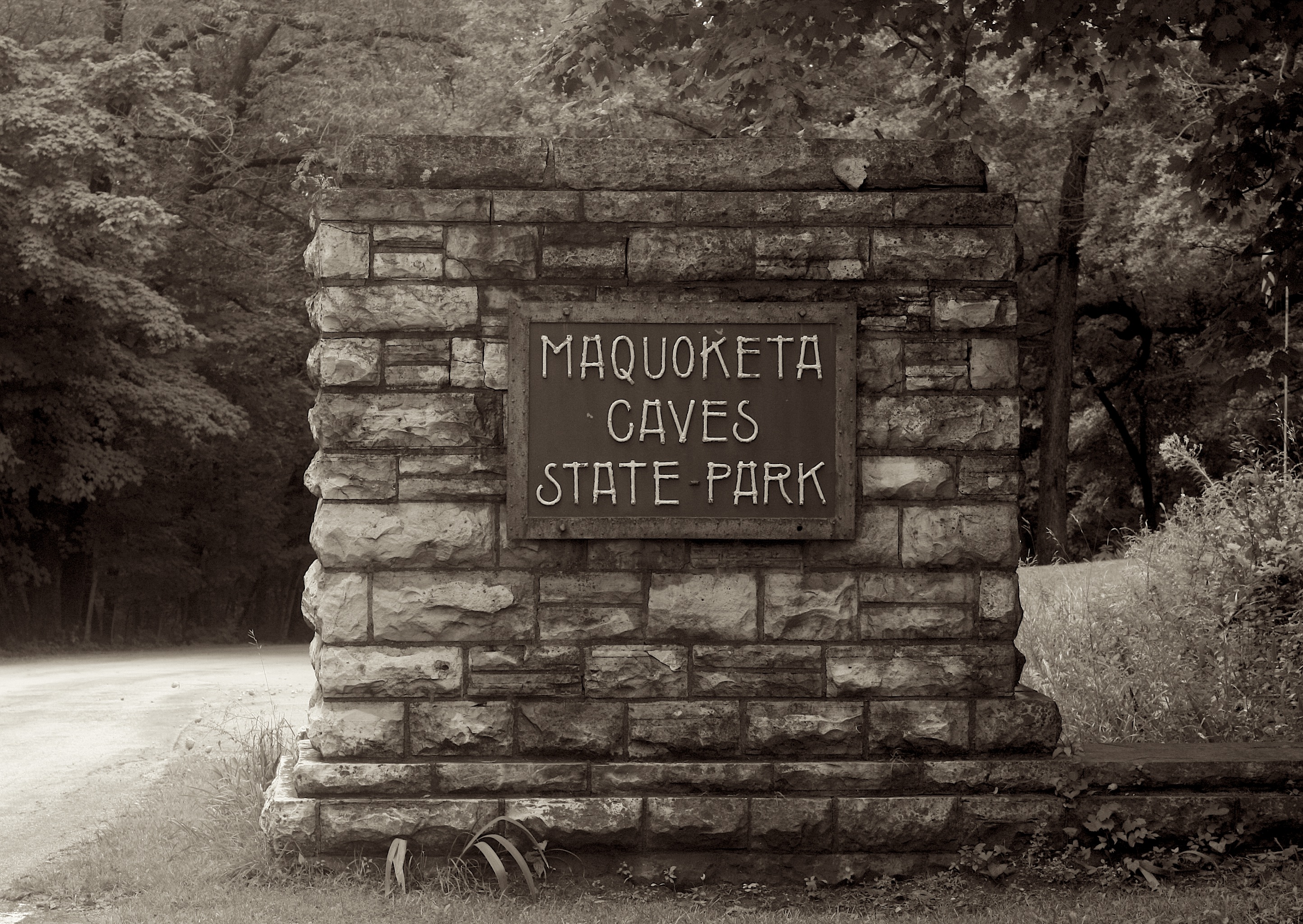
Maquoketa Caves State Park
When I was in college, some friends and I went to southern Missouri for a little getaway, and we wound up touring a cave. About halfway through the tour I discovered for the first time that I’m claustrophobic.
Being inside the tight, dark confines of a cave is not a good time to learn about a fear of enclosed spaces. I’ve managed to avoid caves ever since, but I know my claustrophobia is alive and well, because I’ve had near-panic attacks in large, immovable crowds of people; at concerts; on an airplane; and on a ride at Epcot Center in Disney World.
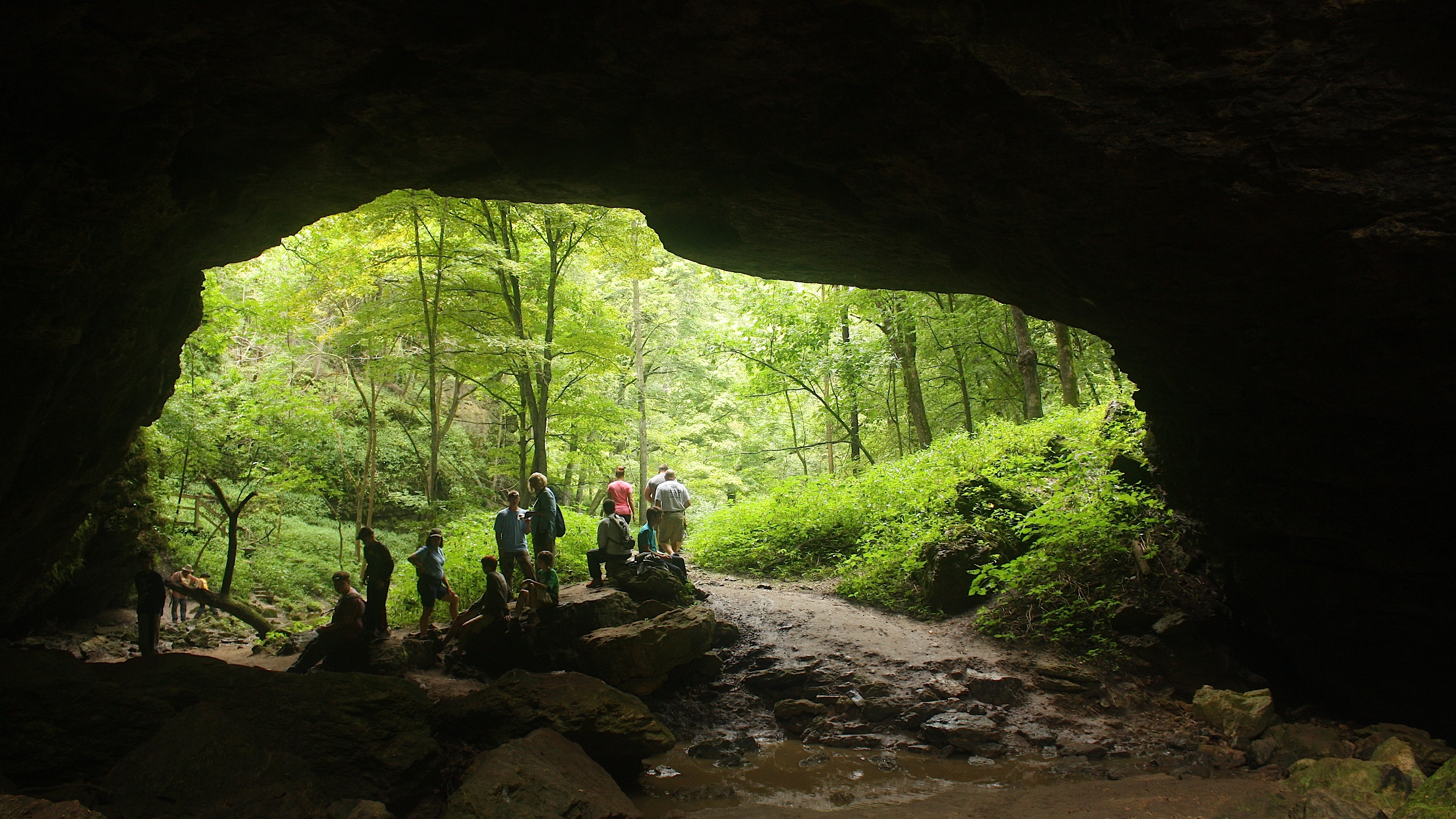
So I’m not exactly sure what drew me last weekend to Maquoketa Caves State Park, except that this place is always listed in the top five state parks in Iowa and is said to be the state’s most unique park environment. I’ve seen pictures of some of the caves, and they’re huge, so I figured I could at least experience the cave entrance if not much more.
It turns out that the park has 14 caves with varying levels of accessibility. Some can be walked through, but others can only be experienced by crawling. (Um, those caves are not for me.) A terrific, well-marked trail system links the caves and other attractions, such as the 17-ton Balanced Rock and the dramatic Natural Bridge (above).
I was pleasantly surprised at the beauty of this park. It’s incredibly lush and green – almost otherworldly when you start exploring.
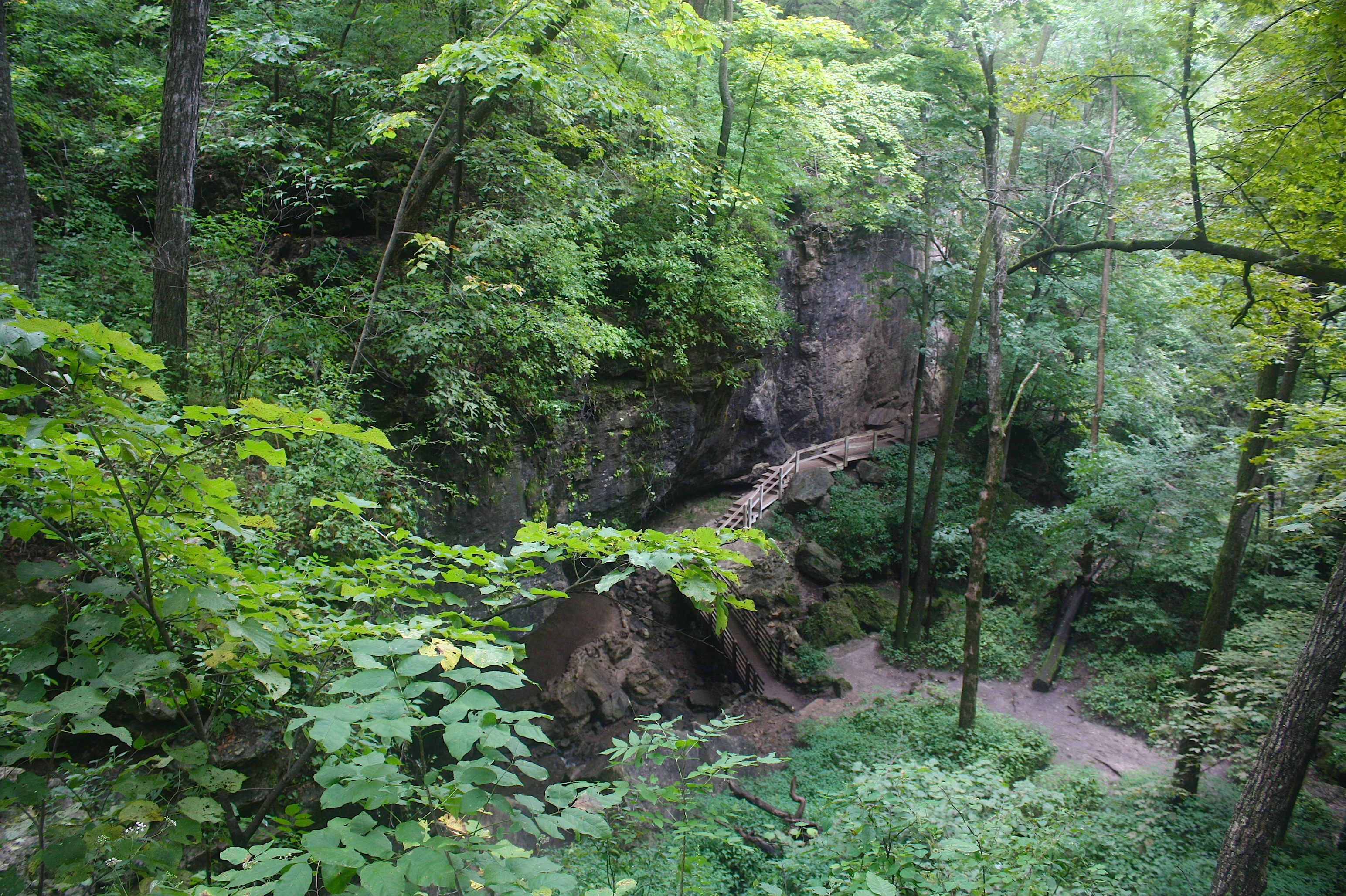
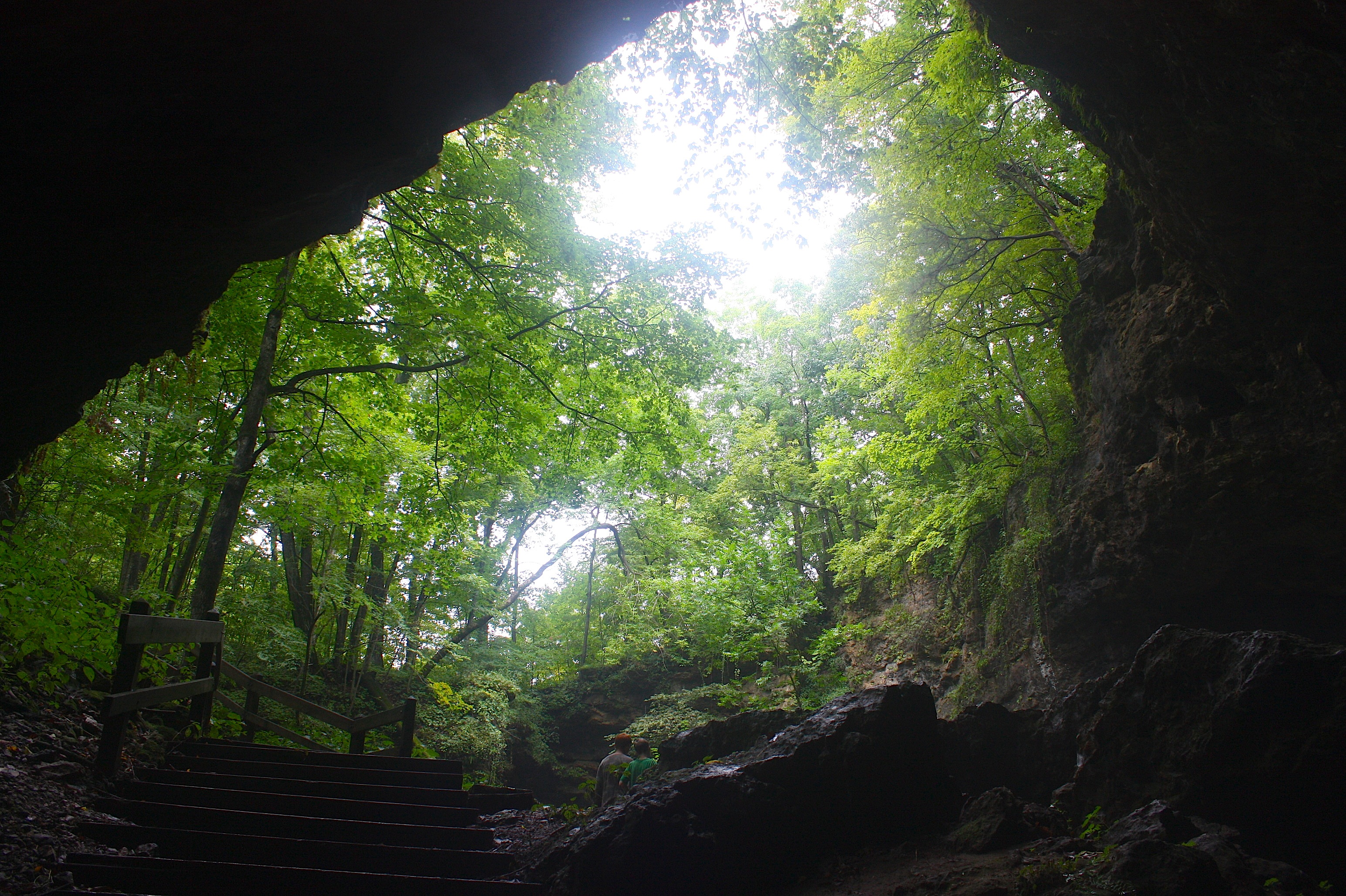
I started my trek at Dancehall Cave (above). This cave is more than 1,000 feet long and has three entrances, concrete walkways, and a lighting system. I made it as far as the upper entrance. It’s huge! Mist was rising out of it; it was damp and cool … and very dark when you peeked inside. I could see stepping stones leading the way into the cave. But the large, initial entrance room was as far as I was willing to go.
These caves, I learned, were formed by the underground flow of water slowly dissolving the lime-rich dolomite. The process results in rounded or oval-shaped passages with smooth rock surfaces.
The coolest area, to me, was right next to the upper Dancehall Cave entrance: The Natural Bridge. This area seems to attract a lot of visitors. I was a little nervous to explore the area too much, since there were lots of slippery boulders and flowing water.
Maquoketa Caves have been around for hundreds and probably thousands of years, judging by the Native American artifacts found in the area, mostly consisting of tools and pottery. The caves were discovered by European settlers in the 1830s, and the area became a state park in the 1930s.
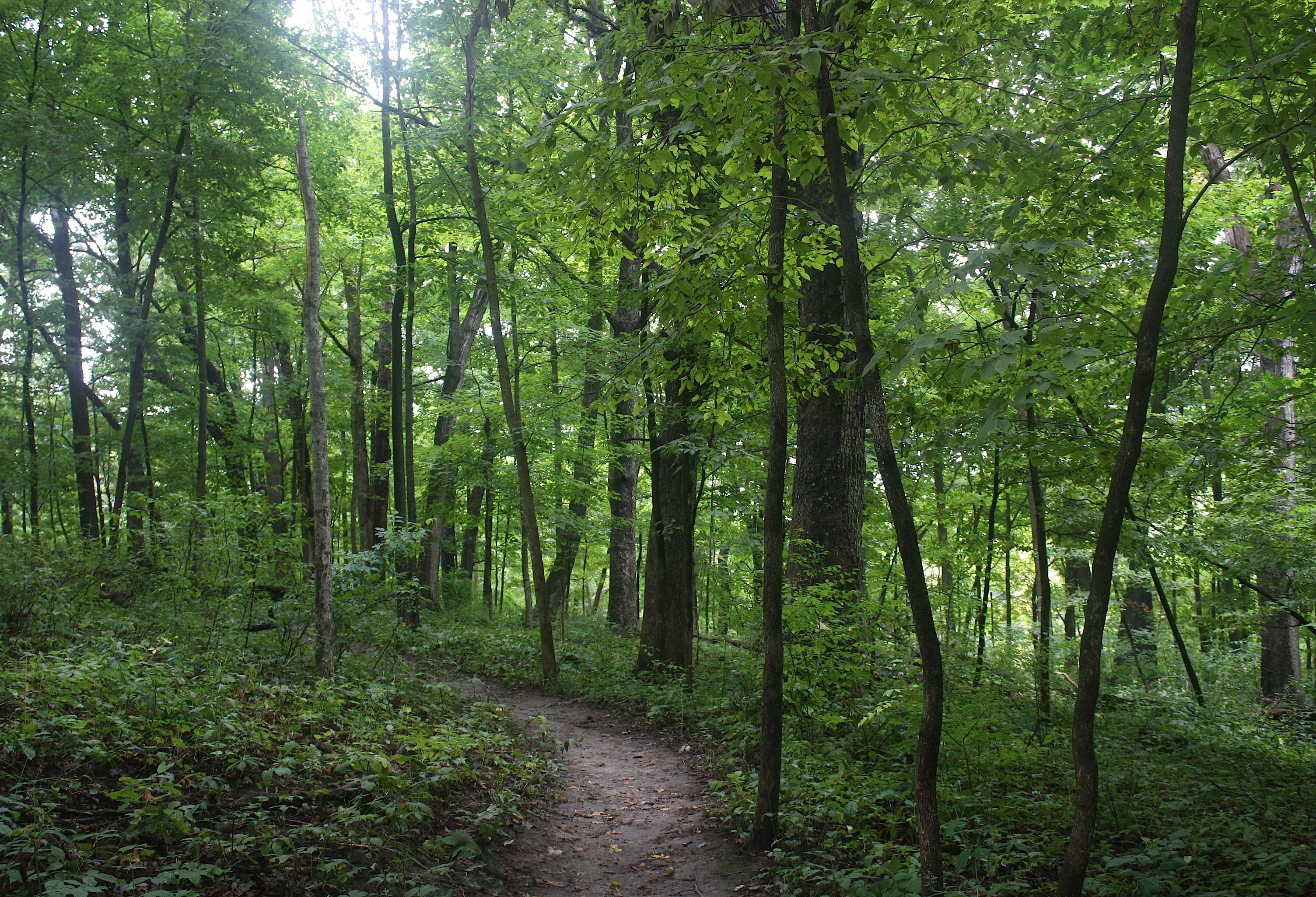
The park features six miles of trails, picnic tables, and a campground with 29 campsites. To get to the park, take Hwy. 61 north out of Maquoketa and follow the signs to the west. Currently, the Iowa Department of Natural Resources requires visitors to attend a short lecture before entering the park’s caves to help prevent the spread of White Nose Syndrome to the caves’ resident bats. (I did this, and it’s no big deal. The young rangers are very helpful.)
Fossil & Prairie Park Preserve

I was in the doctor’s waiting room last May, reading a back issue of The Iowan magazine, when I ran across an article about the Fossil & Prairie Park Preserve up in Rockford, Iowa. This is a place I had never heard of, and it interested me on a number of levels, mostly because I’m working on a story for VISIONS magazine about the geological history of Iowa. I had a chance to visit there this summer.
During the Devonian Period (365 million years ago), Iowa was essentially an ocean. Most of the fossils currently found at the Fossil & Prairie Park Preserve are from a shallow sea environment and are marine invertebrates (no backbone).
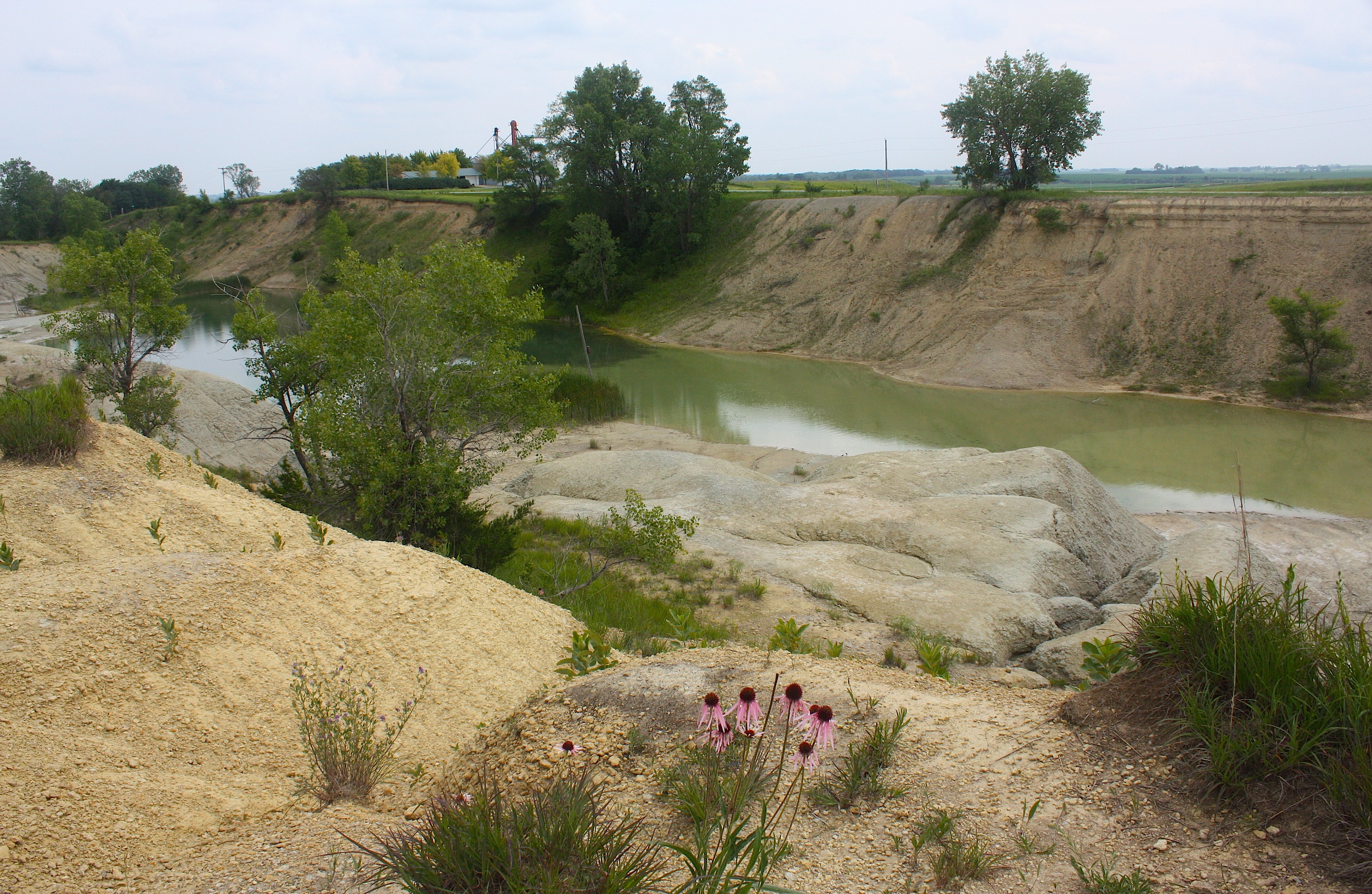
You can learn a lot about the prehistoric history of this state at the Fossil & Prairie Visitor Center. It’s geared toward school-aged children, but I found the displays extremely interesting and well executed.

The Fossil & Prairie Park Preserve is one of the few places I’ve ever come across where you can actually pick fossils up and take them home with you. In fact, they encourage it with a little fossil hunter’s guide that they give you at the visitor center.
According to The Iowan article, this park was on its way to becoming a landfill in the 1980s because of its natural clay lining. The area is a former brick and tile quarry.
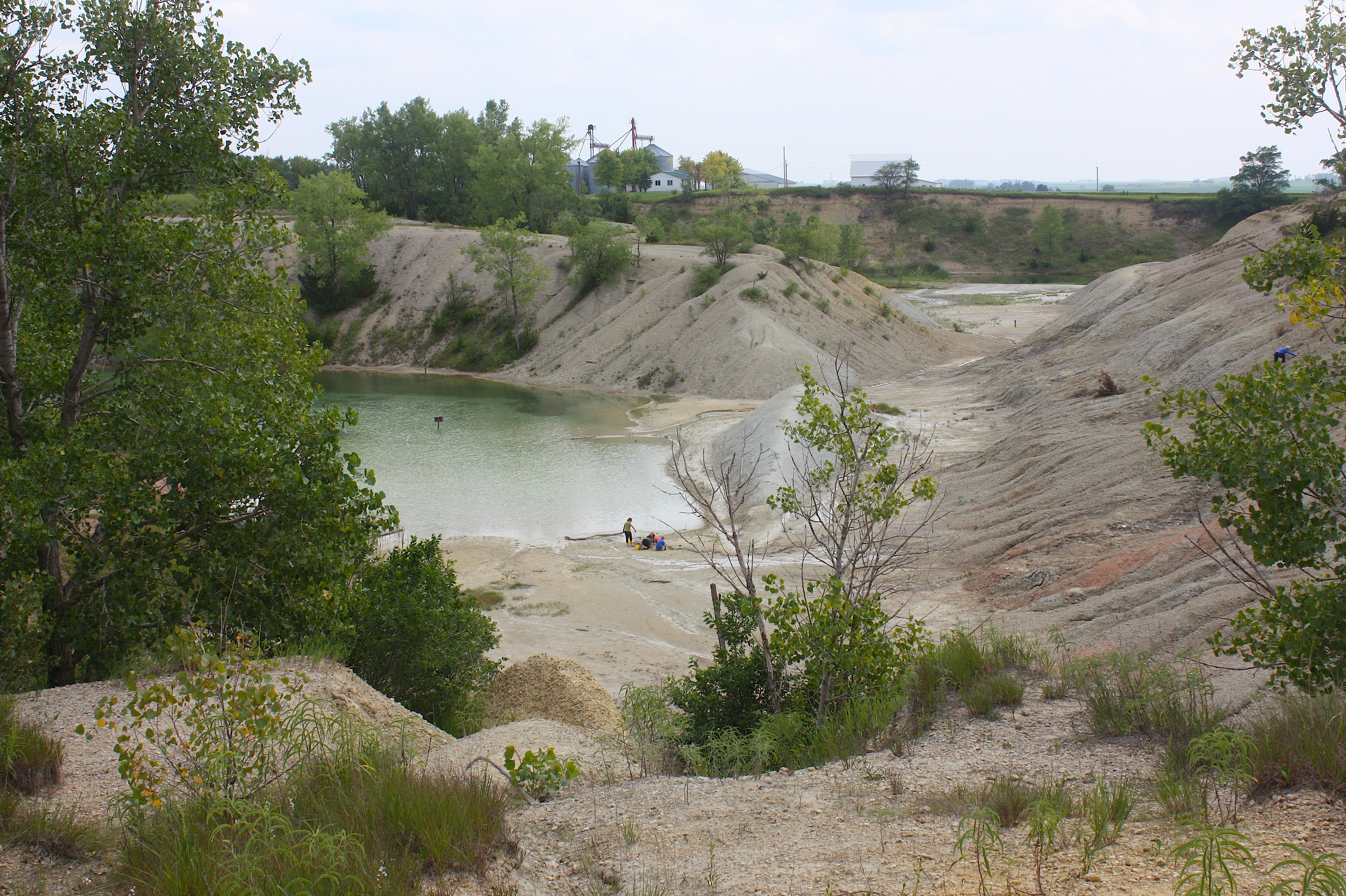
Climb around and you’ll see fossils literally at your feet – and you can just pick them up. There are exceptionally large quantities of fossils: brachiopods, gastropods, crinoids, horn corals, cephalopods, and more. There are signs throughout the park to help you recognize the different fossils, and the printed guide shows them pretty much actual size.
While I was there, I ran into David Simon, who got a PhD in geology from Iowa State and currently lives in Bartlesville, Okla. He and his wife, Kathie, were just passing through Iowa and stopped at the fossil preserve. Both like collecting fossils, and they showed me some of the best ones they’d found that day (below).
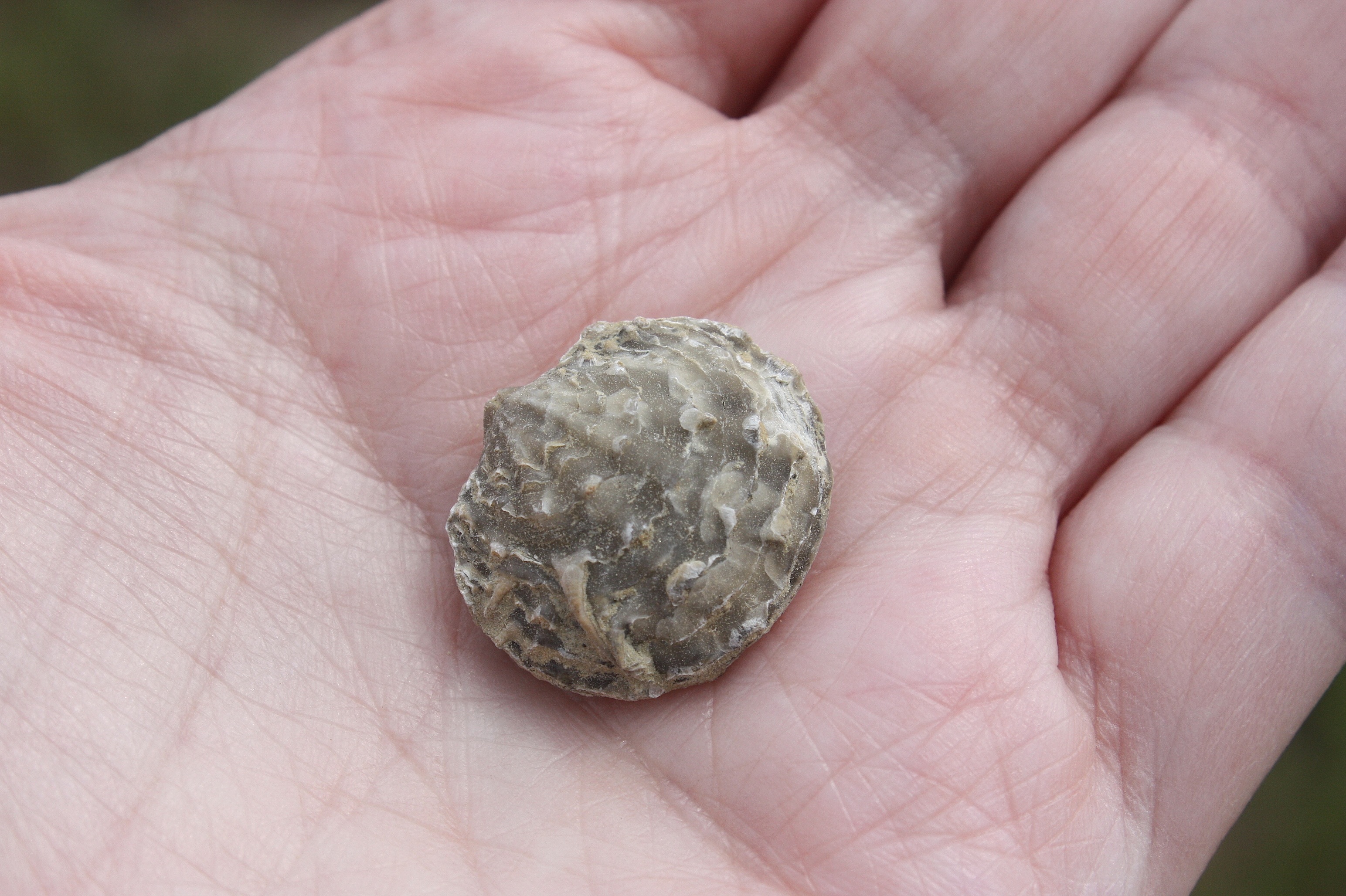
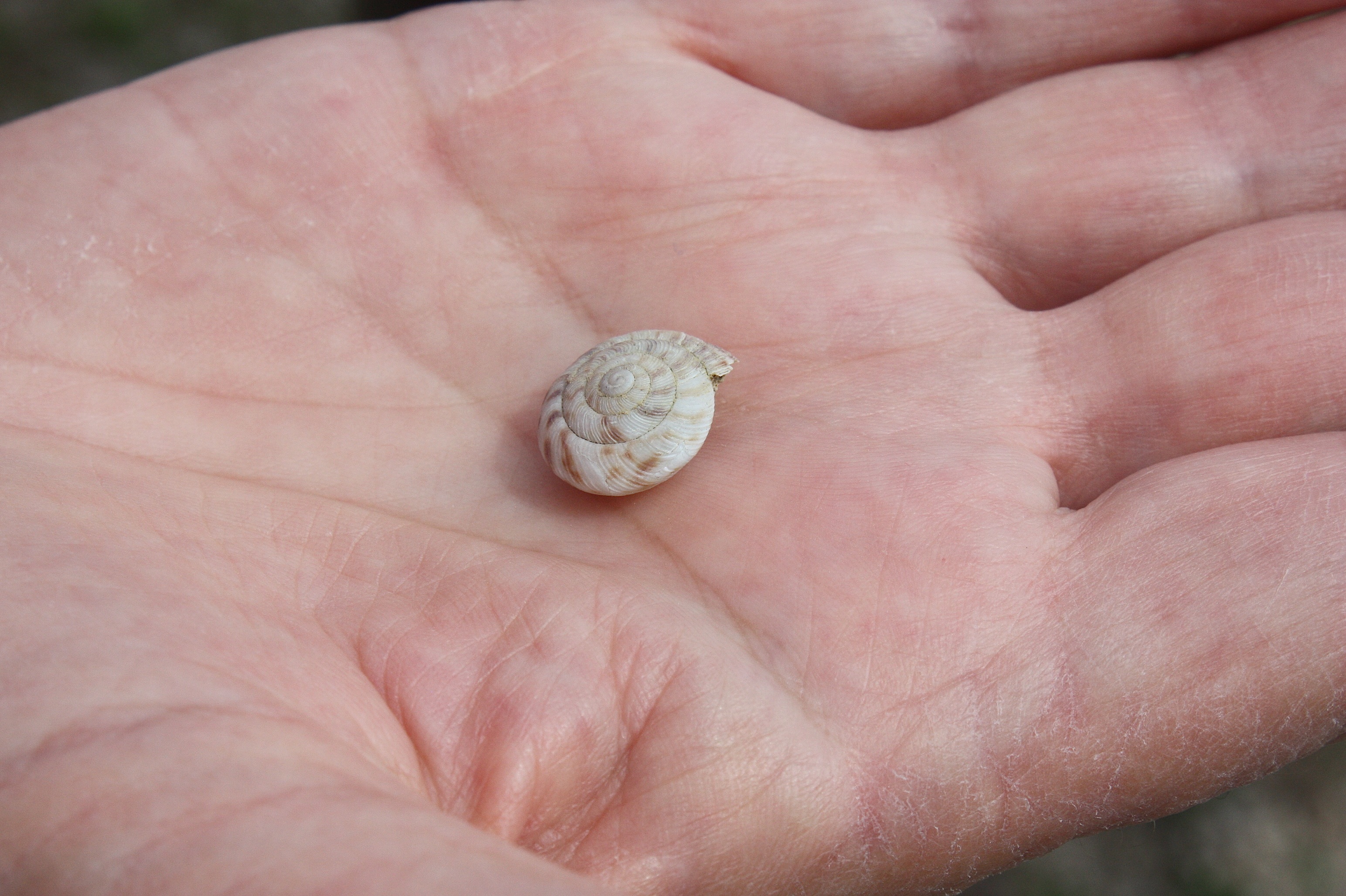
If you’re interested in collecting fossils, bring an egg carton, a plastic bucket, or a cloth bag. Plastic bags are discouraged. No tools are needed, because the fossils are simply lying on the ground. Be sure to wear clothing and footwear suitable for climbing and mucking about – and don’t forget the sunscreen and hats. There’s essentially no shade here.
Fossil hunting is the draw, but for me, the prairie is just as interesting. The park includes 60 acres of remnant prairie that has never been turned by plow, according to The Iowan. Creeping juniper grows here, along with purple coneflowers and orange butterfly milkweed, among many other species of wildflowers and grasses.

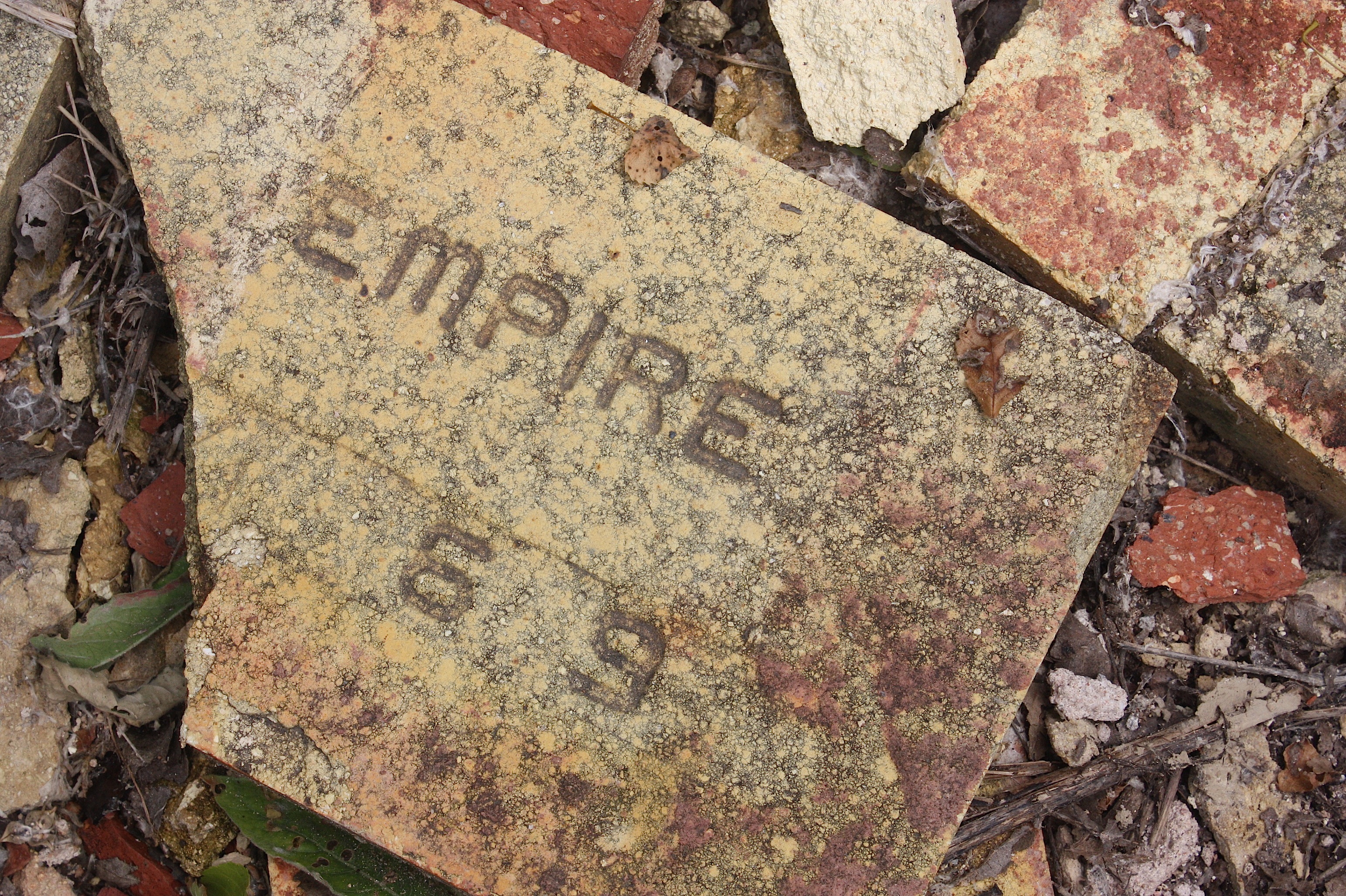
There’s also the brick kiln, which you can reach on a well-marked walking trail. The kilns are still standing and are surrounded by broken pieces of brick from their earlier working days.

Fossil & Prairie Park Preserve, operated by Floyd County Conservation, is located about 20 miles east of Mason City and just west of Rockford, Iowa. The Fossil & Prairie Center is open daily from 1-4 p.m. Memorial Day through Labor Day. In May, September, and October, the center is open on weekends 1-4 p.m. Outdoor areas are open from sunrise to sunset.

Late-summer walks

This is a fantastic time of year for enjoying a walk — especially an evening walk. The days are still long, but the nights are getting cooler. Here are two unique places to take a walk in central Iowa:
NEAL SMITH NATIONAL WILDLIFE REFUGE

Sure, you can stroll around your neighborhood or hike on a bike path, but why not take a walk through grasses and wildflowers at one of Iowa’s hidden gems: The Neal Smith National Wildlife Refuge. The wildlife refuge is a tallgrass prairie near Prairie City, about 20 miles east of Des Moines. I wrote about this unique Iowa destination back in 2011.
The paved Tallgrass Trail is a two-mile loop through lush wildflowers and grasses up to 10 feet tall. Tallgrass prairie once covered about 80% of Iowa! Today, less than .1% remains, so this is a very special place.
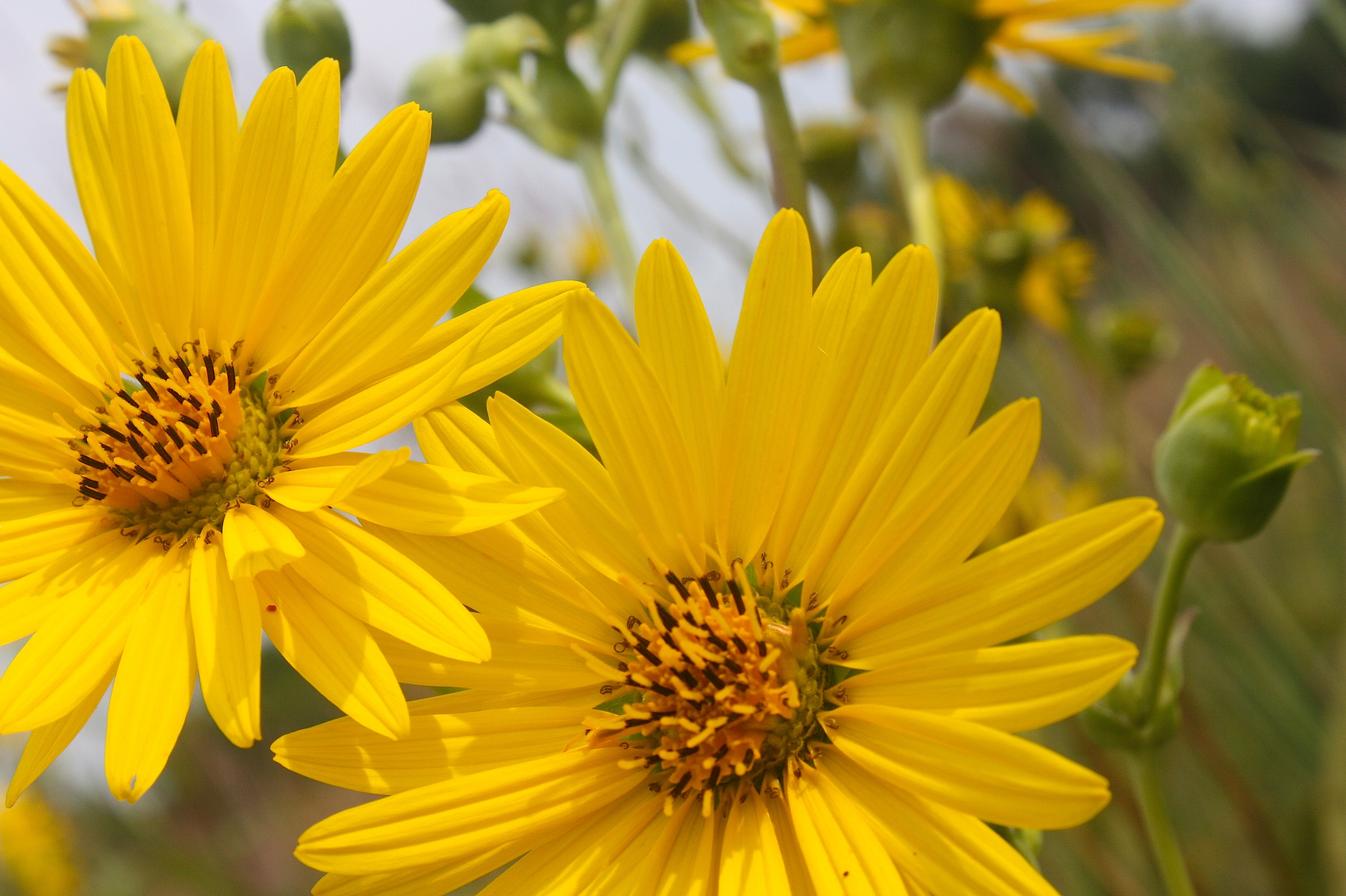
Your walk will take you through a variety of blooming plants and grasses. I wish I could tell you all the names, but I haven’t a clue. I just know that there are yellow and purple and white and pink and orange and gold flowers in every imaginable size and shape, framed by grasses in shades of green and brown and purple. Working hard the day I was visiting were hundreds of bumblebees and butterflies.
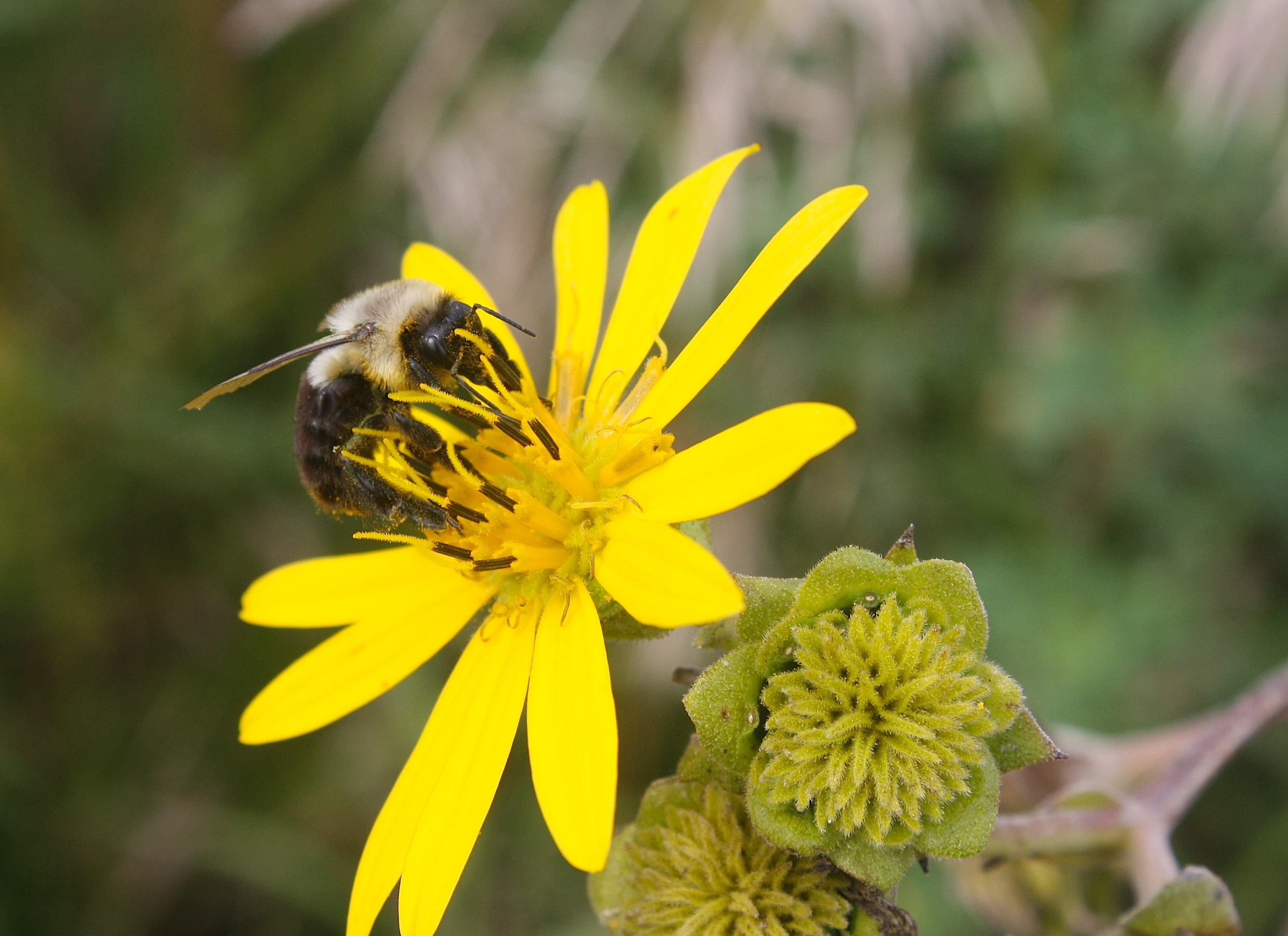
If you don’t mind stopping along the way and reading informational plaques, you can learn a lot from this walk. Here’s what I found out about the insects in the prairie:
“The interrelationships among the plants and animals make prairies very complex and resilient. Insects are the most numerous of the prairie animals. Butterflies, moths, bees, and wasps are attracted to showy prairie flowers, which they pollinate. The great mass of grasses, leaves, and stems provide an abundance of habitat for ants, grasshoppers, and other insects.” (Oh, yeah, there were grasshoppers there, too.) “Without insects, the prairie ecosystem would collapse, and the circle of life would be broken. Insects pollinate many plants, allowing new plants to grow.”
I won’t bore you with more facts. Here, just take a look at some of the things I saw on my walk. Some of these flowers were a bit past their peak, but they are still beautiful in their own way.

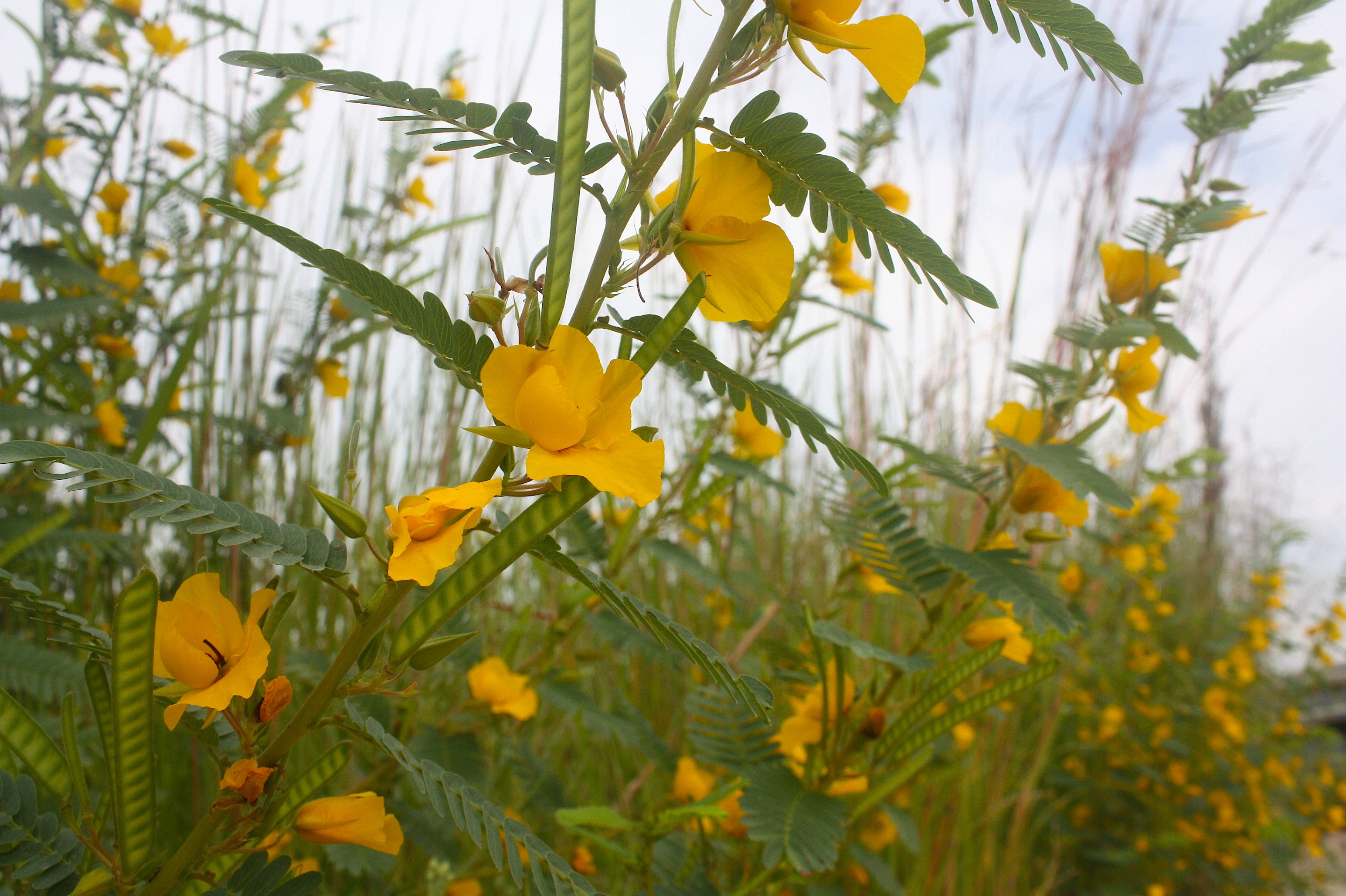


While you’re at the wildlife refuge, be sure to drive around to see if you can spot the resident bison herd.
ADA HAYDEN HERITAGE PARK
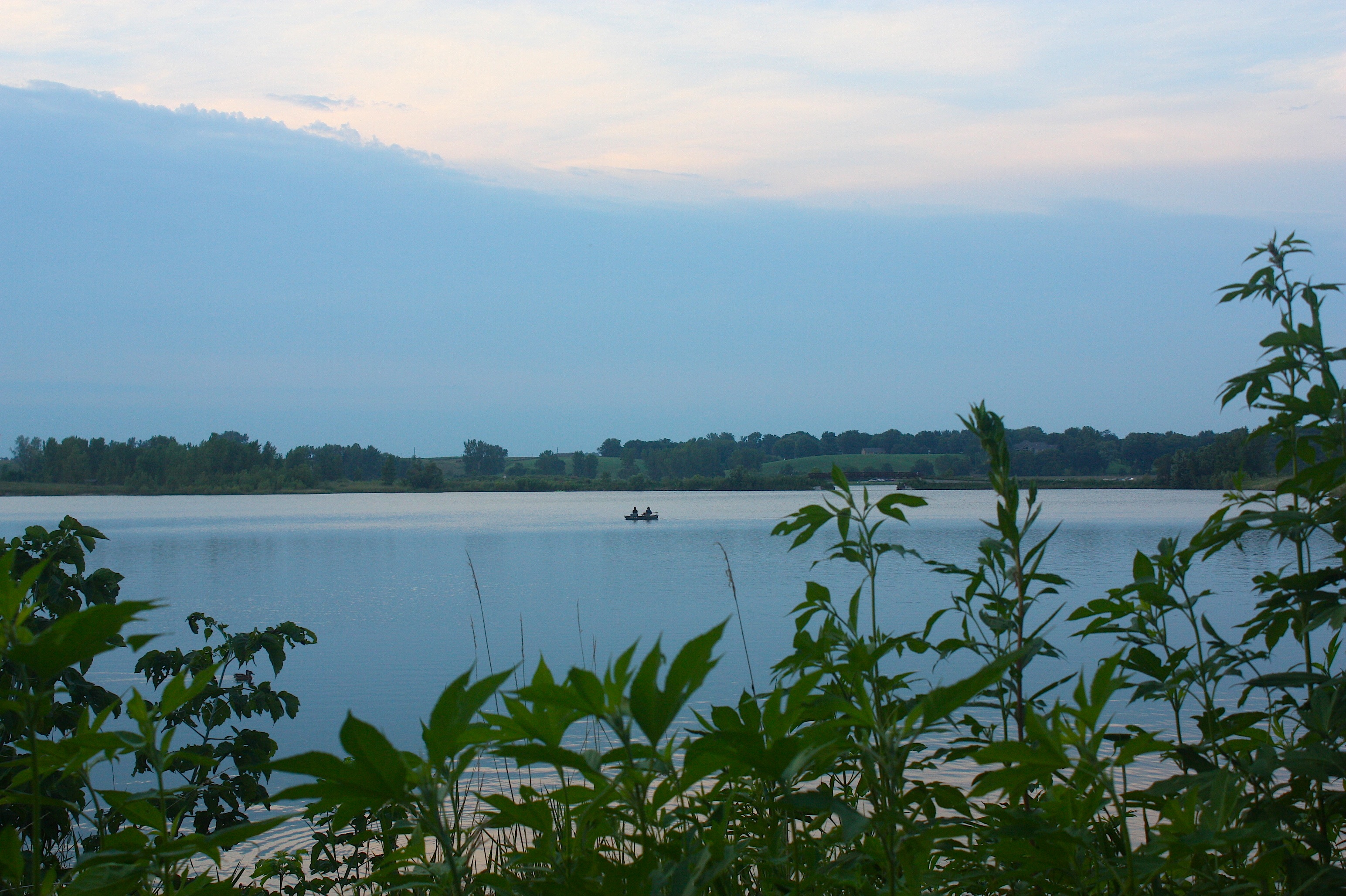
Another truly beautiful place to walk in central Iowa is Ada Hayden Heritage Park just north of Ames. I also wrote about this place in 2011.
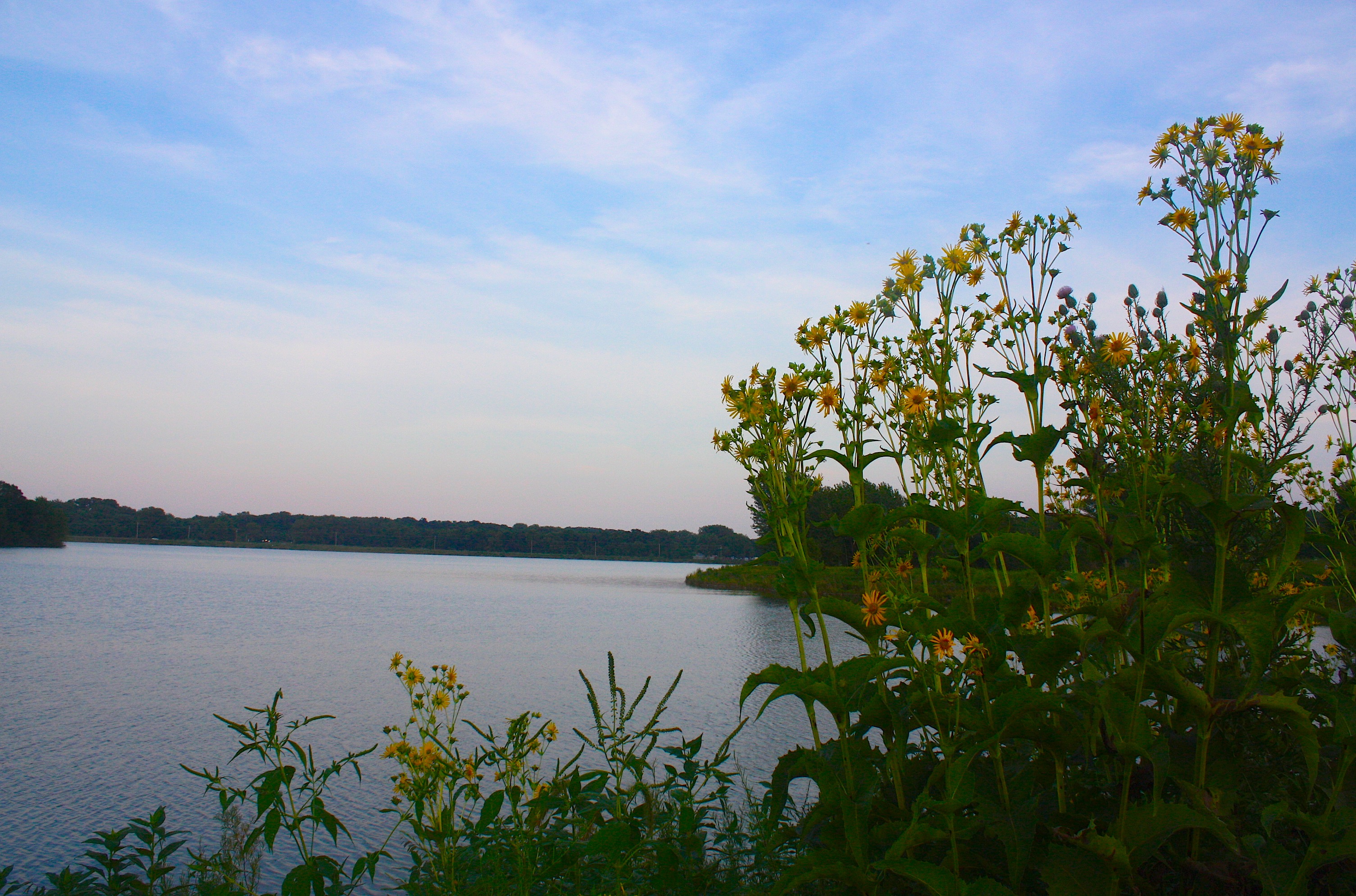
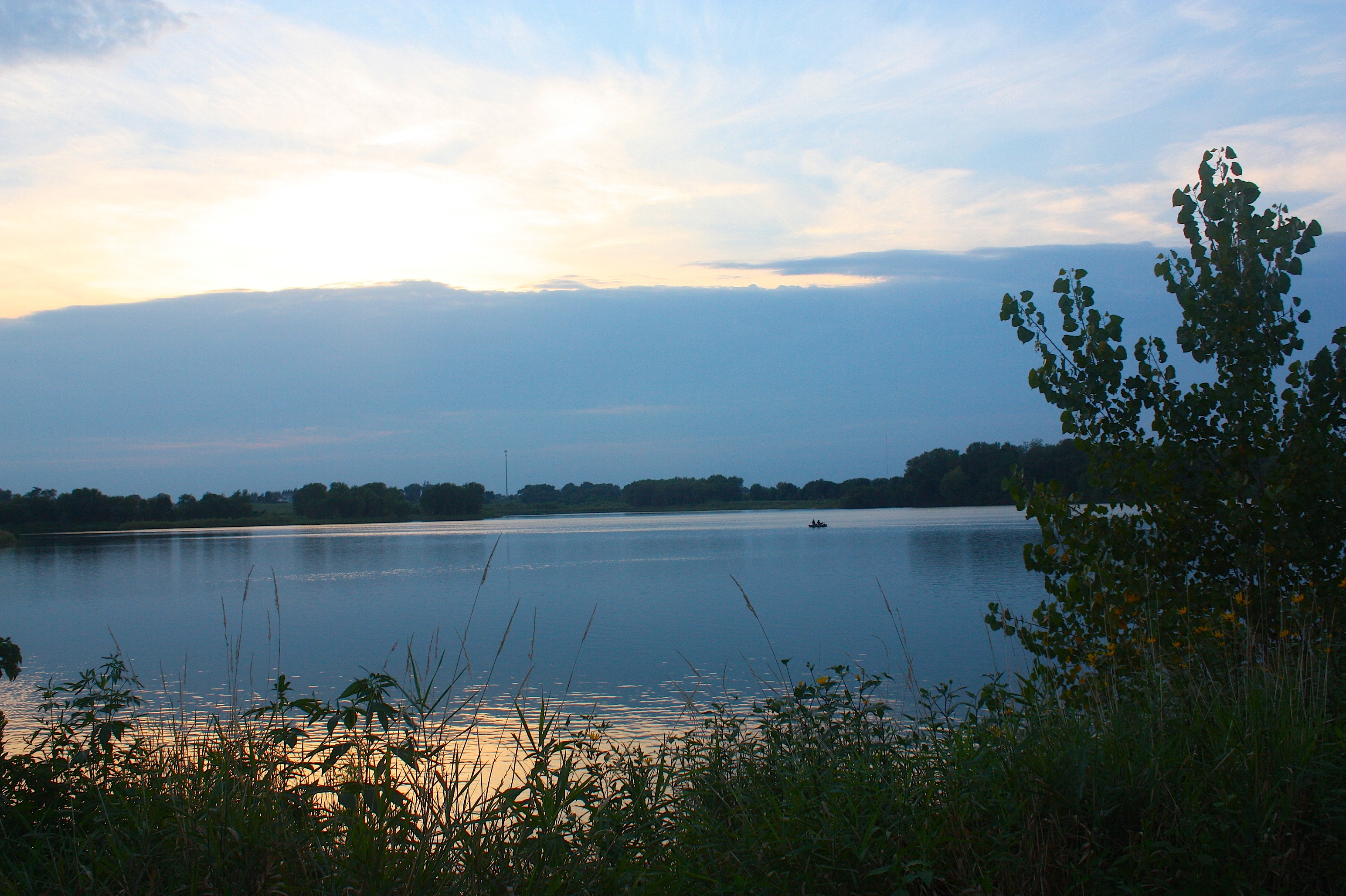
I guess you could say that Ada Hayden is Ames’ version of Des Moines’ Gray’s Lake. The path around the lake is very popular with walkers, runners, cyclists, in-line skaters, and dog walkers. If you walk the whole thing, including the bridge that bisects the lake, it’s a 3.2-mile paved loop around the water. The park also features a 1.2-mile upland trail. But it’s the lake that draws the traffic, the lake that glistens with the sun and glows in the evening light, the lake that makes this a really memorable walk.
Here are some scenes from a few nights ago:


Colorado Springs

In just over an hour, the afternoon has gone from a toasty 88 degrees and sunny to 50 degrees, blustery, and cloudy. In fact, we are IN the clouds…maybe above the clouds. It’s hard to tell from the top of Pikes Peak.
We’ve driven to Colorado so I can attend a conference, but you can’t go to Colorado Springs without visiting a couple of the major tourist attractions, and Pikes Peak is one of them. Just half an hour from the city, Pikes Peak may be the only Colorado mega-mountain you can ascend with your car or on a cog railway. Both take you to the 14,115-ft. summit. And baby, it’s cold up here and the air is thin. My head is pounding and I’m light headed. I dig around in the back seat and add some warm layers before getting out of the car. The view is spectacular.
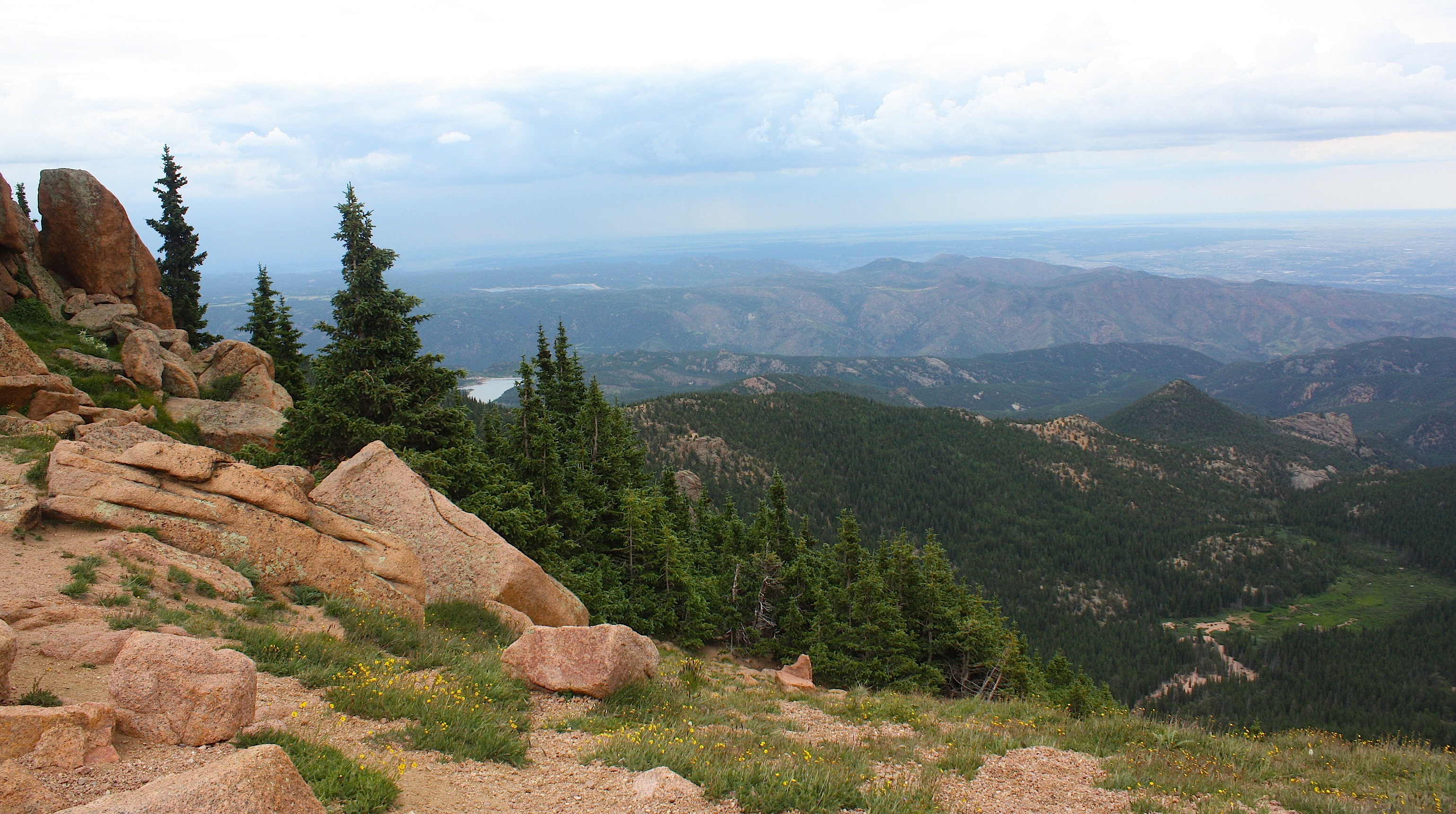
WHEN YOU HOP ON THE 19-MILE “America’s Mountain” roadway ($12 per person), you’re advised to drive all the way to the top without stopping and then take your time on the way down – stopping at the pullouts and scenic vistas. This is for two reasons: One, you can take in the views and snap as many photos as you want, and two, you will give your car’s brakes a much-needed rest.
So we followed the advice and drove straight to the top; it took about an hour on the crazy-curvy, hairpin-turning road. A few times it seemed like we could very easily plunge right off the edge of the road to our untimely deaths, but perhaps I was being overly dramatic.
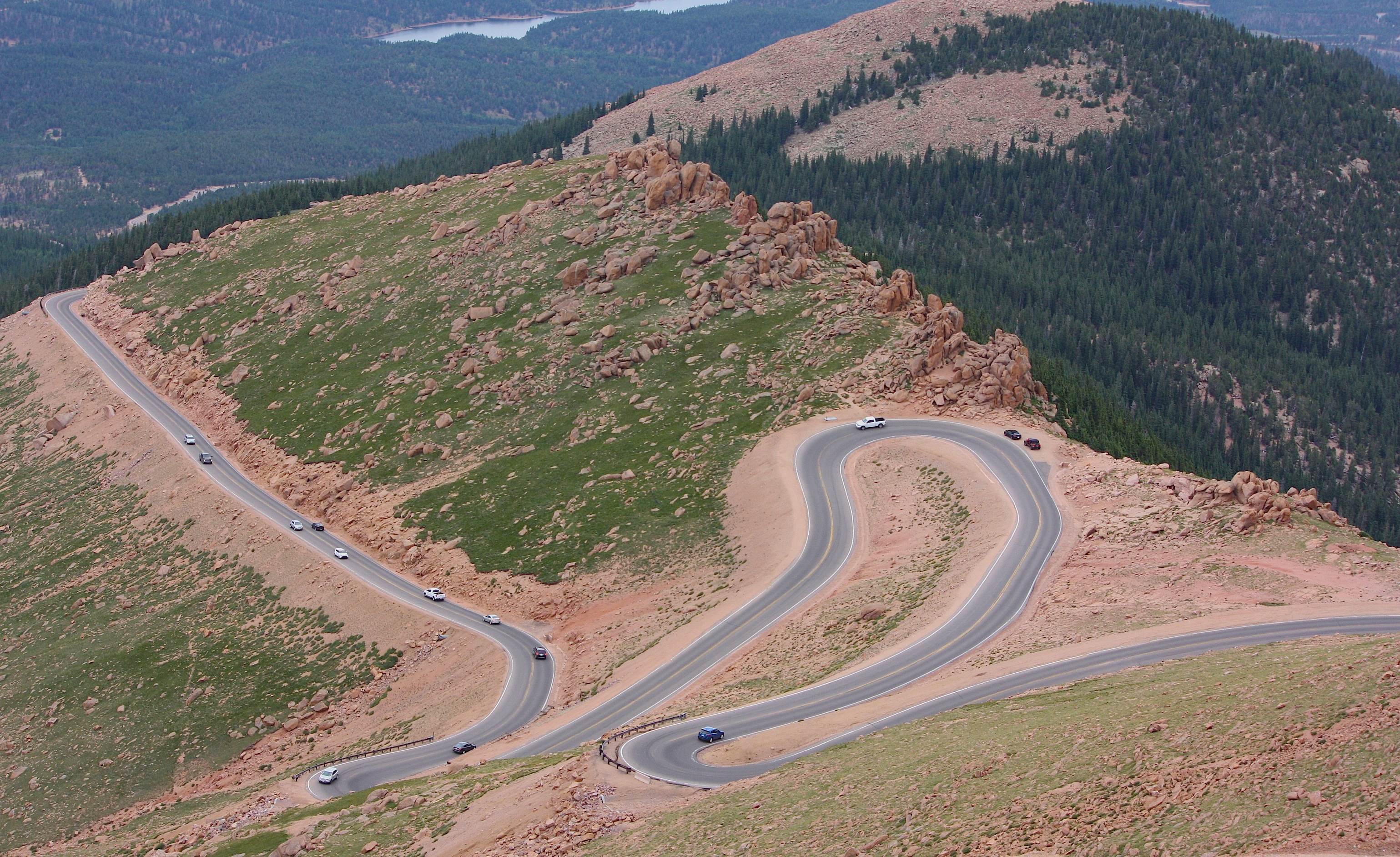
You start the drive at 7,800 feet and climb, climb, climb. At around 11,800 feet, you’re above the tree line. Most of the really scary switchbacks are above timberline. Sometimes it’s just best to close your eyes (unless, of course, you’re driving).
I’m sure the cog railway is a very different and no less exhilarating experience. The railway cars were at the top of the mountain when we arrived; the red cars really popped against the alpine scenery up there.
When we began our descent, we took our entrance guide’s advice and put my little Prius in engine brake mode. The car makes a funny noise when you use that gear (I don’t believe I’ve ever gotten 99.9 miles to the gallon before), but it seemed to work. Partway down the mountain you have to stop while one of the guides checks your brakes to make sure they’re not overheating. We saw lots of cars with their hoods up in sort of an automotive time-out, waiting for their brakes to cool. But the Prius was good to go.

We stopped a number of times on our descent, places with names like “Bottomless Pit” and “Devil’s Playground.” We saw bighorn sheep. We saw great views. It was a beautiful day. As we descended, the temperature increased again and I had to take off my layers. Welcome back to summer.
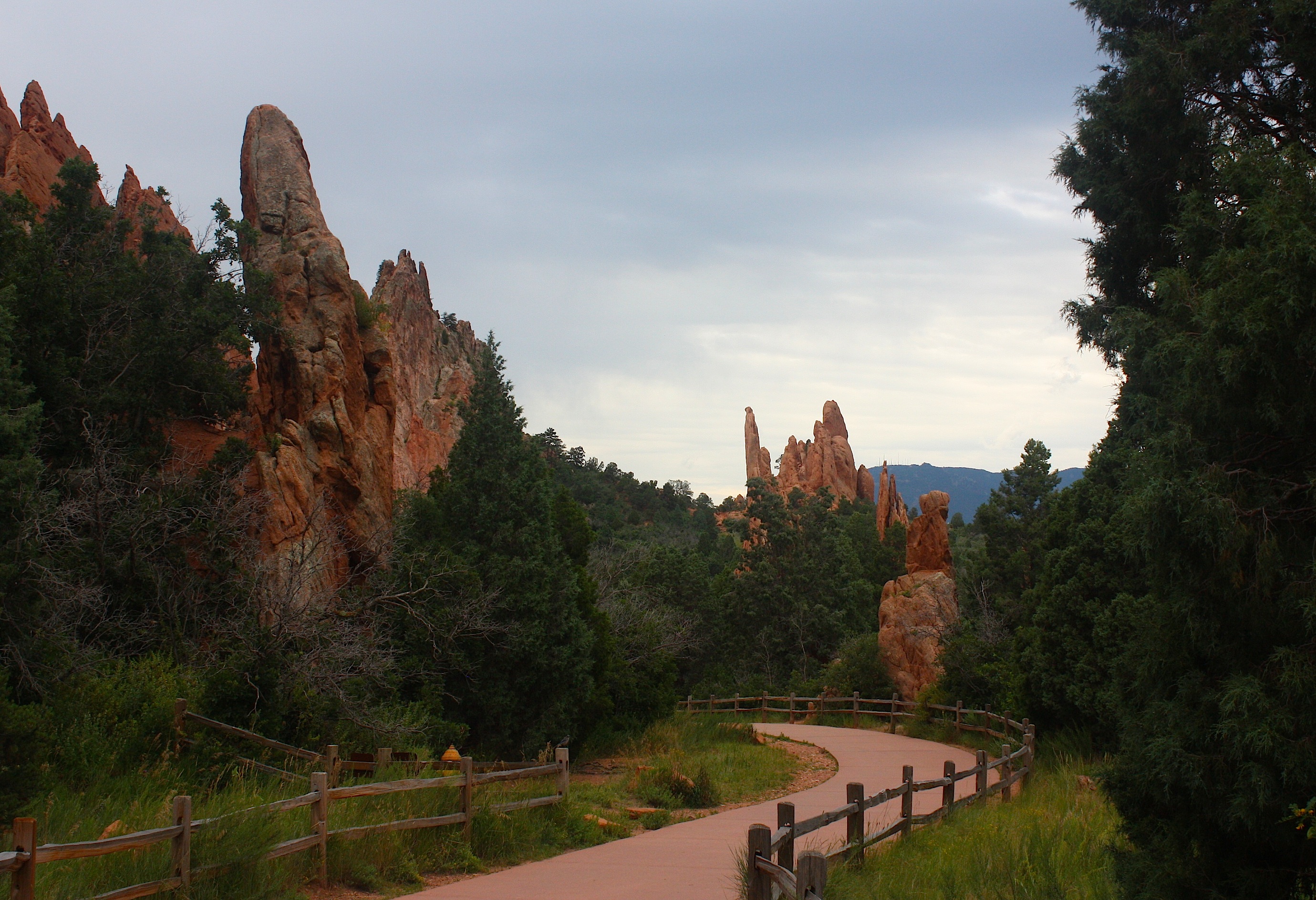
The next morning, before my conference began, we visited the other top attraction in the region: Garden of the Gods.
This 1,367-acre park is a millions-year-old geological wonder right in the city of Colorado Springs. The amazing rock formations were created during a geological upheaval along a natural fault line. The result is cathedral spires, balanced rocks, and other formations.
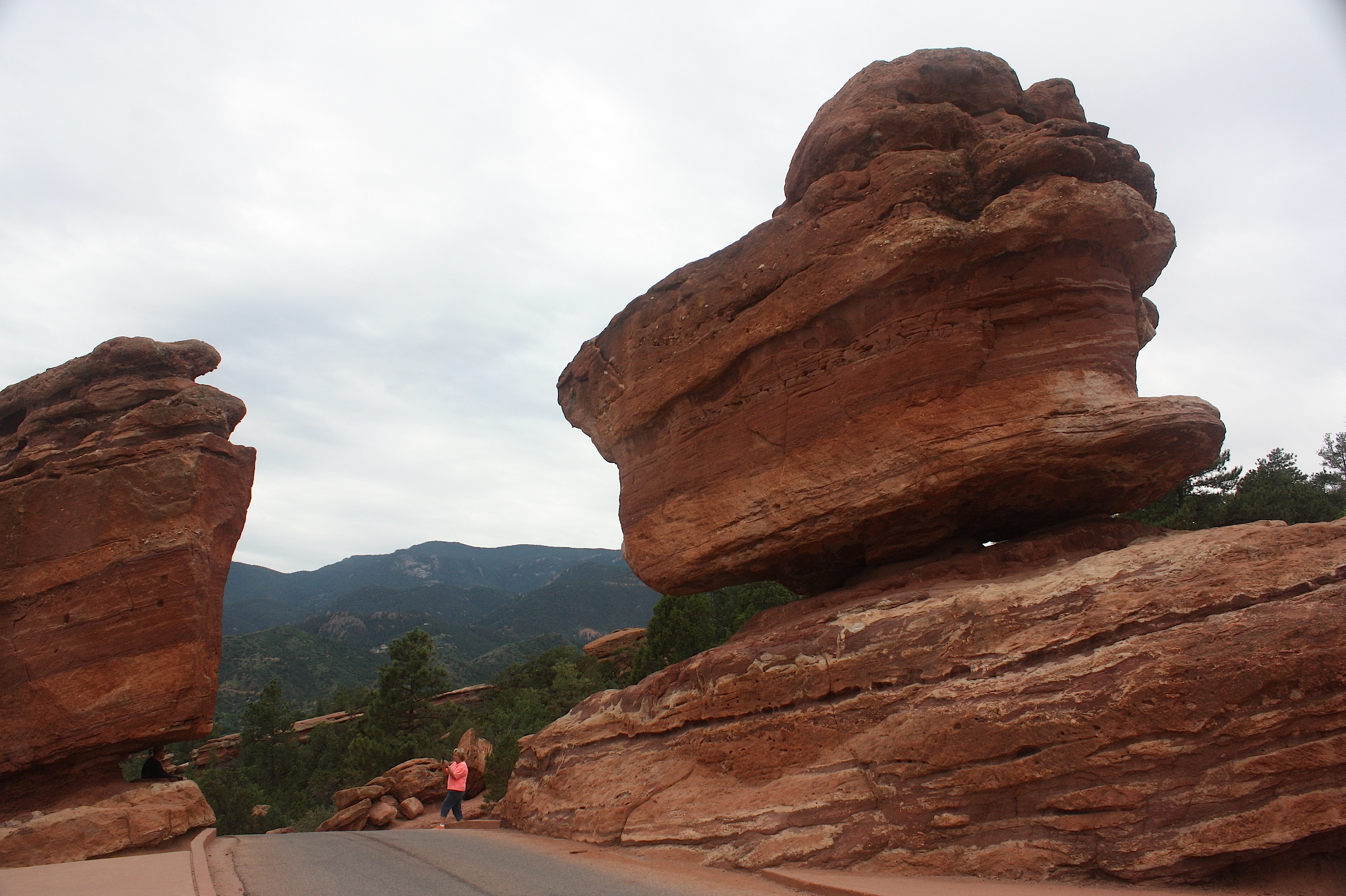
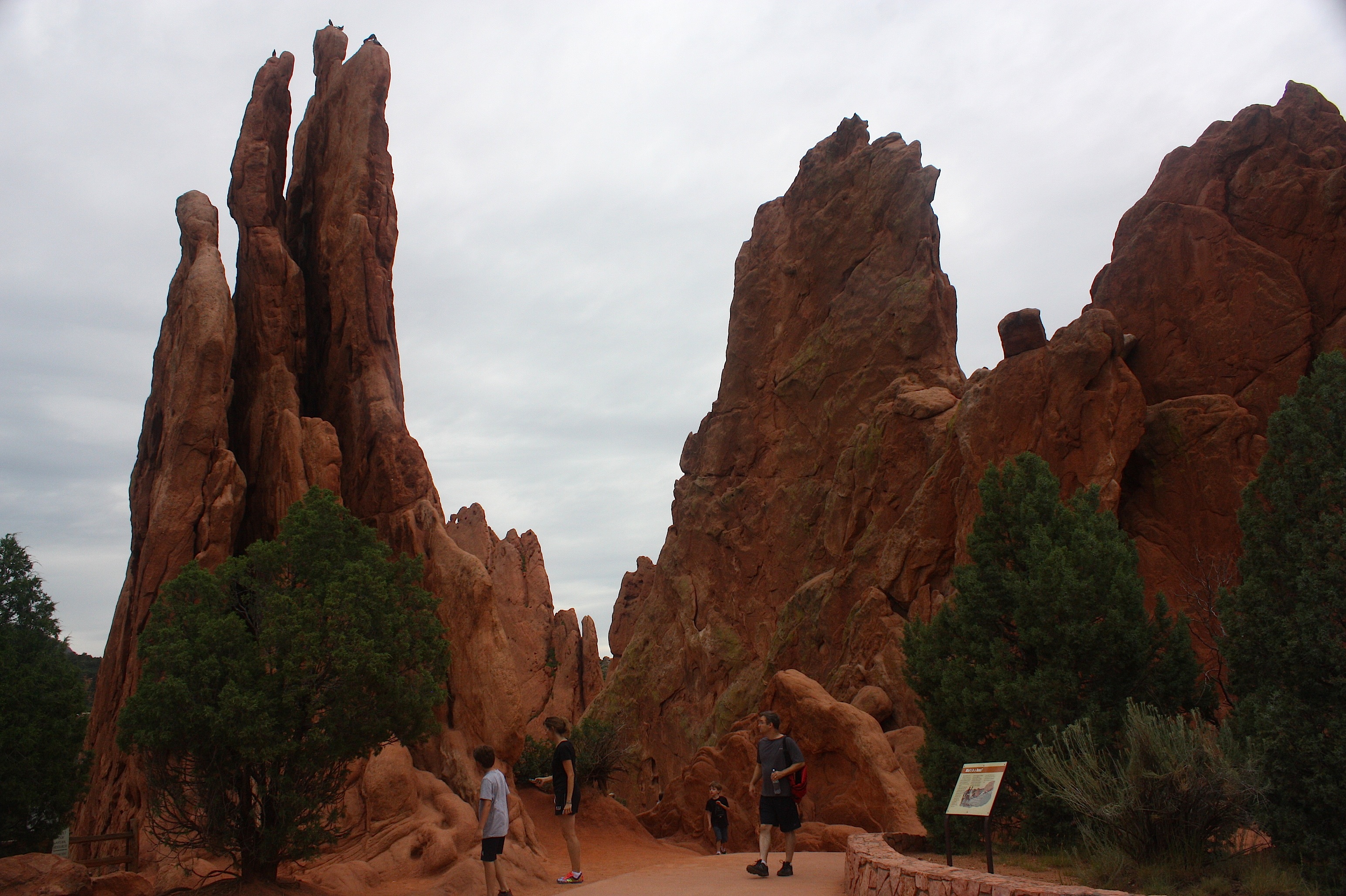

You can drive through this free city park. Better yet, park your car and take a hike; there are 15 miles of trails, and many of them are paved. When we were there, we saw technical rock climbers and horseback riders. A visitor and nature center is nearby, as well as a much-promoted trading post. We stopped at neither.
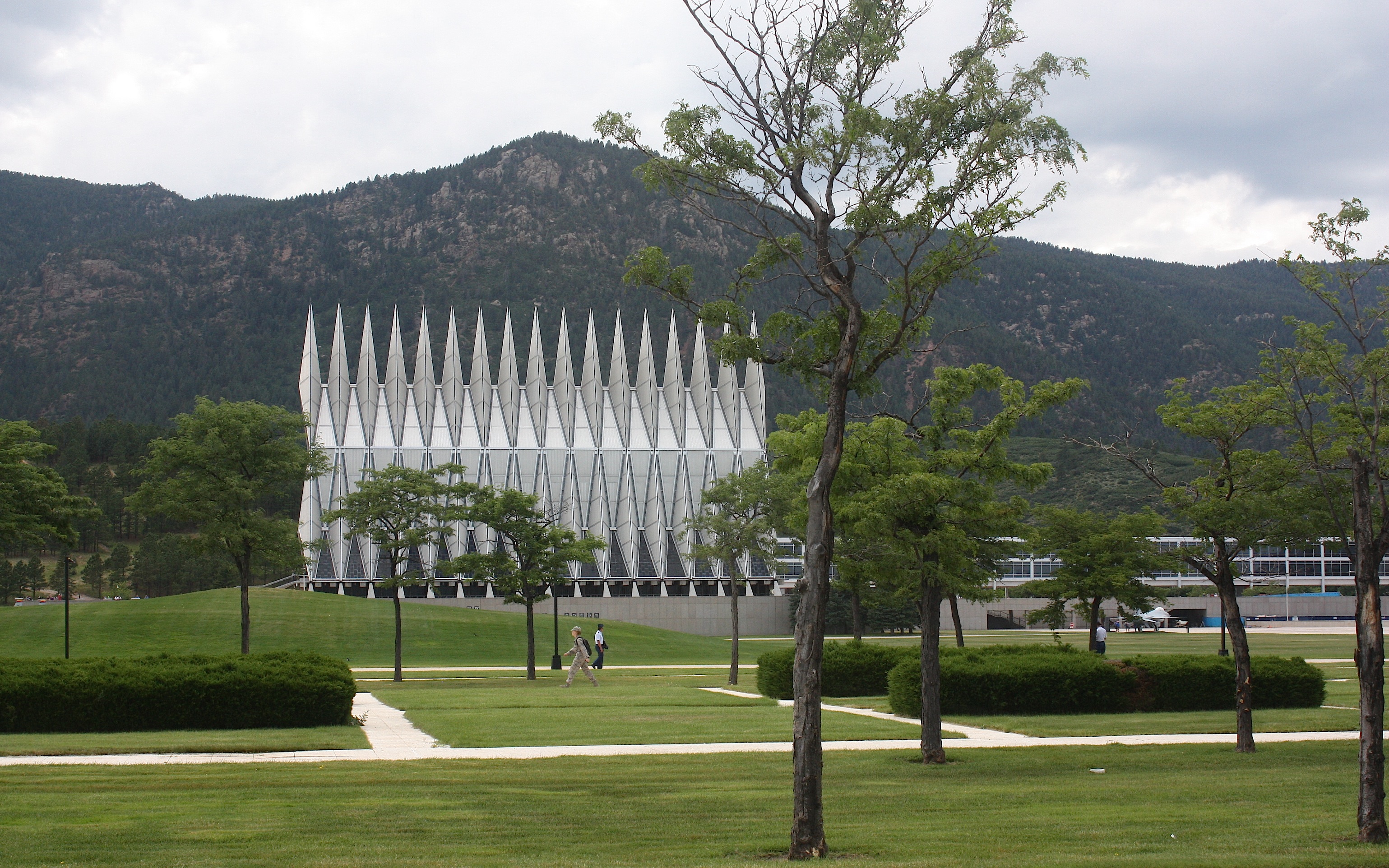
Once my conference began at the Air Force Academy, I figured my tourism opportunities were over. But I was wrong, because the Academy itself is a tourist destination, and our group got an extensive tour the first afternoon we were there. Be advised, if you visit, that security is extremely high on the campus as it is also a military base.

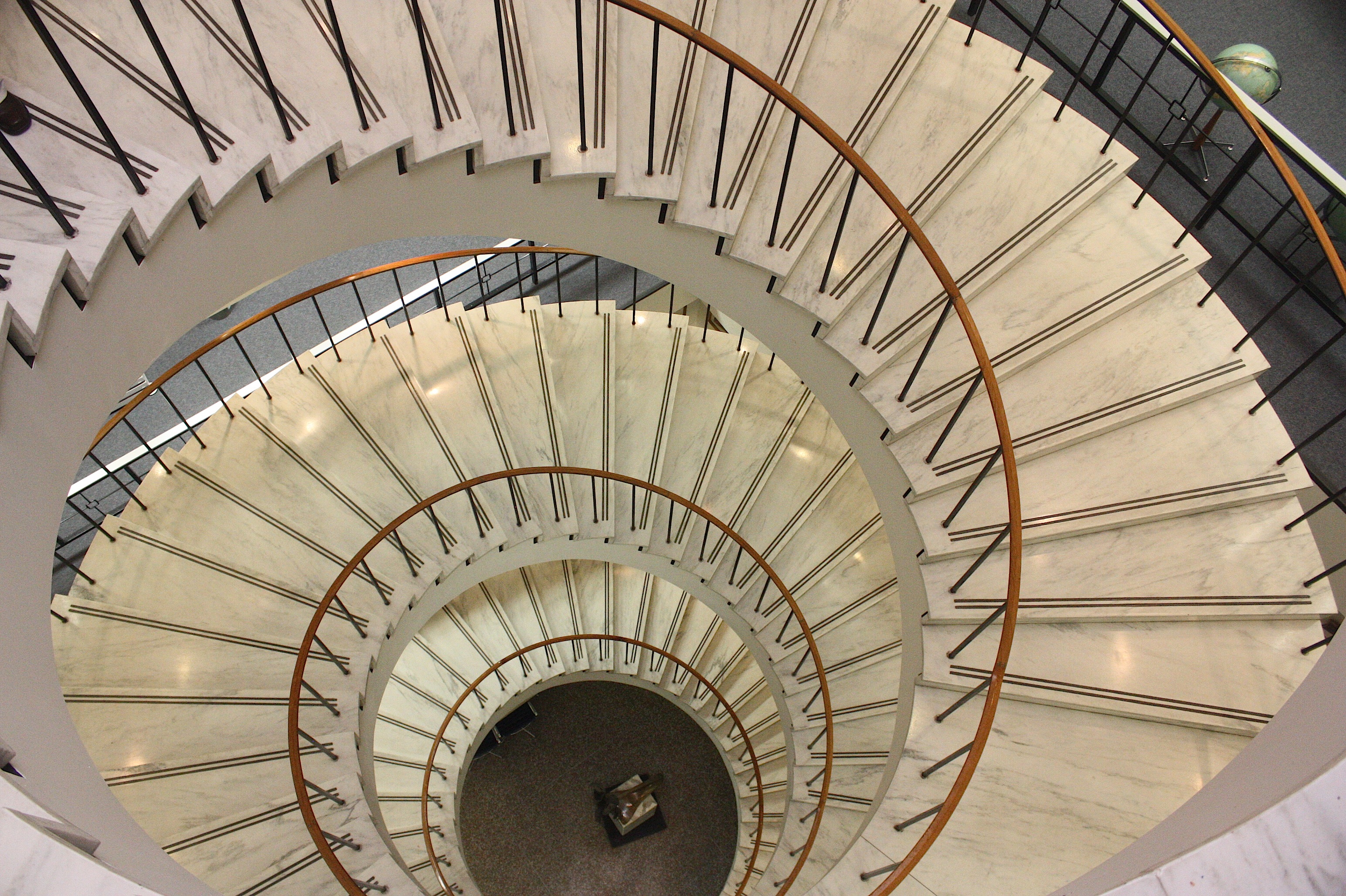

We were lucky to be here when the cadets were on campus, marching in their regiments. We toured the chapel, library (with its spiral staircase), dining hall, and other areas of this most unusual campus.
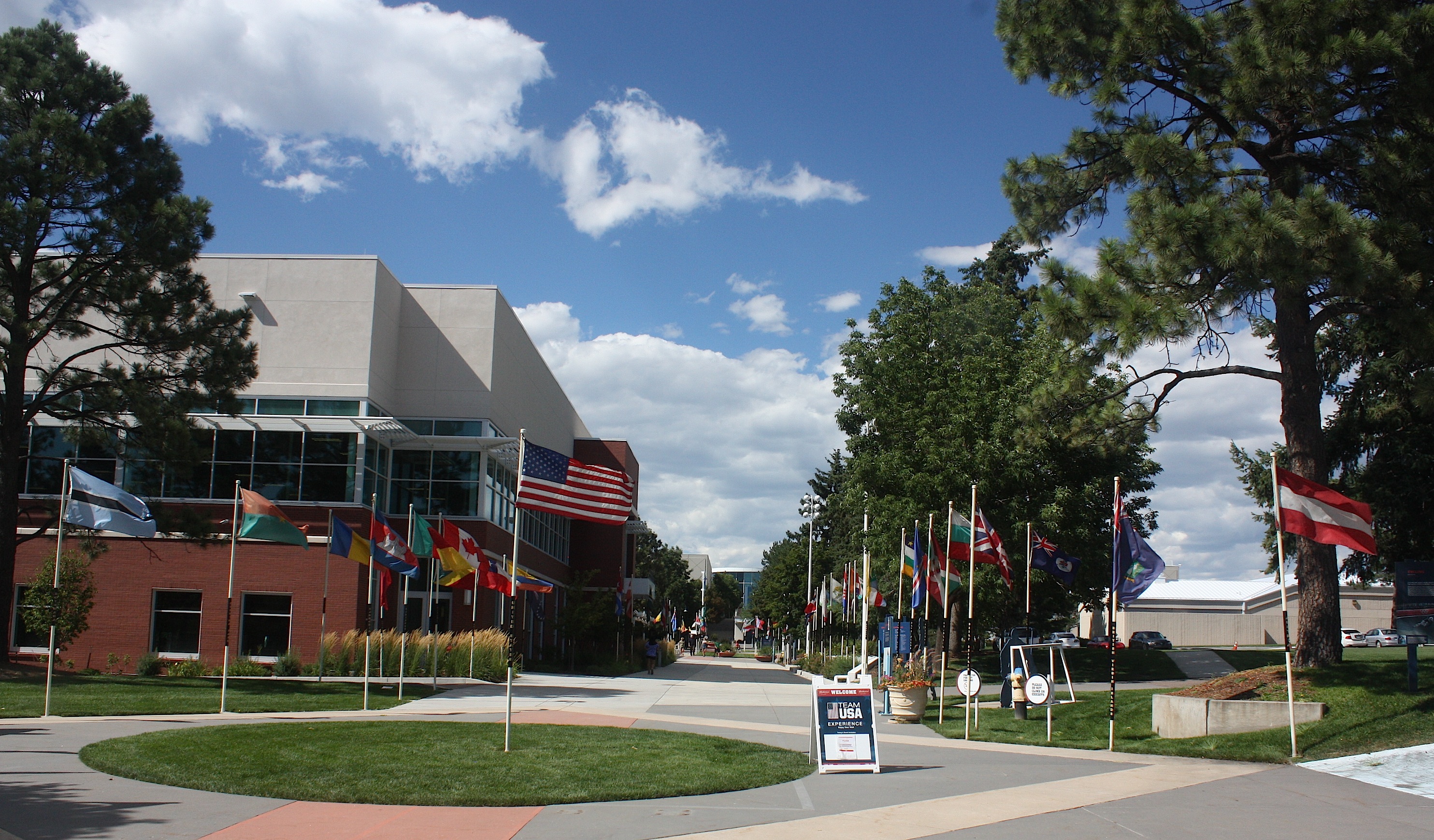
The next day we visited the Olympic Training Center in the heart of Colorado Springs. Hour-long guided tours are available for $5. If you’re lucky, you’ll be able to see athletes training in one or more of the many sport facilities for swimming, gymnastics, shooting, weightlifting, wrestling, etc. There’s also a visitor center with a pretty cool gift shop.
Blood Run historic site
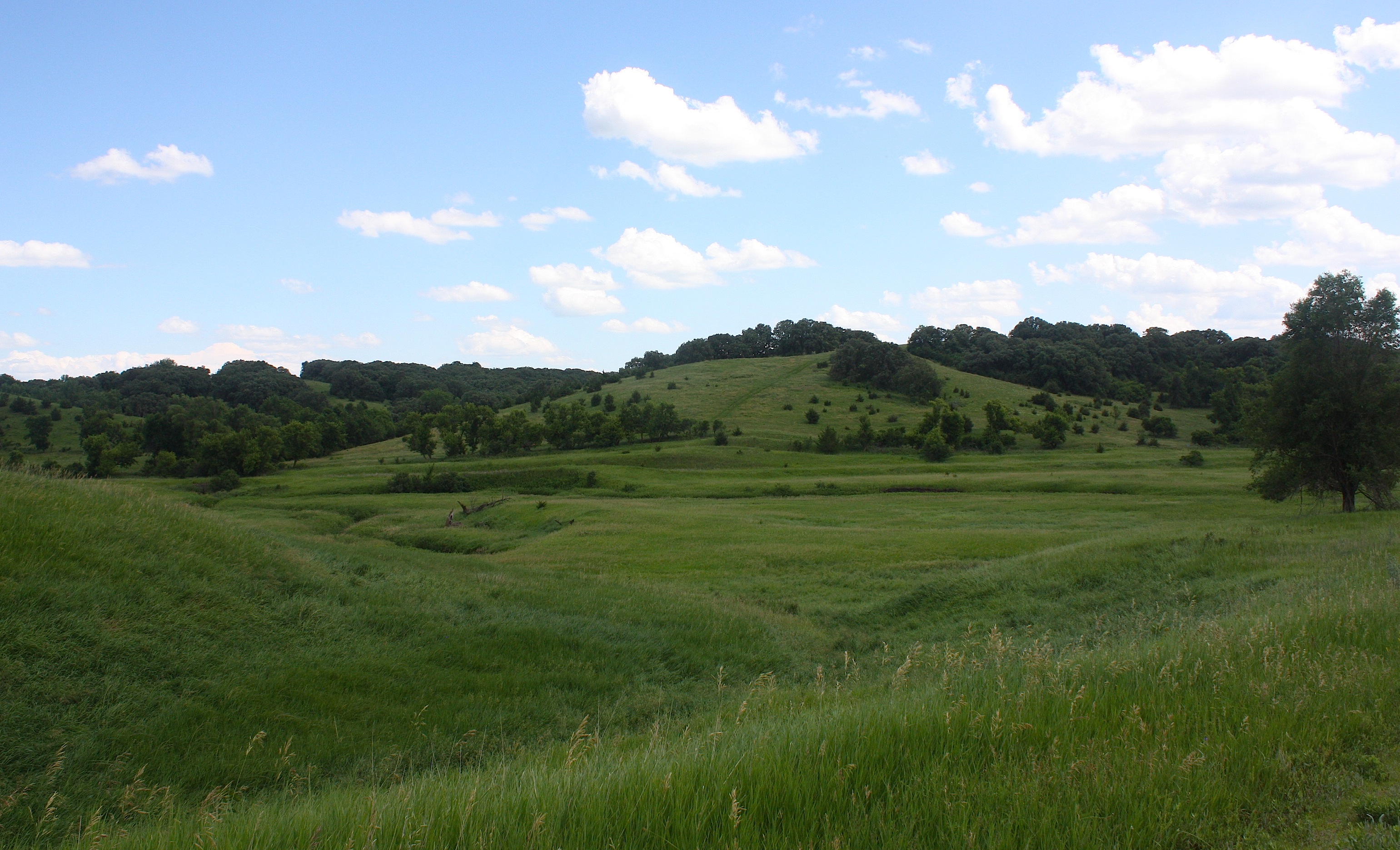
You can find Blood Run, a National Historic Landmark, at the far northwest corner of Iowa…if you’re willing to get off the main roads. Located about half a mile south of 1001 120th St., Larchwood, the Blood Run archaeological site is very remote and difficult to find. (The nearest city of any size is Sioux Falls, S.D.) The woman I spoke with at the Lyon County Conservation Board suggested setting my GPS at 1051 120th St., but it’s even south of that if I remember correctly.
I visited the Blood Run historic landmark this summer because I’m really interested in Iowa’s history – pre-European settlement history, even pre-human history. This particular site is more than 300 years old. It’s the location of a large village and ceremonial site of the people who were ancestors of the Omaha, Iowa, Ponca, and Otoe-Missouria tribes – the Oneota and Prairie Sioux. It was a major trading site from about 1500 to 1700.
Hundreds of burial mounds were once observed, and you can still see several of them here.
At its peak, this land was attractive to the Oneota culture because of its fertile soil for gardens, abundant game, and access to the Big Sioux River.
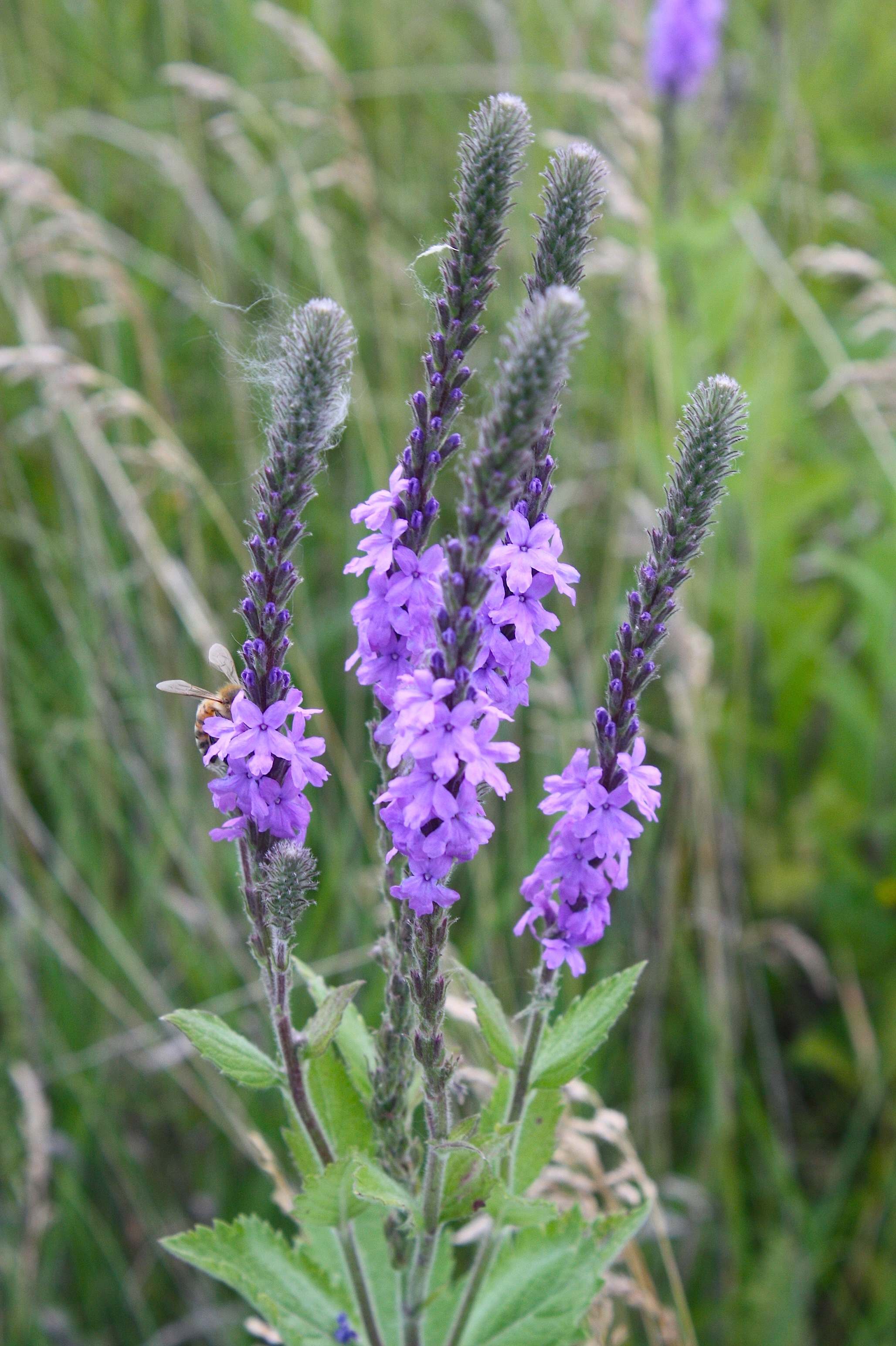 It’s still an incredibly beautiful place: hilly, wooded, prairie plants everywhere. But it’s the historical significance that took my breath away. This place is said to be one of the oldest sites of long-term human habitation in the United States.
Self-guided hiking is allowed on designated trails from May 15 to Sept. 15. Tour guides provided by the Lyon County Conservation Board must accompany visitors at other times. For an appointment call (712) 472-2217.
Sweet corn!
 Nothing says “summer in Iowa” more than fresh, local sweet corn. And nobody does sweet corn better than Adel, Iowa, at its annual sweet corn festival.
This weekend was the third time I’ve attended the festival. It’s a great time: There’s a Sweet Corn Princess contest, 5K race, parade, beer garden, entertainment, vendors…and CORN. Lots and lots of free corn.
And here’s the amazing thing: On Friday night, when about seven and a half tons of Deardorff sweet corn appears on flatbed trucks in a downtown parking lot across from the fire station, more than 200 Adel folks show up to shuck it. Moms, dads, little kids, grandparents…they’re all there, shucking away.


Most are laughing, some are drinking a bit, and everyone is having fun. It’s a real community-wide effort that makes the corn taste even better the next day.
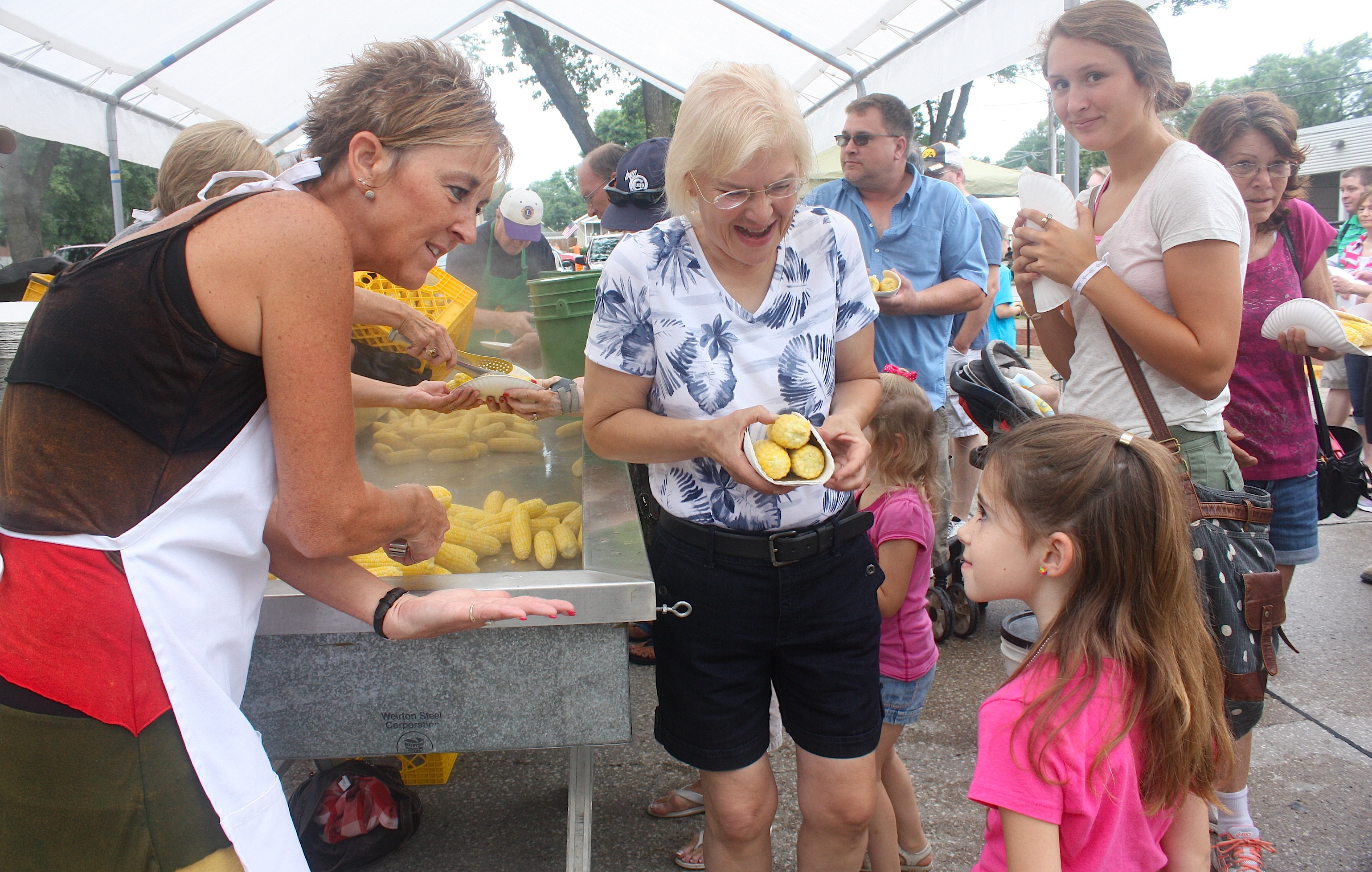

And it is delicious. It’s boiled in a huge corn cooker specially engineered by local resident Kenny Chapman. The process is amazing to watch: 24 yellow milk crates, each holding three dozen ears of corn, are submerged at once in the boiling, steaming water for about eight minutes. It takes a huge crew of volunteers to set the crates on a conveyor belt, feed them into the cooker, pull the crates filled with cooked corn out of the cooker, dump them into the waiting stainless-steel serving station, and serve them to the hungry masses — see the line below, it gets to be a couple of blocks long.
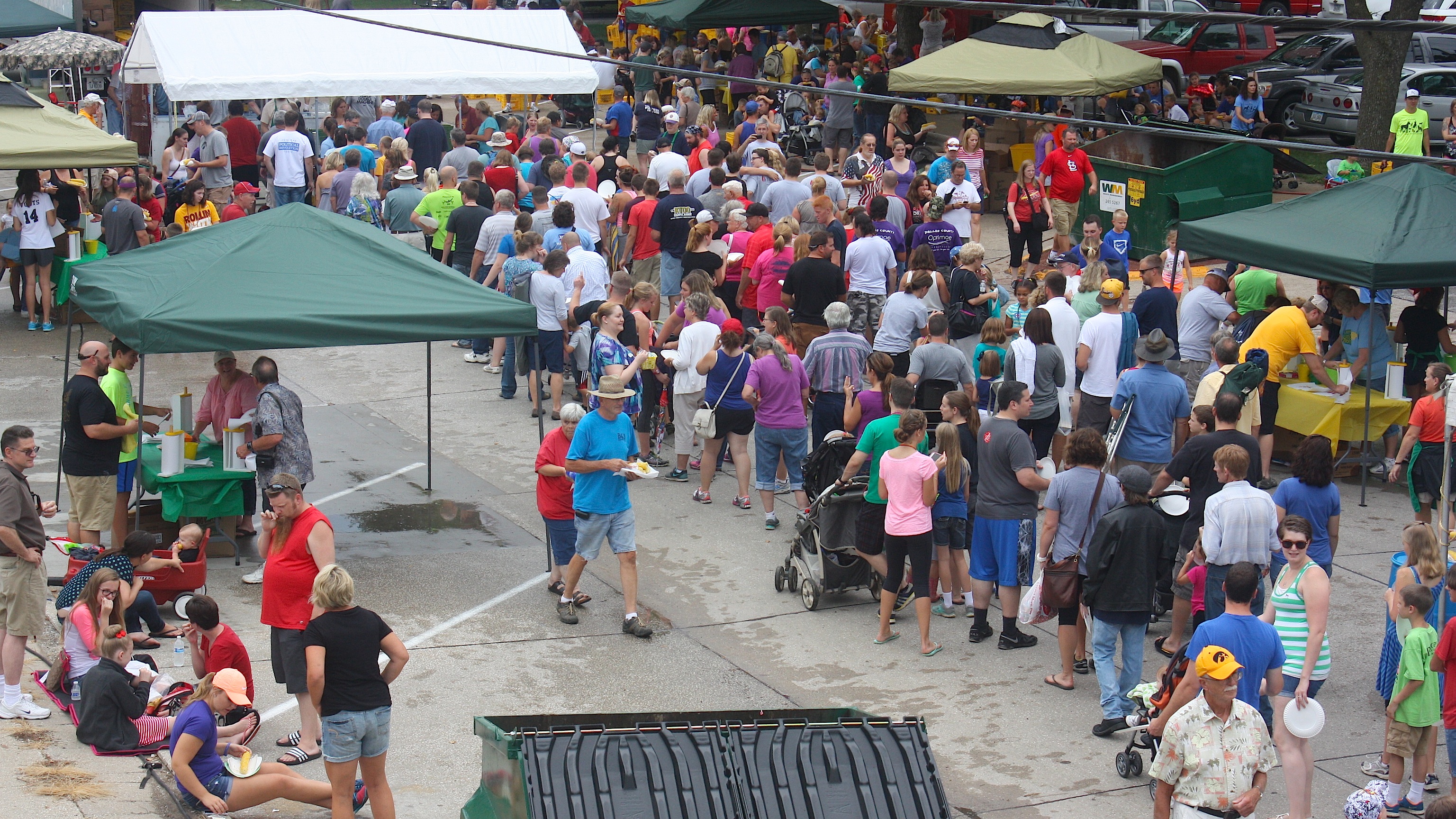
Volunteers give away about 15,000 ears of corn at the Sweet Corn Festival, now in its 36th year.
Albert the Bull
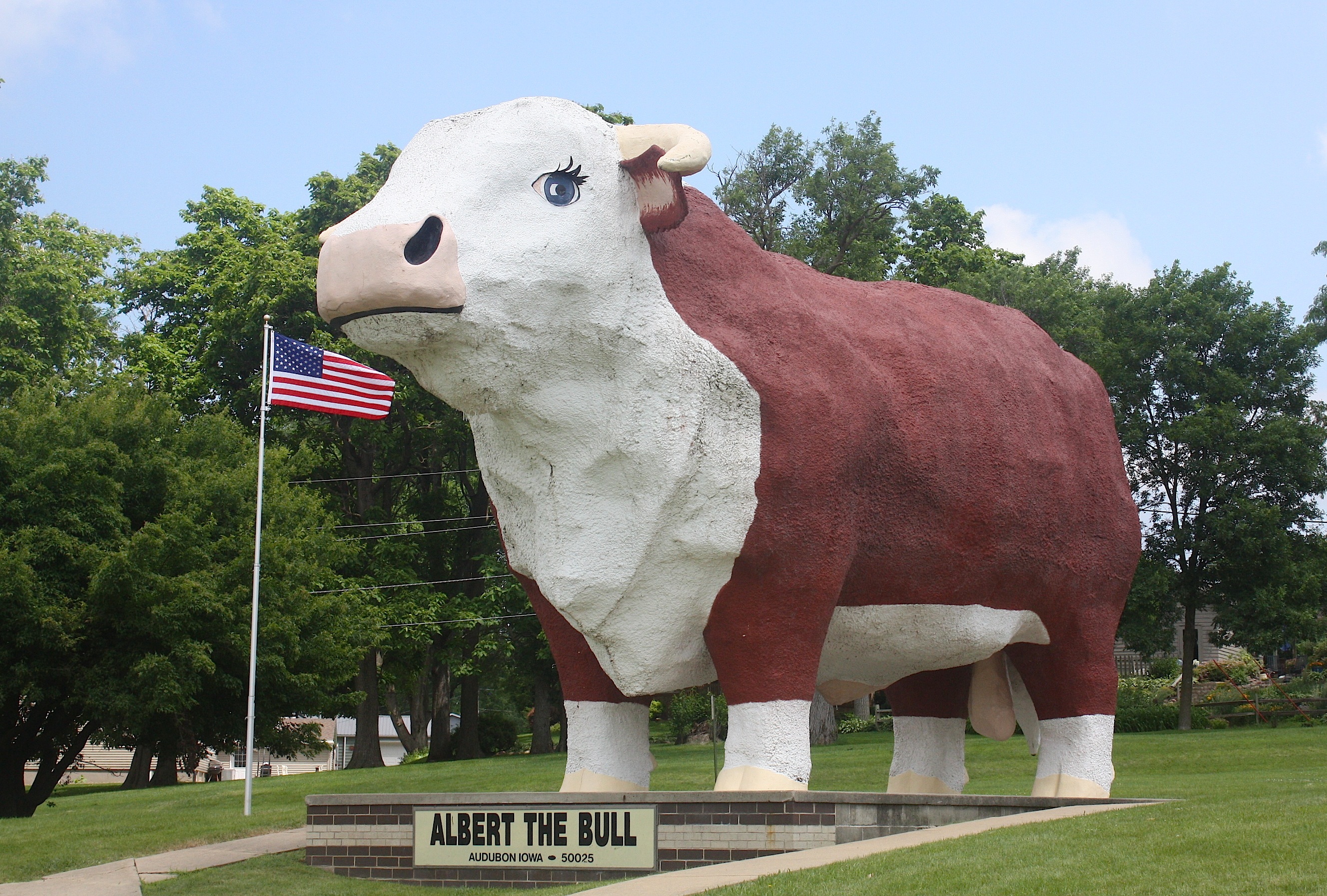
Driving along Hwy. 71 in western Iowa between Carroll and Atlantic, it’s hard to miss Albert the Bull. I mean, he’s said to be the World’s Largest Bull, and who am I to doubt that claim?
Albert is kind of cute and funny…for an enormous concrete bull. He’s 30 feet tall and 33 feet long, weighs 45 tons, and has blue eyes. He stands in a park on the south side of town.
The big bull was named after Albert Kruse, who originated Operation T-Bone, a salute to the Iowa beef industry. He was built in 1963 by the Audubon Junior Chamber of Commerce.
Family fun in the Twin Cities
Each summer my husband’s side of the family gets together somewhere in the country. Sometimes they find a location in the Midwest; other years they’ve gone as far away as California, Las Vegas, Washington, D.C., South Carolina, and Colorado. I haven’t made it to all of the gatherings, but this year we all went to the Twin Cities for a few days.
We rented a large house about a mile from the University of Minnesota campus. My husband, Dave, found the house through HomeAway, a vacation rental company. The house was in an older neighborhood. It was set up like a duplex: You went into the front door and then there were two more doors. Each side was a mirror image of the other. Each had a living room, dining room, kitchen, bedroom, and bathroom on the main floor. Downstairs were an additional bedroom and bathroom, plus a laundry room. A third bedroom was on the second floor. So, all together we had six bedrooms, four bathrooms, two kitchens, two dining rooms, and two living rooms. Plenty of space for 12 people and all their stuff.
Dave and the girls and I had driven up early on a Friday, our first day there, because we wanted to meet a friend for lunch. Afterwards we spent a couple of hours in Ikea (because, how can you spent LESS than two hours in Ikea?) Then we headed for the house that would be our headquarters for the next three days.
We spent the first night – after a grocery, beer, and pizza run – just getting settled in.
The next morning, after finding coffee and muffins in nearby Dinkytown, we all headed to Mall of America, the most blatantly American commercialization place on earth. I hate to admit it, but I think it’s kind of fun – in small doses.


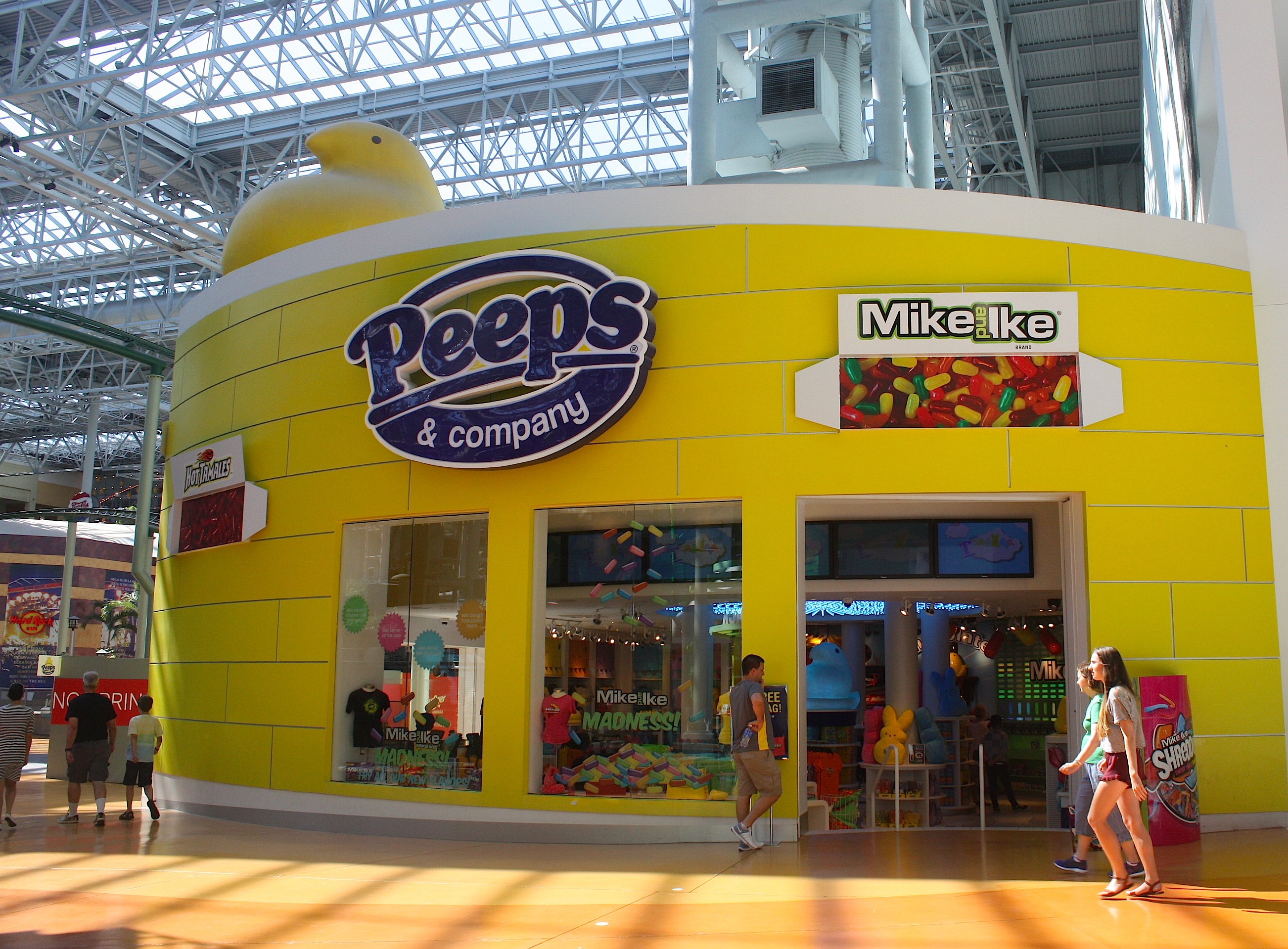


I had a blast in the American Girl store, shopped at the Lego store for my little nephew’s birthday, and went with the girls to H&M, Nordstrom Rack, and Forever 21. We ate lunch at a Tony Roma’s (note to fellow vegetarians: This is not the restaurant for you), and the more adventurous in the group rode a bunch of rides at Nickelodeon Universe, the theme park located in the middle of the mall. It never ceases to amaze me how they can cram that many rides – including a full-sized roller coaster – in a shopping mall. While they were riding rides, my sister-in-law Joyce and I went to L.L. Bean (disappointing) and then ate gelato. Most of the family (not me) wanted to play miniature golf at Moose Mountain Adventure Golf, also located inside the mall, but the wait was too long so we left.
We ate dinner at Town Hall Brewery. We were lucky on two counts: The restaurant had room for a table for 12, and the weather was so nice that we sat on the patio. I was surprised by both, especially since it had been so warm and humid the previous few days. But it was a lovely evening in Minnesota. We ate (I ordered a bean burger, and we shared avocado fries), drank, and made merry before heading back to the house, tired from a long day of fun.

The next morning we started out with a trip to the Midtown Global Market, a terrific public market that offered produce and other groceries, plus lots of prepared foods and shopping – all with an international bent as the name implies. It was Sunday, and we got there before many of the shops opened, but most of the food vendors were up and running. We went to the Salty Tart Bakery because I’d seen this place mentioned in several “don’t miss” lists of Twin Cities attractions. It did not disappoint. I ordered the sugar-topped, crème-filled brioche, and it was heavenly. I paired it with a latte from Mapps, a food vendor around the corner. Others in the family found eggs, French toast, and other breakfast foods from nearby shops. We all met in a large seating area, where we could listen to salsa music coming from a dance group performing around the corner.
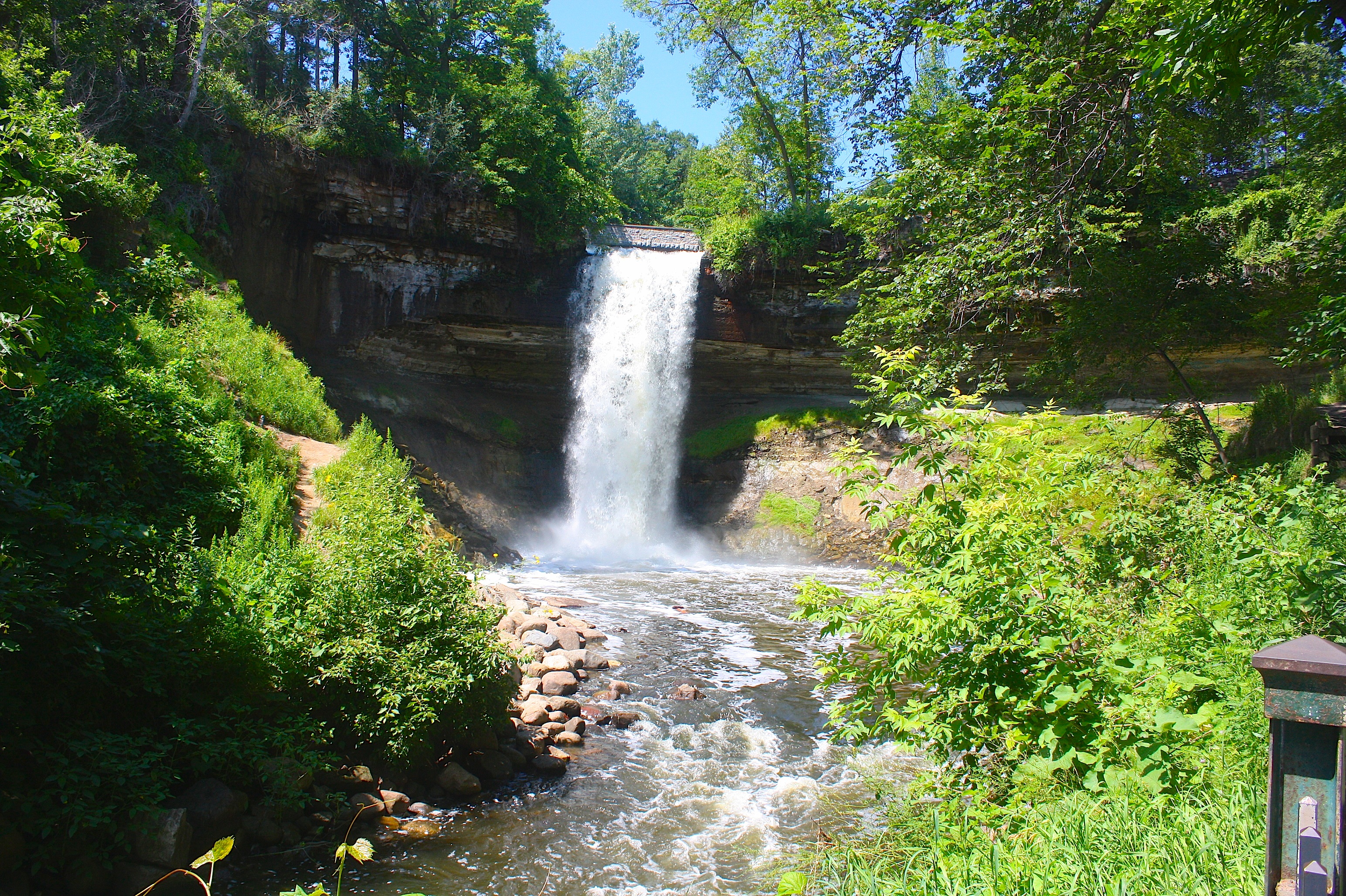
Our bellies full, we headed to Minnehaha Park and Falls, a popular Twin Cities destination, especially during the summer. We viewed the falls from upper and lower vantage points, and at that point the group decided to go in separate directions. Some went to the Mill City Museum – something I’d definitely like to do one of these days. My group stayed at Minnehaha just a bit longer, because some of us thought it would be fun to rent a bicycle surrey and ride around the park. For $32 an hour, you can rent a bicycle built for four, with room for a couple of little kids, and lots of people were riding around on these things. Why not?
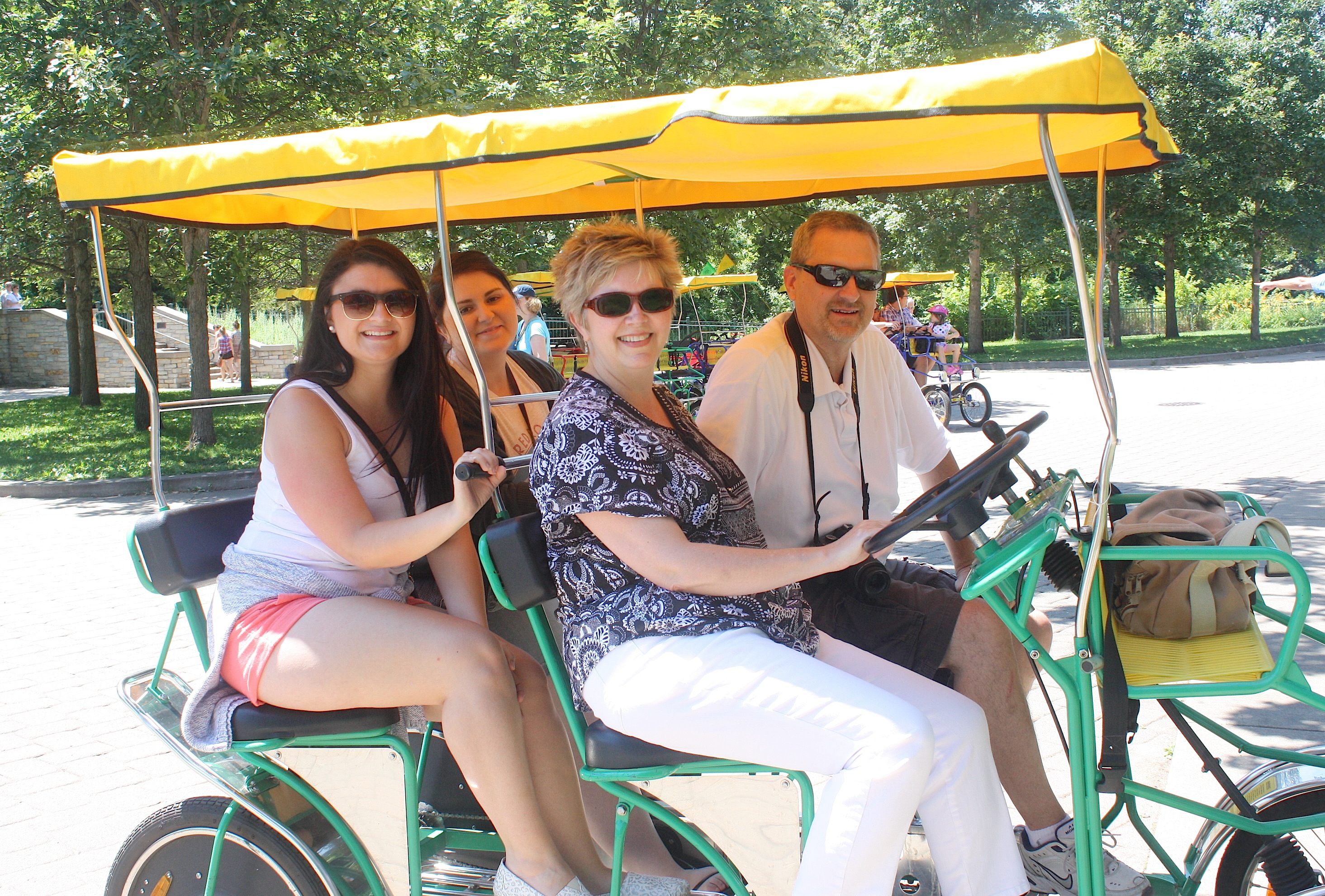
Well, making the contraption go forward was harder than we expected. Making it stop was nearly impossible. The terrain was mostly flat, but when we encountered a slight incline, we couldn’t make the damn thing move at ALL, so we all got out and walked it up the hill. It was humiliating. Other families were laughing at us. Well, maybe not, but it seemed like it. We didn’t keep the surrey for the full hour, and we were glad to turn it back in at the rental stand. Daughter Lauren, who had loudly voiced her opposition to renting in the first place, was right. The Giesekes are not a biking family.
That bit of embarrassment behind us, we sought solace in lunch. Katie had heard about a dive called Matt’s, home of the original Jucy Lucy, a delicacy I’d never heard of. We found the place easily, and it was packed. We stood in line, watching as the cook cranked out burgers (the Jucy Lucy is a hamburger with cheese melted inside) and fries and not much else. It’s a pretty limited menu.
Once we got a table, we ordered two Jucy Lucys for three people, one basket of fries for all of us, plus a grilled cheese for me. The food was greasy but really good, and it was a fun.


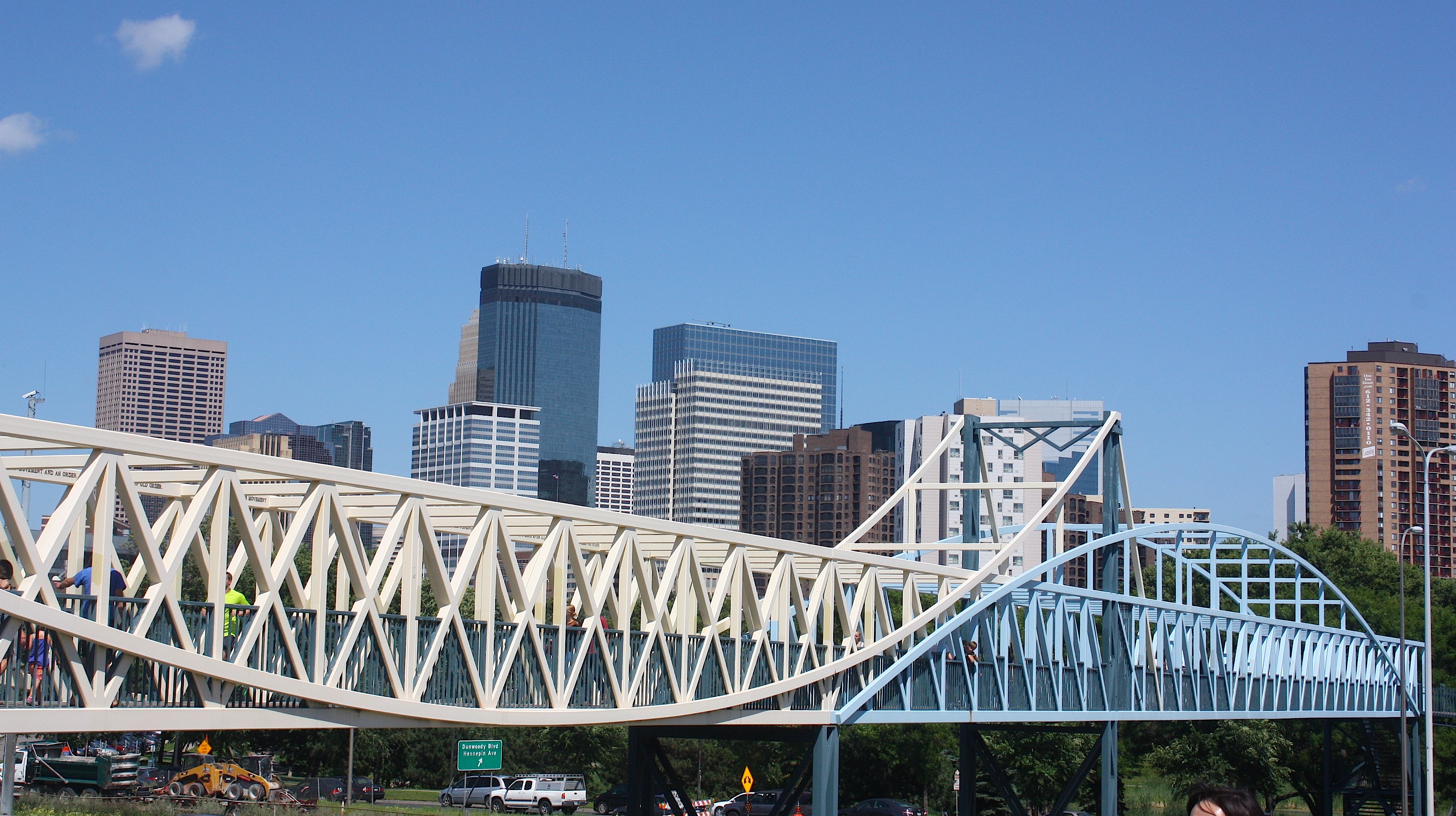
From there, we went to the Minneapolis Sculpture Garden, home of the famous Spoonbridge and Cherry and filled with lots of other artwork, all in a park-like setting.
Afterwards we went to another popular local food hangout: Sebastian Joe’s. This place was crazy crowded, with a huge line waiting to order ice cream in flavors like chocolate amaretto, dreamsicle, and cappuccino heath. I had a scoop of honey cinnamon crisp in a handmade cone, and it was delicious.
Our final family dinner was at Republic (“A Pub for the People”), recently named one of the Top 100 beer bars in America by Draft magazine. I don’t know about that, but we had a good time and everyone seemed to enjoy their food and drink. I ordered a variation of the BLT, with a fried egg, tomato, and lettuce on thick white bread.
We spent the evening watching TV together, packing, and hanging out on the back patio. Our family vacation in the Twin Cities was maybe not the easiest in terms of traffic and parking, but it was a nice place to gather, and we all left the next morning happy, relaxed, and ready to get back home.


 Iowa Girl on the Go