Archive for the ‘Uncategorized’ Category
Iowa’s historic Kirkbride buildings
 Comments (4)
Independence State Hospital
When I visited the first of three historic mental health facilities last summer, it was so hot that I could feel the searing heat of the pavement right through my shoes.
That was in Clarinda, a small town in southwest Iowa, the third week of June. Before the month was over I had visited the other two facilities – once known as insane asylums – in Cherokee and Independence.
My interest in these buildings is two-fold: I’m primarily interested in the historic architectural design of the institutions, but I’m also fascinated by the history of how we as a society have treated people who have been diagnosed with mental illness.
I stumbled upon a fascinating website some months ago that describes the architecture and use of the facilities known as Kirkbride buildings. Dr. Thomas Story Kirkbride (born 1809) was superintendent of the Pennsylvania Hospital for the Insane, and he promoted a standardized method of asylum construction and mental health treatment, popularly known as the Kirkbride Plan. Kirkbride believed that asylum buildings and their surroundings were a central component of treatment for the mentally ill.
Kirkbride buildings – most built between 1848 and 1890 – feature a central administration with tiered wards on both sides. Patients were housed in a hierarchical system based on gender and illness. In general, men were on one side, women on the other, with each ward subdivided into areas for “better behaved, rational” patients and “excited” patients. Kirkbride felt this arrangement would make patients more comfortable and their treatment more productive by isolating them from “other patients with illnesses antagonistic to their own” while still allowing for ample fresh air and natural light.
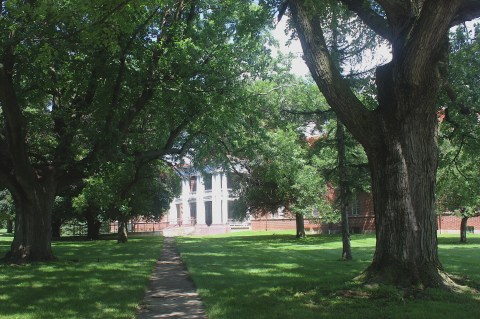
Cherokee State Hospital
The campus concept makes for a truly remarkable atmosphere, even today. Placing patients in a natural environment away from urban centers, surrounded by cultivated parks and farmland was thought to both stimulate and calm the patients. In fact, patients were encouraged to help work the farms and keep up the grounds.
Eventually these state-of-the-art mental healthcare institutions gave way to more modern facilities. Many of the original Kirkbride buildings across the U.S. have been abandoned or demolished. According to the website, just a few of these grand buildings remain in their entirety, and three of them are in the state of Iowa.
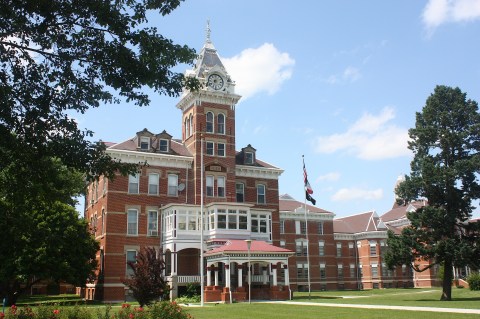
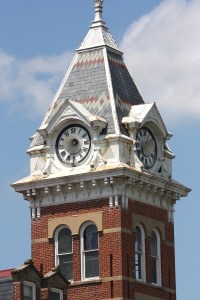
As I mentioned, the day I visited the Clarinda State Hospital (above) in June was hot – and it was also deathly quiet. I drove up the long, tree-lined drive (all Iowa facilities under the Kirkbride Plan have these long, beautiful, tree-lined drives) and parked my car near the Clarinda Academy, a residential foster care facility that provides treatment to at-risk youth. The Academy is housed on the grounds of the state hospital, behind the main building. I walked down the road and onto the main campus to get a good look at the historic insane asylum that opened in 1888. The gothic structure is huge – more than 500,000 square feet – with the distinctive center section flanked on both sides by patient wards.
 At the time I was there, the facility had not yet been closed by the governor – a controversial move that I won’t explore in any depth here except to say it was hasty and motivated by a line in the state budget rather than by patient needs – but I’m told that some patients had already been moved elsewhere and the staff was reduced. I’m guessing that explains why it was so quiet on a Saturday afternoon, a day I expected to be a popular visitors’ day for families of the remaining patients. I walked the grounds, taking photographs, without seeing a single person. I walked inside, hoping to ask someone for entrance to the museum that is said to exist within the building, but I saw nobody in the common spaces or offices. I took a few pictures of the main interior space – I obviously didn’t continue to the patient wards – and I could hear muffled voices coming from what sounded like a distant meeting. But that was it: no human sightings.


The Kirkbride website says that the building is “well maintained throughout and is in fantastic shape” and it appeared so to me.
Despite protests, the facility was shut down later in the summer; 53 employees were laid off, and the remaining patients (some of the state’s frailest and most complicated psychiatric patients) were transferred to other facilities. At last count, three had died.
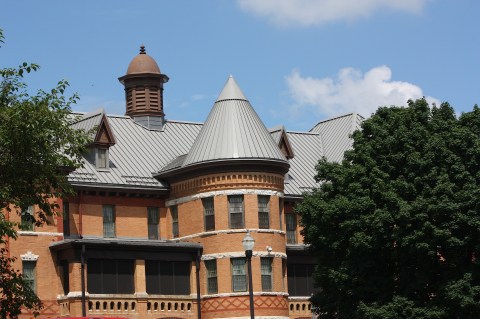
The Cherokee State Hospital (above) was built in northwest Iowa, the fourth of the four state asylums, in 1902. According to the Kirkbride website, the original facility had 1,810 windows, 1,030 doors, 550 rooms, 23 dining rooms, and 30,000 square feet of tile. Much of the original building remains; the website notes that changes in the exterior have “diminished the historic character, but it’s still an attractive building.”
I thought it was still grand and impressive, but it has a notable difference from the Clarinda facility: prison-grade fencing. The south wing of the Cherokee Mental Health Institute houses criminally insane and violent patients.

I visited the Cherokee facility on June 26 with a friend. We parked closest to the south wing and walked toward the building. But I only got a few frames snapped on my camera before a large man on a cell phone came toward me and told me that no photos could be taken of the south wing, even after I told him that I was just documenting the architecture for my blog. (He also asked me, in an authoritative voice, if I knew what the building was originally built for. No? Well, he said, it was supposed to be the location for Iowa State University. I didn’t argue with him, but I do have to quibble with that “fact.” I work at Iowa State University, and I happen to know that it was founded in 1858 and opened its doors to students in 1868. The Iowa legislature didn’t even begin talking about the Cherokee facility until 1894. So there you have it, you annoying, officious man.)
Officious Man said we needed to speak to the superintendent about photographing the other parts of the building, which we did, because he happened to be standing on the front steps and we couldn’t avoid him. He was young, and seemed to be a very nice man, but he said we’d need to go inside and ask the person at the front desk. Turns out she was NOT nice and told us in no uncertain terms that we could NOT take pictures anywhere, inside or out, and pretty much kicked us out. I kept thinking she was going to call security. We walked around the grounds anyway (many of the secondary buildings are in a state of glorious disrepair, such as the one below) and took a few more photos of the main structure from a distance – I swear, we were not being disrespectful of any patients or their families or physicians; I would not have photographed anyone, even if I saw anyone, which I did not. I just wanted to document the architecture, for crying out loud.
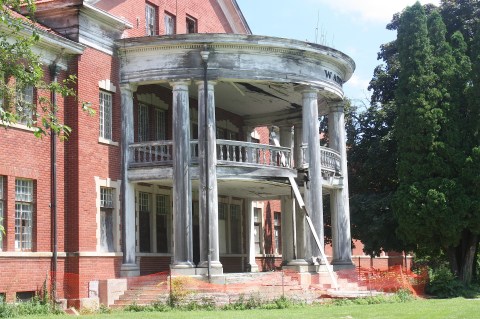

So when we went to the Independence State Hospital (above) a few days later on June 29, we didn’t ask permission to take pictures of the outside, and we kept a low profile.

But once we documented the exterior of the facility that opened in 1873 as the Iowa Hospital for the Insane, we bravely went inside and asked very nicely if we might be permitted to snap just a couple of photos of the gorgeous hardwood staircase in the main welcoming area. The woman on duty said it would be okay! Here’s what it looks like:

The Independence facility is a beauty, and it is said to look much as it did when it was built. The main building appears to be in excellent shape, and the grounds are lovely and park-like. Hanging in the entryway is a huge, colorful painting of the building:

I should mention that Iowa once had four Kirkbride buildings. The Mount Pleasant State Hospital – opened in 1861 and originally called the Iowa Lunatic Asylum – burned in 1936. It was the first public asylum in the state of Iowa. The state built a more modern structure in its place. The Mount Pleasant mental health institute was shuttered by Iowa Gov. Terry Branstad, along with the one in Clarinda, on June 30. Branstad has been quoted by the media saying that he is open to the possibility of closing one or both of the remaining mental hospitals in Independence and Cherokee.
According to a report issued by the Pew Charitable Trust, Iowa ranks 47th in its general-fund spending on mental health services.
Science Center of Iowa
Even if you don’t have kids, there are two good reasons to go to the Science Center of Iowa right now: A brand new “National Parks Adventure” film at the IMAX theater and a very interesting exhibit on race.

The U.S. National Park Service is celebrating its 100th birthday this year. I wanted the film to be longer! It’s only 40 minutes, and there are so many spectacular parks to feature, it just didn’t seem long enough. But it’s still worth a trip to the SCI.

Plus, the RACE (“Are we so different?”) exhibit is highly interactive and appeals to adults and kids on different levels. A project of the American Anthropological Association, it’s on display through April 3.

The SCI also has fun exhibits about space. I liked seeing the Mars rover replica, especially after reading The Martian earlier this month.
The Science Center of Iowa is closed on Monday; open Tuesday through Saturday 10 a.m. to 5 p.m. and Sunday noon to 5 p.m. The center is also open late the first and second Fridays of every month. Entrance fees vary…I paid $18 for a combo ticket for general admission and a documentary IMAX film.
Not yet spring

Any relatively warm weekend in February is cause for celebration. I took a walk on a paved path last Friday after work and it felt so great to be outside that I decided to hike at McFarland Park on Saturday. The hiking trails out there are still mostly snow-covered; some sections are icy, and others are muddy. Not just a little mud, either – like, boot-sucking mud. So it is definitely NOT spring in central Iowa, but oh, what fun it is to imagine these trails surrounded by spring flowers and little green leaves!

New York in February

I don’t recommend going to New York in February. Unless you want to get insanely good deals on hotel rooms. And see pretty much anything on Broadway for half price.
A few weeks ago, knowing the weather could be really ugly and the whole trip might collapse, Dave and I bravely reserved a non-refundable flight and non-refundable hotel stay in New York for Feb. 6-10. Two weeks before we went, the city received a huge amount of snow that effectively shut the place down. But by our scheduled flight time, the forecast was reasonable: highs in the upper 30s and low 40s, with a slight chance of snow. Being hearty upper Midwesterners, we could certainly deal with that.
I have been to New York 20 times. I seriously do not recommend a trip in February for someone who has never been before, because there are just so many outdoor things you’ll want to do. Go in May! Go in October! These are wonderful months in New York. We just wanted to see as many Broadway shows as humanly possible in four days, and squeeze in a couple of museums. So we figured the cold really wouldn’t bother us. (And, again, our hotel room was SO CHEAP, we couldn’t resist.)
We arrived in the city on Saturday around noon after a weird flight from Washington, D.C. (our plane took off, then turned back around and landed again in D.C., but everything turned out OK). After a quick taxi ride into Manhattan, we checked into the Park Central hotel at Seventh Ave. between 55th and 56th Streets. We’ve stayed at this hotel many times. It’s a great location: near Central Park and just close enough to Times Square to make it easy to walk to and from shows but not be in the middle of that mess.
Our goal was to buy all our show tickets at the TKTS booth. We’d been stalking the TKTS website and app for weeks, so we had a pretty good idea what shows would be available and for what discount. Broadway tickets have become ridiculously expensive, so this is really the best way to get tickets, especially if you’re not set on seeing the hottest show in town and have time to stand in line.

When we left the hotel, the TKTS line wasn’t open yet, so we trotted down to Bryant Park (42nd St. at Sixth Ave.) to watch the ice skaters (above). That took about 10 minutes, so we continued on to the main New York Public Library and then down to Grand Central Terminal (below), both of which have amazing architecture.
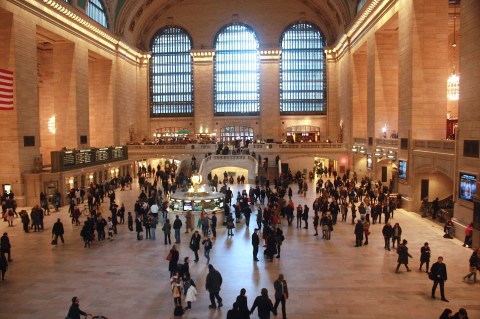
By then the booth was open and the line was very long. We had a number of shows we wanted to see, and as we were standing in line we figured out our top choices and what days we’d go to see each one. Our choice for tonight: “Something Rotten!” at a cool 50% off.

After buying tickets, we had time to have a drink, change our clothes, and eat dinner before the show. We had good seats but they weren’t together, so we sat with strangers and then got back together at intermission. We both loved this show. The premise is silly: It’s a send-up of both Shakespeare and Broadway musicals. But the original cast is still intact, and they’re wonderfully funny and talented and the show is clever and hilarious. Such a great choice!
Sunday morning, Dave went off to some National Park historic site that I didn’t care about (he’s still obsessed with visiting all 400-plus National Park sites before he dies). I preferred to sleep in and eat a leisurely breakfast. At 11 a.m. I went to Times Square to stand in the TKTS line for our matinee show. We had decided to see “Misery” with Laurie Metcalf (whom I love) and Bruce Willis (whom I really can’t stand). Dave and I are both big Stephen King fans, and although this probably wasn’t one of his best books, we thought it would be fun to see it on stage. I also love the idea of seeing a big star once in awhile, because, well, why not?
Before the show started, we killed some time at Macy’s (34th St. between Sixth and Seventh Aves.). That store has undergone a huge renovation…I remember reading that it cost something like $400 million, but don’t quote me on that. Anyway, the frustrating thing about Macy’s big Herald Square flagship store is that it’s just too huge. But the fun thing is that it’s got everything from really high-end merchandise that’s fun to drool over but also stuff you can actually afford. I bought three blouses for less than $75 total, and one was an Ann Klein originally marked $100.
The line for “Misery” was ridiculously long, but we finally got to our seats (not bad for 40% off) and really enjoyed the show. I was a bit star-struck by seeing Laurie Metcalf live on stage. The play was true to the book and the 1990 film that starred Kathy Bates and James Caan. The plot in a nutshell: Famous artist crashes his car in a snowstorm and gets rescued by his biggest fan, who happens to be bat-crap crazy and imprisons him in her home. I loved the revolving set and Metcalf’s performance. Willis was smirking and wooden, as I expected. But when he walked out (with a cane) at the end, after his character was nearly demolished by his captor, everyone went crazy.
As soon as the show was over, we went right back to the TKTS line – because it’s Sunday and there are evening shows to see! The choices on Sunday night are generally not as large as most other nights, and there were even fewer options on this particular Sunday. This was a surprise and a disappointment. We guessed this was because it was Super Bowl Sunday, but we never really knew for sure. We were hoping to get tickets to see the new staging of “The Color Purple” with Jennifer Hudson, but it wasn’t showing. We ended up scoring half-price tickets to “Allegiance” – one of the shows we really wanted to see anyway.
Once we had tickets in hand, we went back to our hotel to drop off our Macy’s bag and then stopped and ate big slices of Ray’s Pizza for dinner. We still had time to kill after that, so we went into a sports bar on Seventh Ave. called Tonic. This is a bar that I’ve been in before, because it’s kind of an Iowa State fan gathering place when the Cyclones are playing in a bowl game or NCAA tournament or whatever. We were lucky to get a seat, what with the Super Bowl and all, and it was crazy loud but had a good selection of beers. We availed ourselves of a couple of them before heading to the show.

“Allegiance” tells the story of a Japanese-American family and their friends during World War II when, after the Japanese bombed Pearl Harbor, many Japanese Americans were sent to internment camps. This was a lovely musical starring Lea Salonga (one of my favorite Broadway performers, who starred in the original “Miss Saigon” cast) and George Takei, whose own childhood experience was the inspiration for the show.
This is a serious subject, and I love shows that tackle serious subjects. Two of my favorite shows are “Miss Saigon” and “Next to Normal” – both heartbreakingly tragic. “Allegiance” didn’t rise to the level of those two shows for me, but it was beautifully done and very moving.
So Sunday was a very satisfying, theatre-filled day.
Monday was a big walking day, and it was also the day it snowed. Undeterred, we bundled up and headed up Broadway to one of my favorite places in all the world: Zabar’s. If you’re unfamiliar with this place, it’s a grocery store that’s been in New York for like 80 years. And, really, “grocery store” doesn’t begin to describe the wonderfulness that is Zabar’s. The cheese cases are the best I’ve ever seen in this country. And there’s the bakery, with the best New York bagels and the best Jewish rye and about a gazillion other kinds of bread. It’s just glorious.
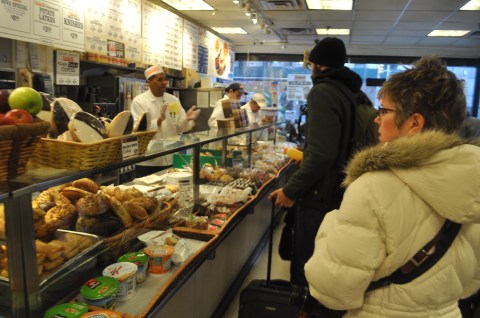
There’s also a very small café where you can eat breakfast, and that’s what I wanted to do. I’ve actually been trying to eat really healthy lately, and bagels and cream cheese are technically not all that good for you. But I figured that if you walk 24 blocks in the snow you can eat whatever the hell you want. So I ordered a toasted sesame-seed bagel with cream cheese and a latte and it was the best, yummiest breakfast ever. I also bought a black and white cookie and a loaf of rye bread for later, and the whole experience made me very, very happy.

From Zabar’s (Broadway at 80th on the Upper West Side) we walked through the snow to 96th Street and over to Central Park. By this time the snow was heavy and sticking to the grass. So the park was pretty (see the photo at top), but I was cold and wet. We walked to 103rd and Fifth Ave. to the City Museum of New York.
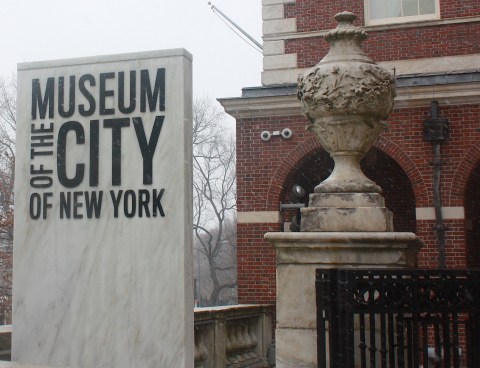
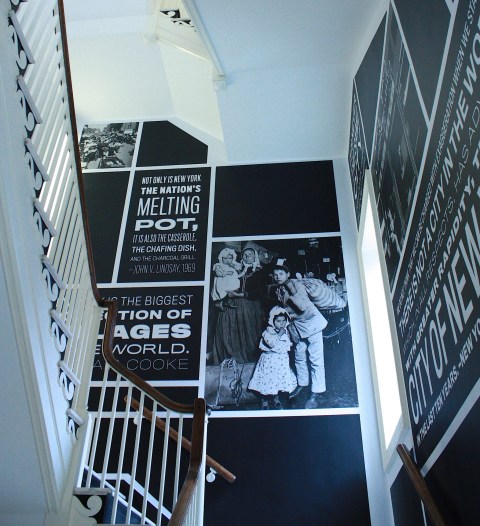
I was really excited to have time to go to this museum because I hadn’t been there before. But I was disappointed. The best thing about it was a short multimedia presentation about how the city was built. But this is a city with such an amazing history and culture, and I didn’t think the museum captured that at all. Current displays feature the NYC Marathon, portraits of rich people from 1700-1860, the artwork of former graffiti artist Chris “Daze” Ellis, and Jacob Riis photos of poverty in the Lower East Side tenements at the turn of the last century (those are pretty cool). But I wanted more. I actually enjoyed the displays in the stairwells (below) as much as anything in the museum.
By now the snow had stopped, and it was just cold. We meandered down Madison Ave., gazing into the windows of clothing shops I could not afford.
I think the cold made me hungry, because I was suddenly ready for more food. We stopped at E.A.T. deli and restaurant around the corner from the Metropolitan Museum of Art. It’s pricey, but I like the food and love the atmosphere. I’ve eaten here a couple of times before. Today I ordered a bowl of overpriced Mediterranean vegetable soup and munched on slices of raisin bread that comes in an overflowing breadbasket. Afterward, we split a piece of New York-style cheesecake. Yum.

At this point we were still around 80th St. and we had to get to 45th. It’s a long walk, but it went fast. We stopped at Rockefeller Center (above) to watch the ice skaters and jostle with the tourists a bit, and then we headed to the TKTS line to buy tickets to our Monday night show.
Monday night is the worst night to see a Broadway show, because this is the night that most theaters are “dark” (A.K.A. closed). I get this, because everyone needs a day off, but it doesn’t leave Broadway lovers much to choose from. We had decided in advance to get tickets to an off-Broadway show instead. These tend to run on Monday nights. I did some research and found “an exquisite gem of a musical” called “Daddy Long Legs.” We scored really reasonable half-price tickets and headed back to the hotel to warm up for a few hours.
Off-Broadway theaters are smaller than Broadway theaters, and often times they’re located in different parts of the city. Ours, the Davenport, was very near the theatre district between Eighth and Ninth Aves. But it had no fancy marquee, and it was so small I was nearly upon it before I saw it. Inside, the front of house was so small and dreary that I imagined a sad-faced photo of me there with the words “Desperate for Theatre” underneath. This place was awful. I had to take an elevator, which made scary noises, upstairs to the ladies room, which was about 130 degrees with poorly flushing toilets and sinks that produced no water. Ick! But once the house opened up and we went in, things improved. The set was like a big library of floor-to-ceiling books, and the tiny theater was very warm and cozy and intimate, with only about 100 seats.

And the show! “Daddy Long Legs” is based on a 1911 novel by Jean Webster. Directed by John Caird, the original director of “Les Miserables,” the show features just two cast members: the orphan girl Jerusha and her secret philanthropist Jervis. The story unfolds mostly through a series of letters written by Jerusha as she enters college and a brand new, eye-opening world. It’s a coming-of-age story; it’s a love story; it’s charming and beautiful and sweet and sad and clever and absolutely delightful – I highly recommend it if you ever get a chance to see it. It was the unexpected highlight of our trip.
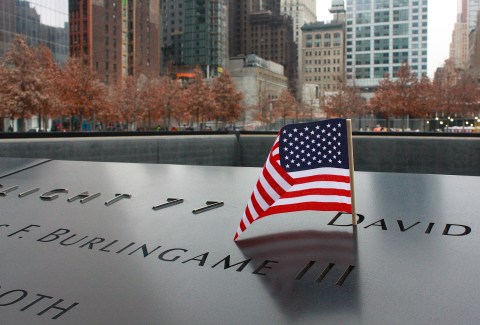
So that was Monday. Tuesday morning we hopped a subway train downtown to the World Trade Center. I’d seen the outdoor 9-11 memorial (above) on a previous trip, but neither of us had been to the 9-11 Memorial Museum, so that was our goal for the morning. But first, we stopped at a quintessential New York counter-service deli for breakfast. It was SO New York, with lots of yelling of orders behind the counter, and close to 100 percent of the customers (besides us) were construction workers from the still-growing World Trade Center area. I ate another bagel, though it wasn’t nearly as good as Zabar’s.

The 9-11 museum is pricey ($24 for adults) but so worth it. I remember a lot of controversy over the content of this museum, and took a very long time for it to open. But it’s a thorough telling of the events of Sept. 11, 2001 as well as what transpired before that day and since. It’s both heartbreaking and hopeful.


From that museum in Lower Manhattan, we walked to a National Park historic site called the African Burial Ground National Monument. From the 1690s until 1794, both free and enslaved Africans were buried in a 6.6-acre burial ground that became lost to history due to development until it was rediscovered in 1991 during the construction of a federal office building. The museum (see two displays above) is well maintained, small, and very interesting. And Dave gets to check off another National Park site.
I’m not sure if I mentioned that Tuesday was very cold, but at least it was dry. After the museum, we walked quickly to Little Italy, where we found a warm, cozy restaurant in which to dine. Little Italy’s Mulberry Street is lined with restaurants on both sides, and during the warmer months, you can eat outside and it’s just delightful. In the winter, the outdoor atmosphere is quite different, but the food is no less terrific – and very affordable. I ordered cheese manicotti and a glass of red wine.
From Little Italy we followed the subway map to a station at Spring St. and Broadway that had a train that would take us directly to Times Square, where we stood in the TKTS line one last time. Our show of choice tonight: “Fun Home,” winner of the 2015 Tony Award for best musical.
“Fun Home” is performed in the round at Circle in the Square theater. It tells the story of Alison Bechdel’s life growing up as an in-the-closet lesbian living in her father’s funeral home (which the kids refer to as the “fun home.”) It’s a funny but also a sad and tragic story that’s told in a very non-linear fashion, bouncing from Alison’s childhood to her college years to current day. Alison is portrayed by three separate actresses, at times together on the stage at the same time. (There’s even an Iowa connection.) I thought it was a wonderful story, and our seats were fantastic. Actually, I don’t think there is a bad seat in that theater.
Thus ended our five-shows-in-four-days New York extravaganza, with bonus visits to Zabar’s and the 9-11 Memorial Museum. My hunger for New York is satisfied, at least for a little while.
Lima, Cusco, Quito, and the Sacred Valley
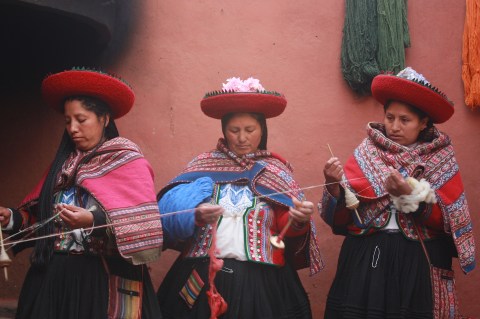
Of my two-week South American adventure late last fall, the Galapagos Islands and Machu Picchu were definitely the highlights. But that’s not to say I didn’t have a terrific time in some of the other nearby cities and villages and stay in some really remarkable lodgings, so I want to tell you about those.
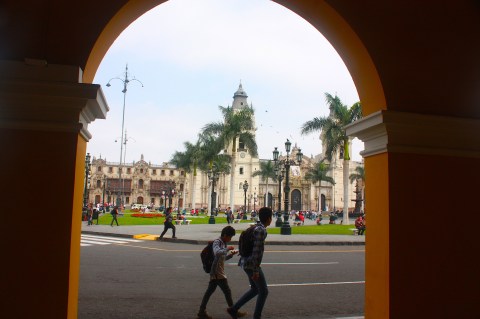
LIMA
Our group tour began in Lima, a city of nearly 10 million people and the capital of Peru. The traffic in Lima is memorable in the sense that it takes pretty much forever to get from point A to point B, not unlike any huge city. Our tour guide, Oscar, was a bit apologetic for the traffic and for the lack of public transportation.
I arrived in Lima late in the evening after three flights: Des Moines to Charlotte, Charlotte to Miami, Miami to Lima. The time zone in Lima is the same as it is in Iowa, so it just feels like a long day of travel, not a disoriented time warp like you get when you cross the ocean to Europe or Asia. After landing, our mountain of luggage was loaded into a motor coach, and our late-night drive to the Westin Lima Hotel just reinforced the fact that the United States exports the worst food in the world: The streets of the city were lined with bad fast food and “casual” restaurant chains from the U.S. It’s a national embarrassment.

The first full day in South America began with a late breakfast at the hotel (a very swanky place, by the way; the rooms were all sleek and glassy and modern) followed by a city tour.

Two memories stand out from that tour: The Museo Larco, an archaeology and art museum with a phenomenal selection of pre-Columbian pottery, was made even more interesting by Oscar, who was giddy with excitement to see that some of the exhibits had been returned from a tour. He truly was an expert on the history of the ancient civilizations, especially pre-Inca. (“Inca, Inca, Inca,” he said derisively at one point, like Jan Brady would say, “Marcia, Marcia, Marcia.”) The Incas, he said, were great, yes, but they took most of the best ideas from the earlier civilizations whose art and technology were much more groundbreaking.

The other cool thing we visited was the Plaza de Armas, which is one of several squares in Lima but perhaps the most important one as it contains the Government Palace among other beautiful buildings.
The next morning we had a 4 a.m. wake-up call (I never need the wake-up call, but it’s nice to know it’s there), breakfast at 4:30, and on the bus by 5:10 a.m. to head back to the airport for an early flight to Cusco. This schedule reminded me that I was NOT on vacation…I was on an adventure. And adventurers apparently need little sleep.
The flight over the Andes was spectacular, with jagged, snow-covered peaks jutting through the clouds.

THE SACRED VALLEY
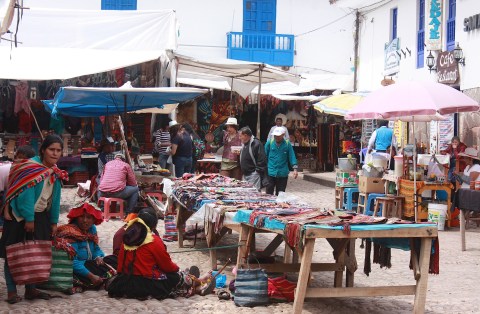
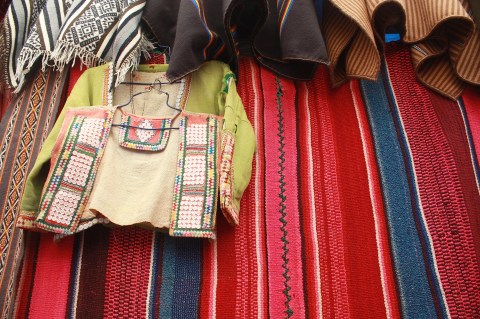
We didn’t spend much time in Cusco, just a visit to the Church of Santo Domingo. Then, following a lovely lunch and some time for shopping at an open-air market (see pictures below), we headed to the Aranwa Sacred Valley Hotel.
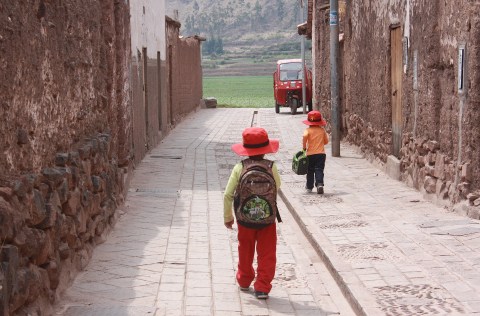
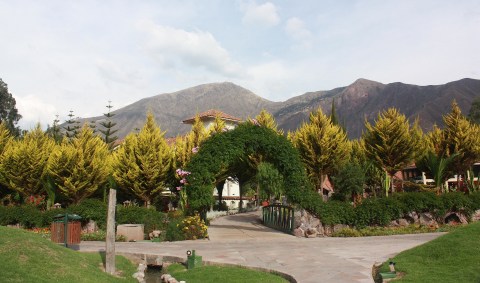
The Aranwa was one of the highlights of the trip. I think part of its charm was the fact that you have to travel down dirt roads past farm fields and stop for cows on the road and then go through a Jurassic Park-like gate into this amazing oasis-like place. The Aranwa resort has a spa, and lovely artwork, a few high-end shops, outdoor pools, a chapel, two restaurants, a bar, and luxurious rooms. But what I liked best were the outdoor spaces with lush, tropical plants, flowers, birds, and llamas (or maybe they were alpacas). And it’s nestled in the valley, so you can see the mountains in all directions. After three days of travel and not much sleep, the Aranwa (below) felt incredibly restful.
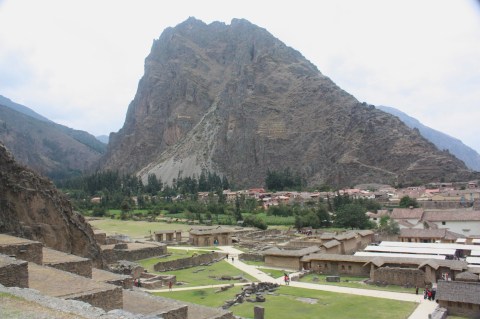
A full eight hours in a comfy bed did wonders for my mood, and I was ready to tackle a full day of sightseeing. We started with an exhilarating climb at the Incan ruins of Ollantaytambo (below). Oscar said this climb, with steep terraces at an altitude over 9,000 feet, would be a test for us before we traveled to Machu Picchu the next day. Indeed, it was a heart-pounding, lung-expanding experience for this girl. But I did it, and the views were amazing.
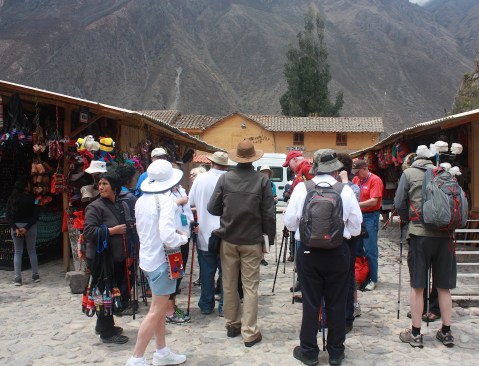

After that climb, I was ready for some lunch. We ate in a lovely spot (below) – another oasis along a bad road – with gardens and Peruvian horses.

After lunch we stopped at an artist’s studio – quite a place – and at a sort of tavern that served freshly brewed corn beer (here’s an example of the corn they use, below). This stuff is an acquired taste, I will tell you, but the small amount I drank was not all that bad. The locals prepare the corn beer every few days, and when it’s ready they put a little flag outside their business so people know they can stop there for a pint or two.

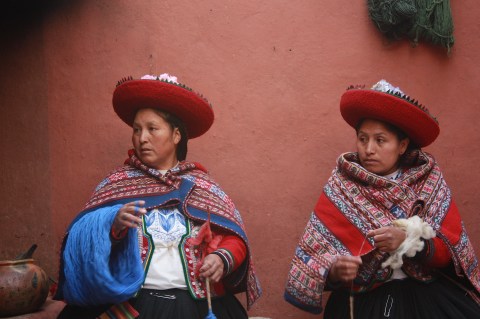
A weaving demonstration in the village of Chinchero was one of those tourist stops you often get on a group tour, but I actually loved the naturally dyed alpaca wool and the beautiful scarves and blankets and sweaters that the local women were making.

Another amazing meal at our hotel, and then it was time for another early departure…this time for Machu Picchu. Read my blog post here.
CUSCO
The day we left Machu Picchu was another long one, starting with a full-on early morning downpour and a mid-morning tour in the rain, which left me wet from my hair down to my socks. After lunch at the Machu Picchu lodge we took a shuttle bus down the mountain, followed by a mid-afternoon train ride from Aguas Calientes and then a motor coach ride to the city of Cusco.

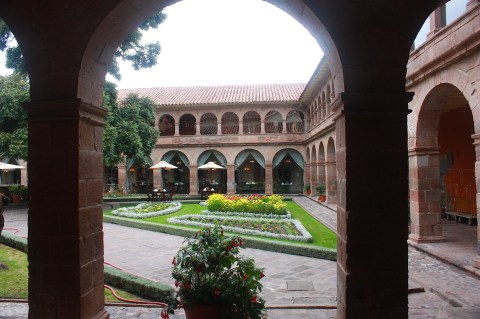
It was dark when we arrived in Cusco, and I was exhausted. We checked into our “hotel” – the Belmond Monasterio, a building whose origins began in 1592 and, after an earthquake, was updated in 1650. My, my, my. I thought the Aranwa would be the highlight of the trip, hotel-wise. But this place was equally wonderful. I have never slept in a room so quiet. I think the walls were about four feet thick. And the central courtyard (below) and the walkways lined with arches…stunning! I was giddy with happiness the whole time I was there. (The chapel, above, is actually part of the hotel.)

The hotel had a huge, beautiful bar area (above) and a lovely dining room. The first night we stayed there I was too tired to eat. So I just sat in the bar with friends and drank some wine. That seemed about right.
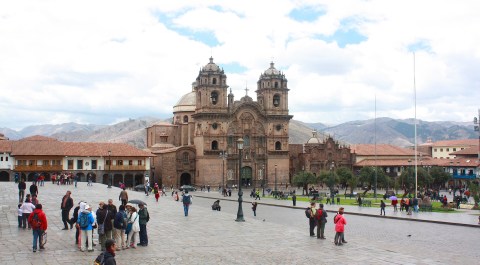
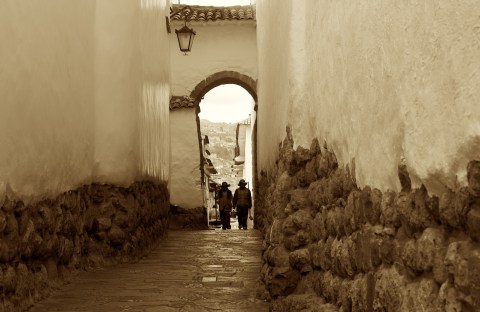
Our only full day in Cusco was relatively laid-back. We got to sleep in – breakfast at 9 a.m.! Yes! – followed by a light walking tour of Cusco, the Inca Empire’s former capital and South America’s oldest continuously inhabited city. I thought it would be a small place, but it actually has a population of about half a million people. We visited the main plaza – a lovely place, above – and then took a motor coach to Sacsayhuamán, Incan ruins (below) that are impressive in their scale (some of the building blocks for the walls are 33 feet high and weigh 360 tons) and memorable in the sense that the name is pronounced sort of like “sexy woman.” By this time I was sort of tired of ruins. But I liked the llamas/alpacas and the panoramic view of the city.


Our afternoon was “at leisure” so my friend Cindy and I took off walking to see if we could find local handcraft shops at which to bolster the local economy. We walked and walked and walked, only to find the big craft mall was a piece of crap. But the walk was fun, and we did find some shops – and an adorable French coffee shop – along the way.


That night a bunch of us met in the hotel bar, and I drank a pisco sour and then went with two couples to a Peruvian fusion restaurant just down the street. I don’t remember what I ate, but I know it was delicious because everything I ate in Peru was fresh and inventive and healthy and wonderful. I can’t remember being in a country where the food was so consistently good.

QUITO
My next journal entry was at 3:50 a.m. two days later. The early mornings on this trip were becoming legendary, and at this point I had begun to lose track of the days. We left Cuzco very early and took a flight to Quito, Ecuador – with a three-hour layover in Lima – which pretty much took all day. I know we arrived at our Quito hotel after dark, exhausted from travel. And it was a Swissotel – nice enough but definitely without the character of the monastery or the Sacred Valley resort. We ate dinner together at the hotel. And then I repacked all my clothes to prepare for the super, super, super early flight to The Galapagos the following morning.
You can read about my Galapagos adventures here. I loved everything about that place.
After Galapagos, the trip definitely went down hill. Machu Picchu was the early peak, and the Galapagos cruise was chance-of-a-lifetime amazing. So anything else would be disappointing. That’s not to say that Quito was a bad place, because it was really quite beautiful. But after four days on a boat I was tired, and the idea of more bus tours did not thrill me, and all my clothes were dirty, and I was ready to go home.
We arrived back at the Quito Swisshotel in the evening. I bought some cheese and crackers at the “supermaxi” (a grocery store, not a feminine product) down the block and ate them in the lobby bar, with drinks. And went to bed at 9 o’clock.
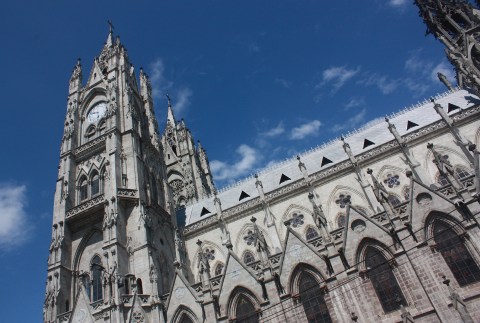

We had just one more full day in Ecuador, so we made the best of it. The next morning we toured Quito, the first entire city to be named a UNESCO World Heritage site. We visited a lovely plaza and saw some kind of governmental changing-of-the-guard ceremony (above). Apparently they do this every Monday. There were lots of men with guns, and horses. We toured a couple more places in the city.
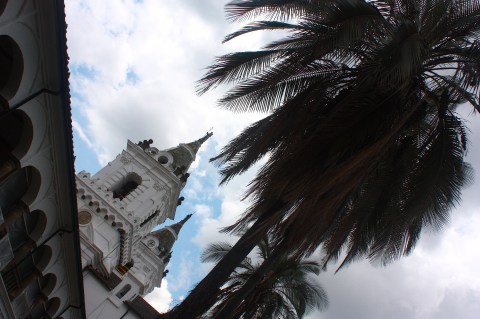
Then we took a very long bus ride to what felt like the top of the world; the restaurant we went to for lunch was literally above the clouds, and we ate more wonderful food. (I am ruined for quinoa for the rest of my life; we ate such fantastic quinoa salads and soups practically every day for two weeks. And fresh figs with cheese. Wow.)

Quito is high in the mountains and is really lovely and right on the equator. I would like to go there some time when I have clean clothes and a better attitude.
Clarinda, Iowa
Confession time: I visited Clarinda so long ago that I had to excavate my notes from piles of more recent travel and research literature littering my desk. And I couldn’t find my photos, either….I really had to hunt for them on my laptop.
I had gone to Clarinda on a very hot day – a day most unlike today, which has been brutally cold – in June. It was Saturday, June 20 to be exact. I went there for a couple of reasons: to visit the Glenn Miller Birthplace Museum, but more importantly to see the Clarinda mental health facility, because I was doing research on that type of institutional design.
I also wanted to kill two birds with one stone with that trip and stop in Greenfield, Iowa, on the way home, but by the time I got there it was too late and everything I wanted to see was closed. Why I never got around to posting anything about Clarinda last summer I can’t say. But, anyway, I digress.
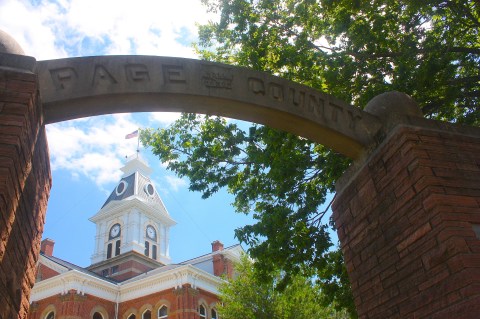
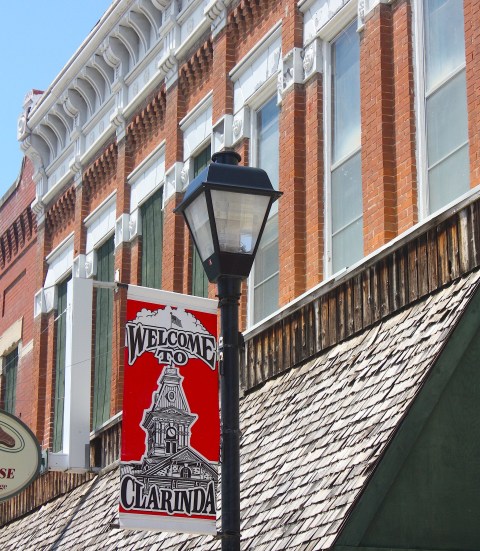
I got a late start out of Ames, so I didn’t get to Clarinda, which is very near the Missouri border in Page County, until well after 1 o’clock, and I was hungry. I arrived at the town square and found Vaughn’s Café (below) right across from the courthouse (above). The bank clock said it was 94 degrees. The sign on the front of the restaurant promised breakfast any time. I went inside.

I didn’t end up ordering breakfast, although it sounded good, because what I really wanted was pie. Pie is weird with breakfast. And besides, the weekend breakfast buffet was only up until 1 p.m., and servers were dismantling it when I walked in. So I ordered a salad and grilled cheese sandwich from the lunch menu and pondered the décor: walls lined with cows and chickens and other farm scenes out of a by-gone era. I like that. It’s very small-town. The food was fine, nothing special, and I ordered a piece of pecan pie with ice cream. The soft-serve ice cream they used melted immediately and my warm pie was swimming in a pool of creamy white. It was very messy but altogether yummy.

After lunch, I walked around the square a bit and then headed to the Glenn Miller Birthplace Museum. It’s a good one, as these kinds of museums go. The 3,000-square-foot museum – open since 2010 – is filled with memorabilia, photos, and displays, and you can watch a movie if you want. I watched some of it, but I didn’t have time for the whole thing. I do love the music of the Big Band Era, and Miller was obviously a big player in that as well as in Hollywood. He’s arguably the most famous bandleader of the 1940s. He was also a composer, arranger, and director in addition to being a trombonist. And, apparently, a controlling perfectionist. If you’re a fan, I think you will love this museum.
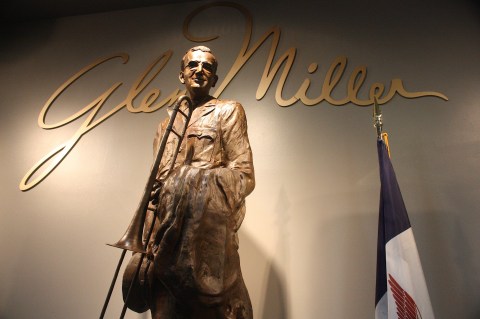
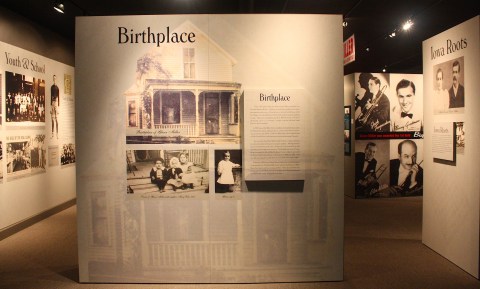

When I was there, the special, rotating exhibits were “The World in Flames” – an exhibit from the National Archives that features WWII – and “Next to a Letter From Home” – photos and words from Miller and his band members exploring the impact of his Army Air Force Band. The museum website still lists these as current special exhibits.
The birthplace home (below), on the same grounds as the main museum, is intact and can be visited. I thought it was charming.

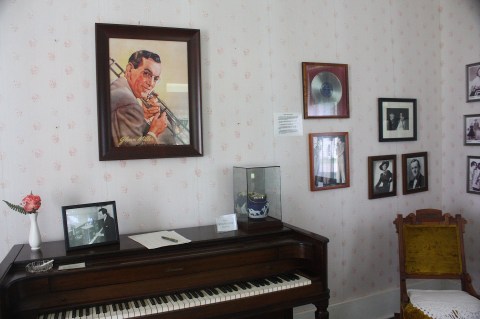
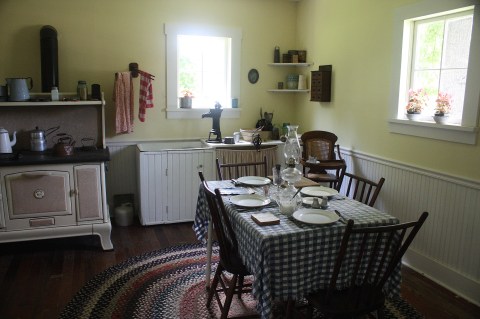
The museum, located at 122 W. Clark Street just south of downtown, is open Tuesday-Sunday 1-5 p.m. General admission is $6 and includes both the museum and the home.
After touring the Glenn Miller Museum, I headed north of town to the Clarinda Mental Health Institute, which is now apparently closed (or was, or will be, or might be? It’s become very political and confusing). But at any rate it was definitely still open when I visited in June. This facility, along with the Cherokee and Independence mental hospitals, is built in the style of historic insane asylums known as Kirkbride Buildings. I’m fascinated by this style, and I wish I could get inside these buildings and tour every nook and cranny, but in reality you’re lucky if you can wander the grounds and take pictures of the exteriors. I won’t say any more about this here, because I’m working on another blog post about these (stay tuned!) So I’ll just give you a sneak peek at this gorgeous old building in Clarinda:

Christmas in Disney World

My grown daughters and I just spent a few fun-filled days in Florida, reveling in two of our favorite things: Christmas and Disney.
We have visited the Disney parks many times before, starting when the girls were little. Our older daughter, Katie, spent a semester working at the Magic Kingdom on the Disney College Program a few years ago. She absolutely loves Disney, and so do we.
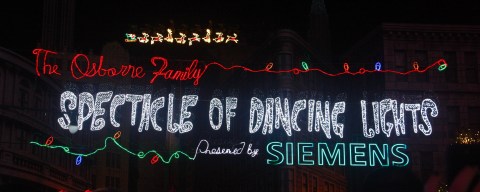
We decided to go to the parks during the Christmas holiday because 2015 is the last year for the big Osborne Family Spectacle of Dancing Lights at Hollywood Studios. I have to admit I’d never heard of this until Katie called me in a panic: THIS IS THE LAST YEAR. MOM, WE HAVE TO GO.
Apparently this holiday light spectacular has been going on for 20 years, so I’m not sure how I missed it…except that we’ve never been in Disney World over the holidays before.
So we booked flights for the three of us (Dave stayed home and watched the pets), reserved a room at one of the cheapest and least interesting of the Disney World resorts (All-Star Sports), along with two days of park-hopper passes.
This was back in September. As the vacation grew closer, Katie did all the planning so we’d have fast passes and dining reservations (people are doing this way in advance these days). She also came up with our schedule: One full day in Epcot, next morning in Magic Kingdom, and the afternoon/evening in Hollywood Studios….with a few other fun activities thrown in.
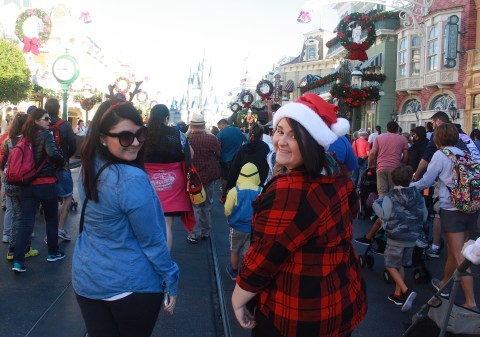
We left home at the ridiculously early time of 4 a.m. last Sunday to get to Des Moines International for a 5:50 a.m. flight. I won’t bore you with all the irritating flight-delay details, but I will just say that we were still SITTING ON THE TARMAC IN DES MOINES at 12:30 p.m. We should have been in Orlando at 11 a.m. We were grumpy and disappointed that our afternoon and evening plans were pretty much ruined (thanks a lot, Delta Airlines).
Once we finally got to the Orlando airport, things picked up. Thanks to the magic of our magic wrist bands, we hopped aboard Disney’s Magical Express (really just a very efficient shuttle bus) and headed to our resort. Check-in was speedy at that time of night (it was around 7:30 p.m. when we arrived), and we quickly changed clothes to begin our much-delayed evening activities.
The idea was to take the Disney transport bus to Magic Kingdom, where we’d board the monorail and ride from resort to resort, looking at holiday decorations and going to theme bars for appetizers and drinks — a monorail pub crawl, if you will. This was supposed to be a leisurely activity begun in the mid-afternoon, but because of our delay we were tired and hungry when we began, and the process of riding the shuttle to the park and standing in line for the monorail took longer than we expected because Magic Kingdom had just closed for the night and a few thousand people were leaving all at once. We got off at the Polynesian Resort (omitting the Contemporary Resort entirely due to time) and headed to Trader Sam’s, a tiki bar with expensive rum drinks and a short list of appetizers. We sucked everything down like we were starving and immediately felt better.
From there we took the monorail to the Grand Floridian – by far the swankiest resort in Disney World. I would love to stay there someday, but a quick look at prices shows rooms in the “Grand Fla” start at $571 per night, compared with our room, which goes for $109. You get what you pay for, but still.
Anyway, we drooled over the Grand Floridian’s gorgeous holiday decorations, including an enormous Christmas tree and a life-sized gingerbread house. We ordered drinks, a cheese plate, and a dessert in Mizner’s Lounge (very classy, with live music). We sat there until we were too sleepy to move.
The trip back to our lesser resort consisted of taking the monorail back to Magic Kingdom, where we could catch a bus to the All-Star.

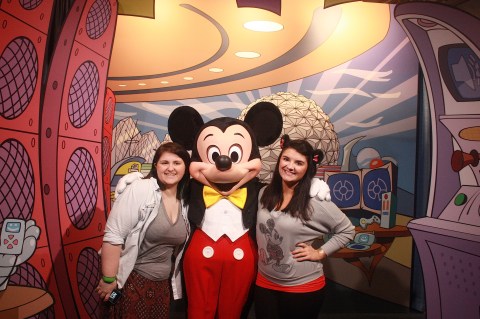
We decided to sleep in the next morning since we’d had such a long day on Sunday. After breakfast in the resort cafeteria, we got to Epcot around 9:30. There’s not much to do on the Future World side (in my opinion). We took pictures, poked around in the shops, and got our pictures taken with Mickey and Minnie until our fast pass time came around for Spaceship Earth, which is always kind of a low-key but fun thing to do.
Once the World Showcase area opened up at 11 a.m., we had plenty to keep us busy: Shopping, eating, and drinking around the world. We started at the Mexican marketplace, ate a terrific pizza in Italy, drank a beer at the Rose & Crown in the UK, and had dessert in France. Somewhere in there we had a fast pass for Soarin’ – one of our favorite rides.


We did a bit more shopping and enjoyed the “International Yuletide Extravaganza” that included Santa Claus and other versions of Father Christmas in each of the lands, plus music and holiday decorations. We also had some yummy tapas in Morocco and shared a big glass of white sangria.

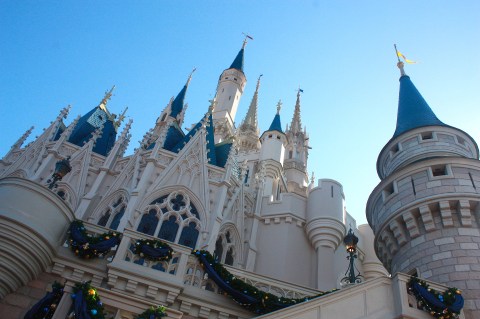
We had planned to stay in Epcot until the park closed, but the pull of the Magic Kingdom was too strong. We decided we had to see Cinderella’s castle lit up for the holidays and watch the lighted parade and fireworks. So we left Epcot as it began to get dark and took the monorail to Magic Kingdom.
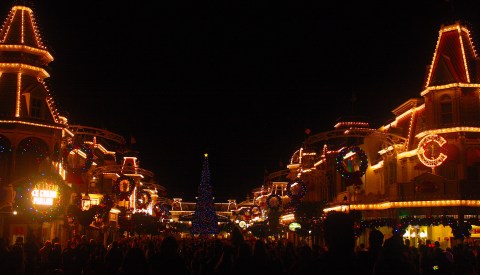
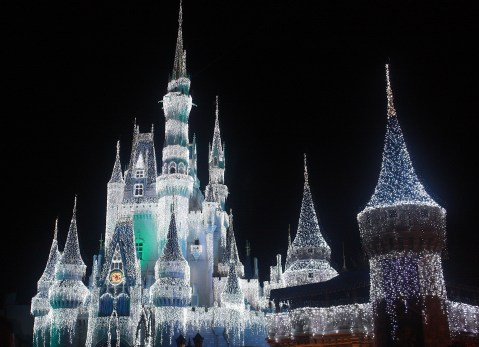
Evening in the Magic Kingdom is the closest thing you can get to “magical” if you ask me. I will never get tired of seeing the lights and the fireworks. And the holidays make it even more special. The lights and decorations on Main Street alone are worth the price of admission. I just could not stop smiling. We watched the castle-lighting ceremony (it has a Frozen theme now). I couldn’t take my eyes off the castle, with its gazillion dripping icicles and always-changing colors.
The evening lighted parade is not my favorite; I’d rather see the daytime parade. But it was still sort of fun and passed the time until the main attraction: fireworks. I’ve seen the Magic Kingdom fireworks at least half a dozen times and I just think they’re better than ever. The Disney folks just really know how to pull out all the stops with their music and story-telling.
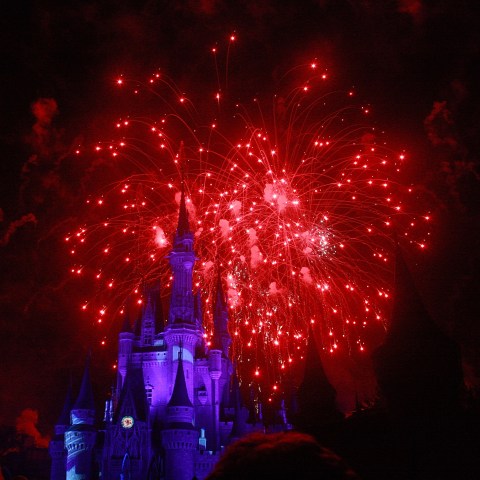
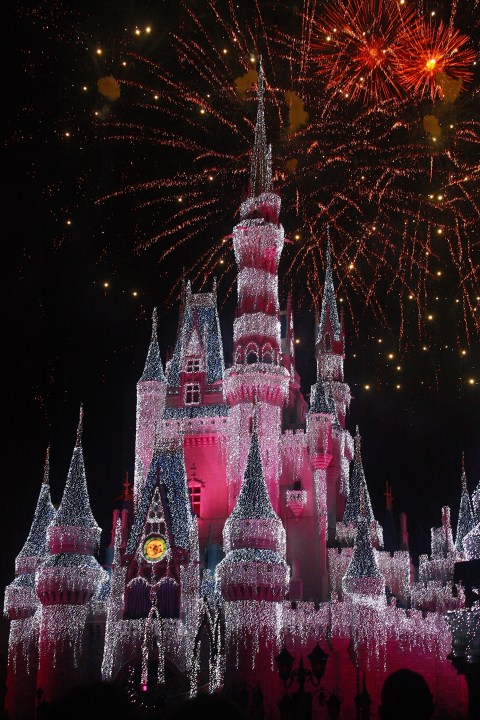
We left the park with a few hundred thousand of our closest friends all heading for the transport buses. We got home tired and happy and slept for what seemed like just a few short hours before heading back to Magic Kingdom for the Park Open show.
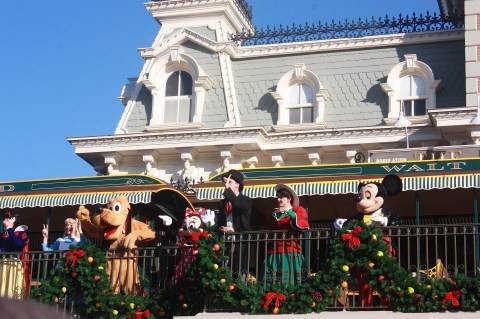
This is something they do every day, but a lot of people never see it because they get there too late. Even Katie had never seen it, and she worked in Magic Kingdom for five months. It’s a cute show, with the “mayor” and singers and a train that brings Mickey and Minnie and all their friends to open the park.
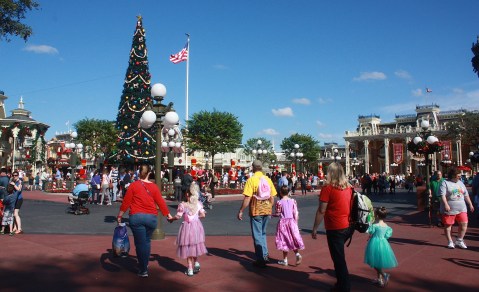
By the time we got into the park (it seemed like we just left) we were hungry so we headed to Starbucks. Yes, you can find a Starbucks in every Disney World park, and the lines are ridiculous.
After breakfast we rode a few rides. The girls went on Pirates of the Caribbean while I drank my Café Americano and sat in the sun. We all rode the carousel and stood in line for the new Seven Dwarfs Mine Train, which is sort of along the same lines as Big Thunder Mountain Railroad in terms of thrill, but underground and with dwarfs.
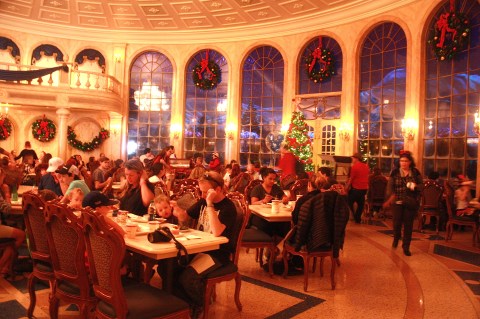
We had lunch reservations at the Be Our Guest restaurant in the Beast’s castle from Beauty and the Beast (above). I wanted to eat there just so we could see it, and the decor was pretty cool. There are three themed dining rooms, and the servers bring your food on fancy carts. (The ordering process is by computer screen, which we didn’t much like, but it’s efficient.) The food selection is good – I actually had a quinoa salad, if you can believe that.
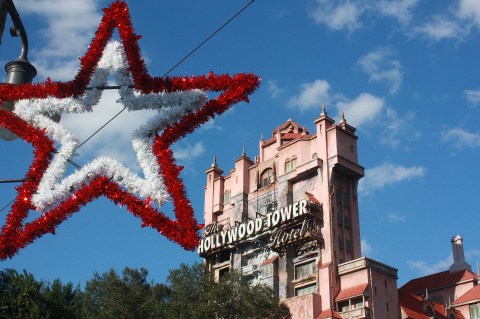
We transferred to Hollywood Studios for the afternoon and evening. We had fast passes for Aerosmith’s Rock’n’Roller Coaster and Tower of Terror, two of our favorite rides ever. We rode the Great Movie Ride and watched Muppet Vision 3D, both of which are feeling kind of outdated to us. We went to the Frozen Sing-along, which we thought would be lame but ended up being a blast, complete with snow falling in the theater. It’s a part-movie, part-live-action concert. I loved it.
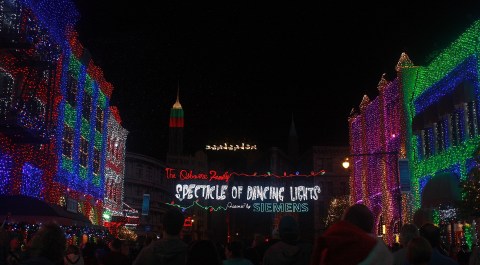
By the time we got out of that, it was dark and the main event was happening: the Osborne Family Spectacle of Dancing Lights. Yay! This is what we came for! And it did not disappoint. Since this is Disney, they wouldn’t just have a bunch of Christmas lights up on some buildings. No, the lights are choreographed to music and they are FABULOUS.

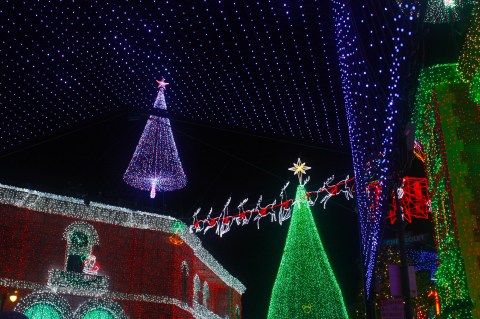
Apparently this family from Arkansas, the Osbornes, had this elaborate collection of holiday lights and eventually they got so out of control that the neighbors complained so in 1995 the family donated the lights to Disney. This year really is the final year for the lights, and I’m so glad we saw them. I felt like crying, they were so awesome.
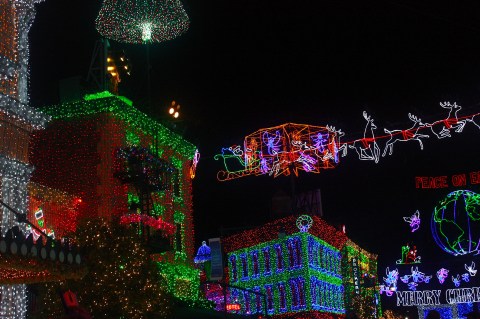

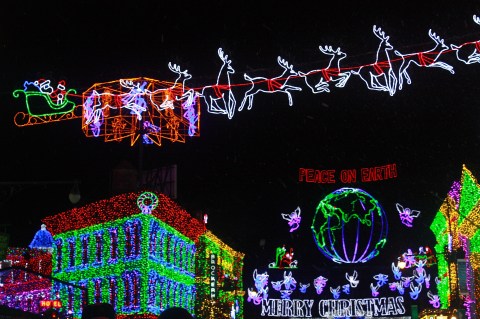


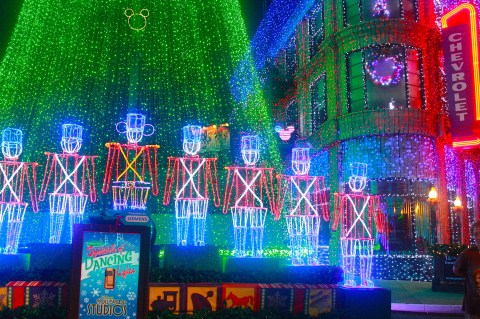


So that’s it – that’s our Grownup Girls vacation in Disney World. And now we’re back in Iowa and wearing boots again. Happy holidays, everyone!
Machu Picchu
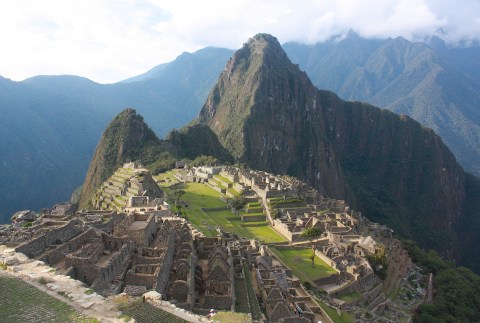
After years of staring at photos of the wonder that is Machu Picchu, being there in person just felt SURREAL. And all the work it takes to actually get there is worth it.
I traveled to Machu Picchu on the last day of October with a group of Iowa Staters on a two-week trip to South America. All the travel arrangements were made by our travel company, Odysseys Unlimited, so we didn’t have to figure this all out by ourselves. But this was what it took to get to what is probably the most famous location in Peru:
- Fly from the U.S. to Lima
- Fly from Lima to Cuzco, a lovely city of about half a million people
- Take a motorcoach ride to the train station
- Take a comfortable train ride through other-worldly mountains to the tiny town of Aguas Calientes
- Take the Machu Picchu shuttle bus from Aguas Calientes up, up, up the mountain (take Dramamine)
- Stand in line
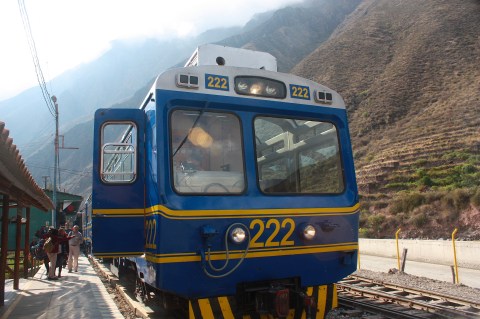
So the good part was we didn’t have to make our own flight arrangements, figure out how to get to the train station, buy tickets for the train, figure out the shuttle bus system, or buy entrance tickets into Machu Picchu. We just had to follow our fabulous guide and go with the flow.
The train trek was about an hour and a half and took us through beautiful mountains, as did the winding shuttle bus. Here’s a picture through the window:

The other great thing about being with this group tour was that we stayed at the one and only hotel located at Machu Picchu, the Belmond Sanctuary Lodge. Just take a quick peek at their website; it’s gorgeous. This place was awesome and it was literally like 20 steps away from the entrance to Machu Picchu. So when we got there, we were able to drop our bags at the lodge and use the bathroom before doing our first guided tour into the legendary Lost City of the Incas.
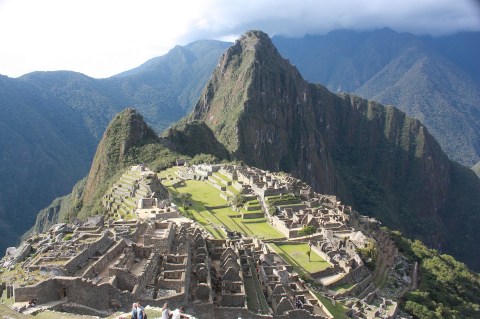
Once you get in, you don’t have to walk very far to get to this vista:


Our guide, Boris, took us through about half of the site on that first visit. I was worried about the elevation (7,970 feet) and the hiking that would be involved. I definitely got winded on a few of the longer stair climbs, but in general it was not too bad. And the place was absolutely remarkable and breathtaking. I mean, Boris kept talking, but mainly I just stared. I mean, holy buckets, I’m in MACHU PICCHU.


I’m sure you already know all about this place, but in a nutshell Machu Picchu is perched in a high saddle surrounded by the Andes mountains, and it was “lost” until 1911 when American historian Hiram Bingham “discovered” it. The city or royal retreat – it is not known exactly what the site was used for – was built in the mid-1400s by those notoriously talented and ambitious Incas, and it was abandoned about 100 years later due to concurrent outbreaks of war and smallpox. The ancient civilization is located in what our guides called a “cloud forest” – it’s different than a rain forest, and it’s in the clouds most of the time, and that gives it that otherworldly look. The site today encompasses five square miles of meticulously preserved terraced stonework linked by 3,000 steps.
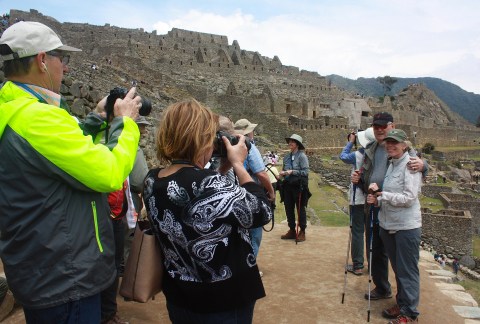
Thank god we didn’t have to climb all those steps. We climbed enough of them. After our guided tour we had lunch in the restaurant at the lodge (sitting down never felt so good); we caught our breath and stopped sweating and then had time to check into our rooms and spend the afternoon doing whatever we wanted. Well, hello, we’re at Machu Picchu, I’m going back in.
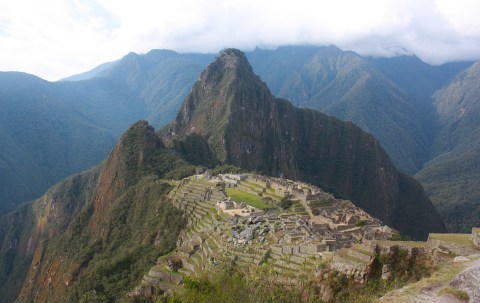
The afternoon visit on our own was a blast. I started out alone but immediately met one of the couples from my group and together we began to climb the steps to the guardhouse, the location where most of the incredible photographs of Machu Picchu are taken. Here are a couple of the views:

And me, on top of the world:

Up by the guardhouse, we ran into a few other people from our group, and we continued up, up, up to try to find the famous Inca Bridge. We walked a long time and were getting close when we were turned back by one of the security guards, who said we didn’t have time to go all the way to the bridge and be off the grounds by closing time at 5 p.m. Well, we must have had really sad faces because the guard then relented and said that we should HURRY and only take one picture and then turn around and head to the exit. The funny thing about this story is that the Inca Bridge isn’t that big of a deal, although it did bring to mind something from one of the Indiana Jones movies (I forget which one). Here it is below, with both a wide angle and a telephoto lens:


At any rate, the climb was fun and the view from the guardhouse on the way back was even more beautiful. The clouds and the light are ever changing in this place. It sort of feels like heaven or something.
I got back to the hotel and hung out on my lovely, relaxing back patio before changing out of my sweaty clothes into something appropriate for dinner in the dining room. Staying at the Belmond lodge may have been the best idea ever. Not only did our stay include incredible food for every meal but we could also drink for free in the bar. A group of us gathered before dinner for a pisco sour demonstration and tasting. If you’ve never had a pisco sour, you’re missing out. It’s like the Peruvian national drink; I’d had these before when I did an Amazon trip a few years back. Here’s a basic recipe. It involves:
- Ice
- Pisco
- Lemon or lime juice
- Sugar or simple syrup
- Egg whites
- Bitters
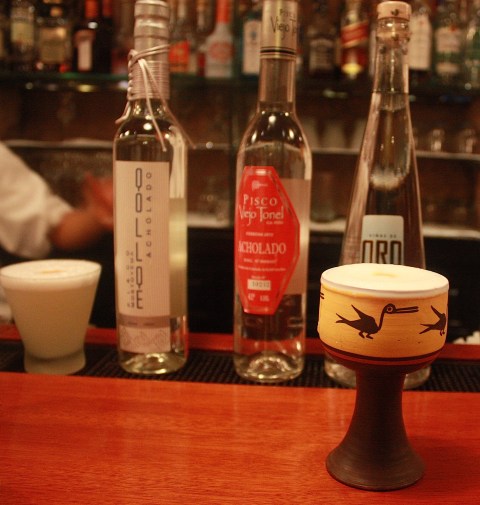
We got to taste a variety of different types of pisco (who knew there was more than one kind?), which is really freaking strong when you drink it straight. And then we watched the bartender make pisco sours, and we each got a glass. This was Halloween night, and everyone was happy. Dinner (with wine) was spectacular, and I went to bed early…
… BECAUSE I was determined to be back inside Machu Picchu at 6 a.m. when the gates opened. My alarm went off at 5:30 and I was surprised by two things: First, it was already very light outside, and second, after I threw on some clothes and went outside, there was already a hell of a long line to get in. (I thought the first shuttle bus didn’t arrive until after 6 a.m., but I was wrong.)
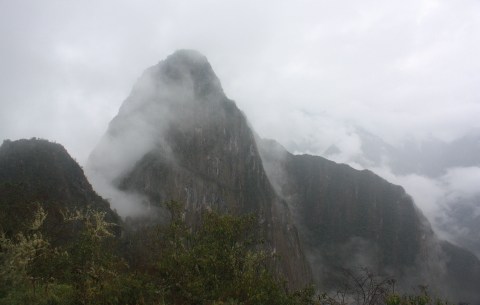
Oh, also, it had been raining. The ground was wet and the clouds were very heavy and low. It was not actually doing anything when I went in, but after about five minutes inside it started raining, and then raining really hard. I joined a group of strangers underneath a thatched-roof hut of some kind and watched it pour. After awhile I got tired of being splashed by other people’s rain ponchos, and I ventured out. I took some photos of the clouds and the rain:


But my rain jacket, which works just fine to run from the car to the office or out in a light rain, failed me big time and it wasn’t long before I was soaked clear though: jacket, T-shirt, undies, hiking pants, socks, sneakers. All wet, as if I’d jumped into a swimming pool. This was not fun, so I headed back to the lodge and ate breakfast, dripping all the while. (Oh, did I mention how good my hair looked at this point?)
I tried drying off in my room, but unfortunately I didn’t have a spare outfit to change into because we’d only been allowed a small overnight bag and I didn’t consider that I might need more clothes. I tried the hair dryer, but that was a joke. (I am laughing as I write this, just thinking about it. It was the most pathetic hair dryer ever.) I grabbed the umbrella from the closet and headed back outside to see if I could buy a rain poncho from a vendor, which I did, and that $2.50 piece of plastic kept me from getting any wetter the rest of the day. Because all through our morning guided tour, it just rained and rained:
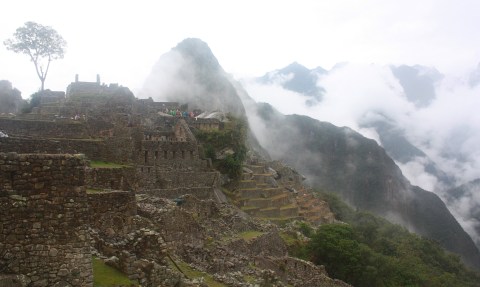
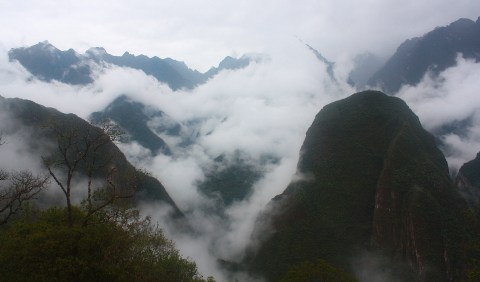
About the time we got back on the shuttle bus to head back down the mountain, the sun came out and the sky was blue with puffy clouds. Sad…but that’s the way it goes. I was just so grateful and happy that I’d had an opportunity to visit Machu Picchu FOUR times, in good weather and bad.
The Galapagos Islands
When I think about the number of words and photos I have to describe my recent trip to the Galapagos Islands, it’s daunting. I could write an entire book…there’s just so much to say and show.
So I’m going to approach this as minimalist reporting, and even then it might get long. Sorry about that.

I flew to the Galapagos Islands – the airport on Baltra Island, to be exact – as part of a group of 17 Iowa State travelers, plus a guide, on Nov. 4. (We had been in Peru and Ecuador since Oct. 27 visiting, among other sights, Machu Picchu, which I’ll write about another day.) From our little landing-strip airport on Baltra, we boarded small panga boats (motorized dinghies that would be our mode of transportation off and on for the next five days) that took us to our ship, the Coral II (below).

I never knew whether to call the Coral II a ship or a boat. It was really small for a ship. The maximum number of guests was 20, plus a crew of about 10. It definitely wasn’t a cruise ship in the sense that you’re thinking: there’s no spacious dining room, no grand staircase, no swanky staterooms or swimming pools or theaters. This ship had a very small gathering area around a tiny bar. That’s where we had our evening updates and ordered local beers and glasses of Chilean wine and watched a television series about the Galapagos produced by the BBC.
There were four comfortable booths where we ate breakfast, lunch, and dinner, plus a small space for the food to be served buffet-style. There were 11 guest rooms, some of them below deck (where mine was) with only tiny portal windows that were too high to actually look through; other rooms had real windows, but nothing fancy. The top “sky deck” had a few comfortable lounge chairs where we could read or watch the world go by when we weren’t out on one of the islands. One night, the chef served a special dinner on the sky deck.

So that was our home for five days and four nights. It was small but cozy and secure. The crew was gracious and hard-working. We had two naturalist guides with our group (because we were in two separate pangas) on each of our outings from the ship to the islands. Each day we had at least two outings, plus time for snorkeling.
The Galapagos Islands lie nearly 600 miles off the coast of mainland Ecuador. There are a dozen or so islands, all created by volcanic activity in the Pacific. The islands are famous for their importance to Charles Darwin (or “Chuckie D” as one of our guides, Gabriel, casually referred to him) and his theory of evolution by natural selection – the islands were the origin of his Origin of Species, according to the BBC series (and I can still hear Tilda Swinton’s voice saying this) and for their vast number of unique, endemic species of animals.
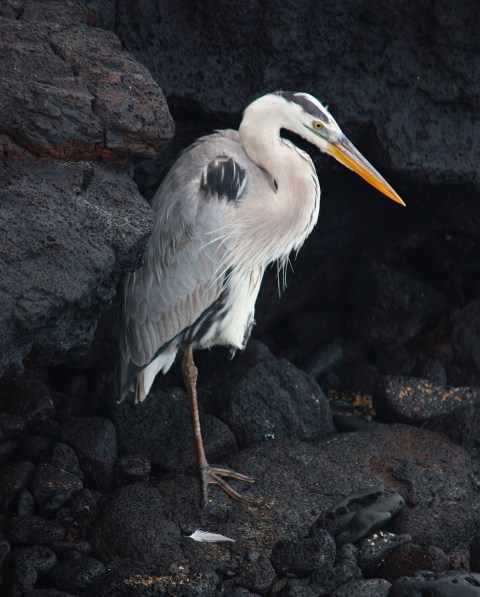
The largest of the islands is Isabella. As viewed from above, the island is the shape of a seahorse. We visited Isabella’s lovely bays and coves several times. We also traveled around the northern side of the island (the head of the seahorse, as it were), crossing over the equator four times, but, in my mind more importantly, experiencing the roughest seas of our entire journey. I liked the coves better…they were not so sloshy.

Anyway, we also visited the islands of Santa Cruz, Fernandina, and Santiago. (Each tour follows a slightly different itinerary.) To give us some idea of the area of land and sea we would cover on our Galapagos tour, we asked one of our guides and he said from west to east, the islands cover about 180 miles, and from north to south about 100 miles. I don’t know how totally accurate this is, but it gave me some idea of the scope of the area.
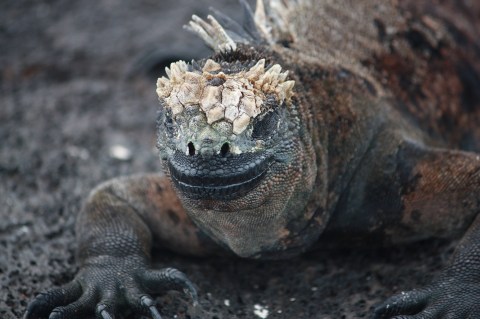
Our very first afternoon aboard Coral II, after our mandatory safety drill (I felt better knowing I had a gigantic life vest underneath my bed during the choppy nights) we had our first experience getting from the ship to the pangas and viewing the cliffs of Eden Islet on Santa Cruz. That afternoon we didn’t get out of the small boats; there was no place to land, but plenty to see: blue-footed boobies, colorful crabs, sea lions, frigate birds, pelicans, rays, marine iguanas, and more. It was breathtaking. And that night we saw what was the most spectacular sunset of the trip. Here are some photos from that first day:


After that day, we settled in to our routine: Breakfast (and wonderful coffee) at 7:30 a.m. (often after taking showers on a still-moving ship), and piling into the pangas for either wet or dry landing on one of the islands. These landings are what you’d expect: the occasional dry landing meant the boat could get close enough to some rocks to let us out on land, but most of the “landings” were not landings at all, but just the boat getting close enough to shore that we could hop out and (with any luck) not be in water up to our necks. Mostly the water was knee-deep, but the waves made it tricky. I saw some people who were wet to the waist. (Getting out of the boat wasn’t bad; getting back in was tough!)

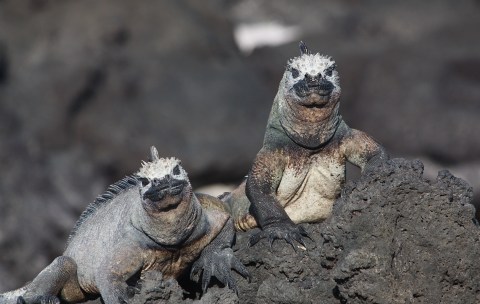
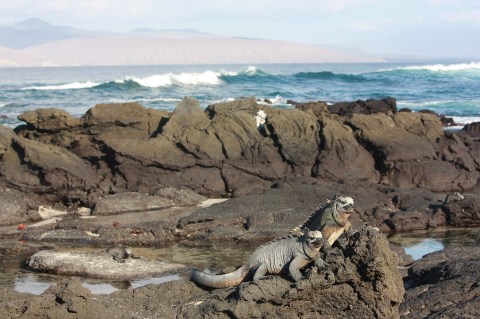
But being on those islands was unbelievably wonderful. We hiked, we saw lots of different landforms and plants, and we saw literally thousands of animals. I fell in love with the iguanas. I know, they’re not too lovable-looking, but they’re survivors, and they live a tough life. I also went crazy for the crabs; they look like they’ve been painted by an artist, each one just a little different.


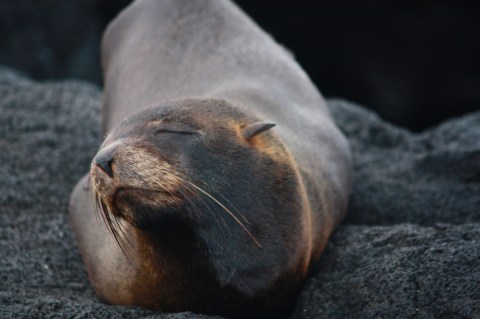
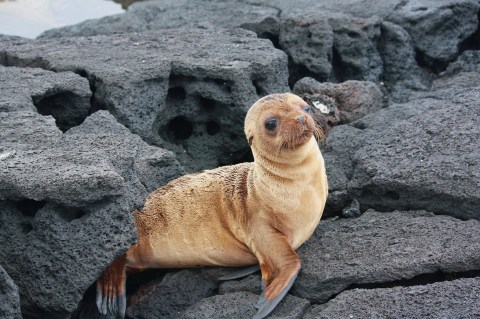
And the sea lions! The pups are especially friendly, but they’re all sweet and tame and adorable. We saw sea turtles and penguins (below) and flightless cormorants, Nazca boobies, land iguanas (below), and hawks. We walked on fresh lava fields and sailed into small caves. The snorkelers in our group reported seeing colorful fish, sea turtles, sharks, and rays. (I will save myself the anguish of writing about my one and only attempt to snorkel. I’ll just say it didn’t end well.)


But I digress. Back to the daily routine: After our morning excursion, usually about two hours long, we’d come back to the ship for lunch, followed by a siesta. (The first day I actually slept, because I was seasick at that point, but other days I enjoyed the siesta time to sit on the sky deck and read.) Sometimes after siesta there would be time for deep-water snorkeling; other days we’d just pile back in the pangas and head off on another shore excursion.
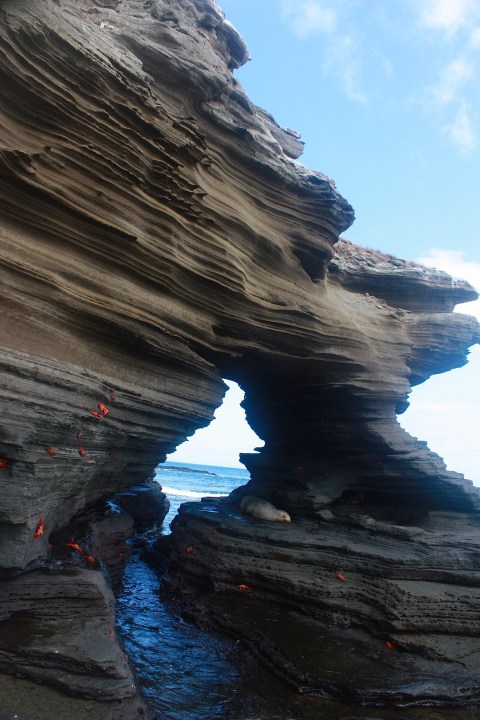
And then, back on the ship, we’d have a little time to relax (or have a drink in the bar area) and change out of our sweaty, grubby clothes before dinner, and then watch some BBC or read or just relax before bedtime. It was a nice mix of activity and relaxation, and I grew to enjoy it…although there were a few times when people were snorkeling that I longed to be on land.
One morning we awoke to three sea lions sunning themselves on the back deck of our ship. Another day we had a friendly hawk sitting on a ledge of the sky deck. And throughout our trip we had friendly frigate birds following us from island to island.

And we saw giant tortoises! Of course we did. These enormous creatures are sort of the poster animals of the Galapagos. We saw a few of them near the beaches, but many more in the highlands on our last day.
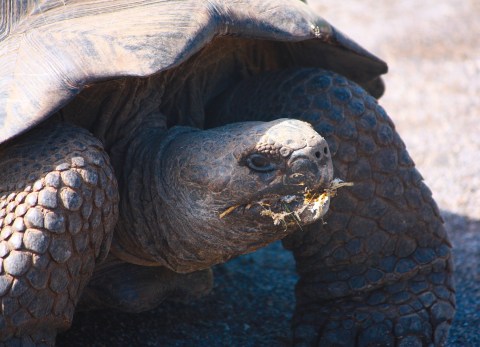

TRIP DETAILS: This was part of a 15-day ISU Alumni Association tour (this is the organization I work for; I was actually a host for this trip), which worked through Odysseys Unlimited, in my experience the BEST tour company there is (with destinations all over the world). For this Galapagos leg of our South American journey, Odysseys contracted with Klein Tours, a company that specializes in Galapagos cruise tours. Besides Coral II, Klein also has the Coral I (our slightly larger sister ship that stayed with us during the entire trip) and Galapagos Legend, a considerably larger ship with a 100-passenger capacity.
To get there, we flew from Quito, Ecuador, to Baltra Island on Avianca Airlines. By the way, if you’re curious, like I was, to know if there are humans who inhabit the Galapagos islands, the answer is yes, there are towns on several of the islands. (About 97 percent of the archipelago is national park land; the other 3 percent is privately owned and inhabited.) So, yes, there are actual hotels and B&Bs available if you don’t want to sleep on board a ship.
The Dragoon Trail

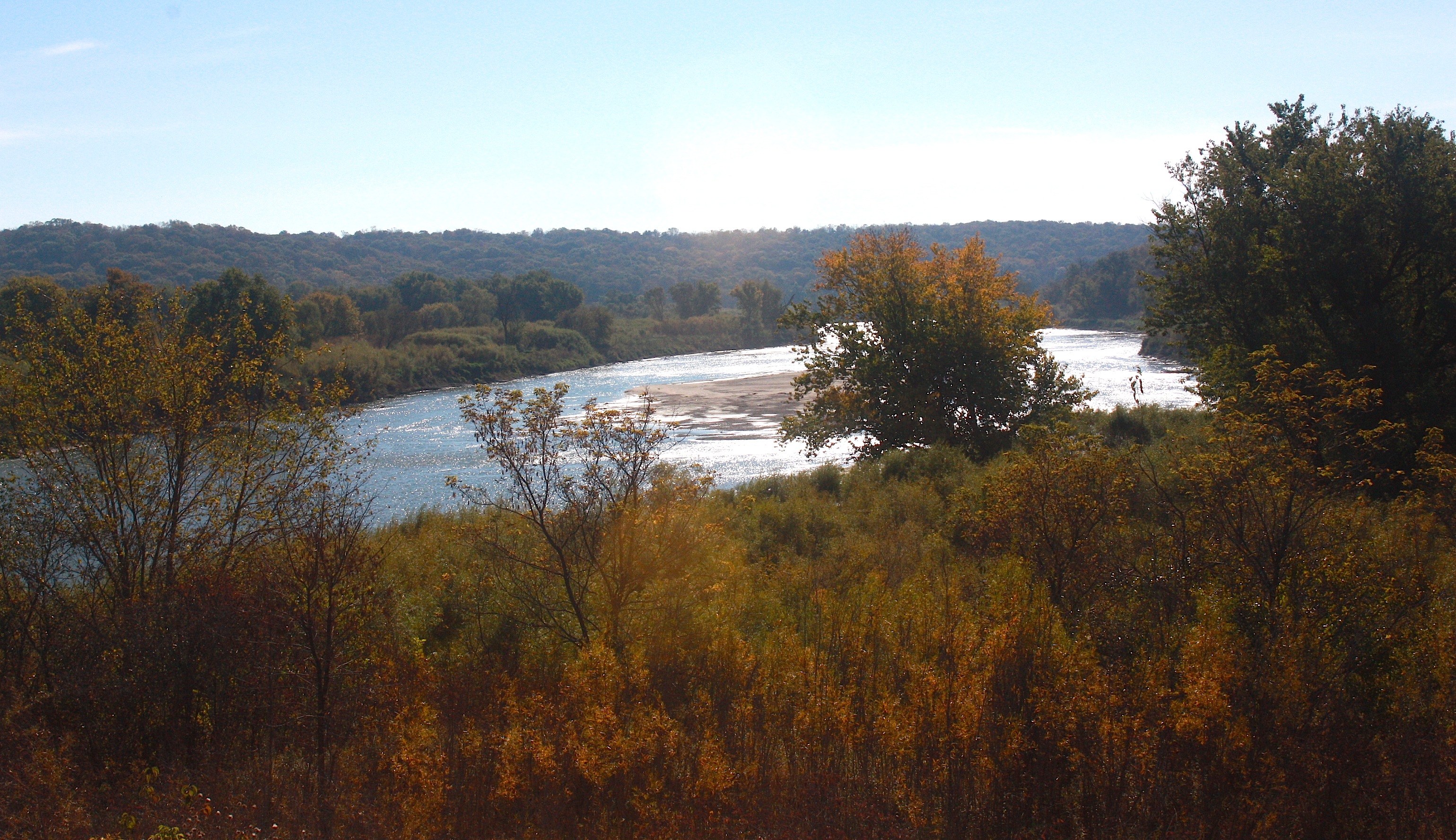
I’m working on a freelance story for an upcoming issue of THE IOWAN magazine about the historic Dragoon Trail. The issue will come out next fall, so I’m working on it now with photographer Jim Heemstra. I’ve spent three full days on the trail to capture it in all its fall-color glory – basically the trail follows the Des Moines River from Fort Dodge to Lake Red Rock.
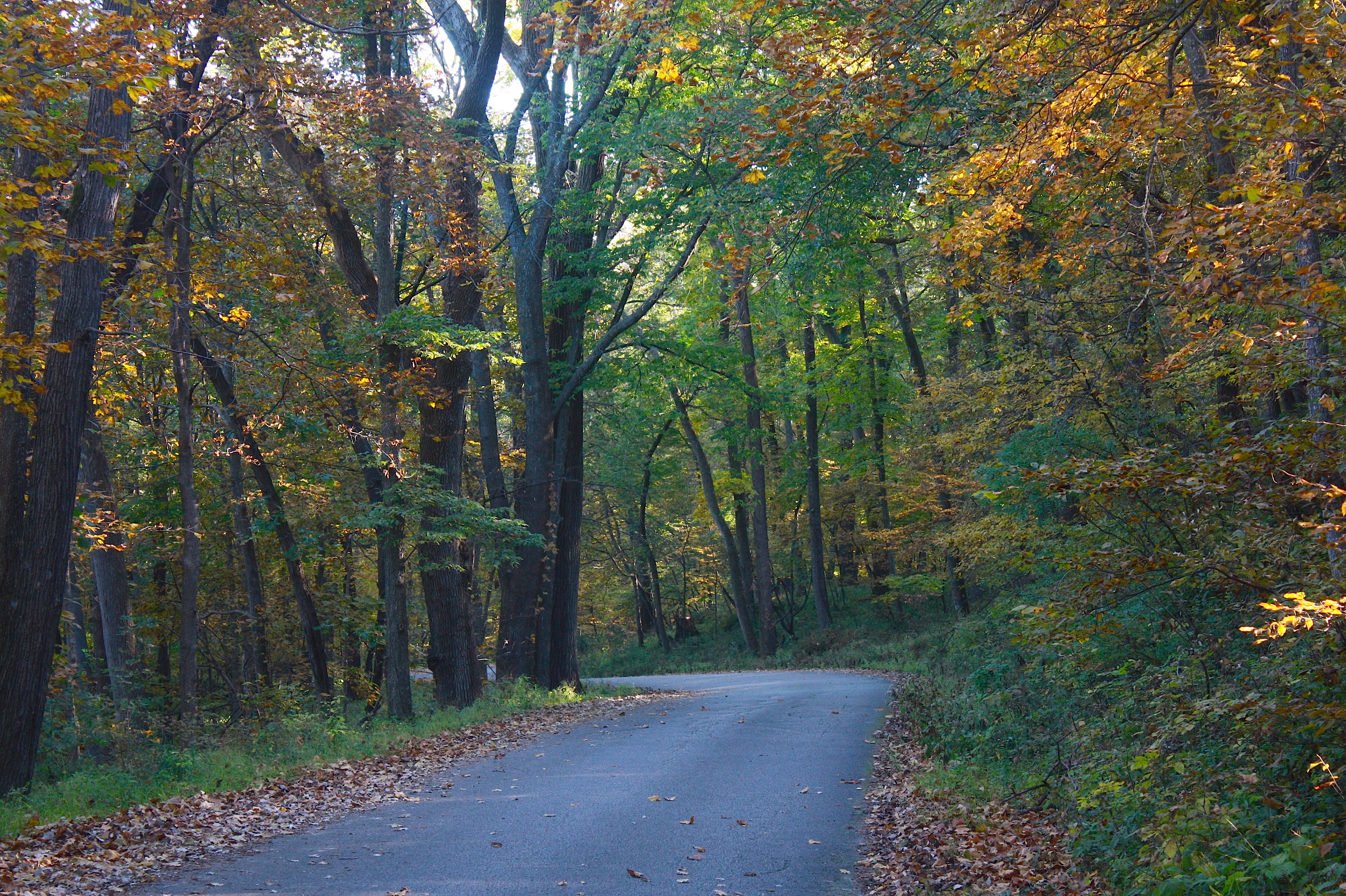
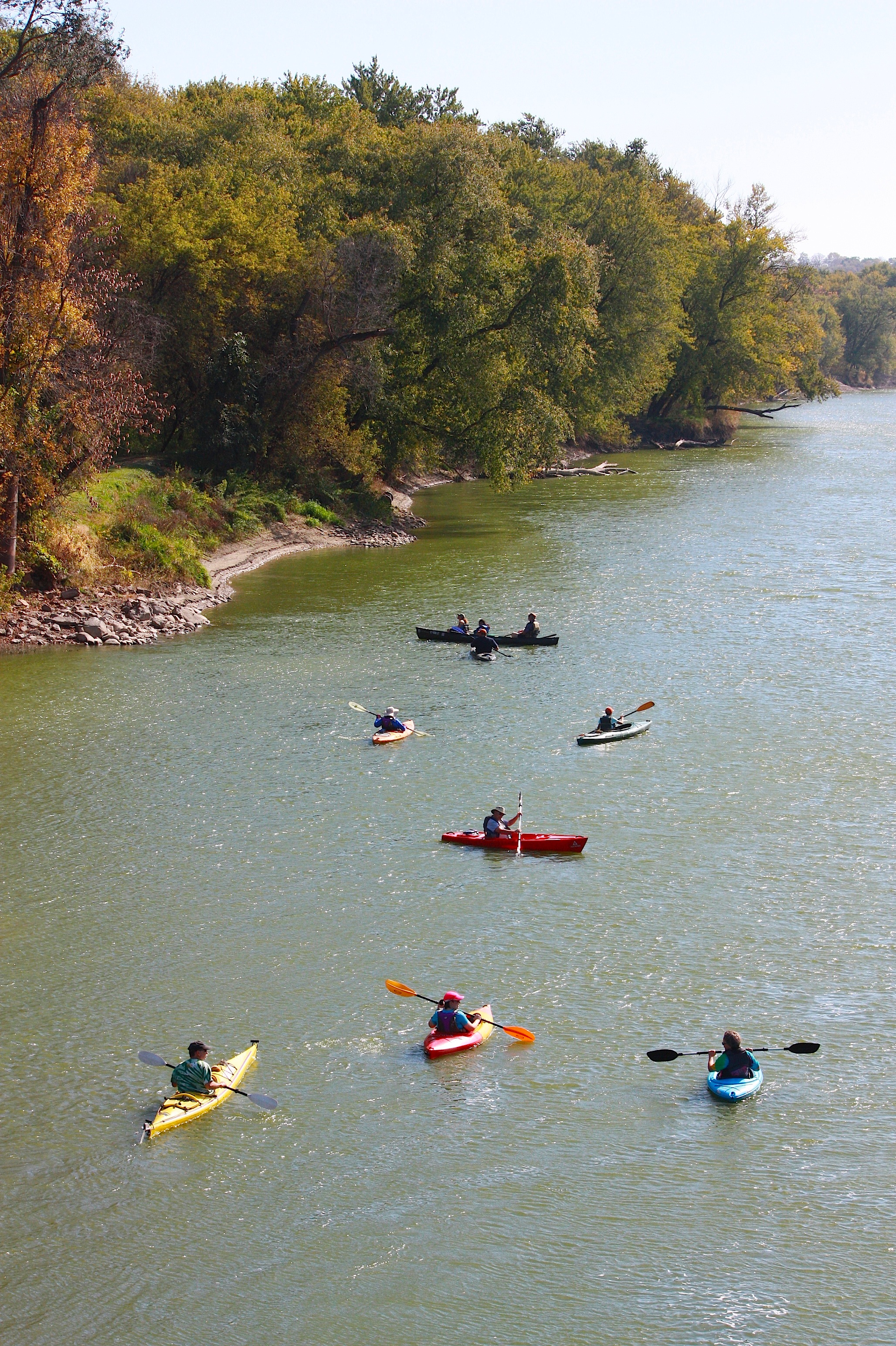
 When I first got the assignment, I was thinking this was not the most scenic part of the state. But I’ve been pleasantly surprised. I’ve encountered some really beautiful vistas, scenic hiking trails, horseback riders, pelicans, kayakers, bridges, and more. There are just gobs of state and county parks all along this corridor, a few I never even heard of. The river itself provides endless photographic opportunities.
I am the writer for this story – not the photographer – but I did take a few pictures and I’ll share them with you here so you can see for yourself. To drive the Dragoon Trail, get directions here.





 Iowa Girl on the Go