Archive for June, 2012|Monthly archive page
Historic Lincoln Highway Bridge
 Comments (1)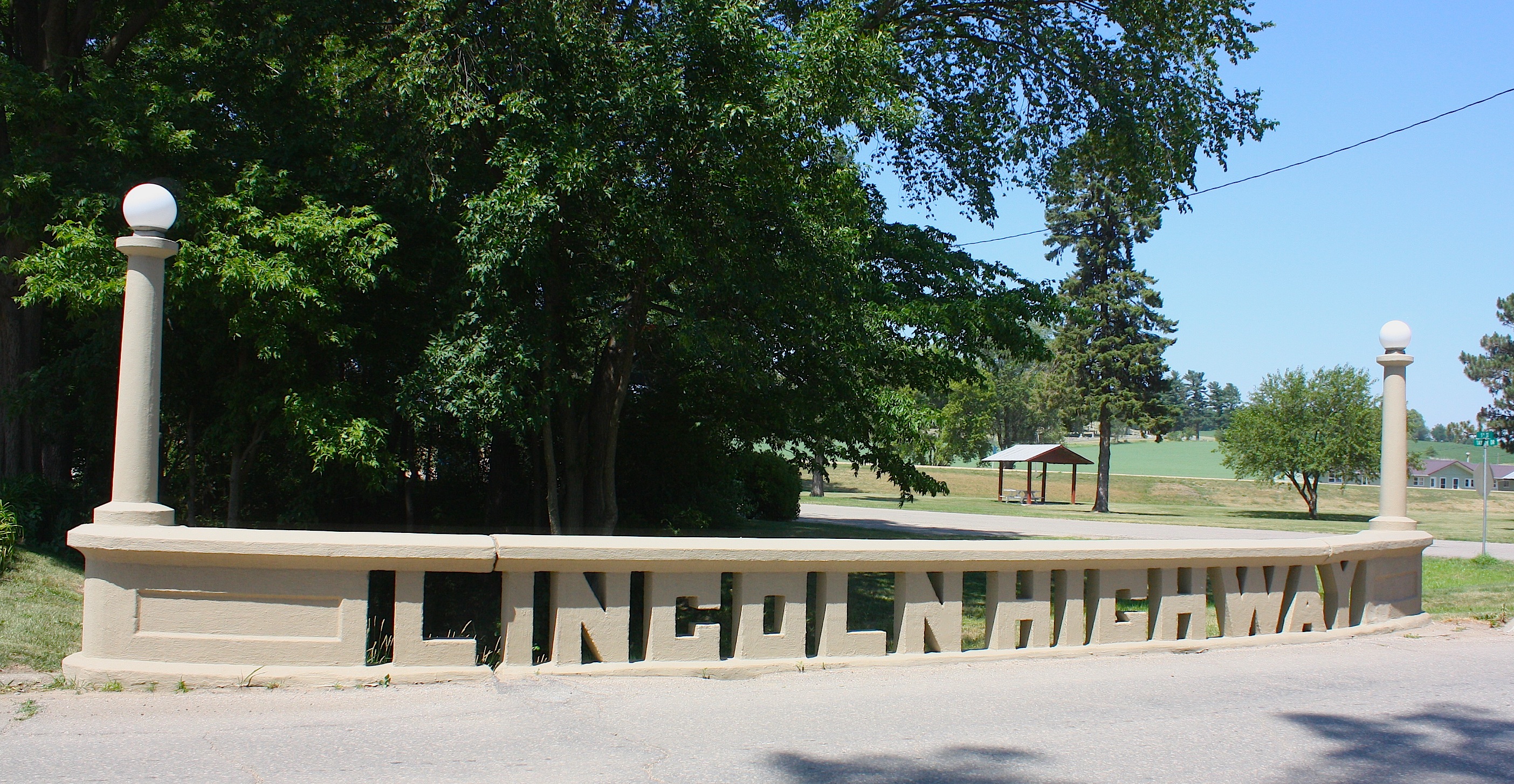
The Lincoln Highway Bridge, located in Tama, was constructed in 1915 as an early advertisement for the Lincoln Highway. The highway was the first successful effort to mark, promote, and build an automobile highway spanning the width of the United States. Initiated in 1913 as a memorial to former President Abraham Lincoln, the Lincoln Highway linked Iowa to both coasts.
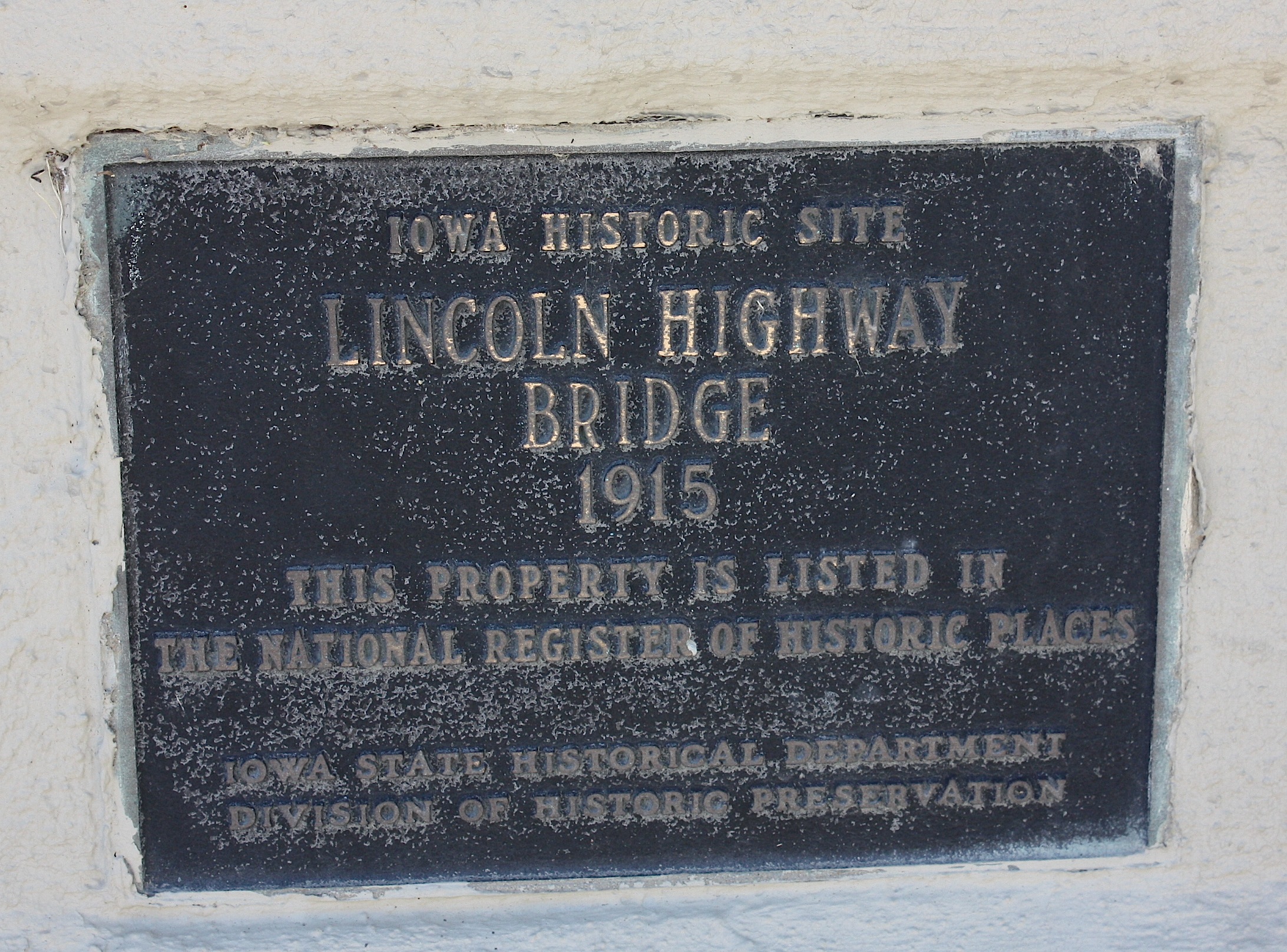 Today you can travel the original route through Tama by following signs that begin at the bridge and continue west on 5th Street. Guardrails spelling the name on both sides make this a unique bridge on the Lincoln Highway. In 1978 the bridge was officially listed on the National Register of Historic Places. It underwent restoration in 1987. According to a sign that marks the significance of the bridge, “it stands as a dramatic reminder of a time when few roads were paved and the campaign to ‘get out of the mud’ had just begun.”
 I happened upon the Lincoln Highway Bridge the other day when I was coming back from Cedar Rapids. Tama is about the halfway point back to Ames, so I stopped there for a break. I had read about the bridge in my trusty Iowa travel guide, but I admit that I had forgotten about it. So it was a nice surprise.
I stopped and took some pictures of the bridge — said to be the only Lincoln Highway bridge still in existence — and its accompanying signage, and I also took advantage of the small park just north of the bridge. It was a nice spot to sit and eat my picnic lunch.
Grant Wood Tour of Iowa: Part III
I started my Grant Wood Tour of Iowa almost a year ago, and the funny thing is, the more I do, the more I learn there is still to do to really follow in this Iowa artist’s footsteps and learn about his work.
To recap the tour so far: I started in August 2011 with visits to the Dubuque Museum of Art, the Grant Wood Art Gallery in Anamosa, Stone City, and the Cedar Rapids Museum of Art. Two weeks ago I visited the American Gothic House in Eldon.
So finally last weekend I visited the Grant Wood Studio at 5 Turner Alley in Cedar Rapids, and this week I went to the Tipton Public Library. Why Tipton? I’ll explain later.
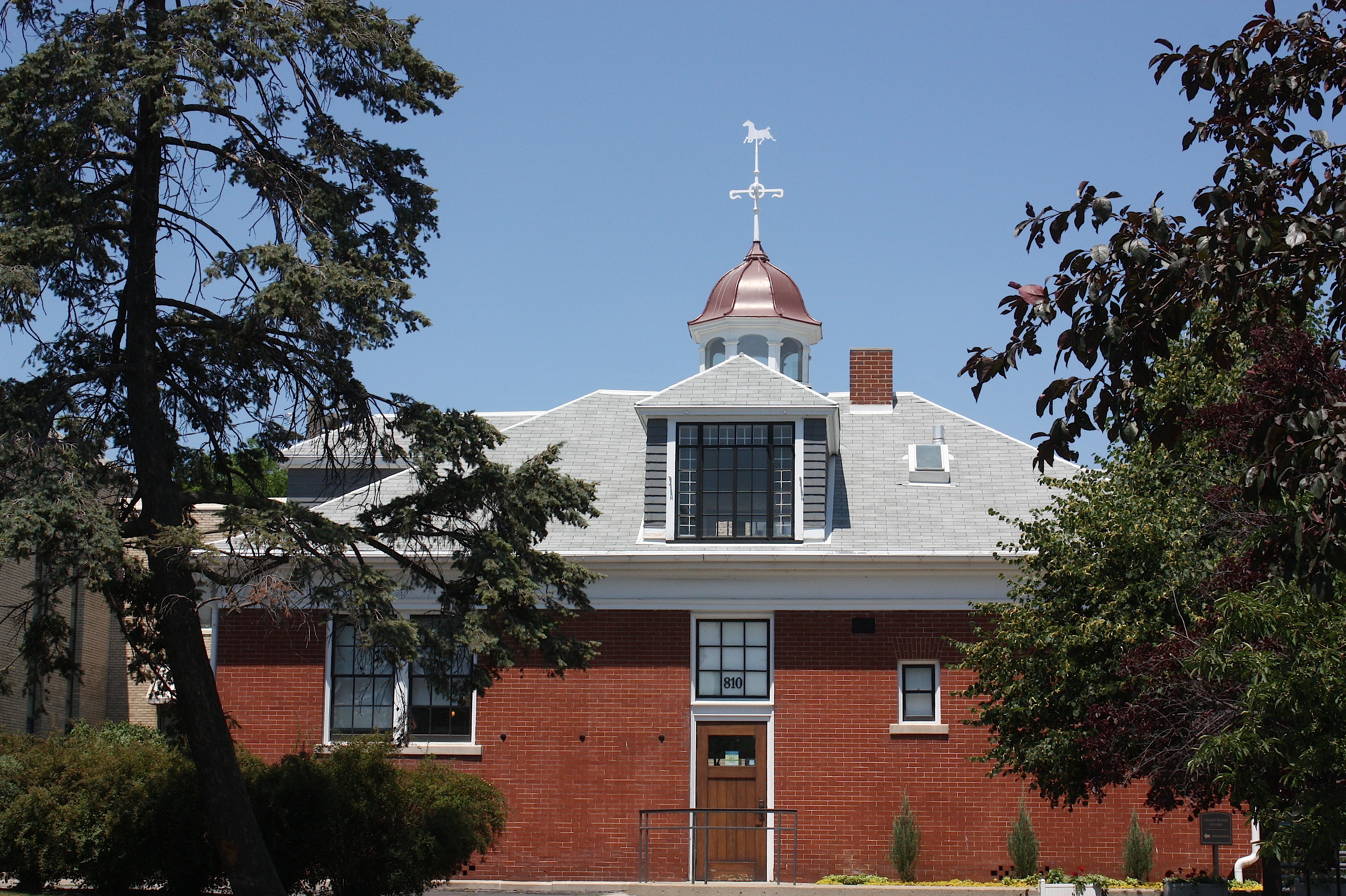
I’ve been wanting to go to the Grant Wood Studio and its accompanying Armstrong Visitor Center for a year now. It’s tough to find time to get there since it’s only open part of the year and only from noon to 4 p.m. on Saturdays and Sundays. If you go this summer, be forewarned that there is road construction in the area and you may have to detour a bit, but the studio is definitely open for visitors.
When I entered the visitor center it was suggested that I join a group that was already watching a 22-minute film about the work of Grant Wood and his lifelong connection to Iowa. After viewing the film, the docents, Bill and Karen Schlue, took us on a tour of the studio.

Grant Wood lived and worked in this studio from 1924 through 1935. The building, originally a carriage house next to the Douglas family mansion, was built in the 1890s. In 1924, David Turner was planning to convert the mansion into a funeral home, and he offered Wood free rent in the hayloft of the carriage house if he’d help with the work.
At first, Wood used the loft only as a studio, but he soon converted it into a full-time residence for himself and his mother (and sometimes his sister, Nan). The space is certainly small for that many people plus art supplies, but Wood was a master at finding a place for things in every nook and cranny, as you can still see in the studio’s built-in storage.
 The Schlues spoke about Wood’s life and work during the days he lived in the studio, illustrating their talk with a handful of old photographs that showed the work space as it was in the 1920s and even some images of Wood posing with his art in the space. During the time he lived there, Wood created many of his most famous paintings, including Woman with Plants, Daughters of the American Revolution, Young Corn, and American Gothic.
The studio and visitor center are located at 810 Second Avenue SE, Cedar Rapids. Admission is free, thanks to benefactors Esther and Robert Armstrong Charitable Trust.
Next on my list was the Tipton Public Library. I honestly can’t even remember how I learned about the Grant Wood art collection at this library; I think it was through somebody I encountered during last August’s tour. At any rate, I made a note and did some research, and indeed, this small library houses a collection of 21 Grant Wood lithographs and two oil paintings.

Apparently Chicago attorney Roger R. Leech was an avid collector of Grant Wood art. When he died in 1976, he left his estate to his sister, who then died the next year. Upon her death, the major portion of the estate went to the Tipton Public Library, including the art collection.

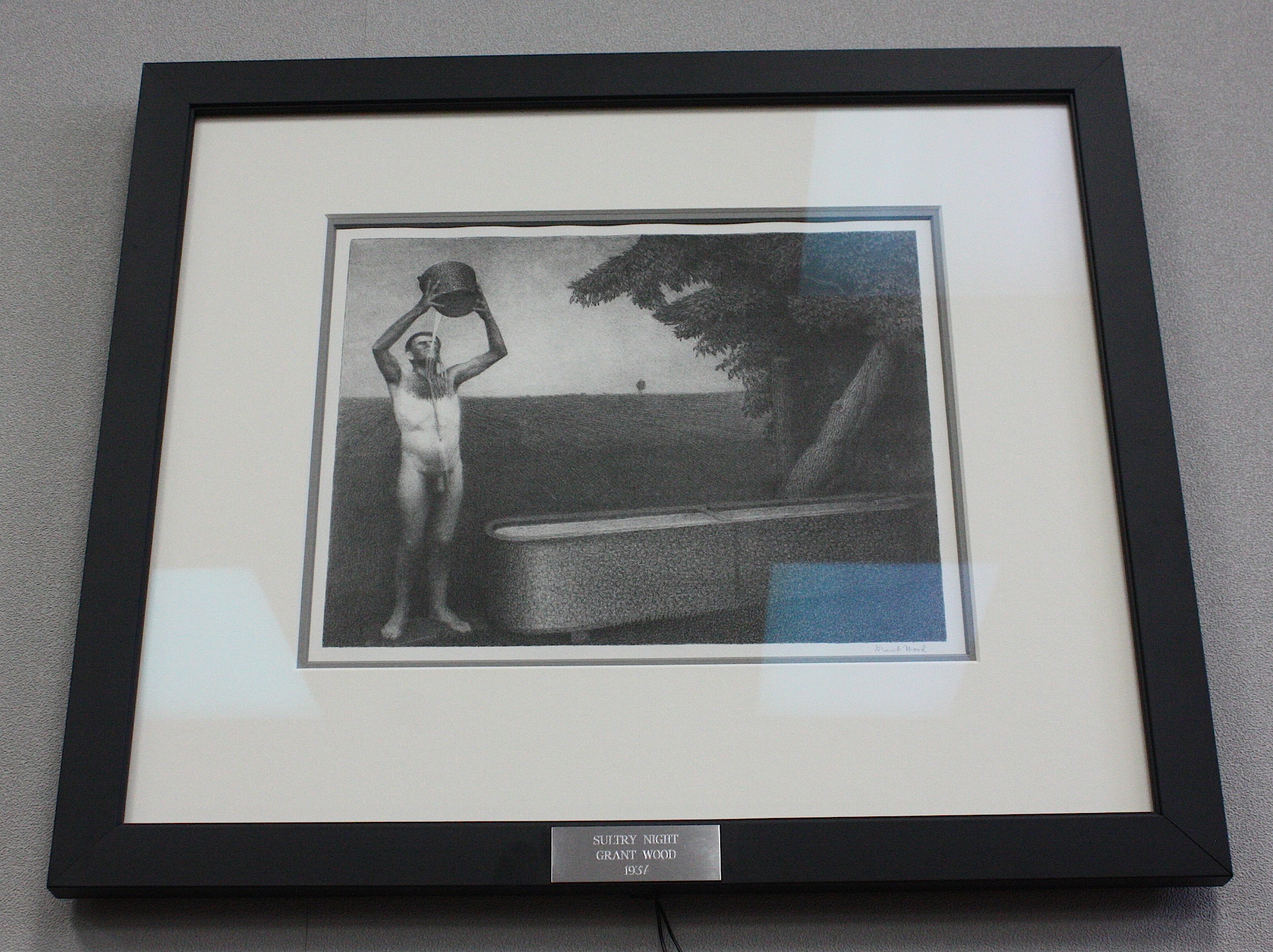 The collection features many famous lithographs, including Approaching Storm (left), Tree Planting Group, Fertility, and Honorary Degree among many others. One lithograph, Sultry Night (right), features a farmer who is bathing nude after a long day in the field. It’s Wood’s only “regionalist nude,” and only 100 were made due to the controversial content. (You may click on these images to see them enlarged if you’d like.)

 Other unique works include a set of hand-colored lithographs, Vegetables and Tame Flowers (left). Even more unique are oil paintings titled Statue of Musette (right) and The Crucifix. I can’t find out much about these two pieces, but I can only assume they were created during Wood’s early-1920s foray into Impressionism when he studied in Europe.
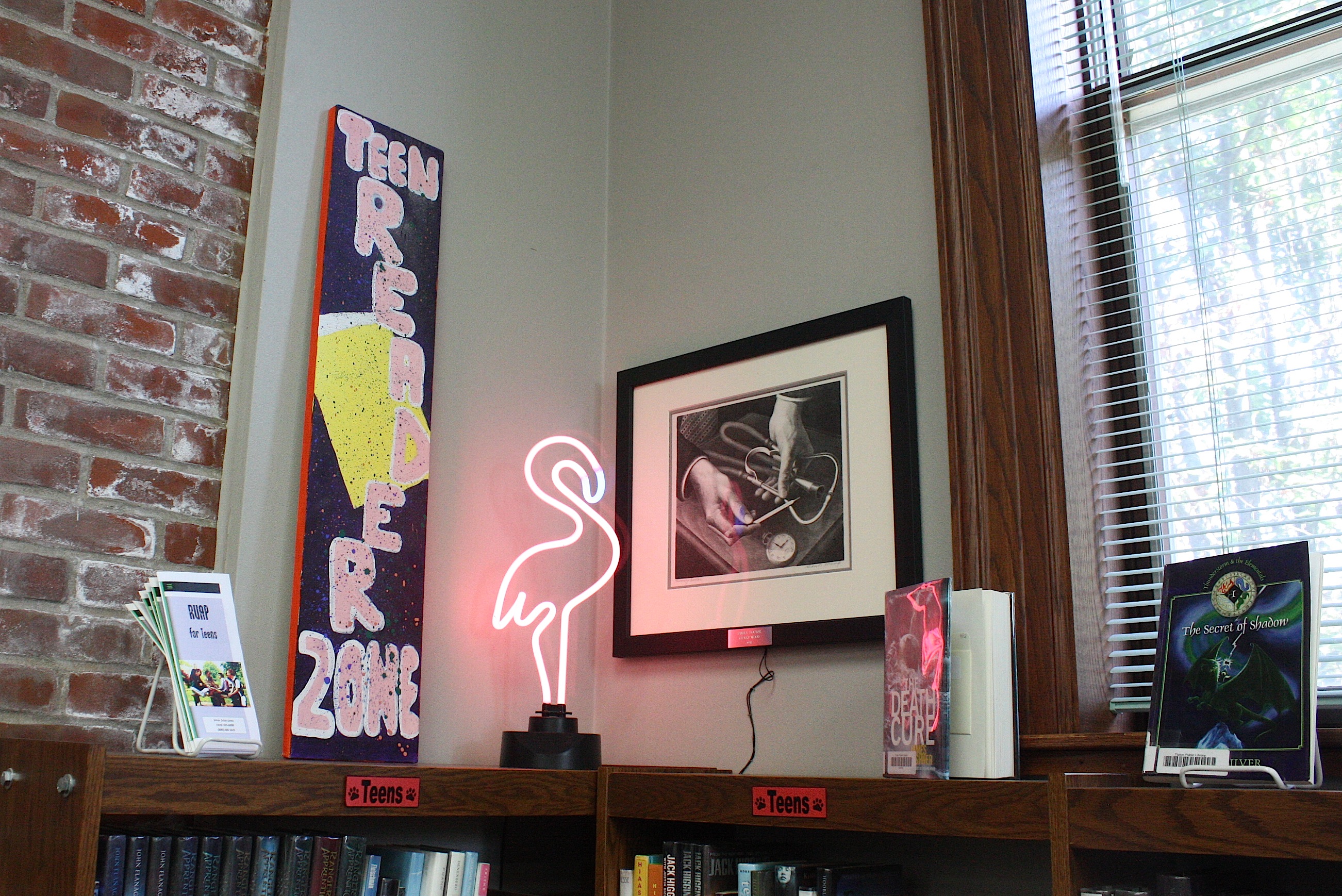
 This being a library and not an art gallery, the artwork is not exhibited on, shall we say, a grand scale. For one thing, the light’s not great. There is one wall with six agricultural lithographs displayed nicely (if not exactly spaced evenly), but most of the others are a bit haphazard. For example, December Afternoon is displayed within just inches of a tacky sign promoting e-books for kids. But the worst offender is the display of a lithograph titled Family Doctor, which was commissioned by Abbott Laboratories of Chicago as gifts for physicians and considered to be Wood’s last artistic work. It’s wedged in the corner, adjacent to a neon flamingo. Ahem.
The Tipton Public Library is open 10 a.m. to 8 p.m. Monday through Thursday, 10 a.m. to 5 p.m. on Fridays, and 10 a.m. to 1 p.m. on Saturdays. If you ask nicely, a photocopied guide of the Grant Wood collection is available at the circulation desk.

And finally: An Iowa tour of Grant Wood artwork cannot be complete without a visit to Iowa State University’s own Parks Library. There you will find magnificent murals designed by Wood and executed under the federal program providing work for unemployed artists in the 1930s, known as the Public Works of Art Project.
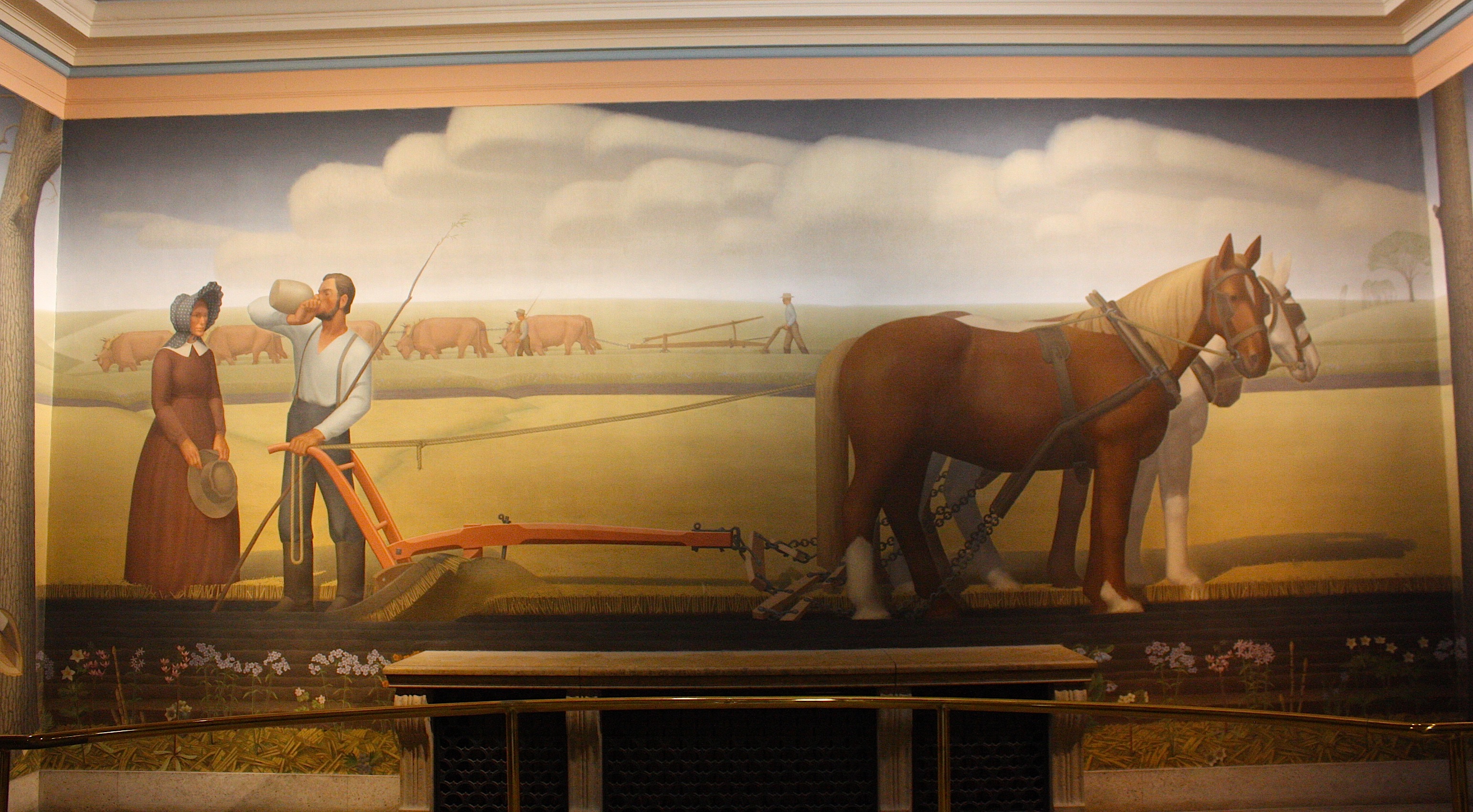
The murals – When Tillage Begins, Other Arts Follow and Breaking the Prairie Sod – are located around the staircases near the library’s original entrance. Tillage consists of nine mural panels, each covering 17 x 6 feet. The lovely Prairie Sod consists of a 23×11-foot center panel, plus two 11×9-foot side panels. You can view these spectacular murals any time the library is open (go to http://www.lib.iastate.edu/libhours-todayall/6175 for up-to-date information).
I promise this will be my last Grant Wood post for awhile.
Zoo Brew

What a great concept: The zoo…open only to adults…in the relatively cooler summer evening hours…with adult beverages. It’s a stroke of genius!
The Blank Park Zoo has, for the past several years, opened its doors to an adults-only crowd every Wednesday night during the months of June, July, and August in a event called Zoo Brew. Each Wednesday event features a different opportunity to sample wines and beers and listen to live music. And, of course, walk through the zoo without having to deal with sticky, screaming children.

I attended “Uncorked,” the first Zoo Brew of the summer on June 6 with my daughter, Katie. (Technically speaking, she’s a grownup.) Wines from Covered Bridges Winery, John Ernest Vineyard & Winery, Madison County Winery, Prairie Moon Vineyard & Winery, and Tabor Home Winery were available for our tasting pleasure. I’ve tried to love Iowa wines over the years but often find them fairly off-putting. Samplings from this group were so-so; one tasted exactly like grape juice, another had to be spat out. Surprisingly, the best was a crisp chardonnay from Prairie Moon. I also liked a white wine from Covered Bridges. None of the reds were worth drinking.
Unimpressive full-size drinks can be purchased at stands around the zoo. I didn’t see any food for sale, and that’s a drawback to this event. It starts at 5:30 p.m., so a few food vendors would make this a one-stop evening event. As it was, we didn’t stay long because we were hungry and eager to find something to eat. Next time, maybe we should back a picnic like the old days, with juice boxes and goldfish crackers?
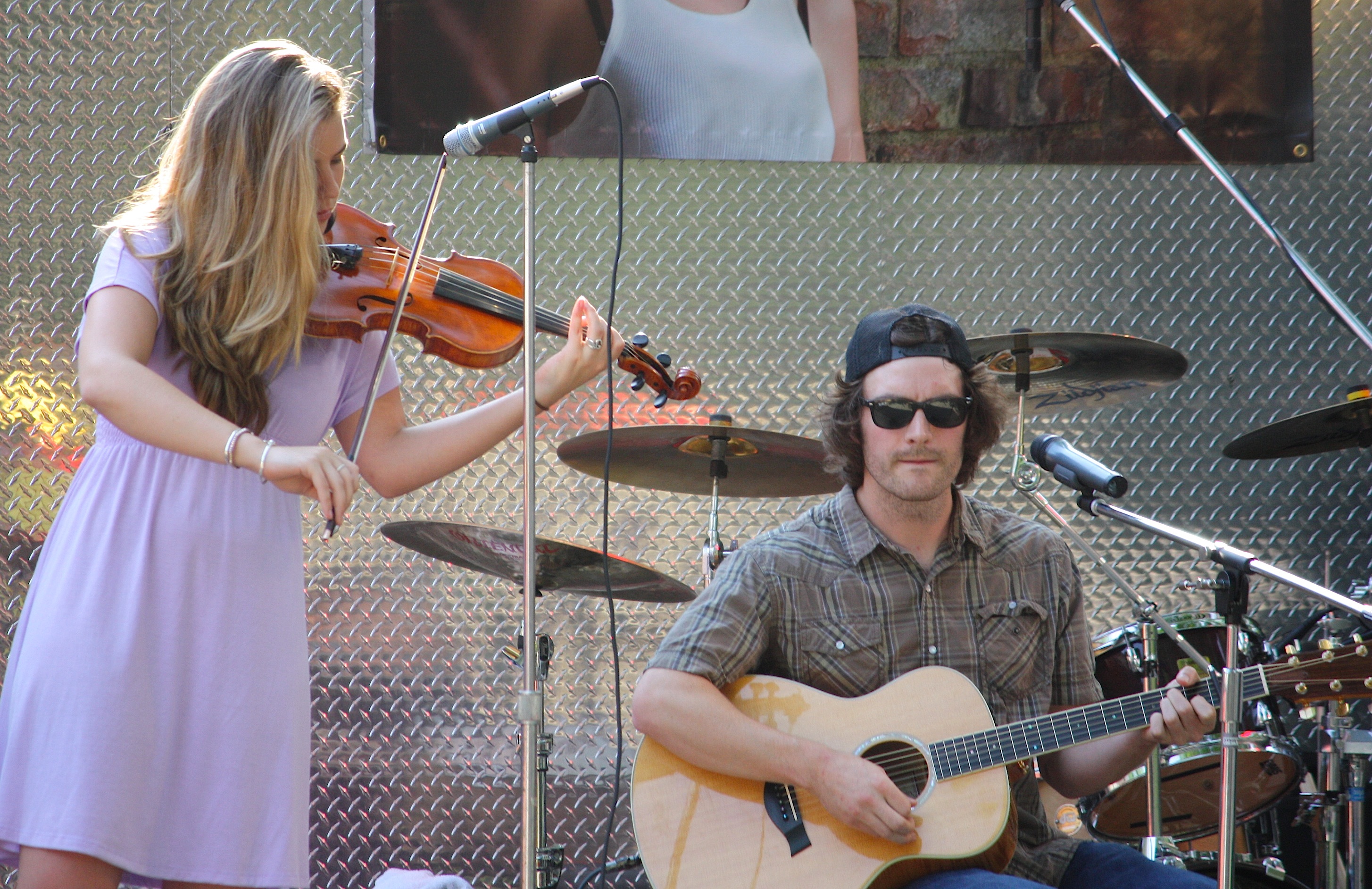
Lack of food aside, this is a great event for young professionals and others in the Des Moines area. It’s definitely a mix-and-mingle event, and the zoo vibe is very pleasant. The night we were there, very good musical entertainment was provided by Bonne Finken with Ryne Doughty.
Here are the upcoming themes, featured drinks, and musical entertainment for the rest of the summer:
- June 13: “Around the World,” featuring Loose Neutral and samples of international beers
- June 20: “Iowa Brew Night,” featuring Throwing Toast and Iowa microbrews
- June 27: “Ladies’ Brew,” featuring Damon Dotson with Rudy York and samples of flavored beers
- July 4: “Red, White & Brew,” featuring Decoy with Brian Congdon and summer beers
- July 11: “Uncorked Encore,” featuring Abby Normal and Iowa wines
- July 18: “Iowa Brew Night” featuring Standing Hampton and Iowa breweries
- July 25: “Country Night” featuring Beau Nystrom Band with Time Well Wasted and a variety of beers
- Aug. 1: “Zoolympics” featuring Cold Filtered and English beers
- Aug. 8: “Summer Luau” featuring Monkey, Monkey, Monkey and light, summer beers
- Aug. 15: “Fan’s Choice” featuring The Wilder Side Band’s Live Karaoke Band and samples chosen by fans on Facebook
- Aug. 22: “Ladies Brew Take Two” featuring Hollywood Burnout with Josh & Josie and more fruit-flavored beers
- Aug. 29: “Zoo Brew Finale” featuring Pianopalooza with Josh and Will and a variety of local beers and wines

With all the attention being paid to the beverages and music, it’s easy to overlook the real stars of the zoo: the animals. Blank Park is a small but extremely nice zoo, and there are dozens of exhibits to enjoy including a new sea lion exhibit, giraffes, lions, tigers, monkeys, otters, prairie dogs, and flamingoes. There’s also a petting zoo that’s as much fun for adults as it is for kids — as witnessed at the recent Zoo Brew.
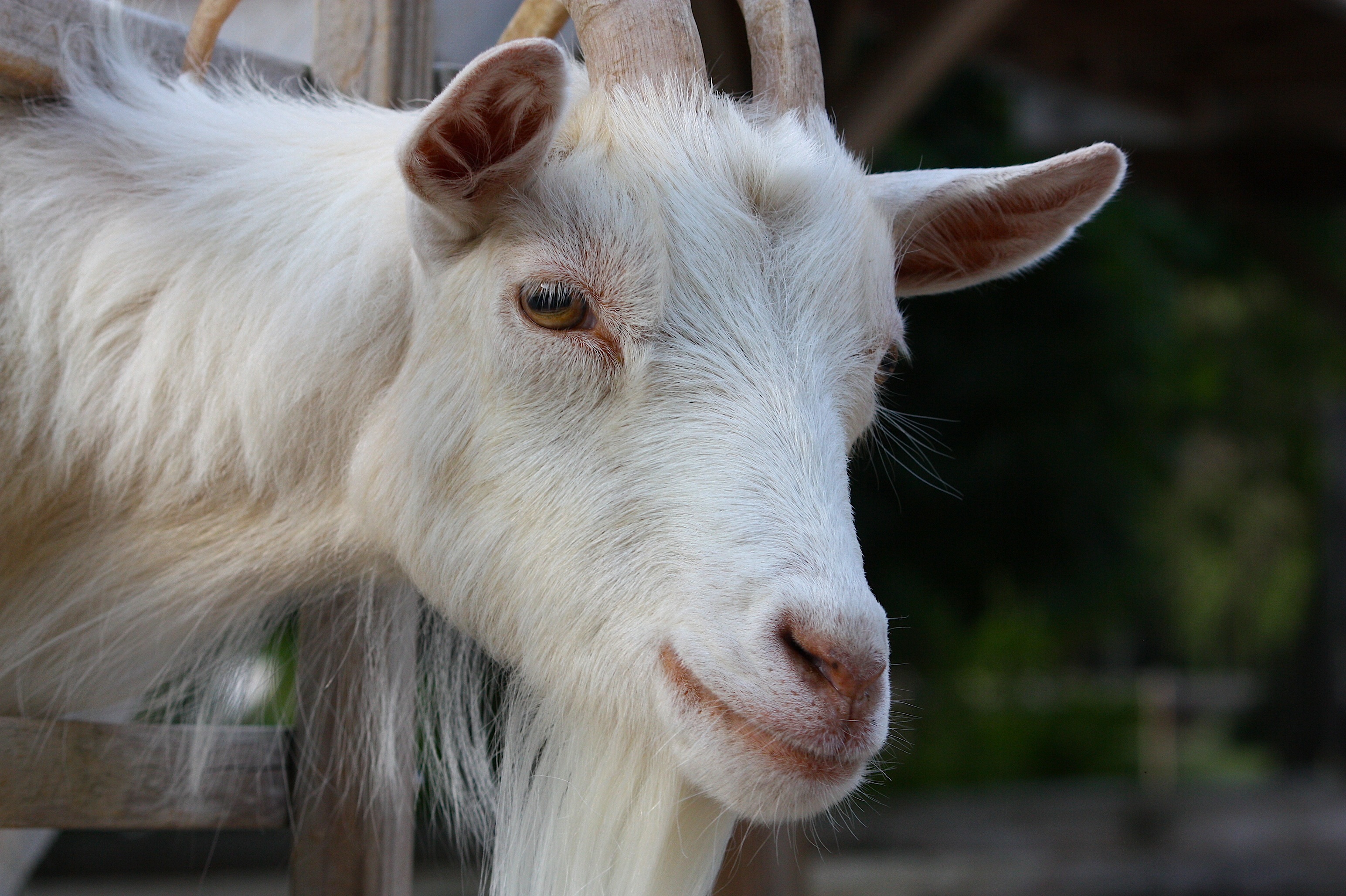

Zoo Brew is held every Wednesday through the end of August from 5:30 to 9 p.m. (entry doors close at 8 p.m.) Cost for Zoo Brew is the same as regular zoo admission: $11. Katie and I were lucky to have snagged a Groupon that got both of us in for just $10 — such a bargain! And I was happy to have an opportunity to try out my new telephoto lens on some feathered, furry, and floppy subjects.


Historic Albia, Iowa
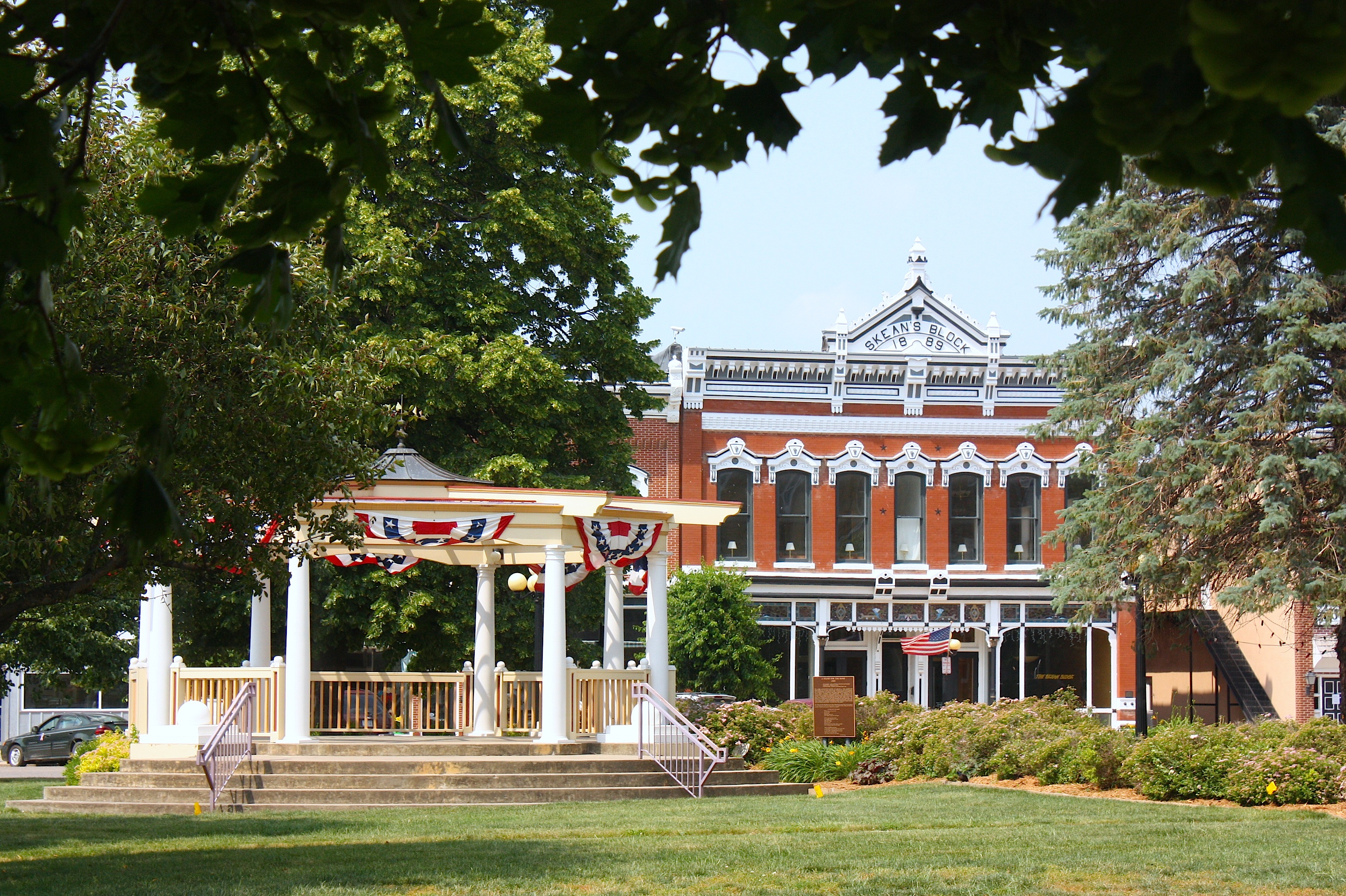
With 92 buildings on the National Historic Register, Albia, Iowa, is a town preserved in time.
Albia is the county seat of Monroe County in south-central Iowa, with a population of 3,706 as of the 2000 census. The town’s historic square features buildings fitted with plaques giving specific details for each piece of architecture: when the buildings were built, what the buildings have been used for, who purchased the buildings.
 For example, the E.M. Noble Block plaque states: “This building is one of the best examples of the commercial Queen Anne style from the early 1900s. The polygonal roofed oriels are the outstanding feature, but the corbeled cornice and round arched brick pediment with cast concrete panels are also noteworthy…. This double-front building has held a number of different businesses over the years, including the D&W Tea Company, which specialized in selling tea and Queensware (pottery), a specialty business that could not exist today given the population of the community.” There’s lots of good information like this on each sign.
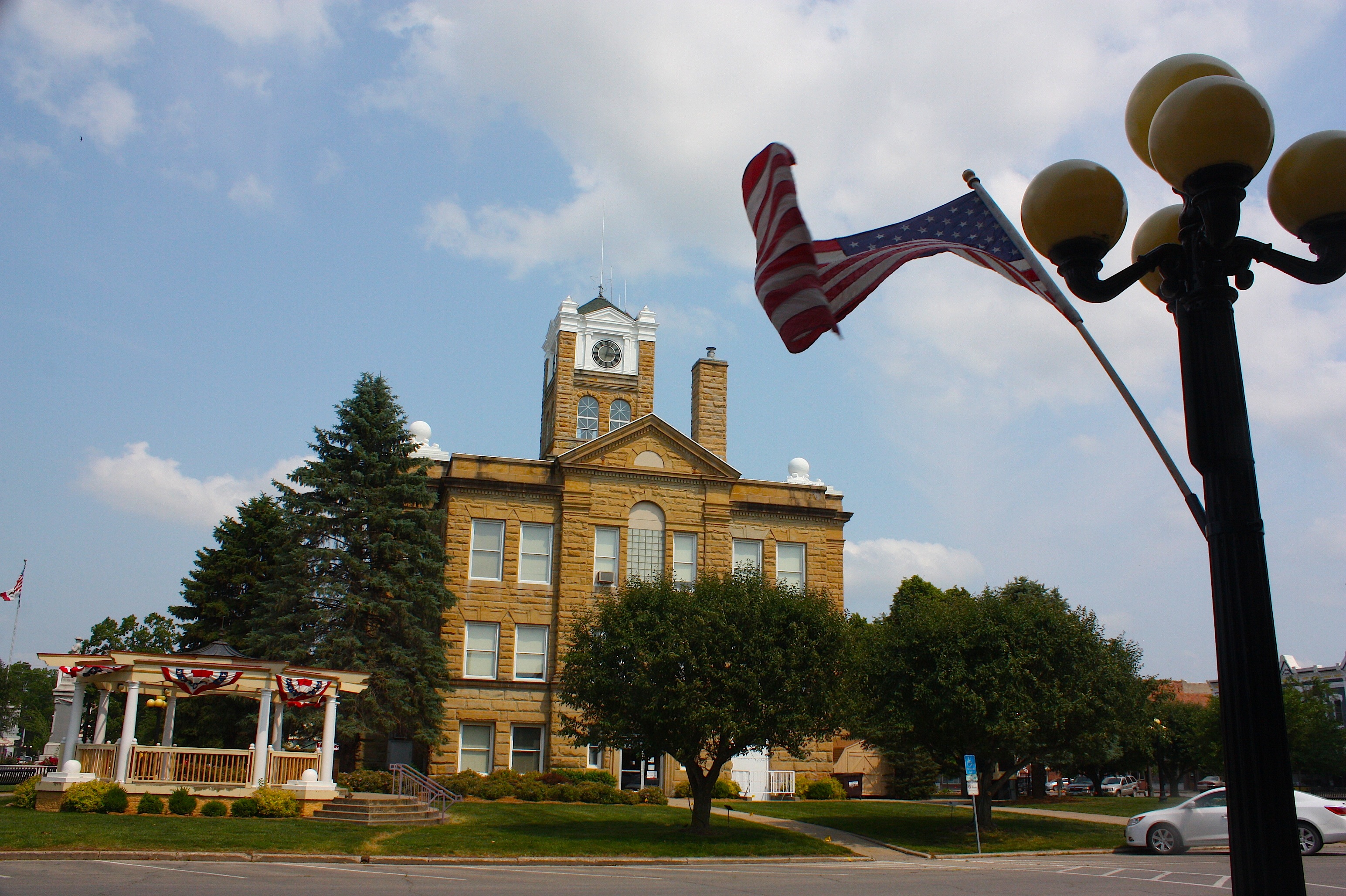 The centerpiece of the downtown square is the Monroe County courthouse; a gazebo shares the spacious lawn. Buildings surrounding the square are mostly made of brick, some with painted accent colors. Some are completely painted – for example, the R.O Cramer building, built in 1890, is blue, white, and yellow; the Bates building, built in 1875, is yellow with black and white accents. Unlike many small-town Iowa squares, these buildings are not in need of repair, paint, or new windows. Most have their names and years painted at the top; most appear to be occupied.
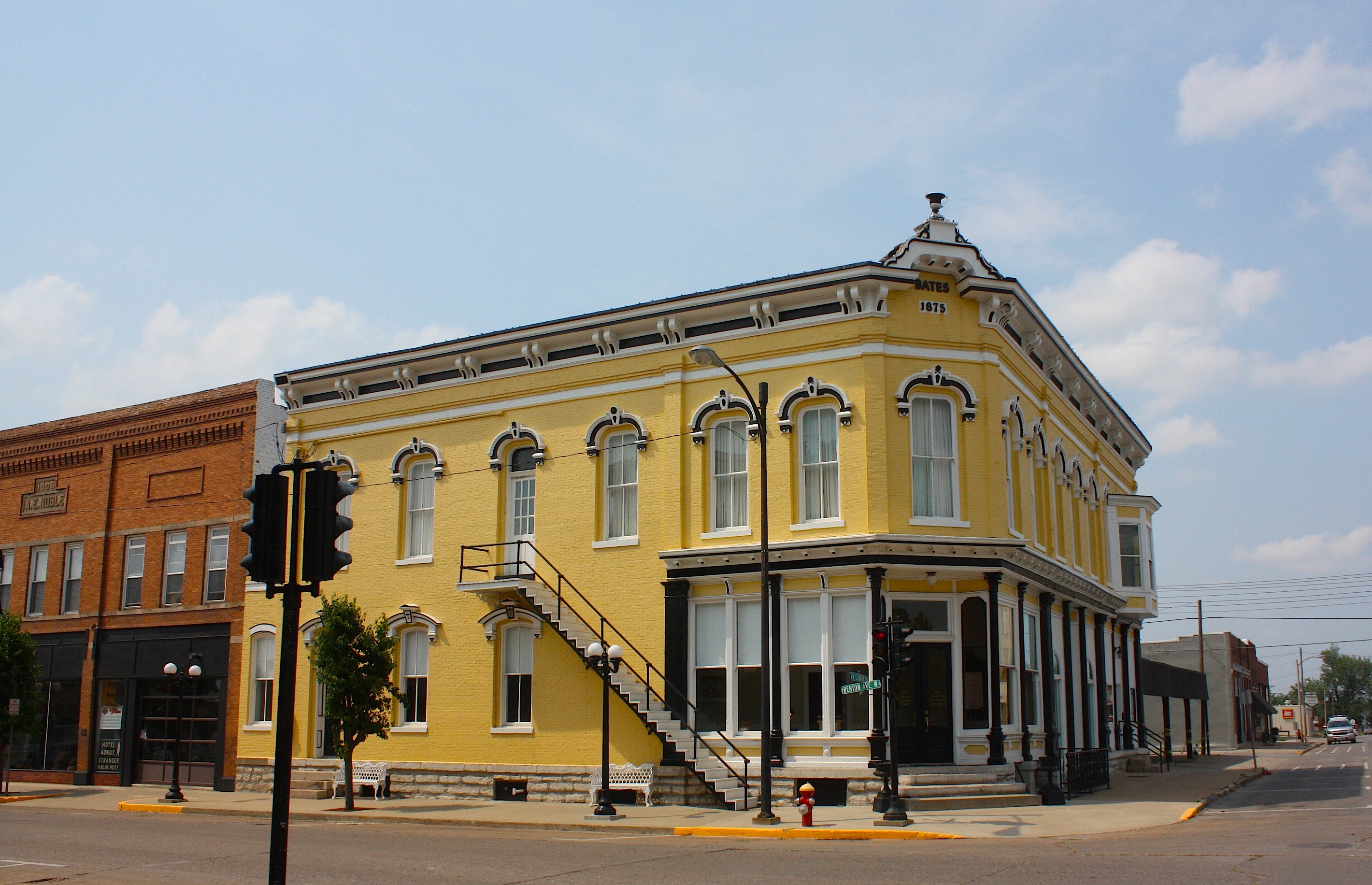
One building, the First Iowa State Bank, is decorated in Victorian antiques. Many homes in Albia were also built in the Victorian era. Tours are given at the Walker House, located at 106 2nd Ave. West.
The Albia Restoration Days festival is held the fourth Saturday of each August. And a Victorian Stroll is held each December.


 Iowa Girl on the Go