Archive for May, 2012|Monthly archive page
Grant Wood Tour: Part II
 Comments (1)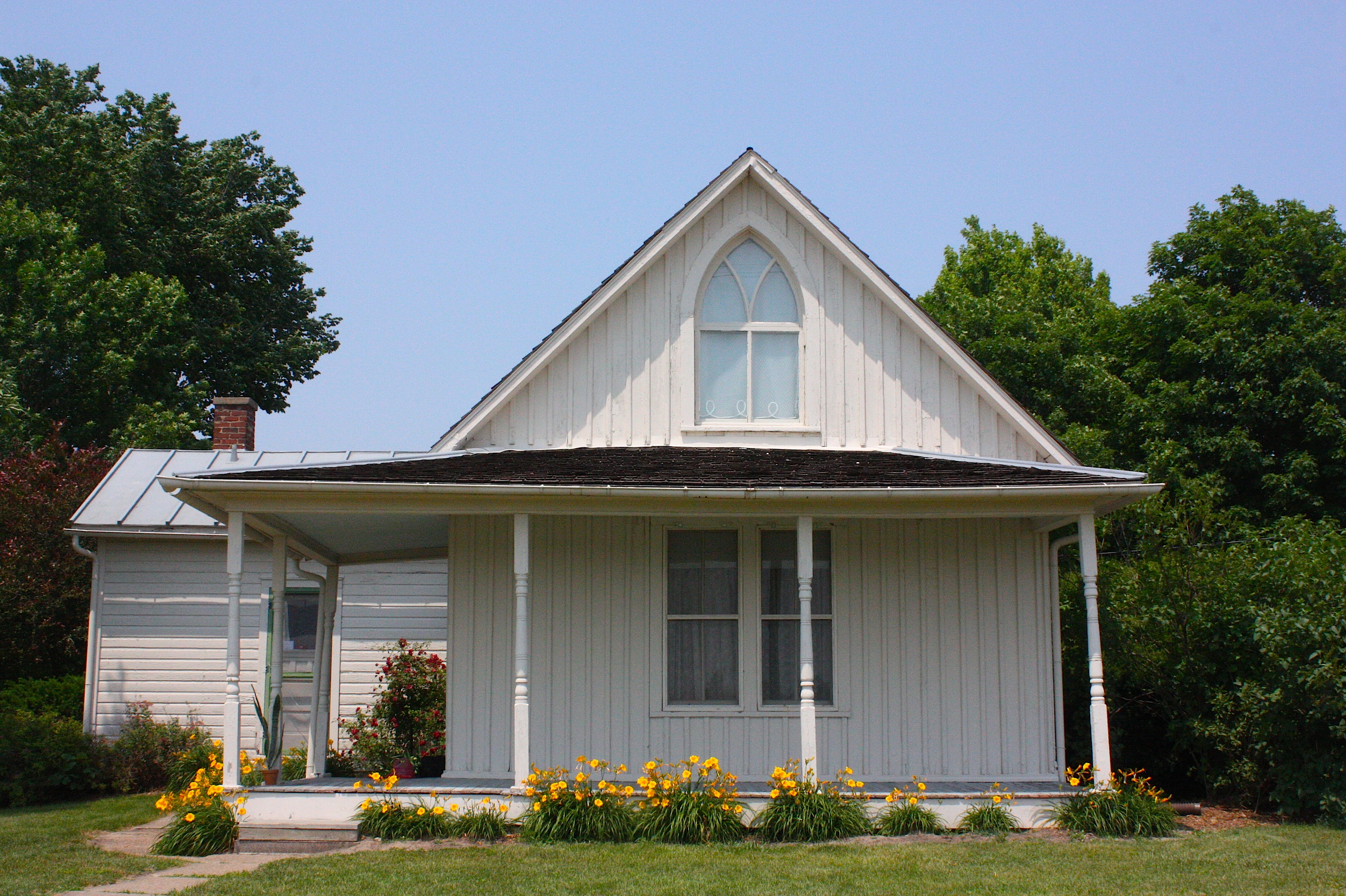
I started my Grant Wood Tour of Iowa way back last August. I was inspired at the time by Seward Johnson’s God Bless America sculpture on display at the Dubuque Museum of Art. The sculpture is based on Grant Wood’s iconic painting American Gothic. After visiting the sculpture, I toured the museum, home to a small but very nice collection of Wood’s paintings. After that, I went to the kitschy Grant Wood Art Gallery in Anamosa, to Stone City, and to the Cedar Rapids Museum of Art. I had hoped to visit the Grant Wood Studio, but it’s open very limited hours. So I pledged to do a Grant Wood Tour Part II.
I had good intentions of doing this last fall, but time got away from me. Yesterday I added another piece of the Grant Wood tour by visiting the American Gothic House in Eldon, Iowa. (The rest of the tour will just have to wait…again.)
The American Gothic House held a number of surprises for me. For one thing, the last time I visited it (maybe a dozen years ago) it sat alone, very unceremoniously on a gravel road in Eldon. Today, many signs point you toward the site, and when you get there, you’re greeted by a full-scale visitor center and a paved parking lot.
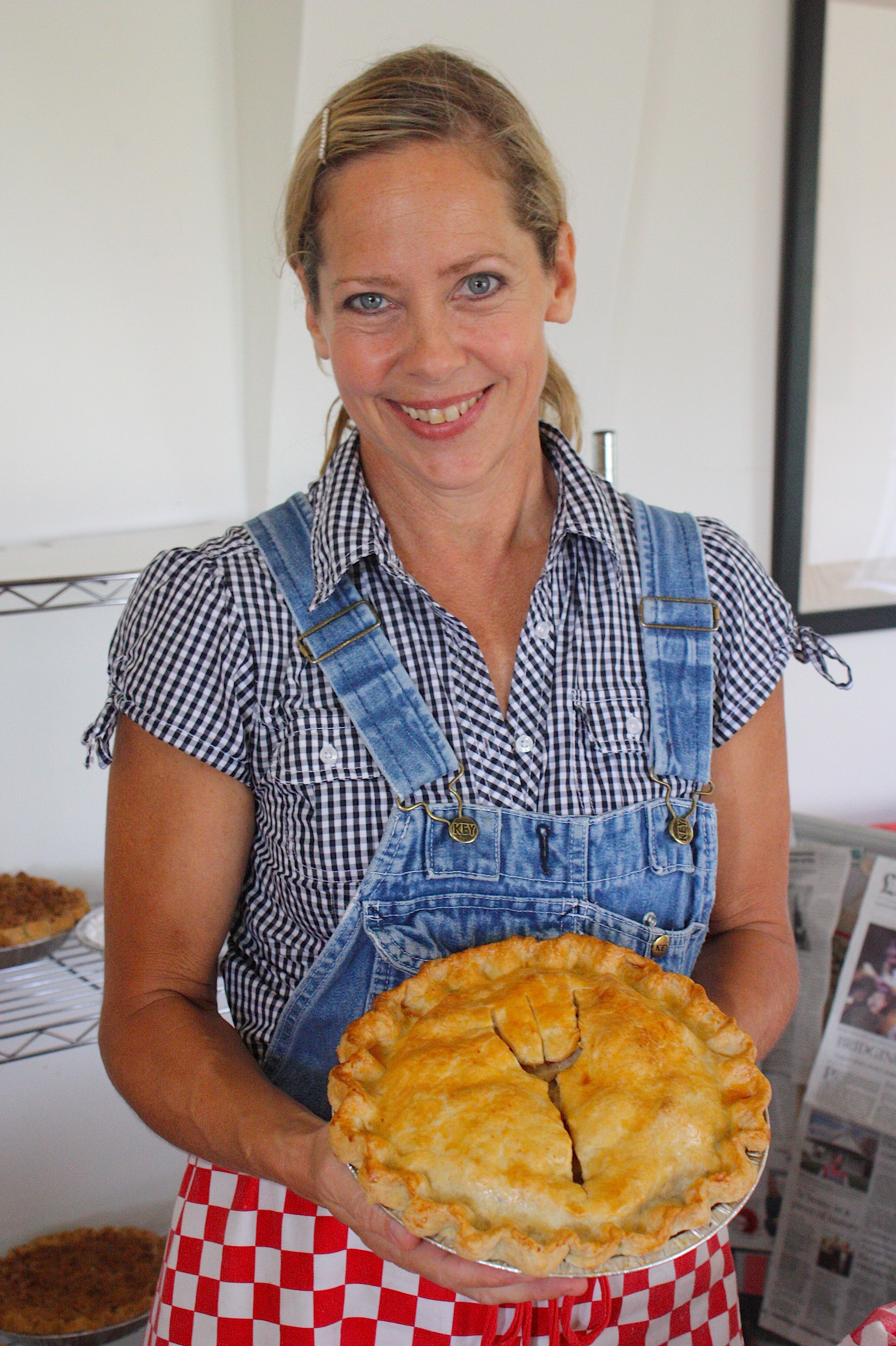 The second surprise for me was the Pitchfork Pie Stand. Unbeknownst to me, the American Gothic House is now home to Beth Howard, piebaker extraordinaire and author of Making Piece: A Memoir of Love, Loss, and Pie. Beth bakes her pies in the tiny kitchen of the American Gothic House, where she lives when she’s not on the road doing book tours or teaching pie-baking classes or appearing on television.
Yesterday was this summer’s opening day for the Pitchfork Pie Stand (who knew?) and the line was out the door. Beth’s pies looked wonderful, and she was selling about equal numbers of pies and books. “I can’t make pies fast enough!” she said.
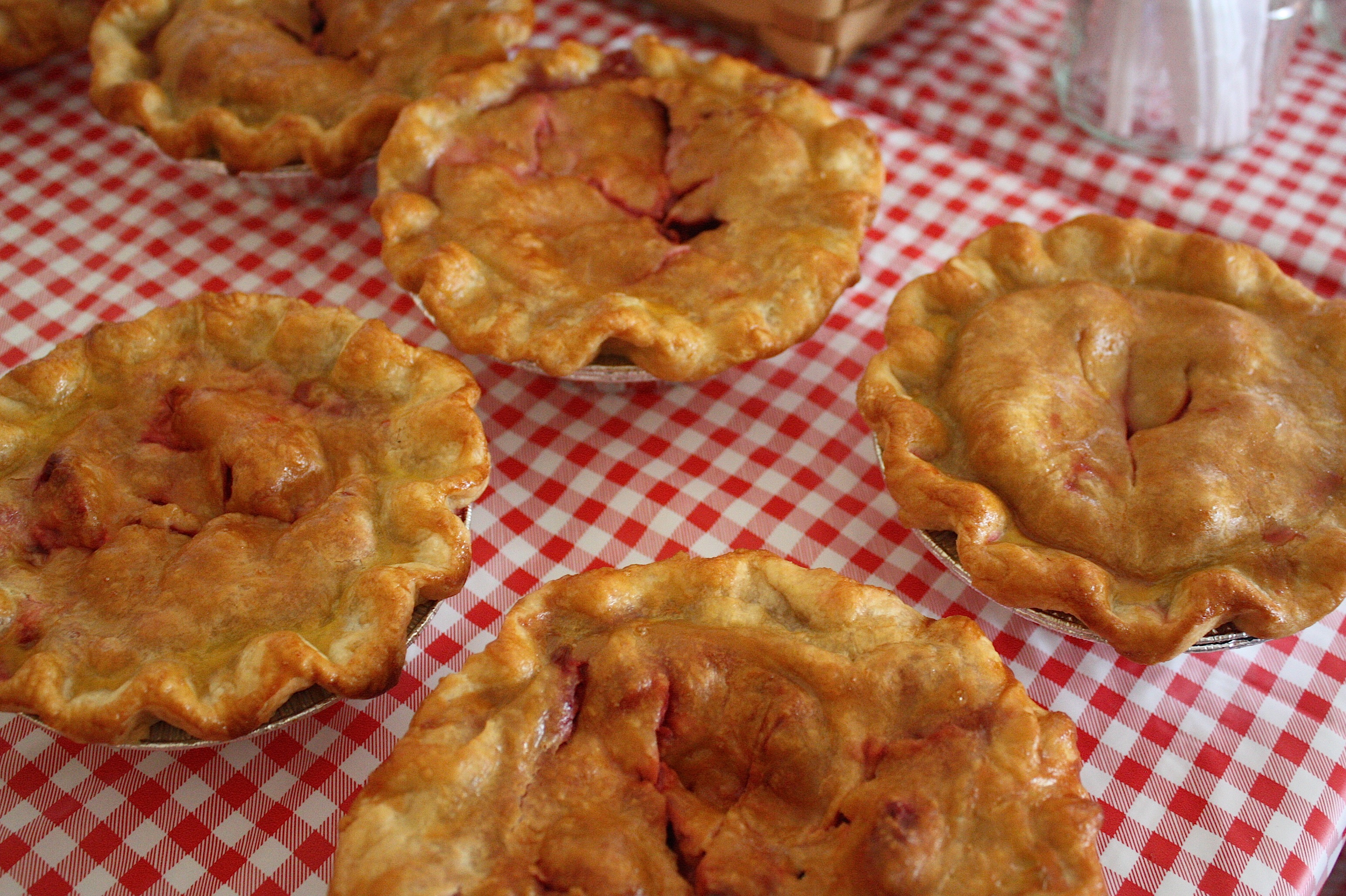 Yesterday’s flavors were apple, apple crumble, strawberry, and shaker lemon. Full pies sell for $20, mini pies are $6, and single slices are $3. The pie stand is open weekends noon to 5 p.m. through Labor Day.
But enough about pies. Back to Grant Wood.
 The American Gothic House in Eldon is the backdrop for Wood’s most famous painting. The painting depicts a farmer standing beside his spinster daughter — although the models for the painting were Wood’s sister, Nan, and his dentist (pictured at left in front of the finished painting in 1942). Each element of the painting was done separately; the models were not painted together and never actually stood in front of the house.
 The Gothic Revival cottage with its distinctive upper window is in wonderful condition and, with the addition of the visitor center, now has lots of colorful flowers (and, of course, pie). If you visit the center (10 a.m. to 5 p.m. Tuesday through Saturday; 1-4 p.m. Sundays and Mondays) be sure to have your picture taken in front of the house, dressed in costumes and holding a pitchfork provided by the center. (I didn’t do this since I was visiting alone; I thought it would be too creepy to have a stranger pose with me.) There’s even a “how to pose” sign in front of the house. The center has educational exhibits, videos, a collection of American Gothic parodies, and plenty of gift items for sale. Directions are available on the website.
Manning, Iowa (and a walk at Swan Lake State Park)
It’s been awhile since I took a day and just explored Iowa.
So yesterday I had big, big plans. Too big, as it turned out. My destination was Manning, Iowa, just south and a wee bit west of Carroll. Along the way I hoped to stop for a walk at Swan Lake State Park, visit the Templeton Rye distillery, stop by Whiterock Conservancy in Coon Rapids, and end with a hike at Springbrook State Park.
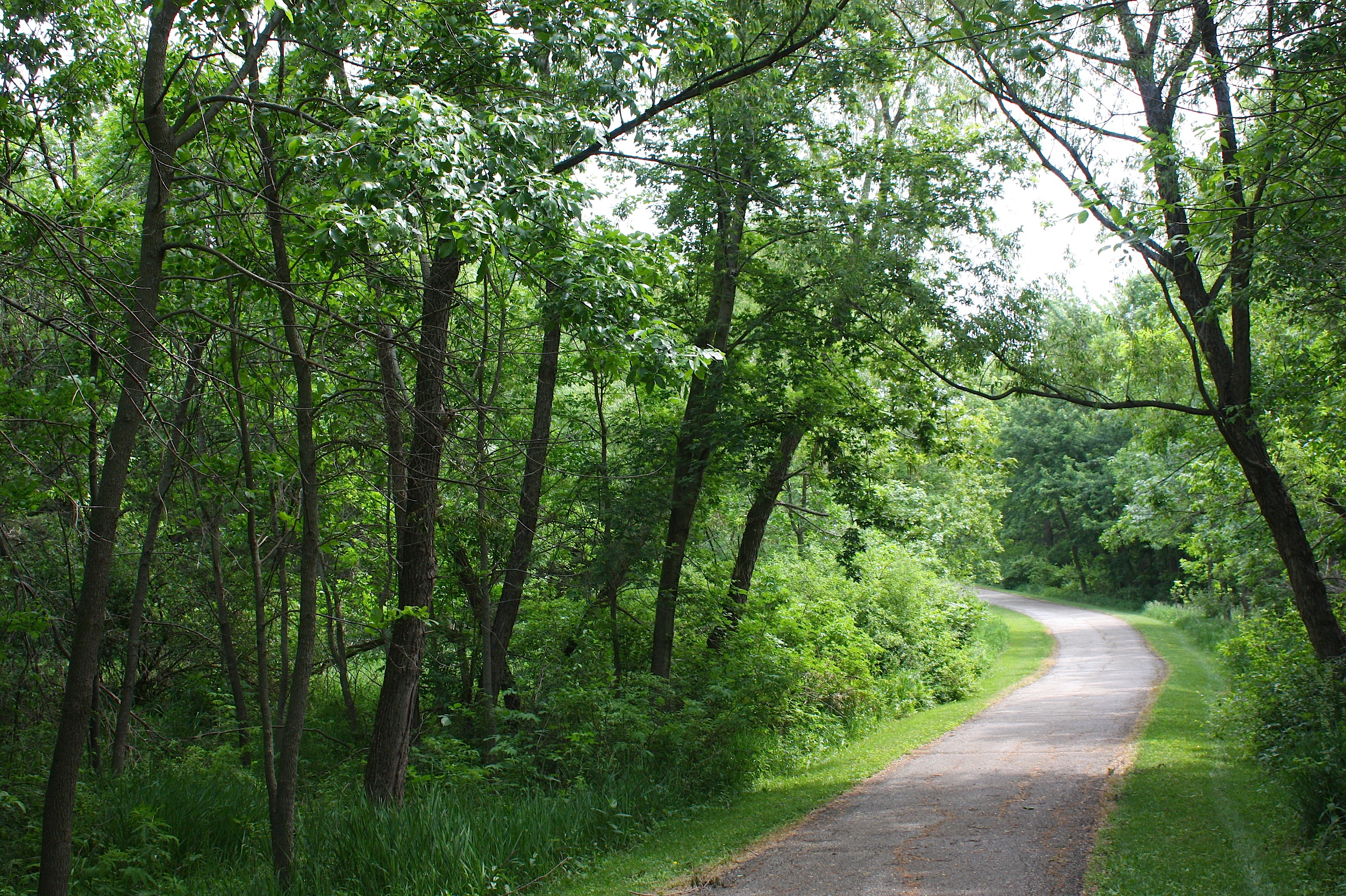
I started out heading west on Hwy. 30 for about an hour until I reached Carroll. From there, Swan Lake State Park is just a couple of miles south on Hwy. 71. I arrived at 11 a.m. The morning had been cool and breezy, and a rain shower had just passed through the area. I set out on my walk.
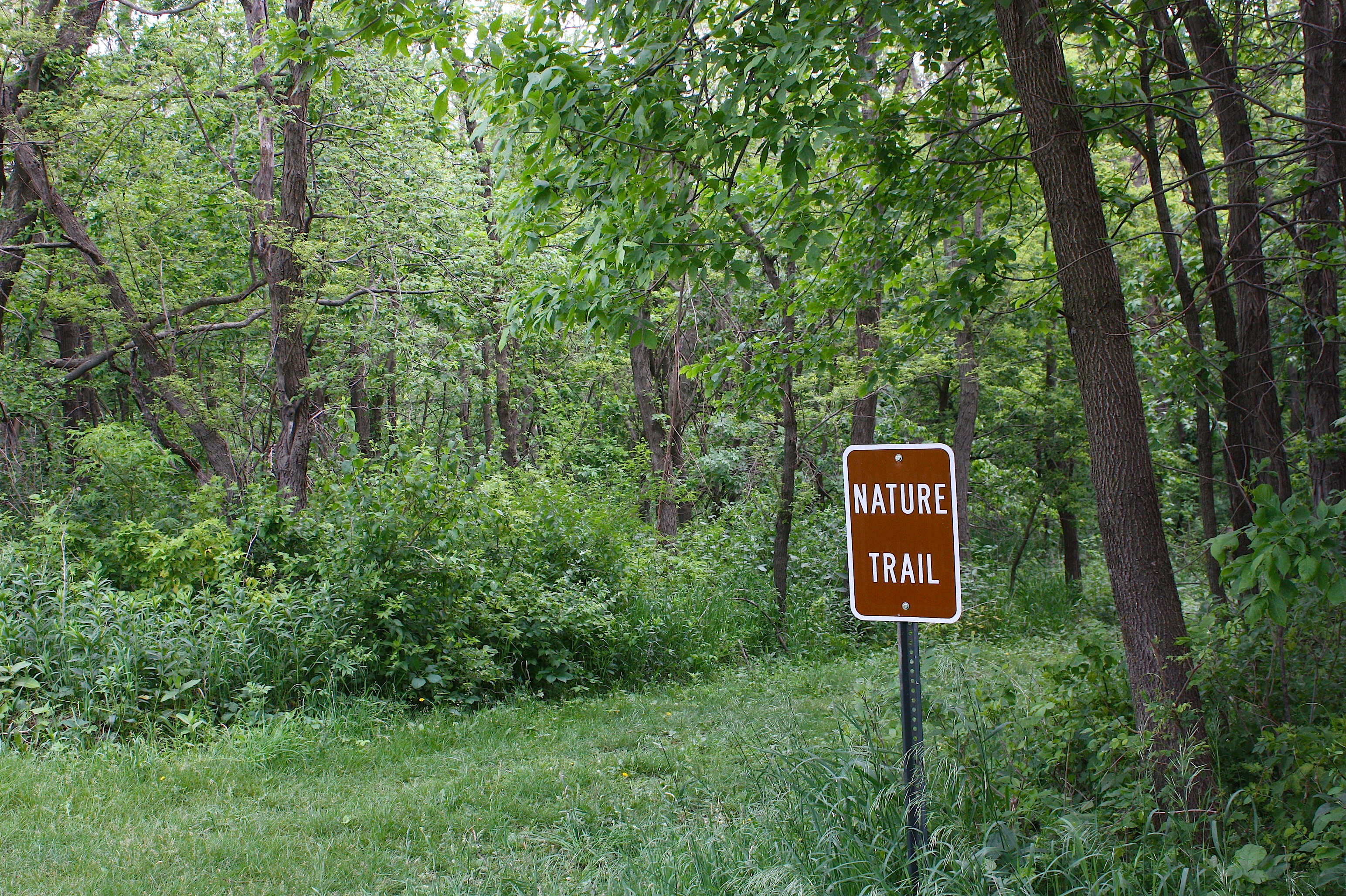
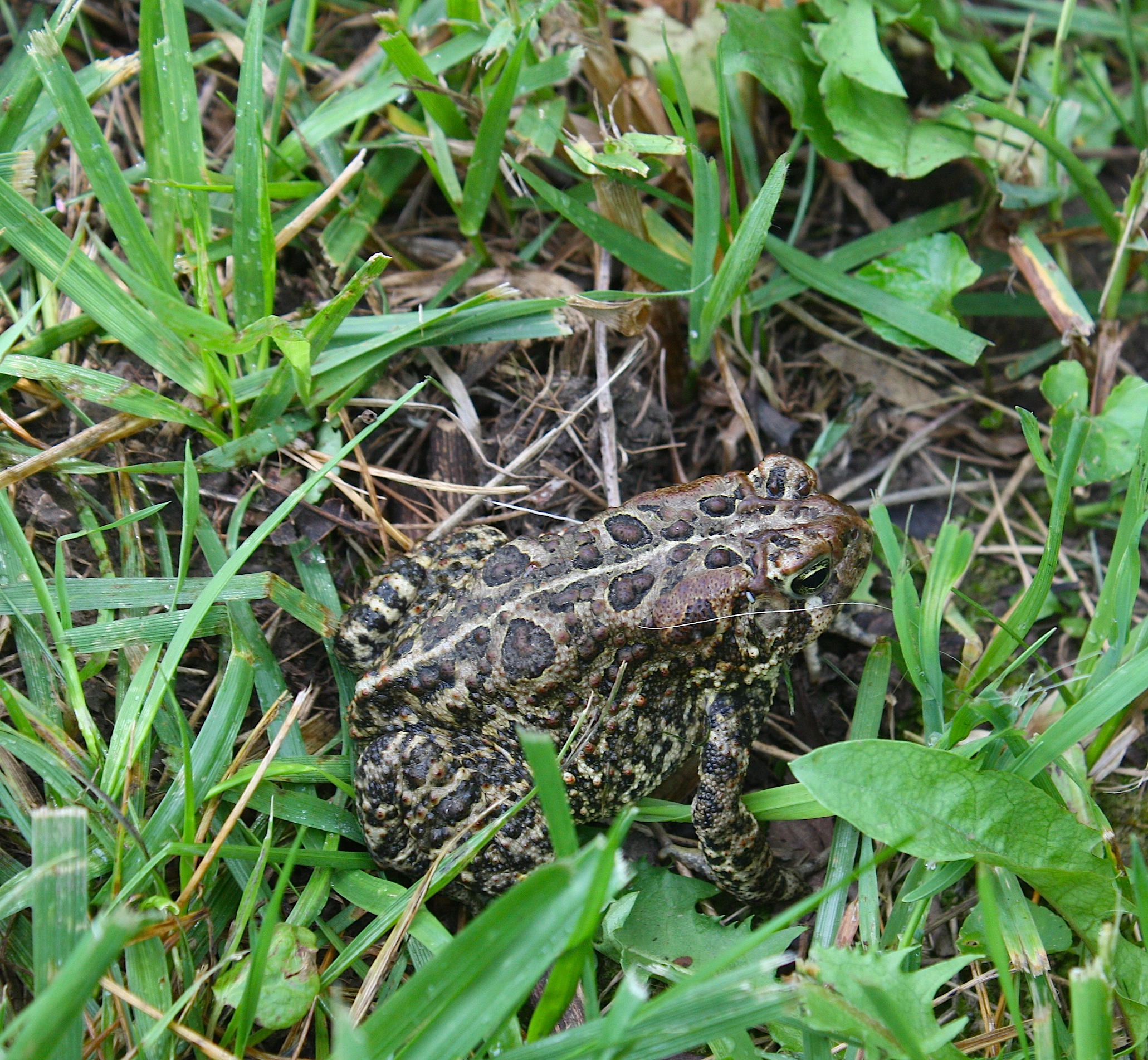 The Sauk Rail Trail connects with Swan Lake, and the paved bike/walking path circles around the lake. The trail takes you through wooded areas, wetlands, and open, park-like areas. You can also get off the paved path and walk on parallel nature trails. As I walked, I saw songbirds, geese on the lake, rabbits, many butterflies, and one handsome toad. I worked up quite a sweat, as the temperature climbed significantly while I was walking. It’s a longer trail than I remembered, probably because the last time I walked the loop I was younger and in better shape. Yesterday it took me an hour and 40 minutes to make it all the way around, and I was really glad to see my car.
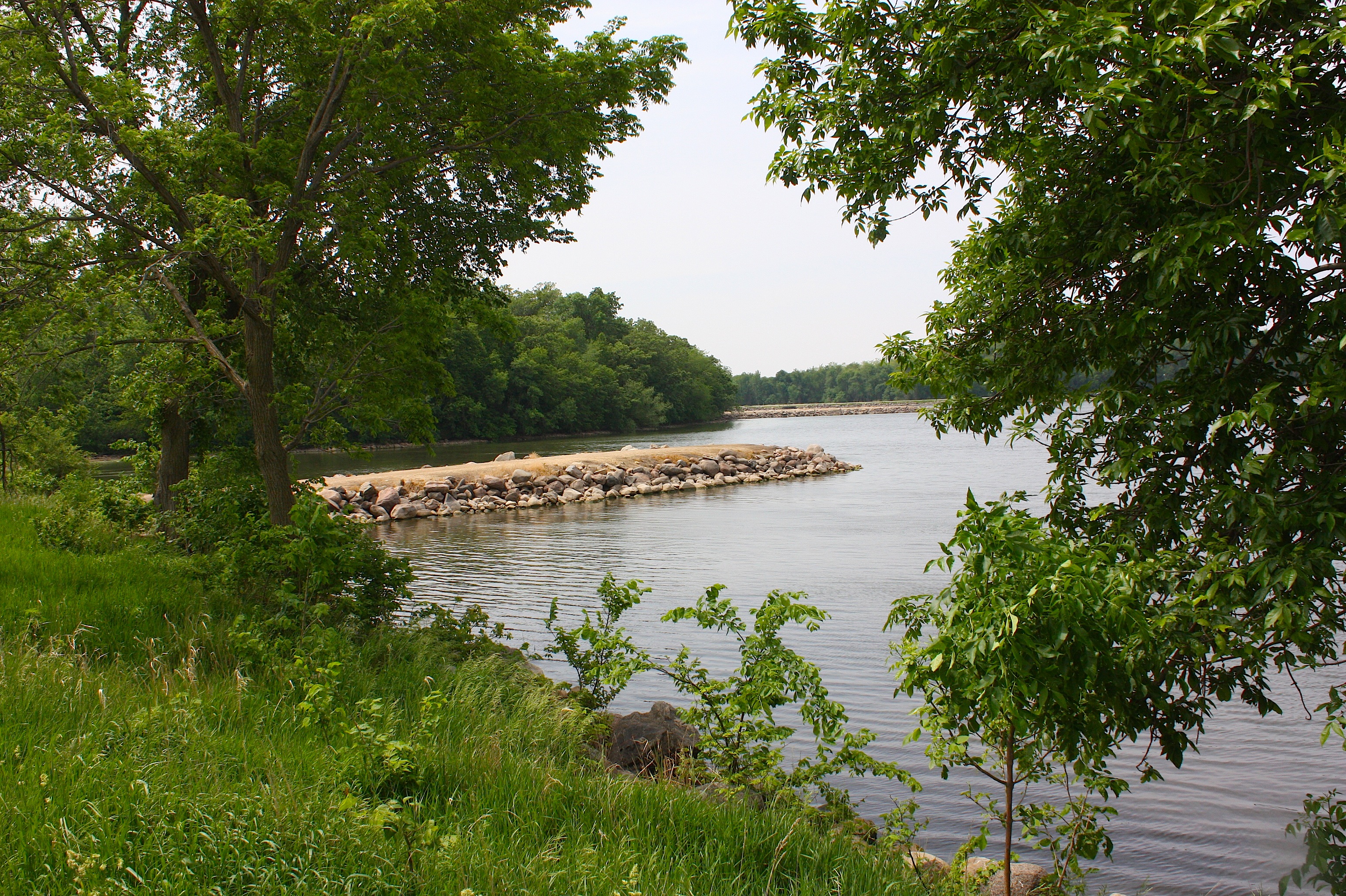
The 510-acre Swan Lake State Park is managed by the Carroll County Conservation Board. The 116-acre lake is the main focus, and there were dozens of RV campers there this weekend.
At that point my feet were sore and I was sweaty and tired. I snarfed down a peanut butter sandwich in my car and then headed to Manning.
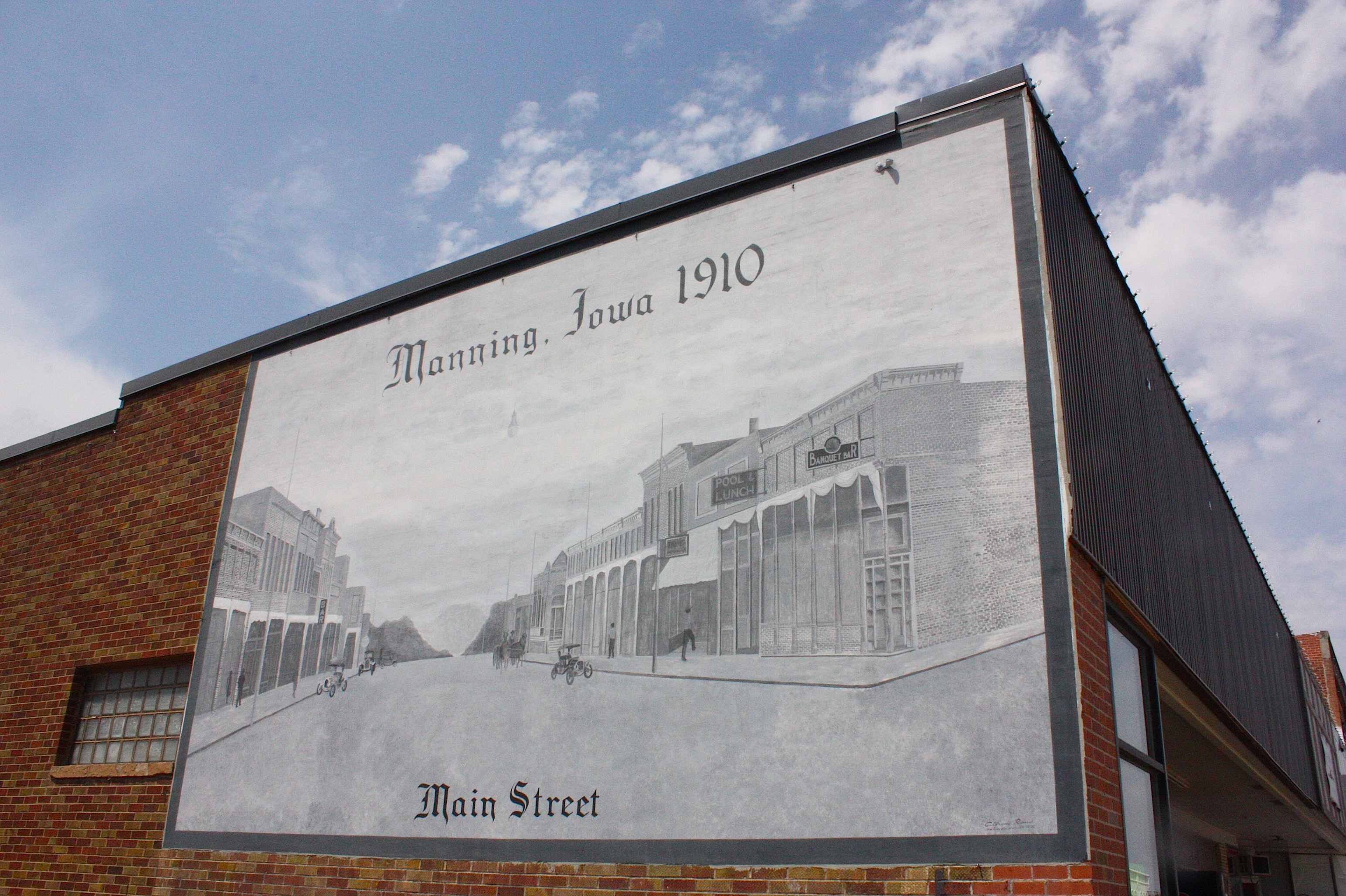
Manning is a little German town right in the middle of Iowa. Residents have embraced their German heritage since the community was founded in 1881 by Schleswig-Holstein immigrants. My main reason for wanting to go to Manning was to visit the German hausbarn and homestead, and I was not disappointed.
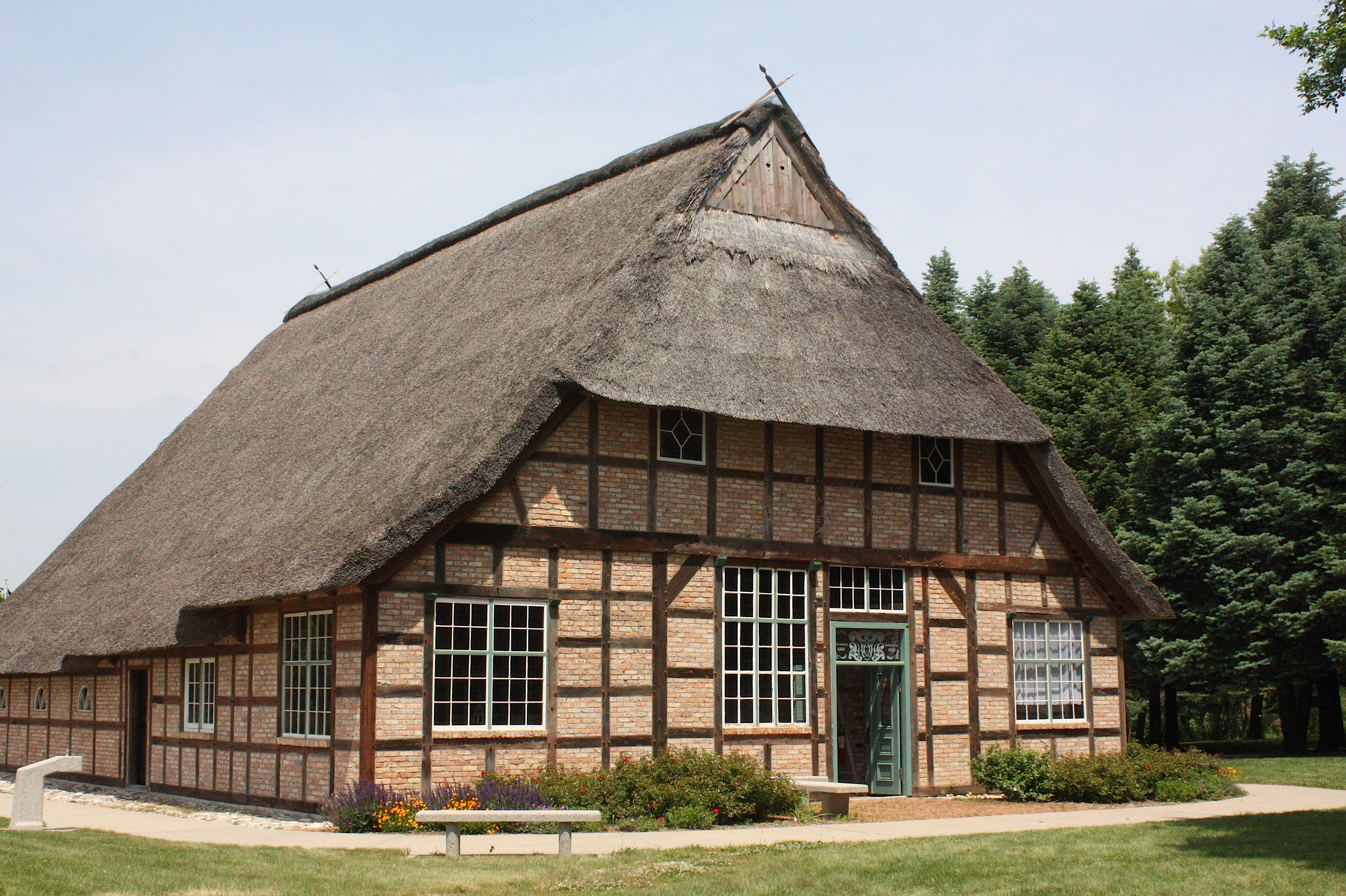
Located just south of Hwy. 141 in Manning, the Manning Heritage Park features an authentic German hausbarn built in 1660. A hausbarn in a unique structure that consists of living quarters (bedrooms, living, dining, and cooking areas) and also areas for housing livestock, farm equipment, and feed.
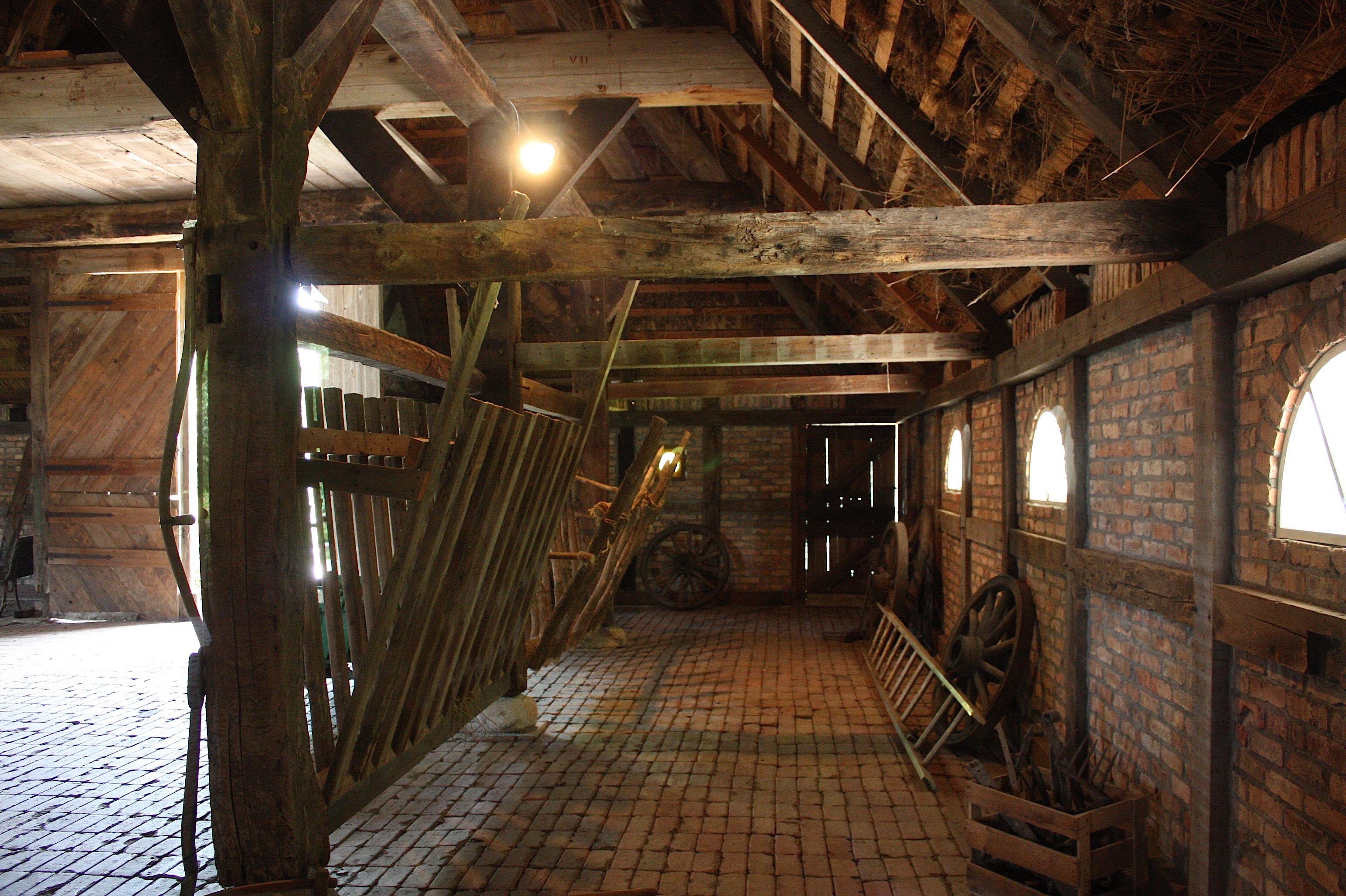 The Manning hausbarn came from northern Germany. It arrived in Manning in September 1996 to be reassembled/reconstructed with the assistance of German carpenters. (Check out the website for interesting construction details.) The building includes brick masonry outer walls, heavy timber support structures, brick interior walls, and a thatched roof. The roof is the most interesting part, given that it contains 20 tons of reeds. Three professional thatchers actually came from Germany to assemble the roof. (Who even knew there was such a thing as a professional thatcher?) All this work took several years to complete, and the hausbarn was dedicated in August 2000.
The result is a truly magnificent barn worthy of a trip to Manning, Iowa, (and a $6 admission fee) to see. In addition to the hausbarn, there’s also a 1910-ish historic farm site – the Leet/Hassler Farmstead – consisting of a Craftsman-style house, carriage house, barn, boar house, chicken house, and corncrib. All are in wonderful condition, and the park setting is shady and well-maintained.
 Last stop is the Trinity Church, a 100-year-old Lutheran church on a hill above the hausbarn and farmstead. Built in 1913, the Manning Heritage Foundation moved the church in 2006 to the park from its original site nine miles south of Manning. It’s available for weddings and other special events.
After I toured the historic sites, I headed into Manning’s downtown. Main Street is wide and tidy, with plenty of free parking and nice German architecture…but not much to do. I was there at 2:15 on a Saturday afternoon and couldn’t find anything to eat or any shops to poke around in. (The Travel Iowa website promised antiques stores, but I saw none.) I left the downtown area disappointed.
But before I left Manning altogether, I had one more stop to make. I wanted to see the John Deere mosaic created by ISU alum Clint Hansen (who also designed the mosaic mural in the ISU Alumni Center, where I work). As a traveler hurrying down Hwy. 141, it would be easy to drive right on by the John Deere dealership and think that the artwork is nothing more than a vinyl banner or painting – but don’t. Stop your car, get out, and look closely. The glass mosaic is a tremendous work of art – and I don’t give a hoot about tractors. The artwork is called “Transitions,” and its four panels tell the story of the evolution of John Deere tractors. (Again, the subject matter may not excite you, but the artistry will.)

After I left Manning, I drove a few miles east and a mile north to the tiny, blink-and-you’ll-miss-it town of Templeton, famous for its rye whiskey. I was certain that the distillery would be open since its website said there were tours on Saturday. Maybe the tours were held earlier, but the place was locked up tighter than a whiskey barrel. Perhaps I’ll go back another day.
My next two stops were to have been the Whiterock Conservancy and Springbrook State Park, but the temperature gauge said 86 degrees and my feet were still sore from my Swan Lake walk, so those, too, will have to wait for another day.
CelebrAsian
According to a story in yesterday’s Des Moines Register, there are 52,000 Asians living in Iowa. Today they came together to celebrate their culture.
Fourteen distinct sectors were represented at the 10th annual CelebrAsian, the largest Asian-American heritage festival in Iowa. The family-friendly celebration included food vendors, a cooking center, a martial arts village, continuous stage entertainment, and many goods for sale.

But the best part about the festival was the people watching. I don’t believe you would find a more diverse or interesting group of people at any other Iowa gathering. And everyone, young and old, seemed to be having a good time.
Specific cultures represented in tents surrounding the east campus of the Iowa State Capitol complex included Thai, Nepalese, Indian, Japanese, Chinese, Filipino, Lao, Malaysian, Indonesian, Vietnamese, Hmong, Tai Dam, Korean, and Cambodian.
 I attended the event with my daughter, Katie. We were tempted by food in most of the vendor booths but ended up dining mostly on Indian food: tandoori chicken for her, vegetables and rice for me, and spiced corn on the cob and cucumber salad for both of us.
Katie got a free henna tattoo and an Indian bindi on her forehead. I watched a little girl play with a pink balloon.
Another thing we both enjoyed was watching the takraw tournament. We thought the game looked like volleyball, only played with your feet. We especially liked the athleticism of some of the younger players. According to the Register, takraw is popular in southeast Asia and combines soccer and volleyball, “with players using their feet, knees, chests, and heads to volley a rattan ball back and forth over a net.”
 CelebrAsian is sponsored by the Iowa Asian Alliance.
Oh, and did I forget to mention? Hello Kitty was there, too.
Kentucky, North Carolina, and Virginia
My friend and photographer Jim Heemstra and I added three more states to our 50-state project last week: Kentucky, North Carolina, and Virginia. (Now only 37 more states to go.)
I must say that traveling to so many states in such a short time has really opened my eyes to the fact that this is a really amazing, geographically diverse, and beautiful country. Hawaii was stunning, yes, but in my opinion it has nothing over the Blue Ridge Mountains, Shenandoah National Park, or the horse farms of central Kentucky – all areas we visited last week.
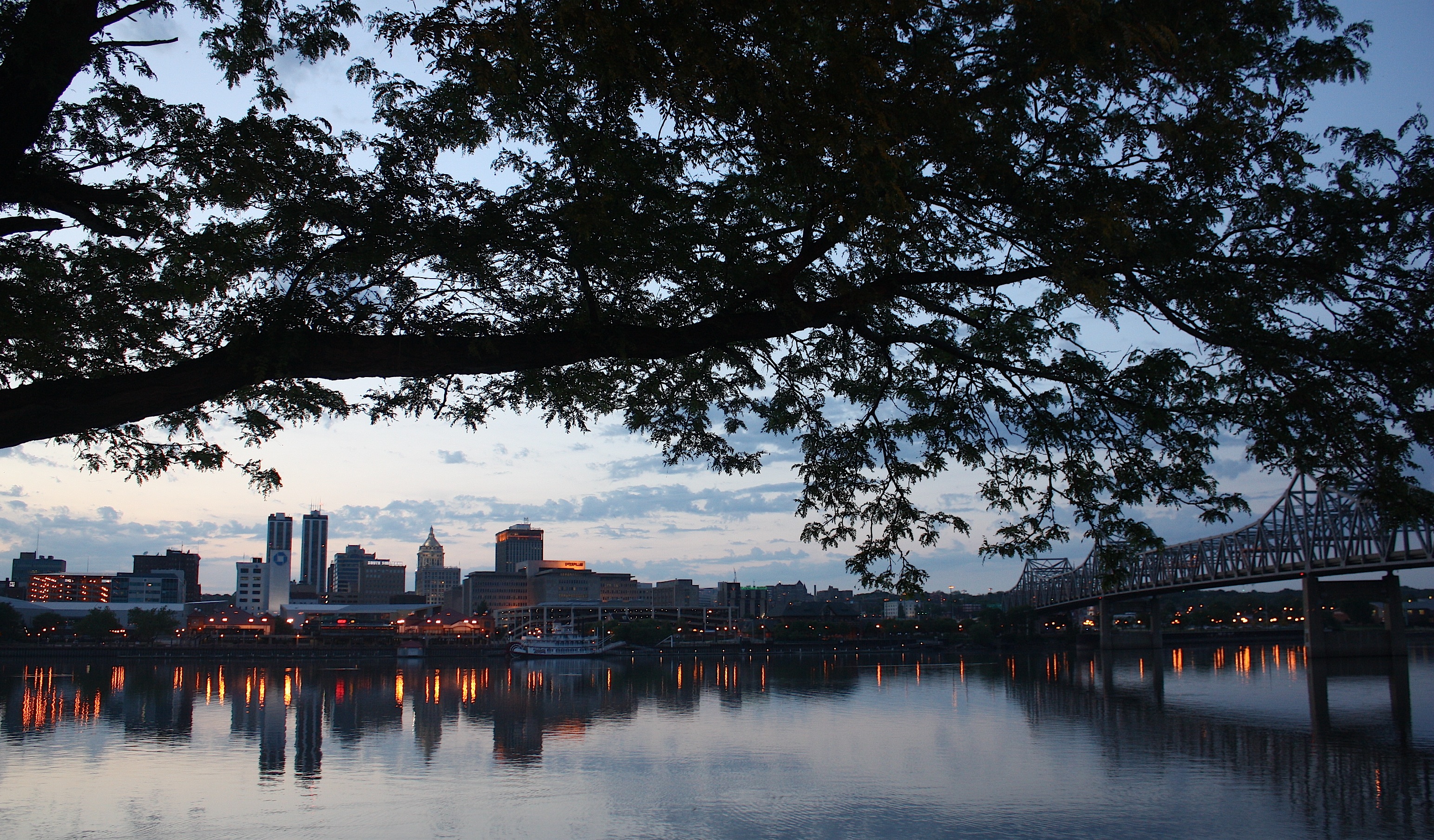
We headed out the afternoon of May 1. We stopped in Iowa City at the New Pioneer Co-op for yummy vegan salads (and cheese for Jim) to eat later that night. Our first overnight stop was in Peoria, Ill. We sat by the riverfront (surrounded by the most goose poop I’ve ever seen in my entire life), ate our picnic dinner. and watched the sun set over the bridge.
The next day we did nothing but drive. Our day ended in Georgetown, Ky., our home for the next two days. It was a hot day – the temperature gauge read 90 by the afternoon – and the sun had been beating up on us through the windshield. So although we had good intentions of exploring Georgetown on foot or driving to other nearby towns to explore, we ended up at the well-air-conditioned Galvin’s restaurant on Main Street, where the mostly local crowd was gearing up for the Kentucky Derby.
Like any good beer connoisseurs, we wanted to try the local brews. Luckily, Galvin’s had several on tap, so we opted for a taster tray to start with. The only two I remember were Kentucky Ale and Kentucky Bourbon Barrel Ale – both brewed by a company called Alltech’s Lexington Brewing Company. I expected to dislike the Bourbon Barrel Ale, but it was surprisingly smooth and tasty. But the Kentucky Ale won out. It’s a beer I’d definitely buy again.
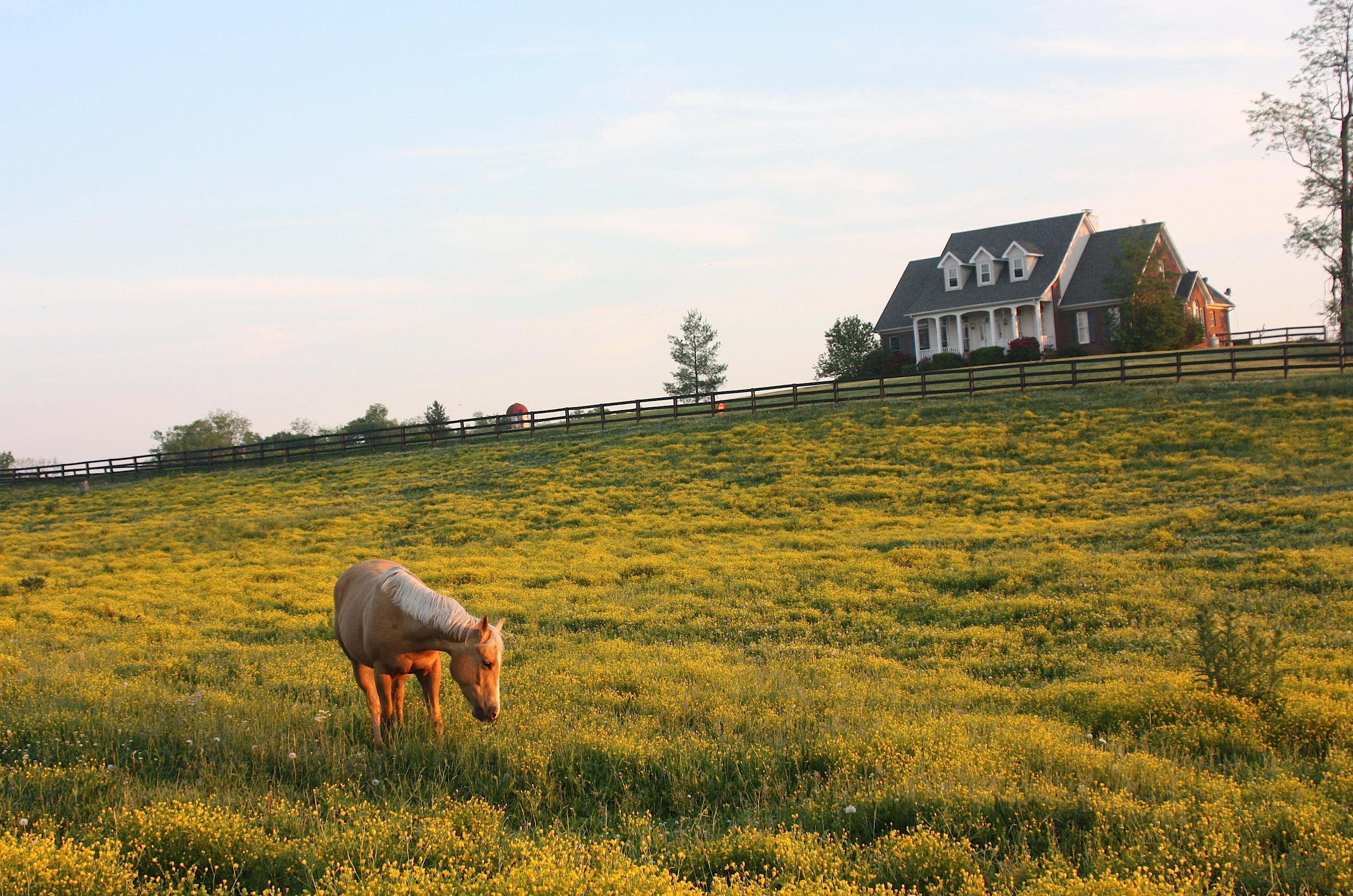
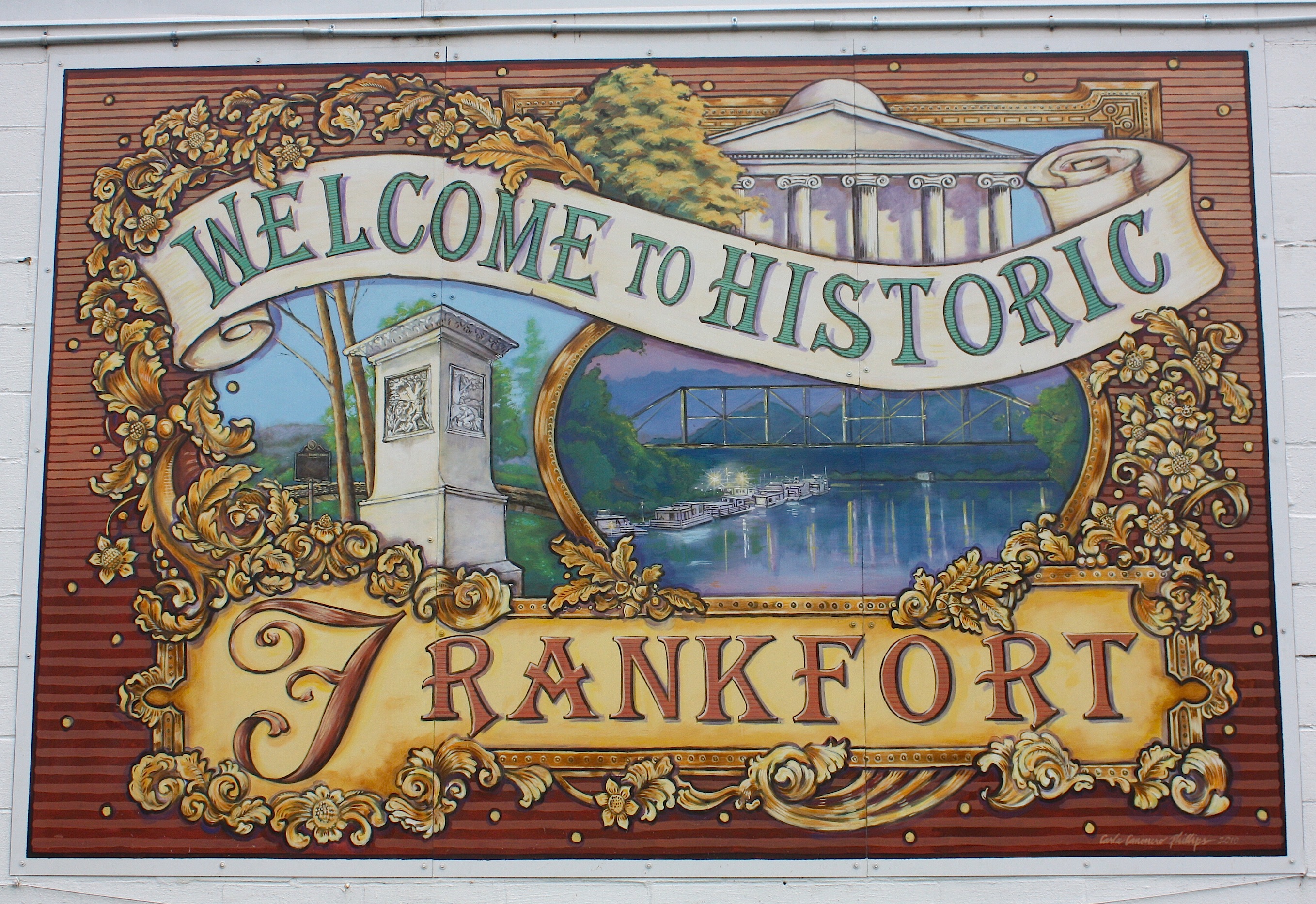 The next morning we had to start working. We drove a short, scenic distance to Frankfort, Ky., stopping along the way to photograph horses in fields. Frankfort, a rather small city, is the capital of Kentucky and home to two capitol buildings – the old one built in 1830 and the “new” capitol built in 1910. Apparently there was a quarrel among Louisville, Lexington, and Frankfort over which city should be Kentucky’s capital. I’m not sure how Frankfort was ultimately chosen, but it’s a pretty town that can be seen in its entirety from the Frankfort Cemetery built on a bluff (and – a bonus! — containing the grave of Daniel Boone.)
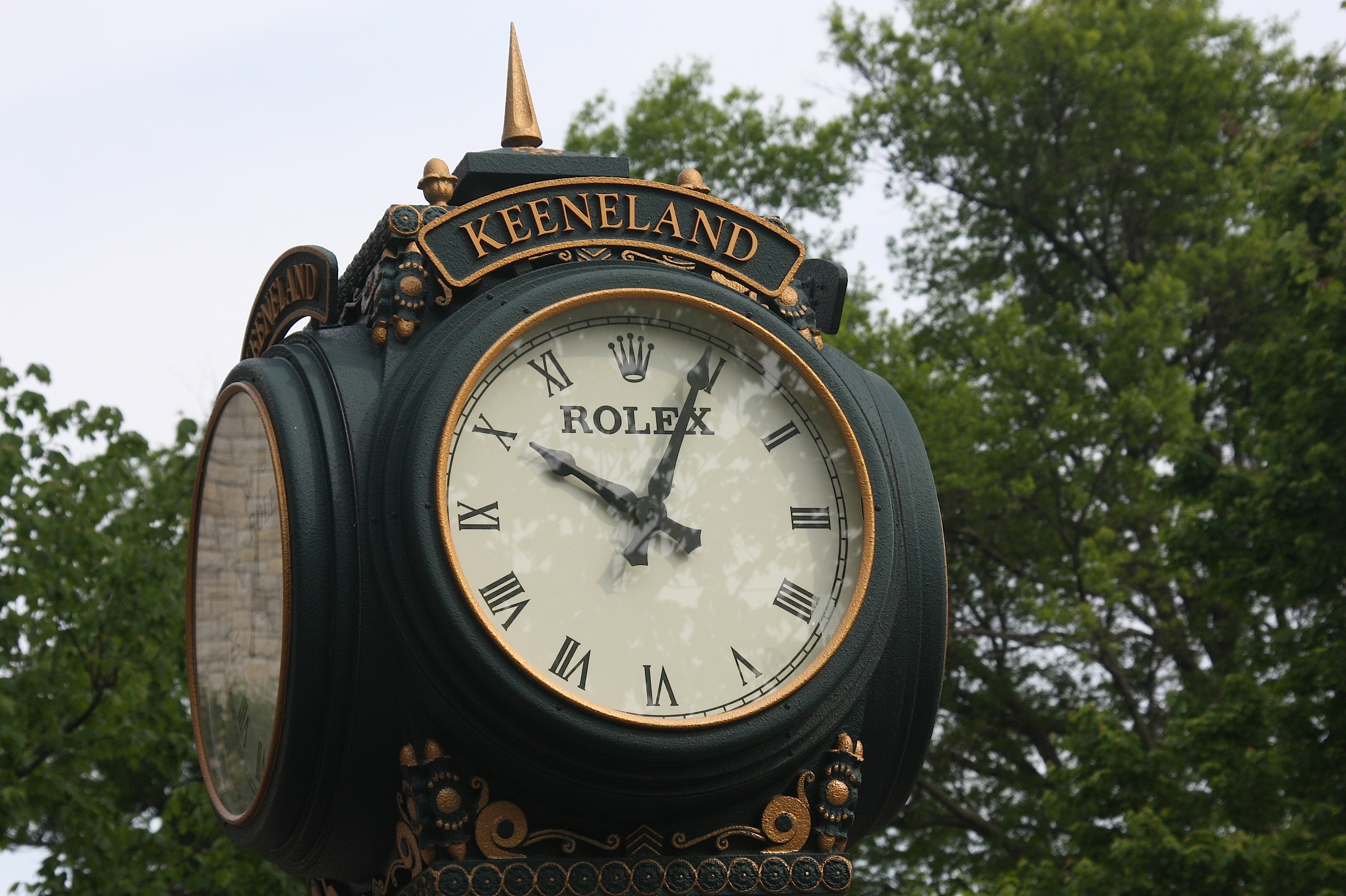 We spent time with our Iowa State alumna in Frankfort, and she also took us to Lexington to the Keeneland horse-racing track and to the Four Roses bourbon distillery. I was not aware that bourbon cannot be called bourbon unless it’s made in Kentucky (kind of like Champagne, I guess). Julie and I did a bourbon tasting but I didn’t like the taste any better surrounded by Kentucky bluegrass than I have anywhere else. I am just not a fan of bourbon.

Later that day, Jim and I had a little bit of time to explore the horse farms near Lexington, and we met with an equine veterinarian who has a horse farm of his own. I like to look at horses from a distance but, as it turns out, I’m not so great with them up close. It’s a long story.
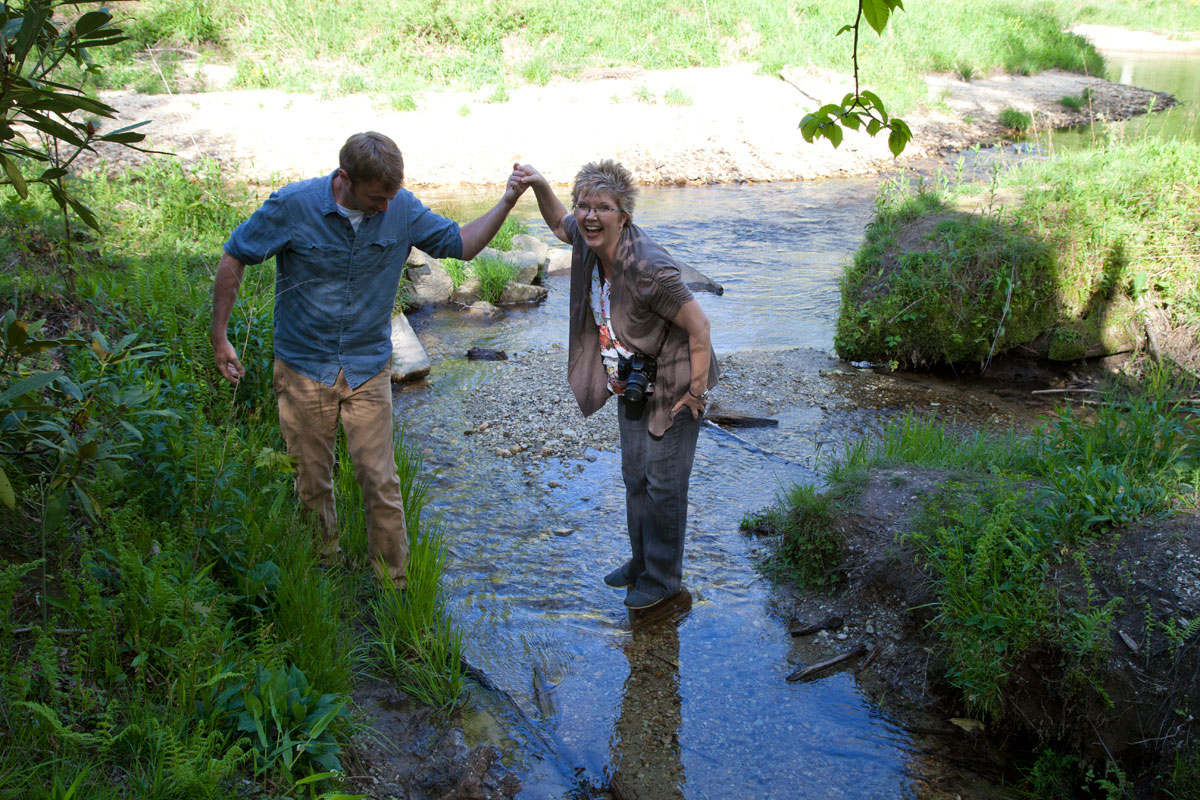
We left Kentucky bright and early the next morning and took a long and winding journey to Boone, N.C., where we met another alum. He took us for a hike at the Julian Price Memorial Park, a short drive down the Blue Ridge Parkway. I had on the wrong shoes and didn’t have a hiking stick, so when we came to a creek way too wide to jump over, I balked. I didn’t want to have wet shoes and didn’t want to fall in and I definitely didn’t want to walk across the log as Joe suggested. So he found a big rock and put it in the middle of the creek and helped me cross. Jim thought it was very funny and took lots of pictures. But I will just say I did NOT fall in.
Boone is a fun college town, home of Appalachian State University. There’s a funky mix of people, so there’s a funky mix of shops, bars, and restaurants. Joe took us to Murphy’s Pub for food and beer.
The area around Boone is just overflowing with opportunity for outdoor adventure. Besides Julian Price and the really beautiful Blue Ridge Parkway, there’s Hebron Falls, Linville Falls, and lots of other places, none of which we had time to explore because we had to get to Virginia.
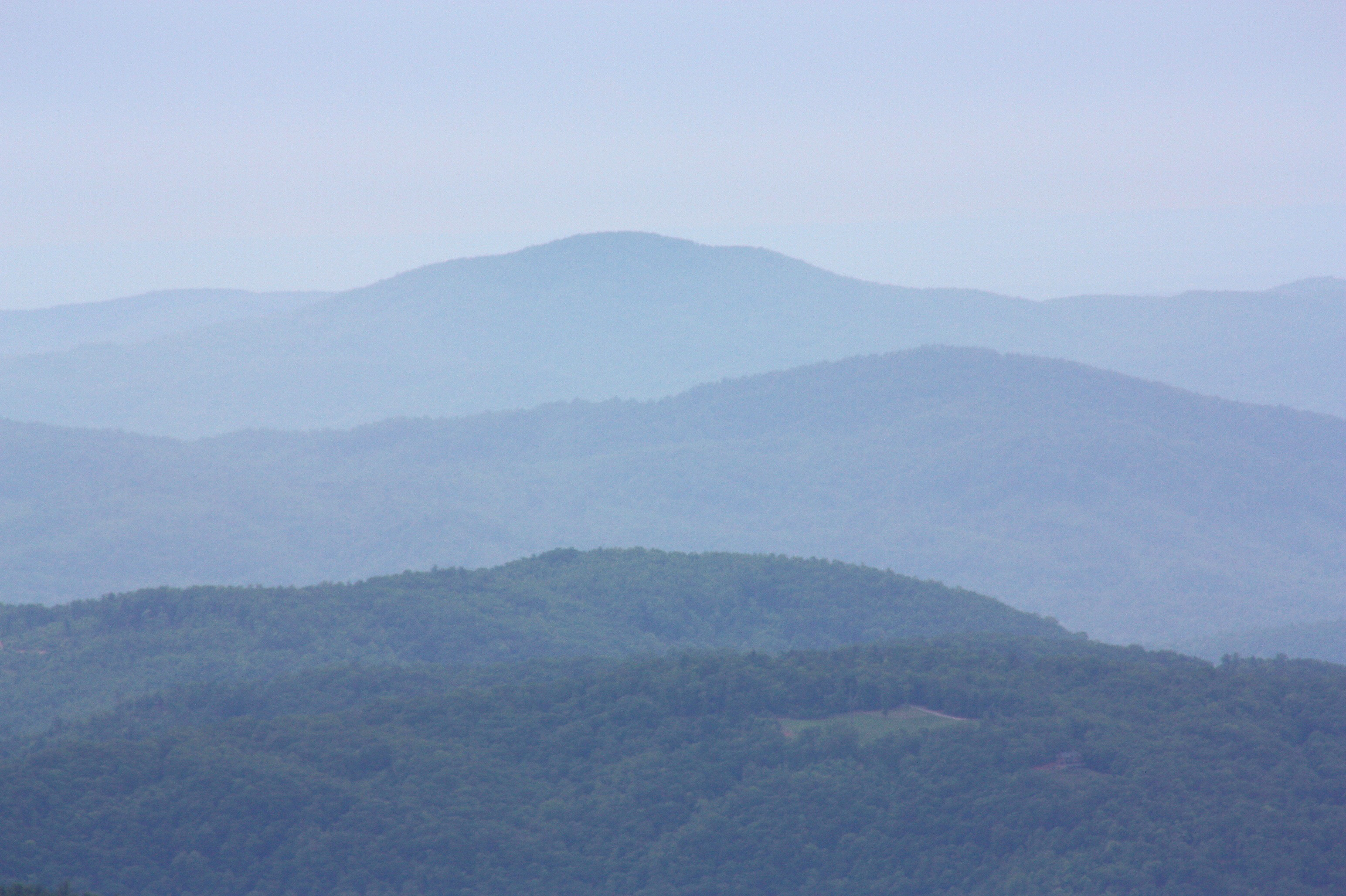
Our day traveling from Boone to Staunton, Va., was as frustrating as it was scenic. We started out on the Blue Ridge Parkway, planning to take it a few miles and then hook up with Interstate 77 so we could make better time the rest of the way. Unfortunately, about halfway up the Parkway section we encountered a detour that took us (very slowly) in the wrong direction. We literally spent hours going nowhere. It was a pretty road but very curvy, slow, and mountainous. I was glad I bought Dramamine the night before in a Boone drug store.
We finally made it to Staunton (in the rain) and walked downtown (in the rain) and found – hallelujah! – a vegan-friendly restaurant with a kick-ass wine list.
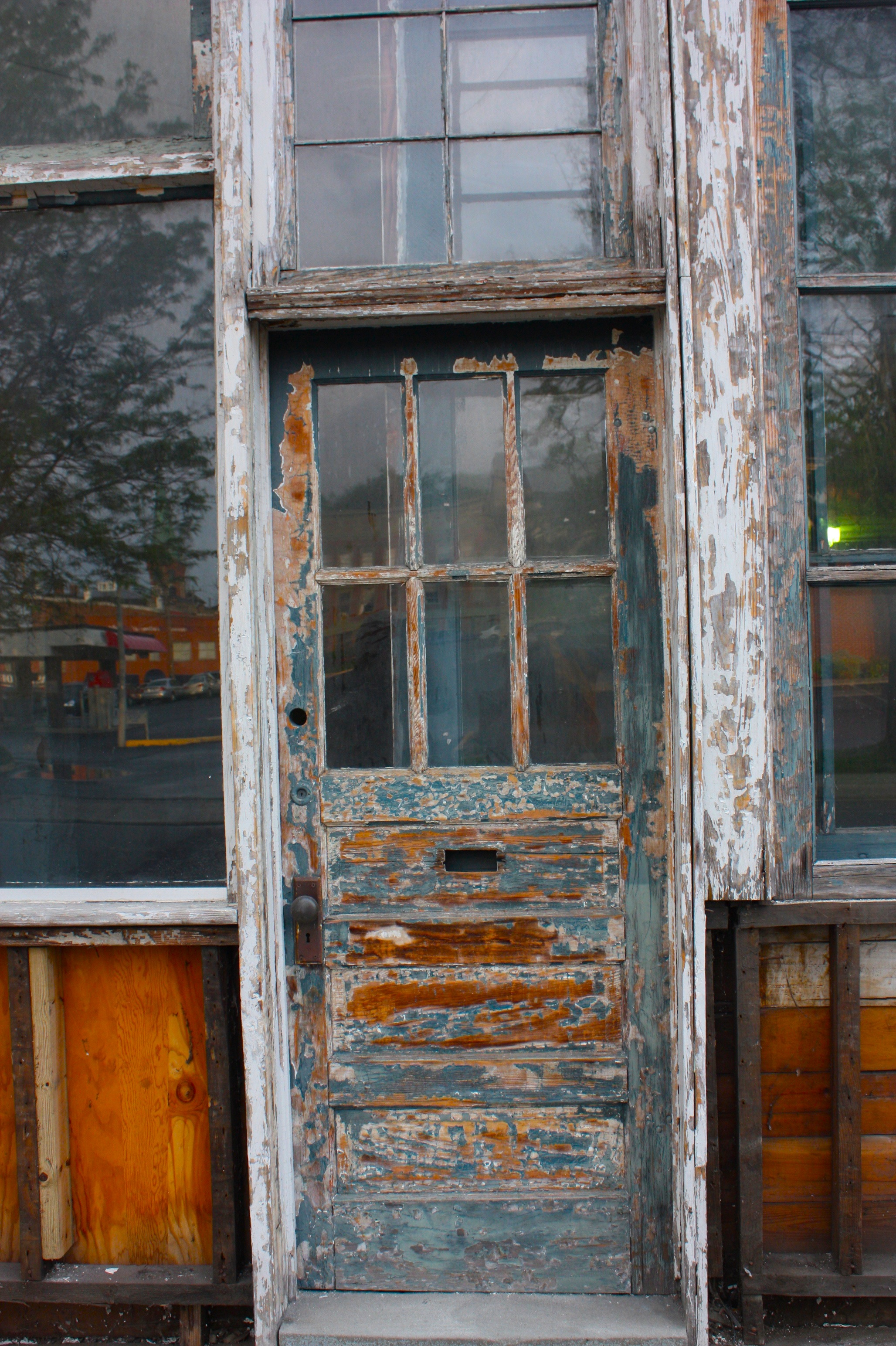 Staunton (pronounced “Stanton”) is a really cool town nestled in the Shenandoah Valley. The historic downtown, honored by the National Trust for Historic Preservation, is famous for its arts scene and restaurants. I wish I could show you more pictures of it, but we were there for a very short time. In the rain.
After our final alumni story assignment — in rural Verona not far from Staunton, where we were treated to a home-cooked breakfast and got to play with chickens – we took the most direct route we could find to Shenandoah National Park.
My previous experience with this national park was in 2003 when Dave and the girls and I went there for a family vacation. I was really gung-ho about hiking back then and wanted desperately to hike the Appalachian Trail. I also wanted to experience the beauty of Shenandoah. Unfortunately on that trip it rained every day and there was so much fog in the park that Skyline Drive and its famous overlooks were nothing but white.
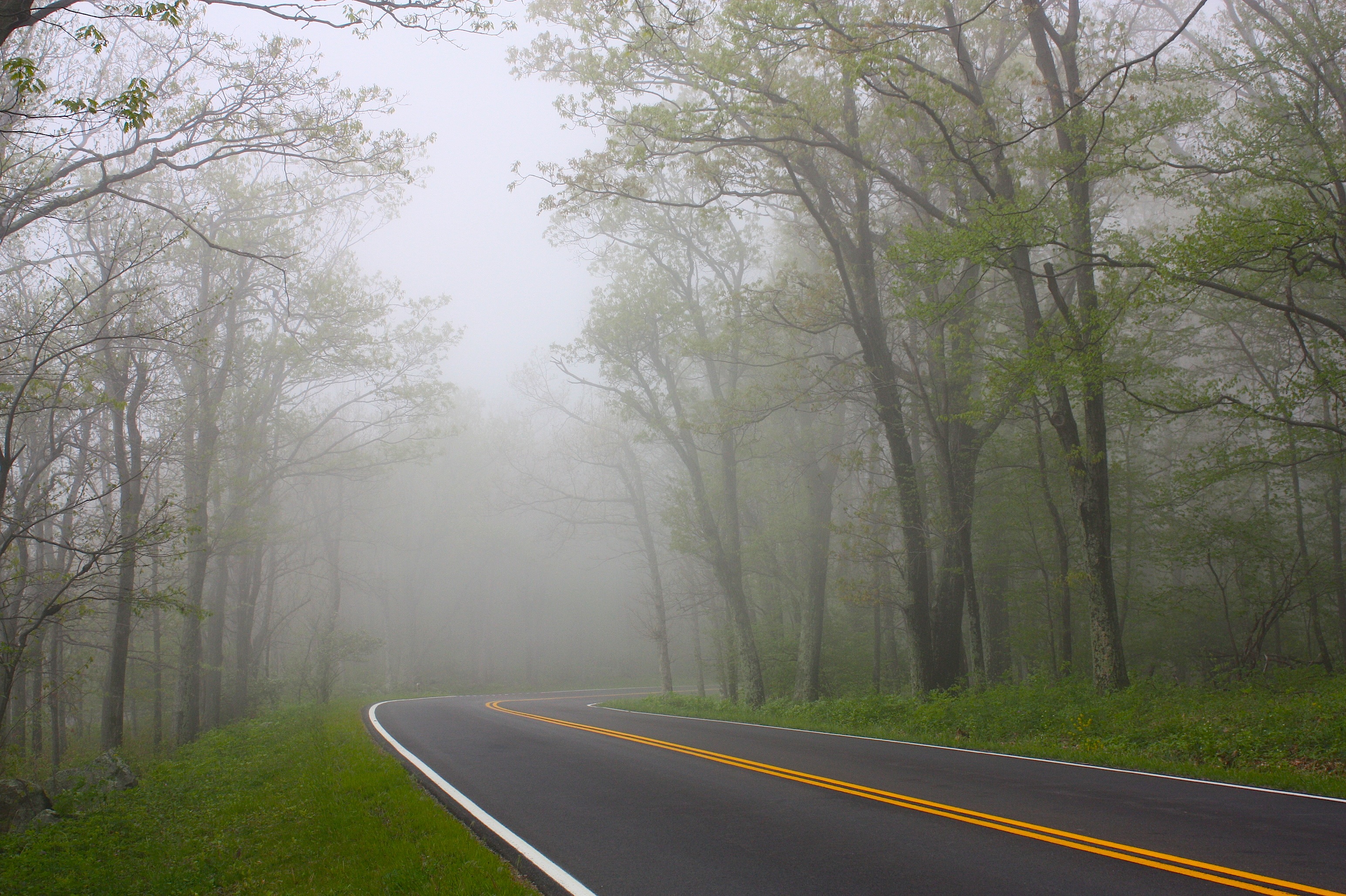
I had high hopes for this visit, but pulling in to the park (after a sunny drive there) we were greeted by…..FOG. Fog on the roads, fog on the hiking trails, fog in the picnic area (where we ate peanut butter sandwiches and potato chips and grumbled about the fog). Fog at Skyland Resort.
Skyland is where my family stayed in 2003, and that’s where Jim and I stayed this time, too. I like the rustic feel of the place (my kids think “rustic” is just another word for “crappy”) and the big ol’ dining room where the windows overlook the mountains. At least, I assume the windows overlook the mountains – it’s pretty hard to tell when there’s that much fog.
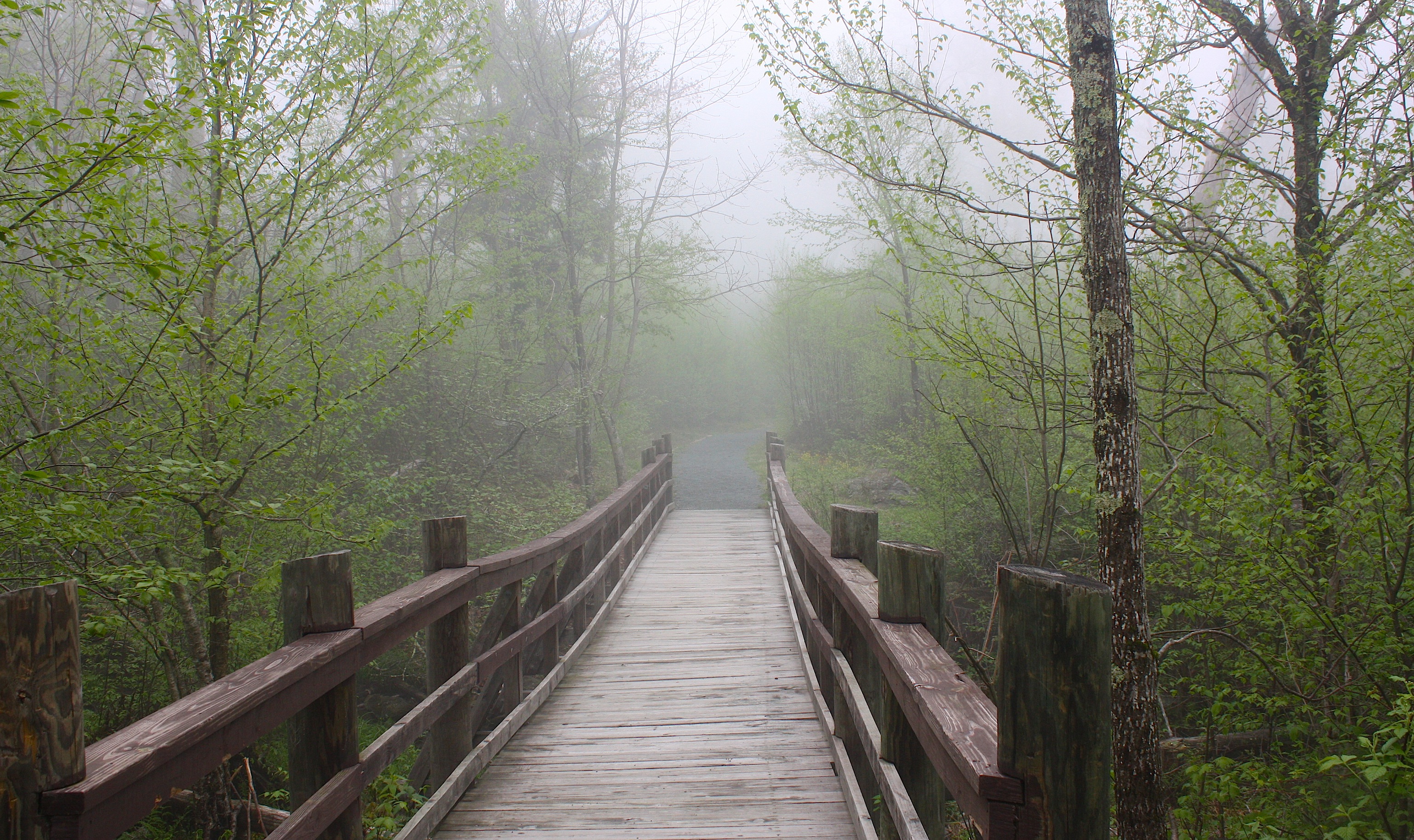
After we checked in to Skyland and hauled our bags up the metal stairs, we drove south on Skyline Drive to the Big Meadows area, hoping we’d eventually run out of fog. There were a few moments of sunshine and a few peeks on the overlooks, but just when we thought the fog was lifting, there it would be: everywhere. We hiked a loop trail and parts of a couple of other trails and called it a day.
The next morning was more of the same so we headed home. After hours and hours and HOURS of mountain driving, it felt wonderful to hit Interstate 80 and get back to Iowa.


 Iowa Girl on the Go